


You might be interested



Australia has gas – a lot of gas.
So much gas that we don’t shy away from exporting billions of dollars’ worth of it overseas every year.
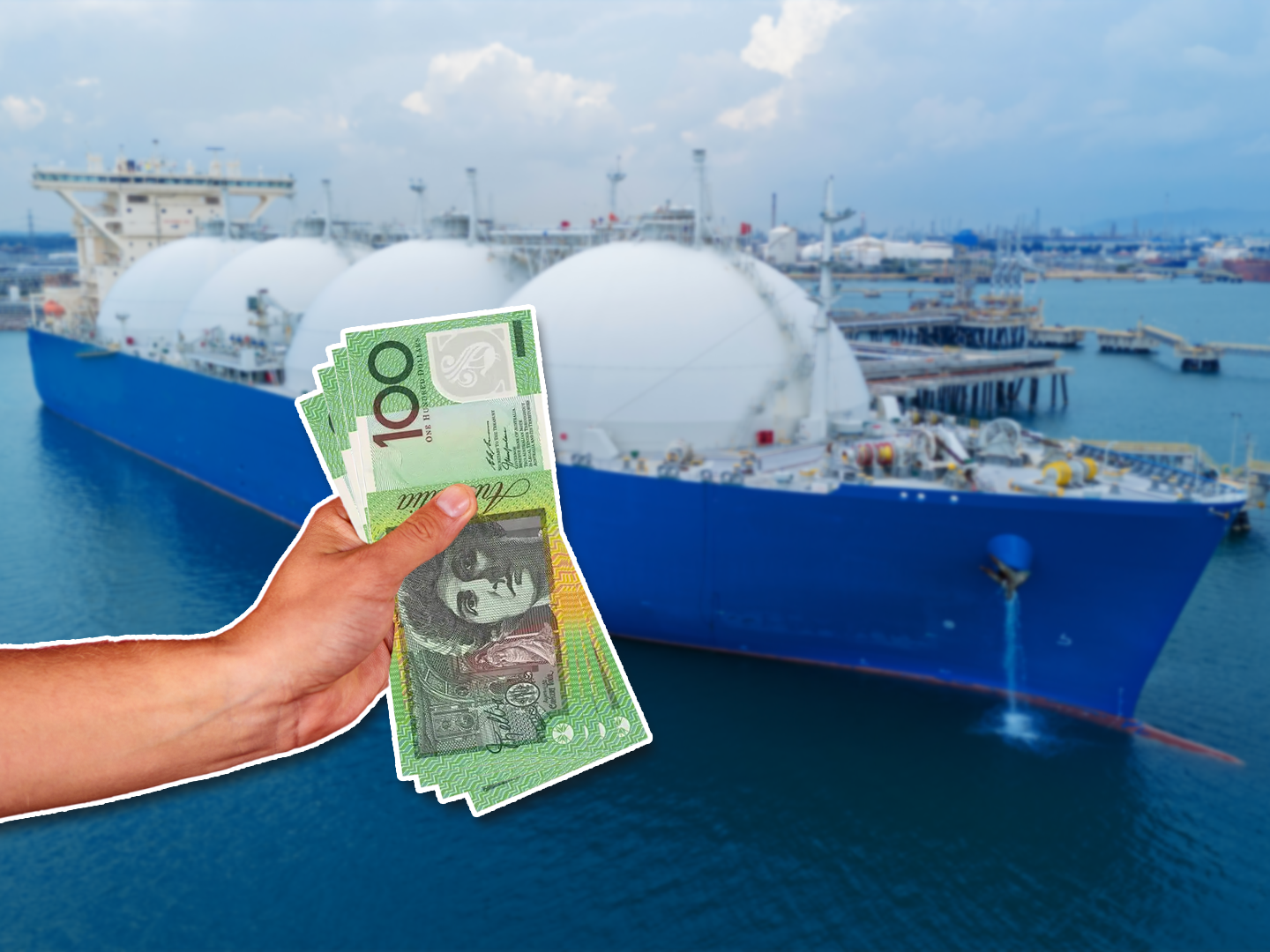
In 2023/24, 78% of Australia’s extracted natural gas was exported as liquefied natural gas (LNG), generating almost $70 billion in export earnings.
That has politicians, unions and industry groups asking: what exactly is Australia getting in return for all this gas?
Gas Money
Australia already taxes most offshore petroleum projects through the petroleum resource rent tax (PRRT), which is charged on project profits after costs and returns are accounted for.
But some say we could be squeezing more value out of our gas.
Unlike a profits tax, the proposed 25% levy on LNG exports would take 25% of the value of LNG exported overseas.
Based on the 2023/24 export values, that could be worth about $17 billion – that’s nothing to sniff at.
And suddenly, everyone has an opinion on how to split the wind – or should that be gas – fall.
Holding It In
Supporters argue that taxing exports would make selling gas domestically more attractive by potentially increasing local supply and putting downward pressure on prices.
But gas doesn’t simply follow the path of least resistance.
A 25% export levy wouldn’t mean gas prices automatically fall by 25%. There are market constraints, industry decisions and half a dozen other frictions involved.
Industry groups warn that taxing revenue before costs could put investors off our gas – particularly from investing in newer or more expensive projects.
Under the PRRT, a company could post a loss on paper and owe nothing, but the export levy wouldn’t care.
So who gets gas and who gets paid?
Clearing The Air
The current campaign gained heat in August, when 70 Australian scientists signed an open letter calling for the levy and greater investment in science and environmental protection.
But the tax wouldn’t automatically fund science, or any other sector. Unless legislation specifically earmarked the money, it would become government revenue, competing with all the other things governments spend money on.
So the argument isn’t really about whether Australia has enough gas. It’s about how we handle our gas, and who gets a sniff of the value.