


READ

PARTICLE 101: My Feed, My Way

Are we headed back to the days of chronological social media?
Connie Greeve
Connie Greeve
Writer
PARTICLE 101: My Feed, My Way

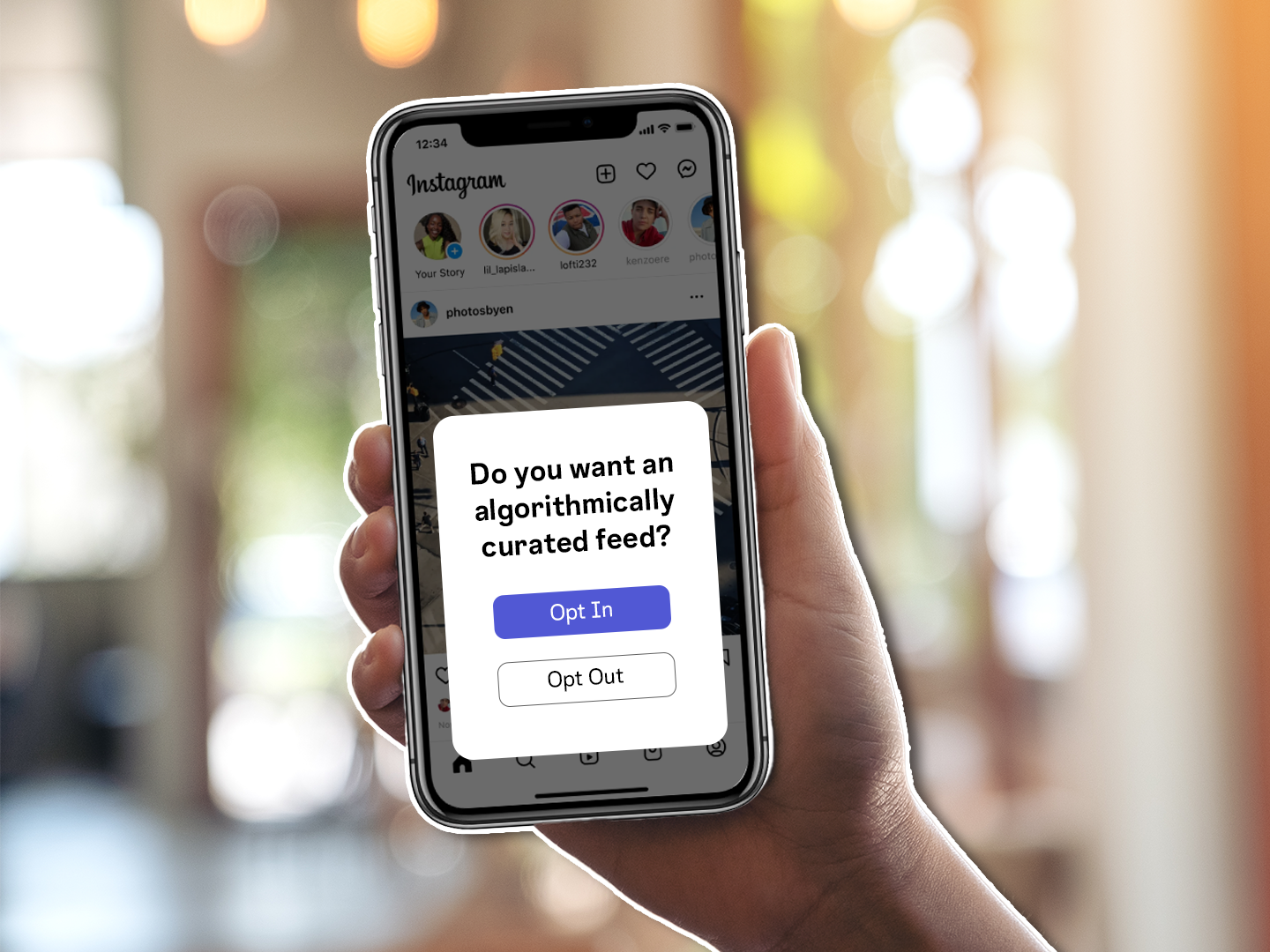
The Digital Duty of Care draft legislation released this month by the Federal Government introduces an Australian first initiative called My Feed, My Way.

The new laws will require social media platforms to allow users to opt out of algorithmically curated feeds. 

The European Union introduced similar legislation in 2022, but Australia’s proposed legislation aims to tighten up some of the wording and hold platforms more accountable. 

The devil will be in the details. 

Back in time

In the early days of social media, the ‘infinite scroll’ didn’t exist. When you got to the end, you were “all caught up”.  

By 2016, most platforms had built-in algorithms to recommend content. Users are now fed personalised content based on their online behaviour. 

While curated algorithms might make it easier to find content we enjoy, they are designed to maximise engagement. 

This becomes a concern when algorithms start introducing users to polarising or harmful content. 

Echo … echo … echo …  

Echo chambers form when an individual’s beliefs are reinforced by repeated exposure to similar ideas. 

Social media algorithms make it easy to slip into echo chambers by slowly feeding you more and more related content.   

Under the new legislation, the government also requires digital services to protect under-18s from platform architecture that could have ‘negative behavioural impacts’ and exposure to ‘harmful content’ that promotes misogyny, disordered eating, crime or bullying

While algorithms certainly create echo chambers, there is concern about how effective simply removing them will be. 

Potential roadblocks 

The difference between opt-in and opt-out is another sticking point.

Experts believe an opt-in situation forces platforms to more fairly present users with a choice. Most people don’t change default settings – in an opt-out world, most users would still have the algorithm without much consideration. 

The opt-in/opt-out issue may also be the deciding factor in whether the proposed legislation even passes. 

The Coalition opposes the legislation, calling it “censorship” and suggesting the government focuses on fixing the under-16 ban, which recent research suggests hasn’t been effective. 

Labor will need the support of the Greens, who will only support an opt-in situation. 

However it ends up landing, at the very least, Australia has started a global conversation about user agency in the online world. 

Connie Greeve
About the author
Connie Greeve
Connie is a freelance science communicator with a background in physics and science communication. She is completing her Master of Science Communication while collaborating with Pawsey and Einstein-First. When she’s not sharing her passion for science, you’ll find her sewing, painting, or hunting through op-shops.
View articles
Connie is a freelance science communicator with a background in physics and science communication. She is completing her Master of Science Communication while collaborating with Pawsey and Einstein-First. When she’s not sharing her passion for science, you’ll find her sewing, painting, or hunting through op-shops.
View articles

NEXT ARTICLE

We've got chemistry, let's take it to the next level!

Get the latest WA science news delivered to your inbox, every fortnight.

This field is for validation purposes and should be left unchanged.

Republish

Creative Commons Logo

Republishing our content

We want our stories to be shared and seen by as many people as possible.

Therefore, unless it says otherwise, copyright on the stories on Particle belongs to Scitech and they are published under a Creative Commons Attribution-NoDerivatives 4.0 International License.

This allows you to republish our articles online or in print for free. You just need to credit us and link to us, and you can’t edit our material or sell it separately.

Using the ‘republish’ button on our website is the easiest way to meet our guidelines.

Guidelines

You cannot edit the article.

When republishing, you have to credit our authors, ideally in the byline. You have to credit Particle with a link back to the original publication on Particle.

If you’re republishing online, you must use our pageview counter, link to us and include links from our story. Our page view counter is a small pixel-ping (invisible to the eye) that allows us to know when our content is republished. It’s a condition of our guidelines that you include our counter. If you use the ‘republish’ then you’ll capture our page counter.

If you’re republishing in print, please email us to let us so we know about it (we get very proud to see our work republished) and you must include the Particle logo next to the credits. Download logo here.

If you wish to republish all our stories, please contact us directly to discuss this opportunity.

Images

Most of the images used on Particle are copyright of the photographer who made them.

It is your responsibility to confirm that you’re licensed to republish images in our articles.

Video

All Particle videos can be accessed through YouTube under the Standard YouTube Licence.

The Standard YouTube licence

  1. This licence is ‘All Rights Reserved’, granting provisions for YouTube to display the content, and YouTube’s visitors to stream the content. This means that the content may be streamed from YouTube but specifically forbids downloading, adaptation, and redistribution, except where otherwise licensed. When uploading your content to YouTube it will automatically use the Standard YouTube licence. You can check this by clicking on Advanced Settings and looking at the dropdown box ‘License and rights ownership’.
  2. When a user is uploading a video he has license options that he can choose from. The first option is “standard YouTube License” which means that you grant the broadcasting rights to YouTube. This essentially means that your video can only be accessed from YouTube for watching purpose and cannot be reproduced or distributed in any other form without your consent.

Contact

For more information about using our content, email us: particle@scitech.org.au

Copy this HTML into your CMS
Press Ctrl+C to copy