


You might be interested



On a property an hour outside of Perth, Casey (not his real name) has built a disaster bunker.
“We’ve actually started calling it a cellar when we talk to people about it,” says Casey, as he rolls back a bench to reveal the staircase beneath.
“When you tell people you have a bunker, they say, ‘How many guns do you have?’”
“When you call it a cellar, they ask what kind of wine you’re drinking.”
Heading down under
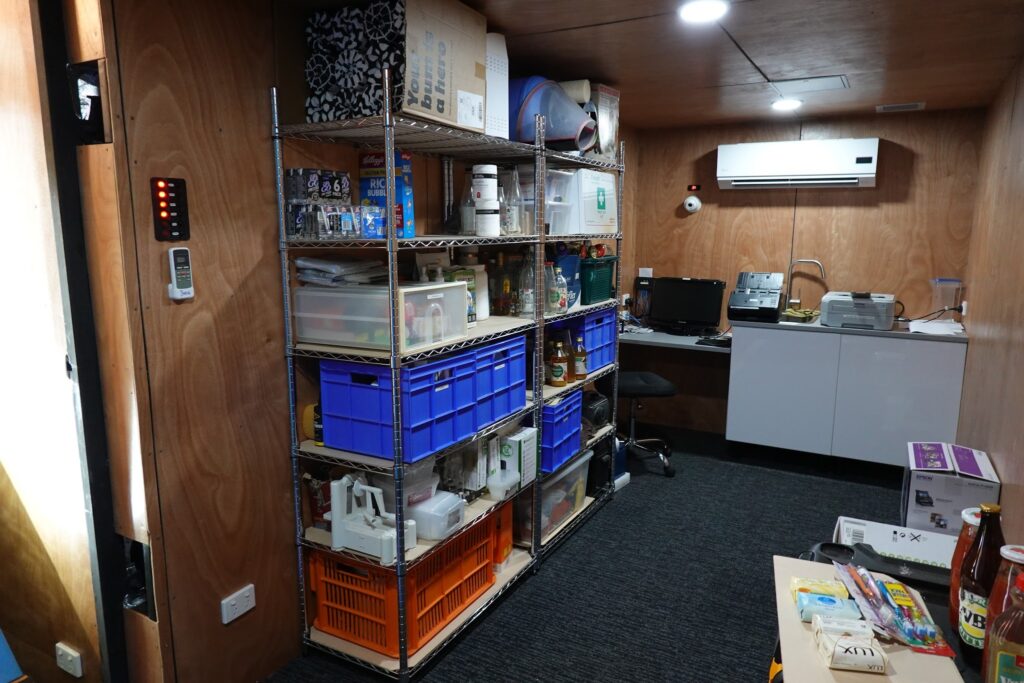
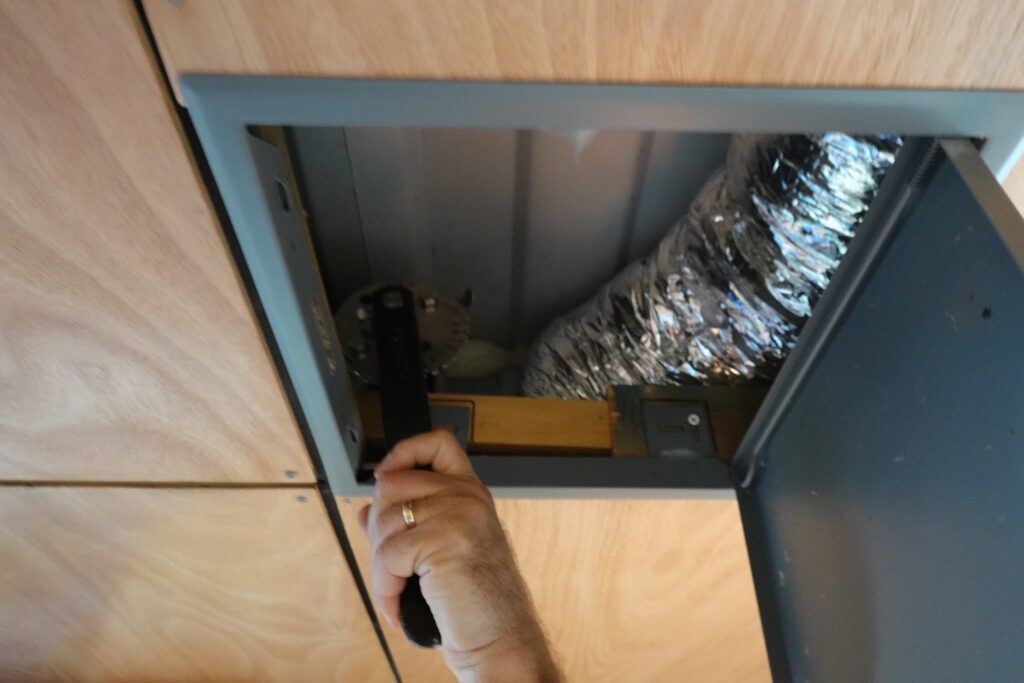
Inside the bunker, air conditioning and ventilation keep the air fresh and a consistent 19 degrees.
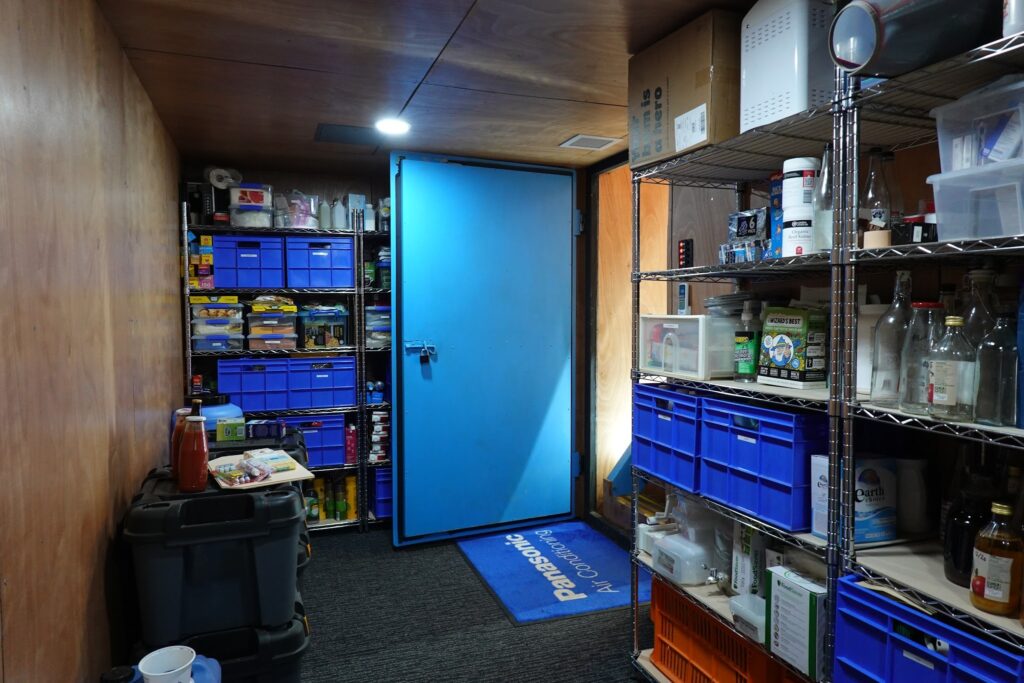
It’s well lit, carpeted and wood panelled, and lined with shelves of (mostly) mundane stuff – coffee bags, crackers and ginger beer.
Credit: Rockwell McGellin
It feels more like a caravan – or yes, a cellar – than a bomb shelter.
“This is effectively our pantry,” says Casey. “It’s just that we can also use this as a refuge if we need to.”
Sheltering in place
There are a few non-standard features for a pantry. They hint at the cellar’s alternate role – not living underground, but riding out an emergency.
“My definition of an emergency is either a bushfire or a cyclone,” says Casey.
“A bushfire might only last a couple of hours, whereas a cyclone, like in Exmouth’s case, they got pounded for 24 hours.”
A first aid kit and a chemical toilet sit among the groceries. A CCTV system keeps an eye on the property. A UHF radio allows communications with neighbours and emergency services.
Credit: Rockwell McGellin
Casey understands what he’s unprepared for too.
“One vulnerability is flooding. It’d come down those stairs like a tidal wave and we’d have to swim out,” says Casey.
“Our biggest vulnerability, though, is security. So if the zombies are coming,” he says, only partly joking, “we don’t have any form of security.”
Floods and zombies notwithstanding, the bunker seems pretty reasonable as a temporary shelter.
Always be prepared
Dr Bingjie Song teaches the delightfully named Disasters! unit at the University of Western Australia.
She says it’s “very unusual” to have a bunker.
“I think one thing he’s doing well is that he really is aware of the hazards in his area,” says Bingjie.
“A lot of people, when they choose where to live, don’t care whether it’s a hazardous area or not.”
The difference between hazards and disasters is important. A hazard becomes a disaster if people are affected.
So while it might be difficult to prevent a hazard, preparation could prevent a hazard becoming a disaster.
Helping hands
“I think this guy is doing an amazing job [of] preparing [for a disaster],” says Bingjie.
“But preparing is not just one person’s job. The community can do something about it, [the] government needs to do something about it. It’s a joint effort.”
Emergency preparedness looks different depending where you live.
Rural communities are further from help and more exposed to natural hazards, especially as climate change makes bushfires and cyclones more frequent and severe.
“They need to be aware of who they can ask for help and how they can help each other,” says Bingjie.
This might be organised or what Binjie calls ‘spontaneous volunteering’ – neighbours helping neighbours during emergencies.
Credit: Rockwell McGellin
In more densely populated urban areas, the priorities are different.
The number of people affected could be much higher, meaning a disaster could overwhelm the systems we rely on.
“We need to think about how we’re getting power, how we’re getting around, how we’re communicating,” says Bingjie.
These aren’t problems a bunker will help with.
You’re better off making a plan ahead of time, so if a disaster occurs, you’re not adding to the problem. (We see you, panic buyers.)
“Our decisions, our actions can also make disasters worse,” says Bingjie.
The real infrastructure is the friends we made along the way
It’s tempting to think of disaster infrastructure as purely physical – building shelters and maintaining stockpiles. But intangible things, like knowing your neighbours and having a plan, are a kind of infrastructure too.
Casey agrees. “Bingjie is correct about the people aspect.”
“We don’t live in our neighbours’ pockets, but we have made sure that we have connection with them,” says Casey.
“They all know we have a cellar and where it is located. Just in case something really nasty happens, they know where to start digging!”