

You might be interested



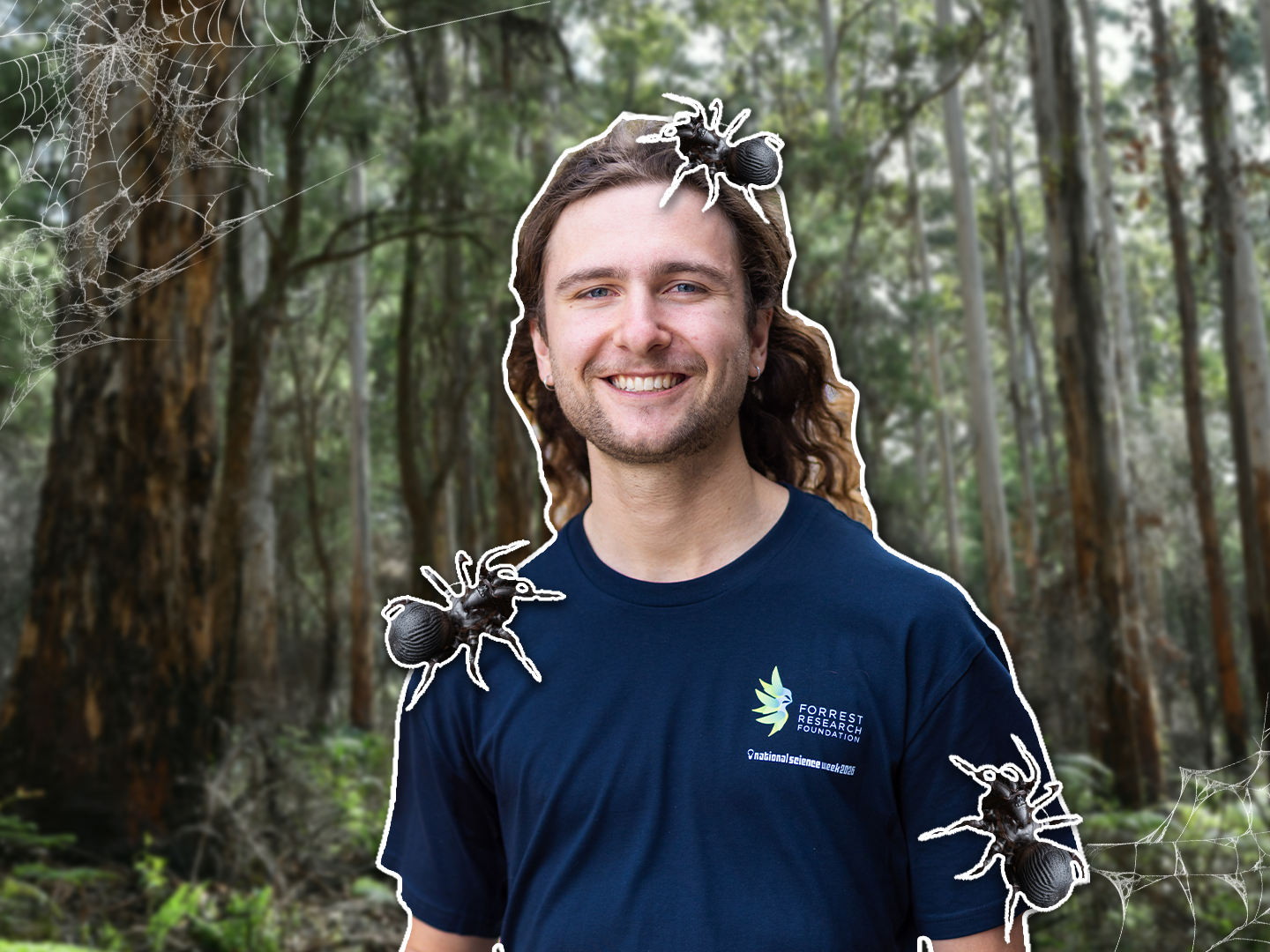
WA’s trapdoor spiders are endangered. Jackson Rendall is here to help – because he thinks they’re “just really cool”.
“Even if you don’t appreciate the spiders themselves, you have to appreciate their burrows,” says Jackson.
In fact, it was burrows that first sparked his interest.
“I was volunteering with pygmy blue-tongue lizards, which are endangered lizards that live in spider burrows,” says Jackson.
This work led him to a research group at Flinders University working on South Australia’s spiny trapdoor spiders.
“I thought, ‘I guess I’ll give that a go,’ then I realised how interesting they were,” he says.
The research was answering some basic questions, like how deep the burrows go (about 16 cm).
They were also answering some thornier ones, like how many spiderlings hatch at once (about 30), does size matter for male spider reproduction (probably not) and how long does spider mating last (about 7 minutes).
(Jackson wasn’t around for that bit, but he’ll gladly show you the video.)
Because if you’re trying to save a species, you need to know how it makes babies.
Spider Vibes
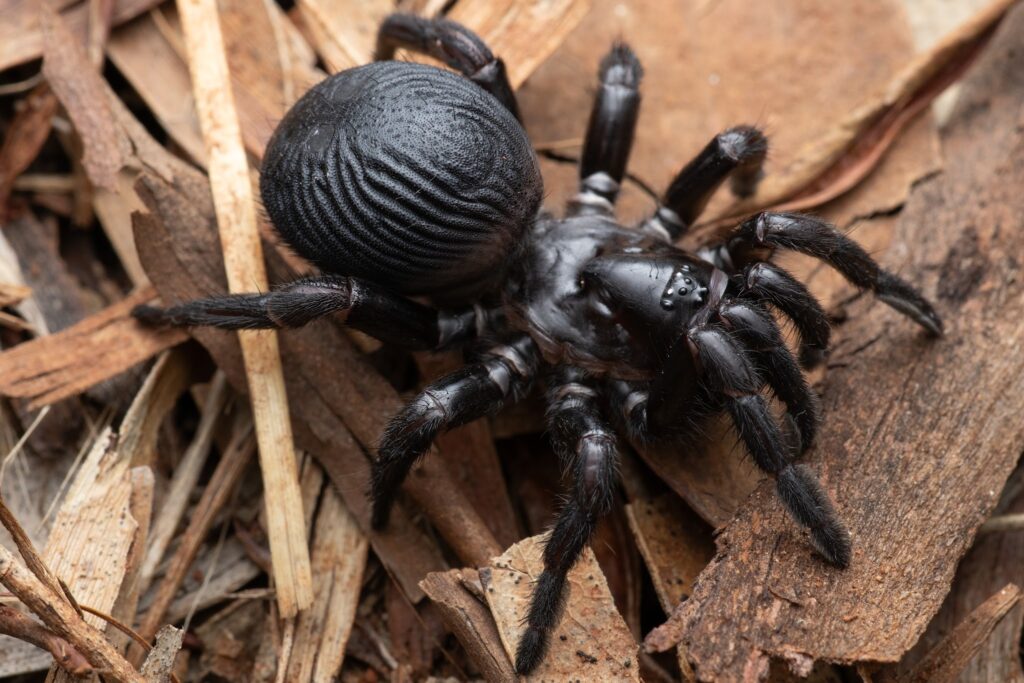
Now in Perth as a Forrest Scholar with UWA’s Centre for Evolutionary Biology, Jackson’s PhD is on WA’s shield-backed trapdoor spider.
His focus is less on the ‘how’ of spider reproduction and more on the ‘who’. That is, are these hidden, immovable groups of spiders genetically diverse or are they horrifically inbred?
Figuring that out takes legwork, in more ways than one.
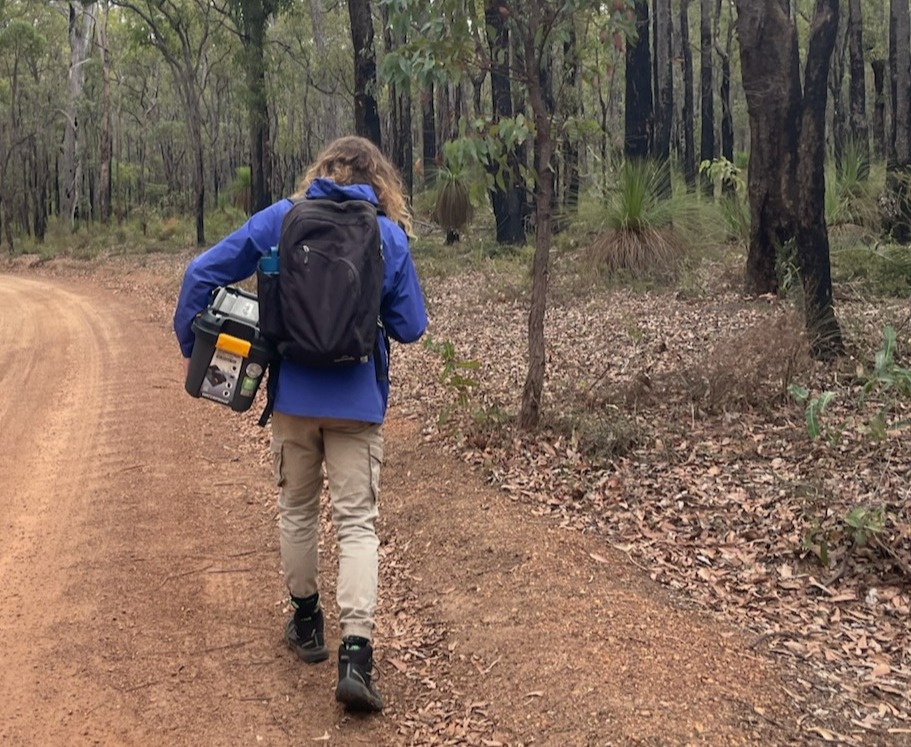
“It was 4 months of field work … just wandering around in the forest, looking at the ground,” says Jackson.
Over time, he’s developed a real-life ‘spidey sense’.
“You’re driving around the Wheatbelt, and you’re like, ‘Oh, that gives good vibes for finding spiders’. And you pull over, and sure enough, there’s trapdoor spiders there.”
Jackson might know it when he sees it, but it’s hard to pin down exactly what ‘spider vibes’ are – which is a problem when you’re trying to describe which spider habitats need protecting.
Credit: Liv Spencer
Seven-legged freaks
Once Jackson finds a spider, he needs to figure out whether or not they’re inbred.
“We’re collecting tissue samples from the spiders, which is … a leg,” says Jackson.
The legs drop on their own, like a lizard’s tail, and can grow back when the spider moults.
It’s exactly this kind of sample collection that a spider sex tape can help with. (If you skipped the video, spider mating involves a lot of leg tapping.)
“Knowing which legs are involved in mating actually helps inform which legs we take as tissue samples,” says Jackson.
Not here to f*** spiders
Jackson has collected over 120 spider legs from WA’s Northern Jarrah Forests so far.
Each one gets preserved in a jar of ethanol and sent to the Department of Biodiversity, Conservation and Attractions to have its DNA extracted.
The goal is to figure out how much genetic diversity different populations of spiders have. The more variation a group has, the better it can adapt to change.
Jackson will use the genetic data to understand how populations are connected, especially across fragmented landscapes.
“If there’s a river or a section of cleared land, does that mean that a population on either side of that are going to be genetically different? We don’t know,” he says.
Credit: Jackson Rendall
On burrowed time
It’s a line of questioning that eventually leads back to spider sex. Jackson is working on the ‘understand the problem’ part of conservation. What he learns will inform the best way to help them.
“Strategies that we could think about include translocations, moving spiders around the landscape.
“Further down the track is captive breeding.”
That isn’t currently feasible, and not just for technical reasons.
Trapdoor spiders take 7 years to reach maturity – much longer than your average PhD project and most other research funding too.
We might be waiting a while for a sequel video.