READ

PARTICLE 101: NATURE JOURNALLING

When was the last time you really looked at the world?
Kelly Hopkinson
Kelly Hopkinson
PARTICLE 101: NATURE JOURNALLING

In a world of increased screentime and instant gratification, nature journalling encourages you to slow down and pay attention.

By slowing down, you can notice and appreciate the natural world around you. 

THE ART OF NOTICING

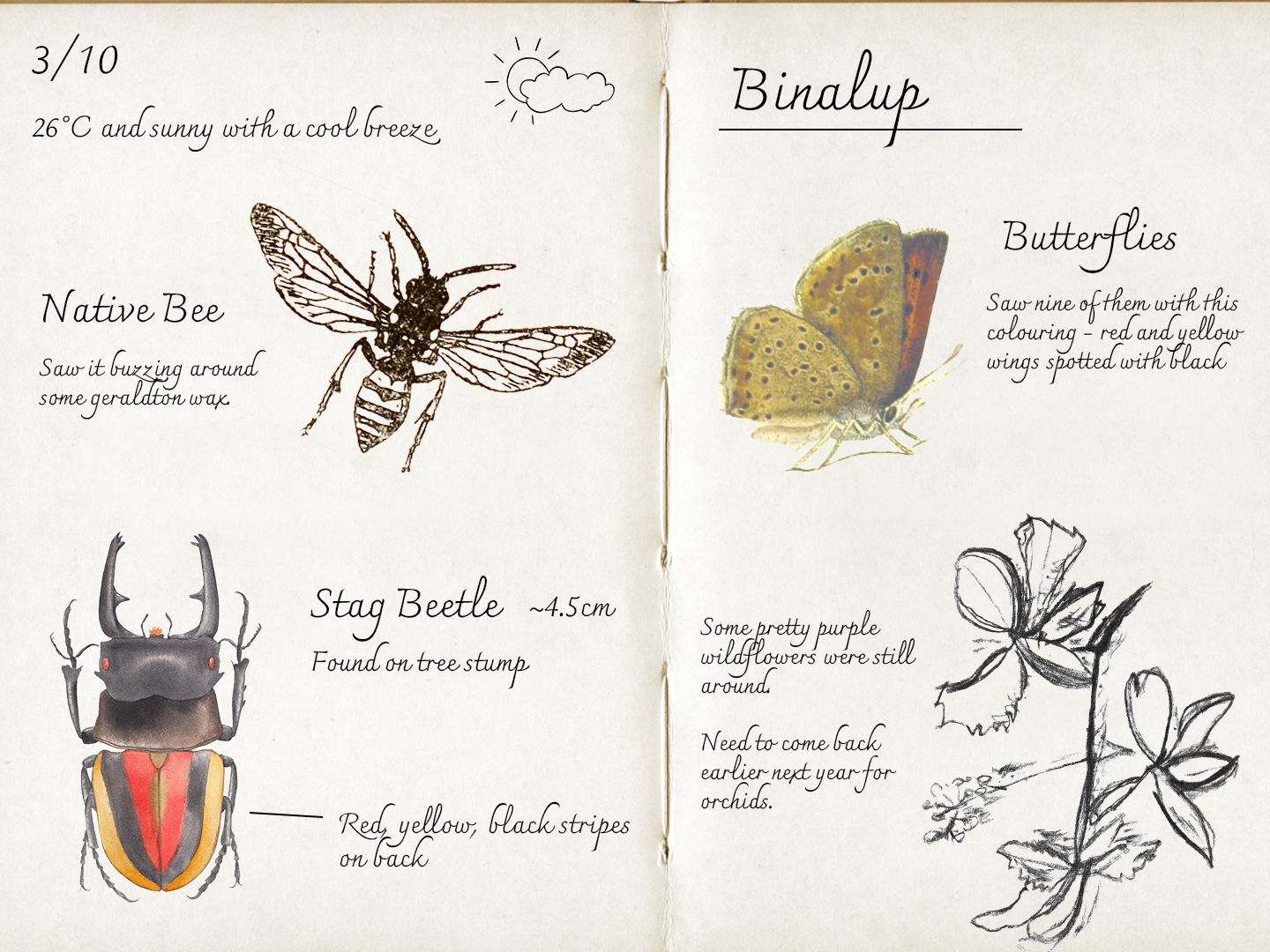
Nature journalling is the practice of drawing, writing and observing nature. It blends art and science and fosters deep connection and curiosity.

The goal is not perfection or artistic talent, but rather the art of observation itself. It creates a snapshot of every sight, smell and feeling from that moment in time.
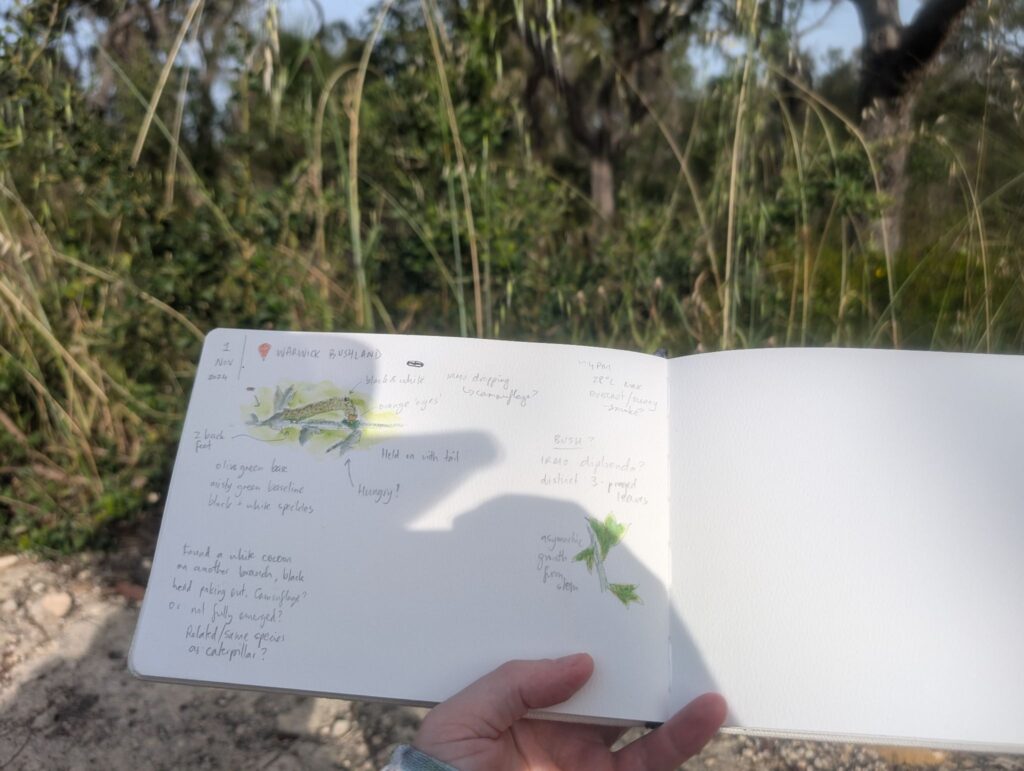
Caption: Bringing a sketchbook on every outdoor adventure can be as educational as it is therapeutic. This page about Warwick Bushland illustrates how careful observation and inquiry can unfold in a pocket of Perth bushland.
Credit: Kim Lapere

ORIGINS OF THE OBSERVER

Scientists have been using illustration for millennia. Charles Darwin’s diary was filled with sporadic sketches that formed the building blocks for the theory of evolution.

In his notebook he wrote, “Let the collector’s motto be, ‘Trust nothing to the memory;’ for the memory becomes a fickle guardian.”

In the days of exploration, it allowed scientists to immortalise their thoughts.

While field journals have been usurped by digital photography, the value of putting pen to paper remains.

MEMOIRS FOR MENTAL HEALTH

Today, nature journalling has evolved into a popular educational and therapeutic hobby. Being in nature is proven to improve mood, reduce stress and restore attention.

One study found that after just one hour-long nature journalling workshop, high school students felt more peaceful, connected to their emotions and had a stronger awareness of nature.

Instead of iPad kids, nature journalling is raising sketchpad kids. Feeding curious minds with slow learning and careful noticing is rekindling environmental connection and stewardship for the planet.
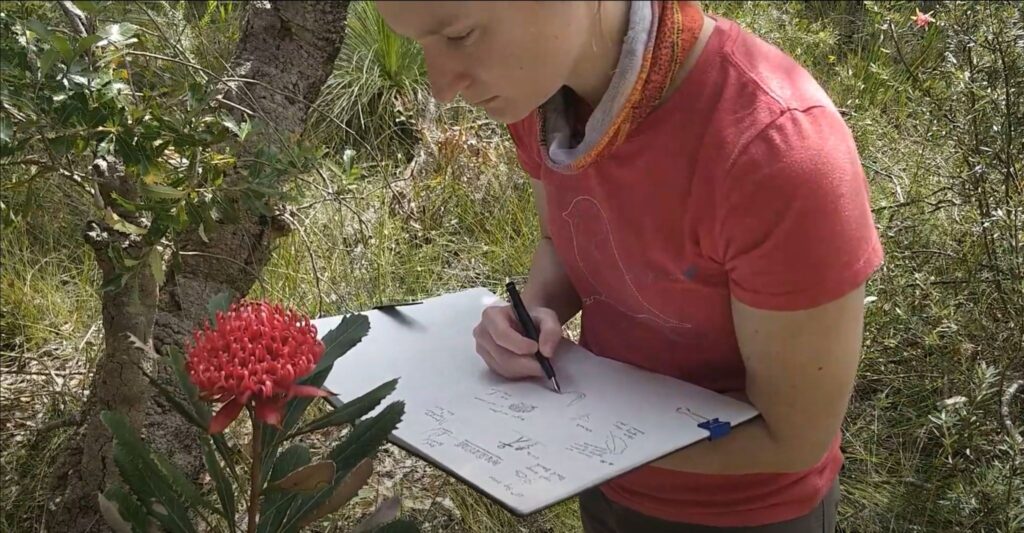
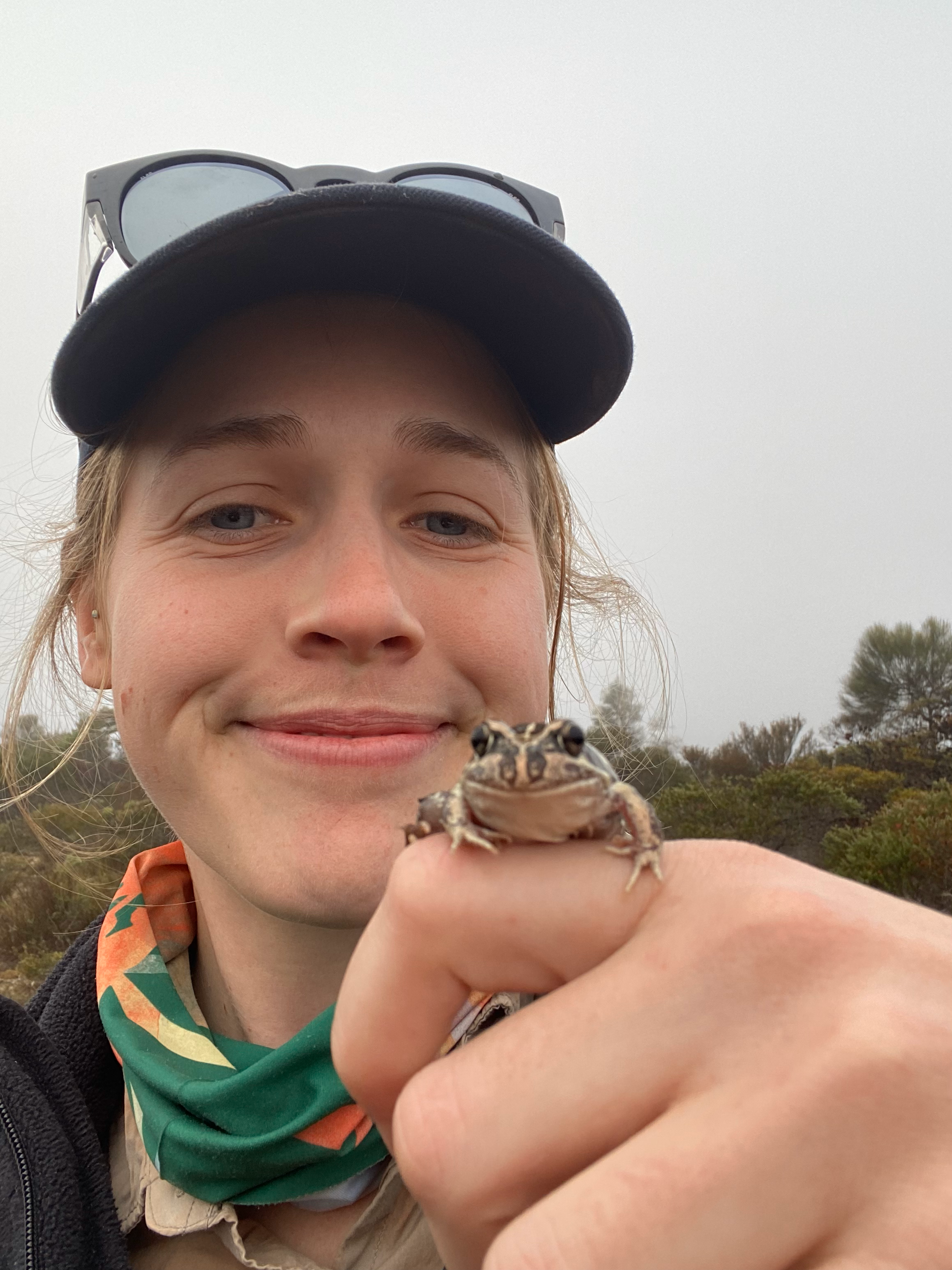
Caption: Kim Lapere is an educator, scientist and nature journaller who founded the Perth Nature Journaling Club in 2021, a community for people to share their work, learn new skills and meet new people. 
Credit: Kim Lapere

COMMUNITY OF CURIOSITY

Beyond the classroom, place-based learning can help nature journallers connect with their surroundings and one another.

Learning is a social process and the act of observing together is helping people combat social isolation.

Grassroots nature journalling groups are blossoming across Australia. The Australian Nature Journaling Association connects people and places. 

Closer to home, the Perth Nature Journal Club has built a community of people who sketch, write and observe together.
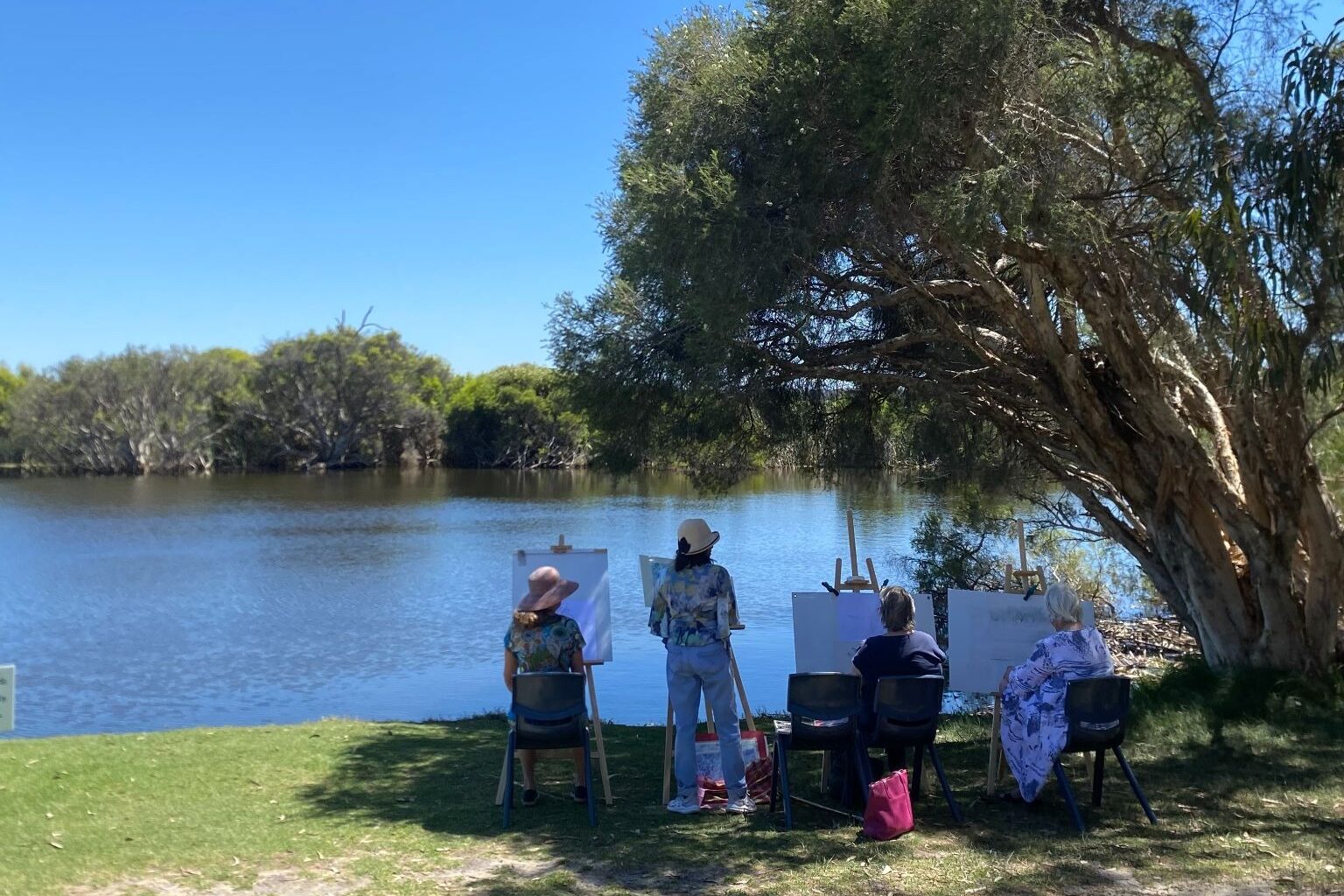
Caption: A nature journalling event at Herdsman Lake. 
Credit: Kelly Hopkinson

LEARNING A NEW LEAF

All you need to get started is a pencil, sketchbook and an awe-like wonder about the world.

You don’t have to be surrounded by rugged wilderness, everyday encounters with nature are equally inspiring. 

The magpie on your front porch or the spiderweb on your windowsill are excellent places to start.

Next time you’re outside, consider swapping your smartphone for a notebook.

Extend an olive branch or maybe paint one with your neighbour.
Kelly Hopkinson
About the author
Kelly Hopkinson
Kelly is a zoologist, science communicator and nature enthusiast. With a background in conservation biology and a childhood spent in the outback you’ll often find her hiking or getting lost in the bush. She enjoys knitting in unusual places, sharing obscure facts with anyone who’ll listen and firmly believes Dad jokes are always funny.
View articles
Kelly is a zoologist, science communicator and nature enthusiast. With a background in conservation biology and a childhood spent in the outback you’ll often find her hiking or getting lost in the bush. She enjoys knitting in unusual places, sharing obscure facts with anyone who’ll listen and firmly believes Dad jokes are always funny.
View articles

NEXT ARTICLE

We've got chemistry, let's take it to the next level!

Get the latest WA science news delivered to your inbox, every fortnight.

This field is for validation purposes and should be left unchanged.

Republish

Creative Commons Logo

Republishing our content

We want our stories to be shared and seen by as many people as possible.

Therefore, unless it says otherwise, copyright on the stories on Particle belongs to Scitech and they are published under a Creative Commons Attribution-NoDerivatives 4.0 International License.

This allows you to republish our articles online or in print for free. You just need to credit us and link to us, and you can’t edit our material or sell it separately.

Using the ‘republish’ button on our website is the easiest way to meet our guidelines.

Guidelines

You cannot edit the article.

When republishing, you have to credit our authors, ideally in the byline. You have to credit Particle with a link back to the original publication on Particle.

If you’re republishing online, you must use our pageview counter, link to us and include links from our story. Our page view counter is a small pixel-ping (invisible to the eye) that allows us to know when our content is republished. It’s a condition of our guidelines that you include our counter. If you use the ‘republish’ then you’ll capture our page counter.

If you’re republishing in print, please email us to let us so we know about it (we get very proud to see our work republished) and you must include the Particle logo next to the credits. Download logo here.

If you wish to republish all our stories, please contact us directly to discuss this opportunity.

Images

Most of the images used on Particle are copyright of the photographer who made them.

It is your responsibility to confirm that you’re licensed to republish images in our articles.

Video

All Particle videos can be accessed through YouTube under the Standard YouTube Licence.

The Standard YouTube licence

  1. This licence is ‘All Rights Reserved’, granting provisions for YouTube to display the content, and YouTube’s visitors to stream the content. This means that the content may be streamed from YouTube but specifically forbids downloading, adaptation, and redistribution, except where otherwise licensed. When uploading your content to YouTube it will automatically use the Standard YouTube licence. You can check this by clicking on Advanced Settings and looking at the dropdown box ‘License and rights ownership’.
  2. When a user is uploading a video he has license options that he can choose from. The first option is “standard YouTube License” which means that you grant the broadcasting rights to YouTube. This essentially means that your video can only be accessed from YouTube for watching purpose and cannot be reproduced or distributed in any other form without your consent.

Contact

For more information about using our content, email us: particle@scitech.org.au

Copy this HTML into your CMS
Press Ctrl+C to copy