

You might be interested

Australia is the driest inhabited continent on Earth. Somehow, it feels like it’s getting hotter and drier every day.
Soaring temperatures result in an immense and complex process of soil degradation and, ultimately, desertification.
Desertification often starts with deforestation. Australia is the only developed nation on the list of global deforesting hotspots, which is a major concern for the future of our soils.
WA is an extremely high-risk area for desertification. The state’s South West is receiving 20% less rain than in the 1970s.
It’s an alarming trend as temperatures continue to soar, and our scorching summers seem to drag out so long it feels like somebody forgot to turn the oven off.
DRY AND GETTING DRIER
Technically, a desert is any ecosystem that receives less than 25 centimetres of rainfall a year.
There are always species of flora and fauna that have evolved to inhabit even the most inhospitable niches.
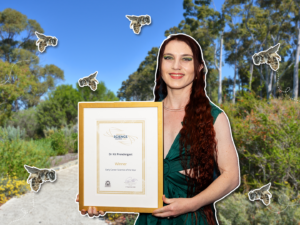
Dr Miriam Muñoz-Rojas is a soil scientist and an honorary senior lecturer at UNSW who has studied Australian soils for many years.
She says it’s completely natural to have arid ecosystems.
“Deserts are perfectly normal,” says Miriam.
“The problem is change.”
Issues arise when ecosystems transform over very short time periods.
“Desertification is when you push that to the limit,” she says.
HOW BAD IS BAD?
“There are some areas that are very, very damaged because of European settlement,” says Miriam. “There was a lot of clearing of land that hasn’t been restored.”
She says mining, overgrazing, erosion and salinity are threats to soil health in WA.
The land has been destroyed by urbanisation, agricultural activity and hooved animals all across the state.
Australia separated from the Gondwanan supercontinent millions of years before ungulates evolved, so our ecosystems were unprepared for the European invasion.
Instead, those ecological niches were filled by soft-footed marsupials – like kangaroos – which means our vegetation is particularly susceptible to overgrazing, trampling and compaction.
Once the earth is cleared and compacted, desertification – a transition to desert-like conditions – can occur. Desertification can render once fertile crescents to barren plateaus of desolation.
Many areas in Australia are contaminated by pesticides, fertiliser run-off, human waste, nuclear waste or even worse.
Wittenoom – an ex-mining town just north of Karijini National Park – has been abandoned for decades due to a leaked blue asbestos mine. It’s deemed “the largest contaminated site in the southern hemisphere”.
JUST DESSERTS OR JUST DESERTS?
In 2021, Australia introduced the National Soil Strategy. It recognises the “vital role of soils for environmental and human health, the economy, food security, biodiversity and climate resilience”.
Miriam says that, while this is a great start, it’s not at the level of European soil science laws.
In Australia, there are no real penalties.
“It’s not a law. It’s an initiative,” says Miriam.
“It’s the first initiative that looks at soil as something more than just dirt.”
“The soil is not a renewable resource. It belongs to everyone.”
AN INGENIOUS OASIS
On the ground, solutions can be hard to dig up.
The horizon is particularly bleak given the unbridled growth of our cattle industry, which has declared 2026 the largest in 50 years, due to more animals being exported and those animals being fatter than ever.
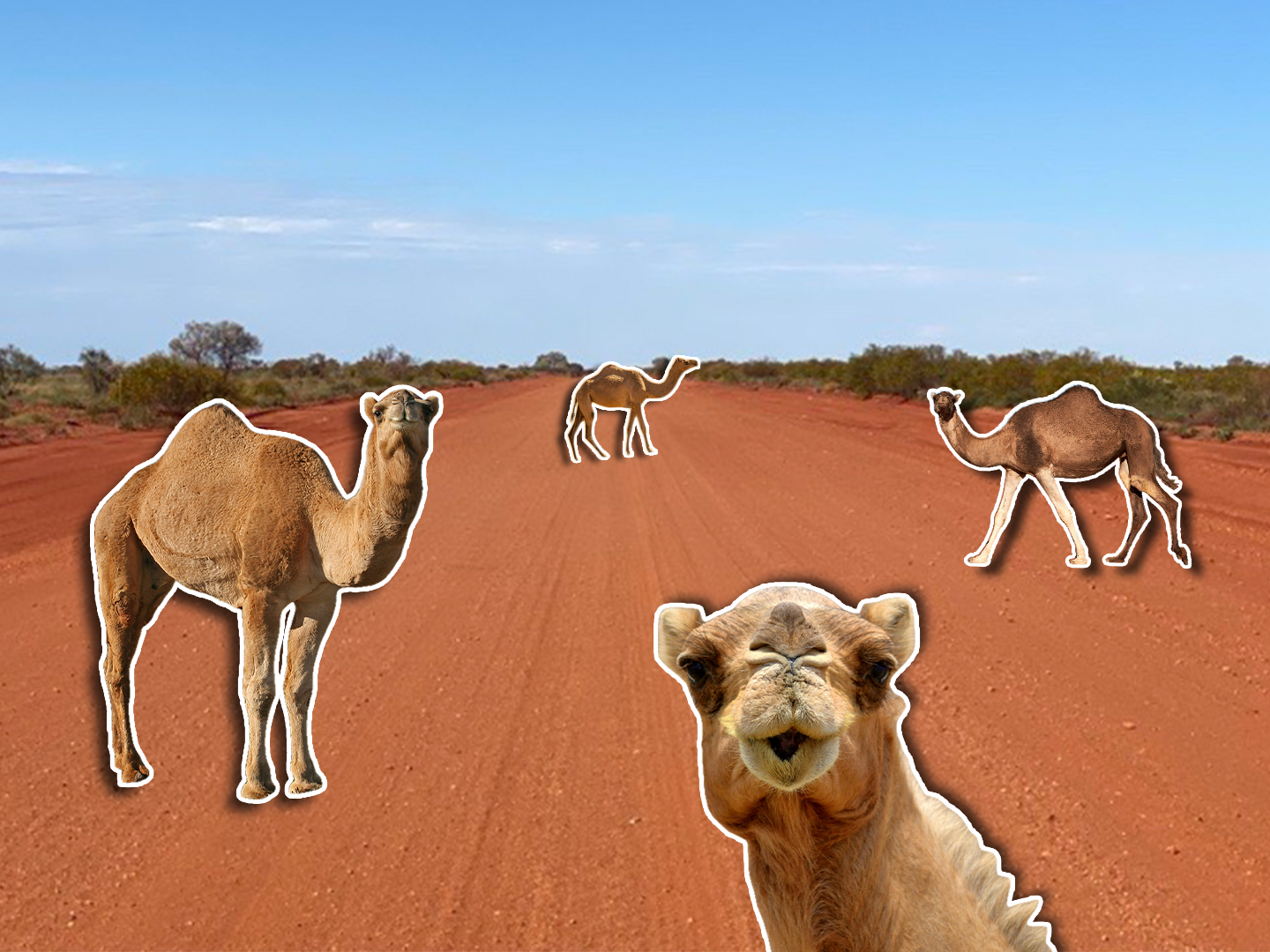
There’s forecast to be more cattle than people in Australia this year. That’s not to mention the millions of sheep, goats, pigs, camels, deer and horses, which all compact the soil too.
Some potential solutions include reforestation, more sustainable land management, mosaic burning and water conservation.
Left unchecked, desertification can become a negative feedback loop, where dust particles block precipitation, which raises temperatures, which leads to more dust, which leads to even less rain, and on and on.
IS THAT A MIRAGE?
Australia has battled degradation and desertification since colonisation.
Without action, these processes will banish wildlife, condemn forests and potentially render the future of the country an inhospitable Mad-Maxian dystopia.
The solution requires a nuanced approach.
You will be shocked to hear that cows have not evolved to survive in desert conditions, for one.
In the end, it won’t matter how strong our live-export industry is. If all of Australia becomes a desert, there really won’t be much left to export.
“It’s all about finding a balance,” says Miriam. “Being productive and also trying to treat the land in a sustainable way.”
“It’s an investment. And like we’ve seen with climate change, some are not willing to invest in change.”
Miriam suggests targeted approaches to specific areas, taking into account local conditions and involving all stakeholders.
“We need to protect the soils, because there’s no turning around.”