

You might be interested
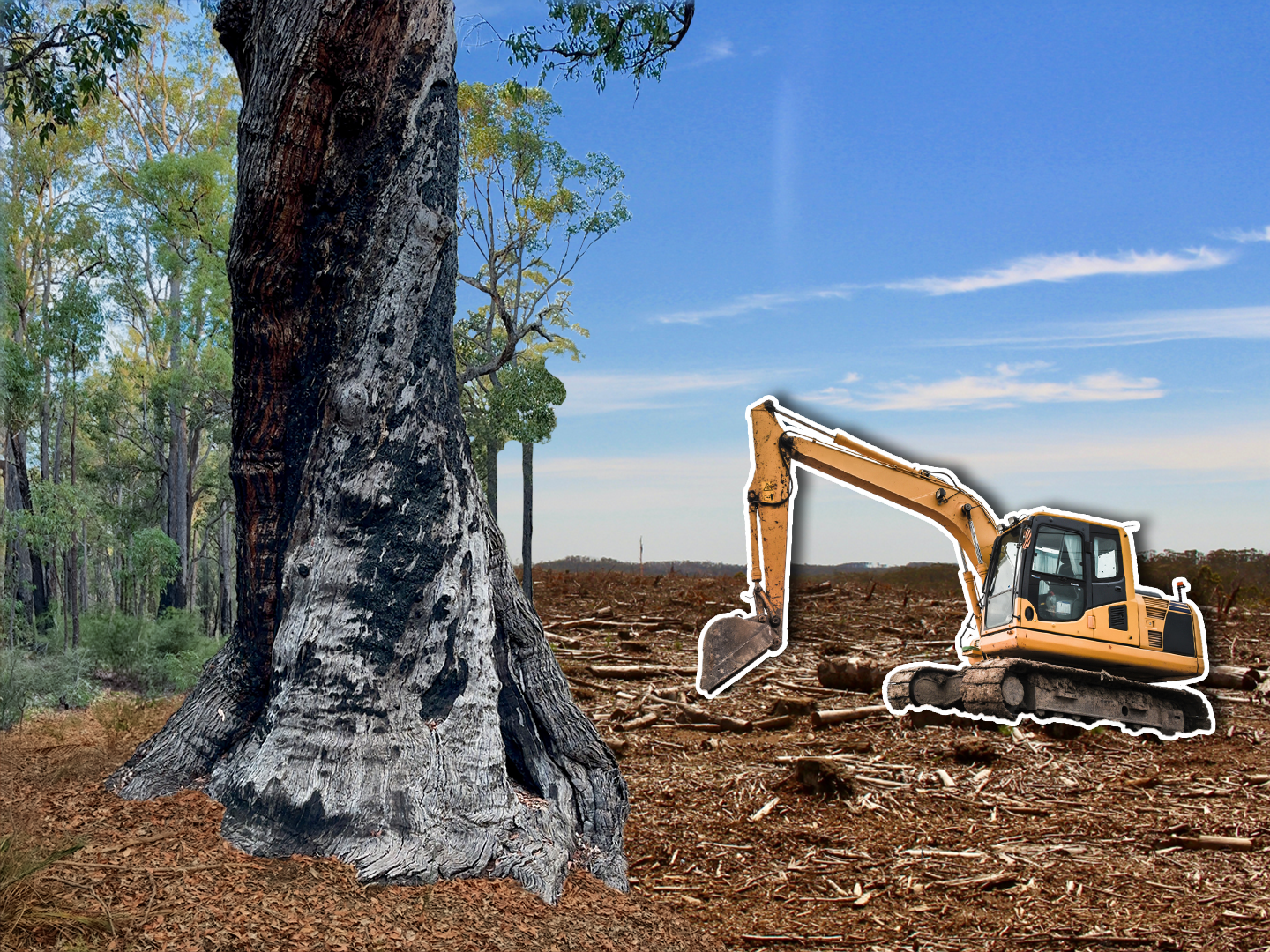
In February, mining company Alcoa was hit with a $55 million penalty for illegally clearing about 2,000 hectares of WA’s Northern Jarrah Forest.
About $40 million was earmarked for so-called “permanent ecological offsets”, for Alcoa to repair the damage in terms of ecology lost.
In the same breath as imposing the fine, Federal Environment Minister Murray Watt also granted Alcoa an exemption.
This exemption allows Alcoa to continue mining for at least 18 months as Watt mulls a proposal to extend the company’s mining operations until 2045.
This decision may rest on a critical minerals deal struck between Australia and the US last year.
A unique bioregion
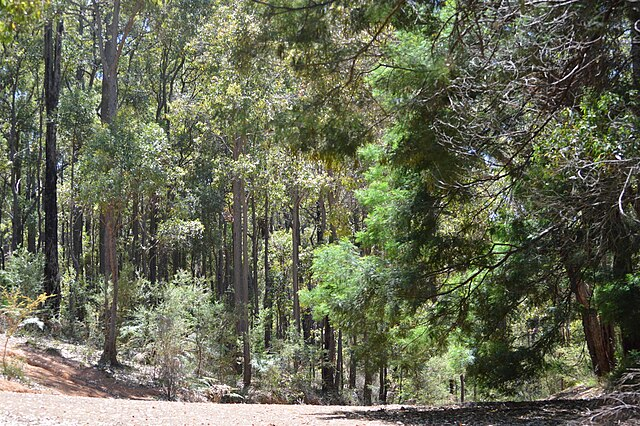
The Northern Jarrah Forest is a subregion in the sprawling jarrah forest bioregion, located south and east of Perth.
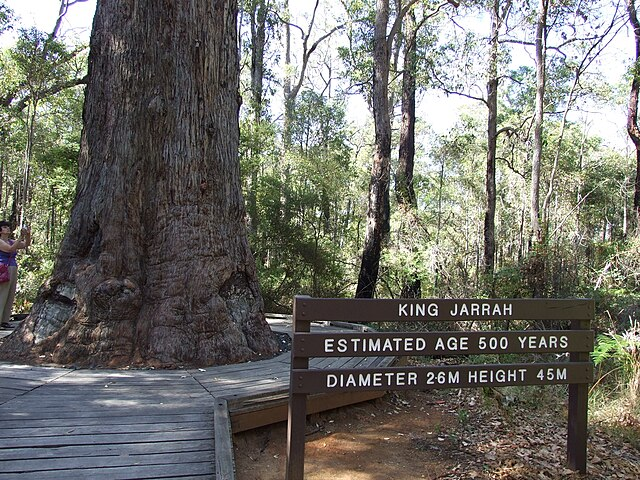
Jarrah trees (Eucalyptus marginata) – known in Noongar as djarraly – are tall, straight-growing trees whose timber has historically been in high demand.
The South West of WA is the only place on Earth that plays host to the jarrah forest ecosystem, which was ostensibly protected when the WA Government banned commercial native forest logging in 2024.
For at least 60 years, Alcoa has mined the vast layer of bauxite that stretches beneath the forest, clearing an estimated 28,000 hectares out of the roughly 1.8 million hectare region.
Credit: Team Flower/Wikimedia Commons
What is being mined?
Bauxite is a reddish, clay-like rock with a high aluminium content. It is refined into a white alumina powder then smelted into solid aluminium metal.
Australia is the world’s second major producer and biggest exporter of alumina.
Demand for aluminium is rising, in part for its use in ‘green technology’, including electric vehicles and renewable energy infrastructure.
The World Economic Forum predicts demand to increase by 40% by 2030.
While Alcoa is required to restore any land it clears, a 2024 study found that cleared jarrah forest sites were not being rehabilitated to their pre-mining state.
Competing interests
The problem is there are two giants competing for this landscape – the mining company and the sprawling old-growth forest that grows atop it, as Kingsley Dixon points out.
Kingsley is a botanist at the University of Western Australia (UWA). He believes the multilayered bauxite deposits structure the ground, aiding water retention, which the northern jarrah forest has evolved to exploit.
“It’s a geological relationship between the forest and the bauxite,” says Kingsley. “You’re fundamentally removing the very substrate that’s created this extraordinary forest.”
However, the science behind how bauxite and jarrah trees in this region support one another has not been extensively studied.
Jarrah trees are slow growing, meaning they recover on scales of centuries, not decades.
Credit: Tam/Wikimedia Commons
Professor Stephen Hopper, a botanist and conservation biologist at UWA, says that the many other plant and animal species beneath the jarrah canopy also need to recover or the whole ecosystem crumbles.
“As with all Mediterranean climate areas, it’s really the shrub layer, the plants that are below the canopy, that are incredibly diverse,” says Stephen.
“There are complications with trying to get stuff like that back into the landscape.”
What do we stand to lose?
In 2023, a group of scientists released a statement with more than 150 signatories calling for a total halt to mining operations in the Northern Jarrah Forest. They warned of a potential “extinction catastrophe”.
The Northern Jarrah Forest is among the most biodiverse temperate forests on Earth, with more than 800 native plant species and at least 10 endangered animal species.
The South West global biodiversity hotspot – of which the Northern Jarrah is a part – boasts more than 8,000 species.
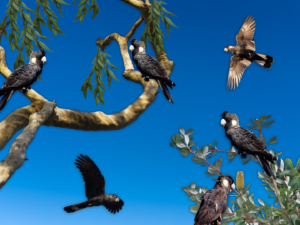
Around 80% of these aren’t found anywhere else on Earth, including the critically endangered Baudin’s cockatoo, the western quoll and several rare orchid species
Alarmingly, Stephen says that about two-thirds of the threatened plant and animal species in this bioregion live in the uplands, which is where bauxite mining tends to happen.
“Bauxite is deepest and richest in the remnant fragments that are highest in the landscape,” says Stephen.
“The notion of extending the mining leases to take out substantial further areas without having a clear biological understanding of how to care for this stuff is of concern.”