


READ

Particle 101: BMI

It’s not all that it’s hyped up to be.
Zaya Altangerel
Zaya Altangerel
Freelance Writer
Particle 101: BMI

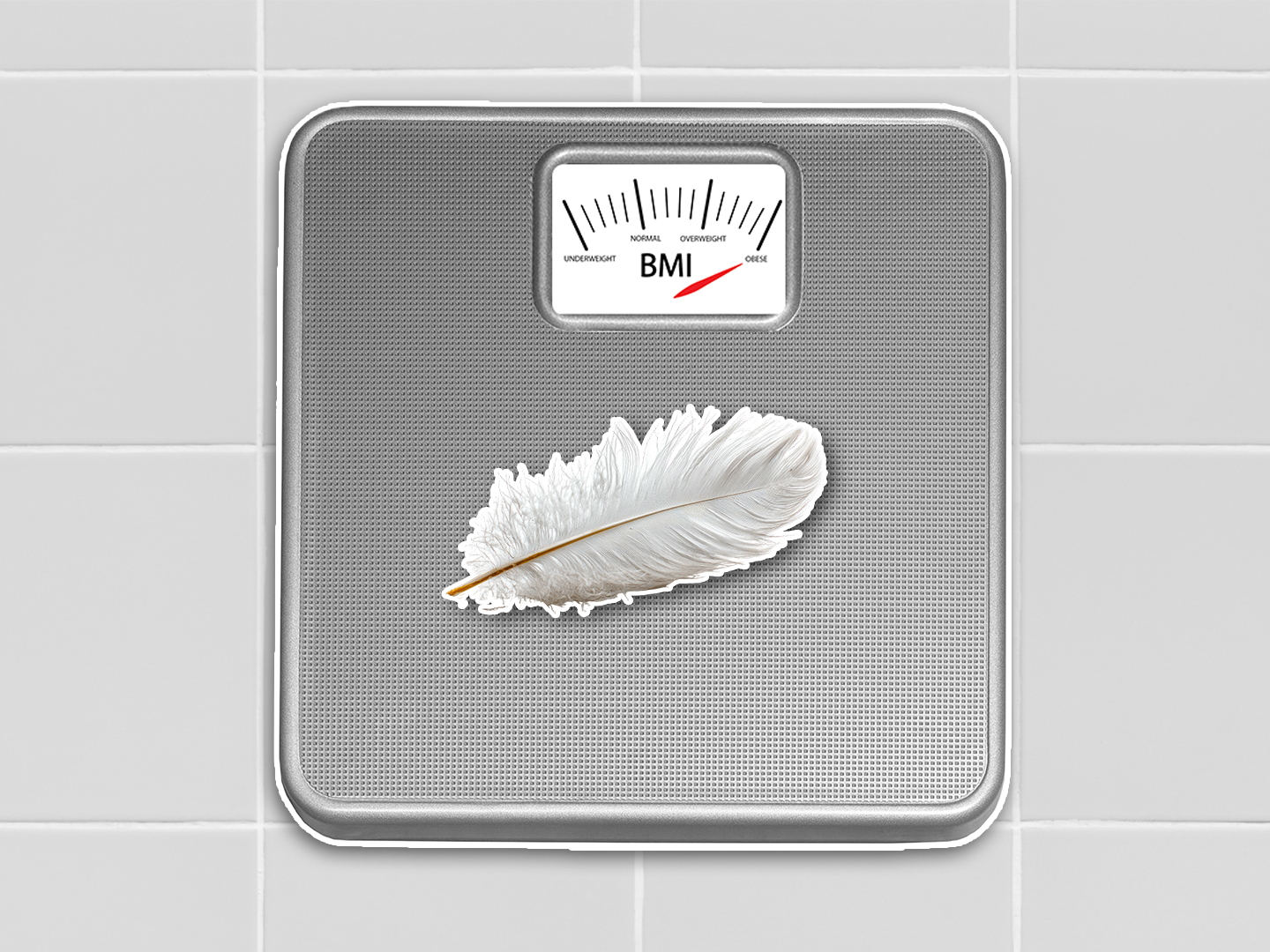
Body mass index (BMI) is a simple mathematical formula widely used to quickly gauge someone’s health. 

BMI = weight (kg) divided by height squared (m2). 

Its simplicity and cost-effectiveness makes BMI a popular health tool, but it’s based on some problematic logic. 

NOT A DOCTOR

In the early 19th century, Belgian astronomer and mathematician Lambert Adolphe Quetelet was on a mission to find the ‘average man’. 

He believed if he collected enough data on measurable characteristics such as weight and height, the average values would represent what the perfect human should be like. 

Of course, Quetelet only collected data from Western European men

During his studies, Quetelet saw a pattern between height and weight. In 1832, he created the ‘Quetelet index’, which is weight (kg) divided by height squared (m2). 

ONE SIZE FITS ALL

In 1972, American physiologist Ancel Keys decided to find a simple method to predict an individual’s chances of developing a chronic disease.

He was inspired by the logic used by American health insurance companies to calculate their premiums. 

Although Keys coined the term BMI, neither he nor Quetelet created BMI categories. 

This was done by the World Health Organization following a 1995 report by an expert committee. 

The BMI categories are: 

  • Underweight: BMI under 18
  • Normal: BMI 18.5–24.9
  • Overweight: BMI 25.0–29.9 
  • Obese: BMI over 30

These parameters are applied to all adults regardless of their race, age, sex or other influential health conditions, like a physical disability. 

A BETTER WEIGH

Strange origins aside, medical professionals agree that the BMI’s biggest flaw is that it doesn’t differentiate fat from other forms of mass in the human body.

A professional athlete with low levels of body fat could have a BMI over 30 (obese) because of their high levels of muscle and bone mass, which is denser than fat. 

Or an elderly person with very little muscle mass but high levels of fat could have a BMI within the normal or underweight range. 

In both scenarios, the true health status of these individuals is incorrectly masked by their BMI. 

Unlike BMI, there’s a proven correlation between an individual’s body fat percentage and their general health. 

If an individual has most of their body fat stored around their belly, they have a higher risk of developing a chronic disease, which cannot be captured by someone’s overall weight. 

Health professionals currently recommend measuring waist circumference as a far more accurate way to quickly gauge an individual’s health – not BMI. 

Zaya Altangerel
About the author
Zaya Altangerel
Zaya is a writer with a question for everyone and everything, but she's especially interested in music, food and science.
View articles
Zaya is a writer with a question for everyone and everything, but she's especially interested in music, food and science.
View articles

NEXT ARTICLE

We've got chemistry, let's take it to the next level!

Get the latest WA science news delivered to your inbox, every fortnight.

This field is for validation purposes and should be left unchanged.

Republish

Creative Commons Logo

Republishing our content

We want our stories to be shared and seen by as many people as possible.

Therefore, unless it says otherwise, copyright on the stories on Particle belongs to Scitech and they are published under a Creative Commons Attribution-NoDerivatives 4.0 International License.

This allows you to republish our articles online or in print for free. You just need to credit us and link to us, and you can’t edit our material or sell it separately.

Using the ‘republish’ button on our website is the easiest way to meet our guidelines.

Guidelines

You cannot edit the article.

When republishing, you have to credit our authors, ideally in the byline. You have to credit Particle with a link back to the original publication on Particle.

If you’re republishing online, you must use our pageview counter, link to us and include links from our story. Our page view counter is a small pixel-ping (invisible to the eye) that allows us to know when our content is republished. It’s a condition of our guidelines that you include our counter. If you use the ‘republish’ then you’ll capture our page counter.

If you’re republishing in print, please email us to let us so we know about it (we get very proud to see our work republished) and you must include the Particle logo next to the credits. Download logo here.

If you wish to republish all our stories, please contact us directly to discuss this opportunity.

Images

Most of the images used on Particle are copyright of the photographer who made them.

It is your responsibility to confirm that you’re licensed to republish images in our articles.

Video

All Particle videos can be accessed through YouTube under the Standard YouTube Licence.

The Standard YouTube licence

  1. This licence is ‘All Rights Reserved’, granting provisions for YouTube to display the content, and YouTube’s visitors to stream the content. This means that the content may be streamed from YouTube but specifically forbids downloading, adaptation, and redistribution, except where otherwise licensed. When uploading your content to YouTube it will automatically use the Standard YouTube licence. You can check this by clicking on Advanced Settings and looking at the dropdown box ‘License and rights ownership’.
  2. When a user is uploading a video he has license options that he can choose from. The first option is “standard YouTube License” which means that you grant the broadcasting rights to YouTube. This essentially means that your video can only be accessed from YouTube for watching purpose and cannot be reproduced or distributed in any other form without your consent.

Contact

For more information about using our content, email us: particle@scitech.org.au

Copy this HTML into your CMS
Press Ctrl+C to copy