

You might be interested
It’s been a rough year for the Nyinggulu (Ningaloo) Reef.
A devastating bleaching event resulted in mass coral death, followed by ex-Tropical Cyclone Narelle wreaking further havoc on the area.
Unfortunately for Nyinggulu, ex-Cyclone Narelle hit the region on 27 March – smack bang in the middle of coral spawning season.
AN AMAZING EVENT
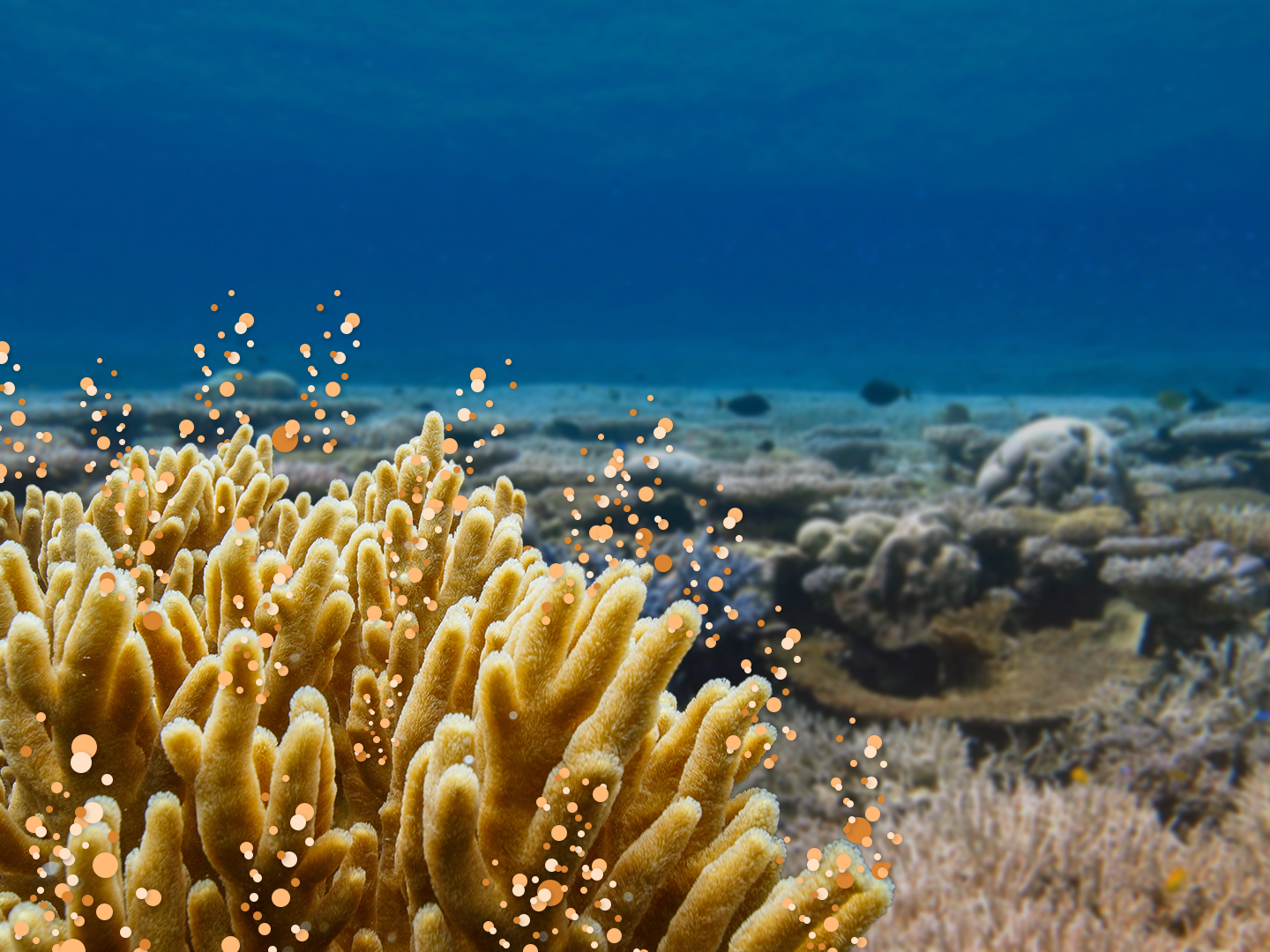
Coral spawning is an annual event in which coral reproduce, typically at night and following a full Moon.
This occurs in March or April at Nyinggulu, with 2026 being a special split spawning. This means it spawned twice in a year – once in March and again in April.
“It’s when [coral] eggs and sperm are released into the water column all at once,” says Dr Jenny Shaw, Research Director at the Western Australian Marine Science Institution (WAMSI).
“Lots of different coral types spawn all at once and there is so much activity in the water.”
This creates a ‘slick’ on the water surface of the ocean where the eggs and sperm fertilise, developing into larvae that sink to the bottom, settle on a hard surface and, if the conditions are right, eventually grow into corals.
A THREATENED SPAWNING
The bleaching and coral death across the reef last year meant there was some apprehension around the spawning, even without a cyclone on the cards.
“We were quite worried about what would happen in terms of the coral spawning this year,” says Jenny.
“There were a lot less corals able to spawn.”
And then the cyclone hit. Stressful barely cuts it.
“The logistics of getting 12 scientists and vessels into that area were incredibly difficult,” says Jenny.
“But we just felt if there was going to be a spawning, we really had to be there to try and collect the coral spawn and to try to increase the amount of coral babies on the reef.”
Credit: Supplied by WAMSI
REGENERATING THE REEF
The WA Reef Regen Program – led by WAMSI and funded by the WA State Government and philanthropic partners – is a multi-year program to support the long-term health and resilience of the reef.
“After the heatwave event last year, there was a huge push from community, Traditional Owners and scientists that something had to be done,” says Jenny.
Within the program, there will be lots of different projects, the first being the Healing Sea Country: Nyinggulu Coral Larval Enhancement Trial, which remarkably was up and off the ground in just 2 months.
WAMSI works with a number of partners, and Jenny says the rapid rate of planning and delivery of this project “shows an enormous amount of collaboration”.
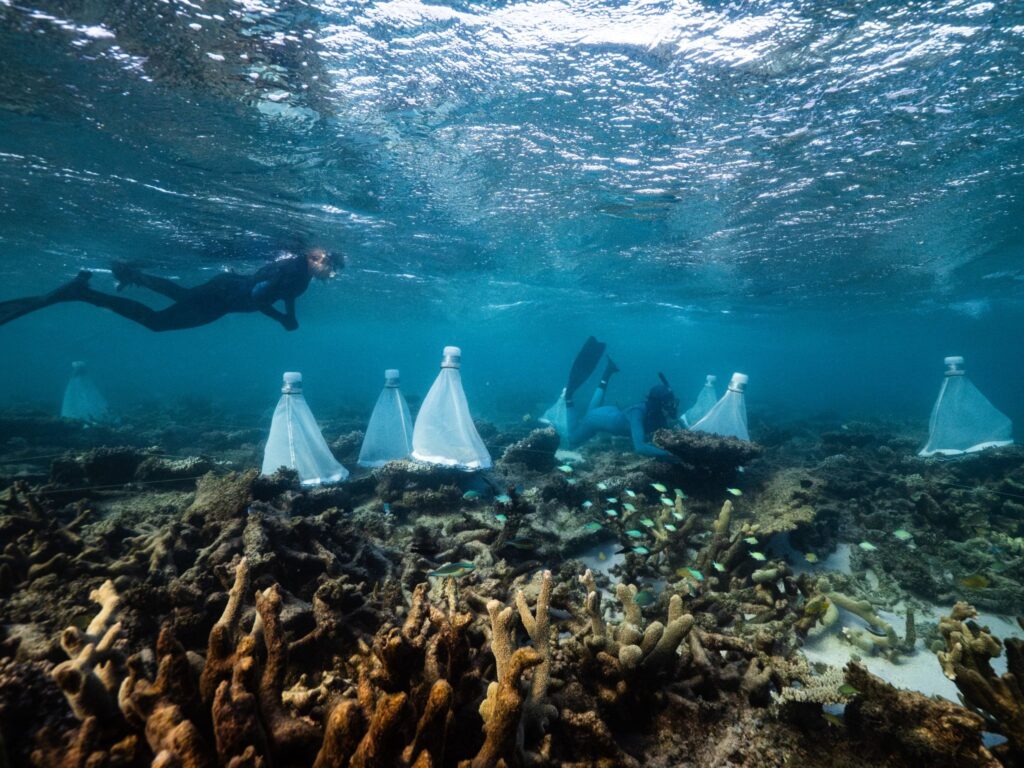
The Larval Enhancement Trial saw Jenny and her team go out on boats and scoop up the slick created by the spawn.
“We then transferred it into large ponds that are floating in the ocean – to protect it so fish don’t eat it!” says Jenny.
“It’s kept in the ponds until fertilisation occurs.
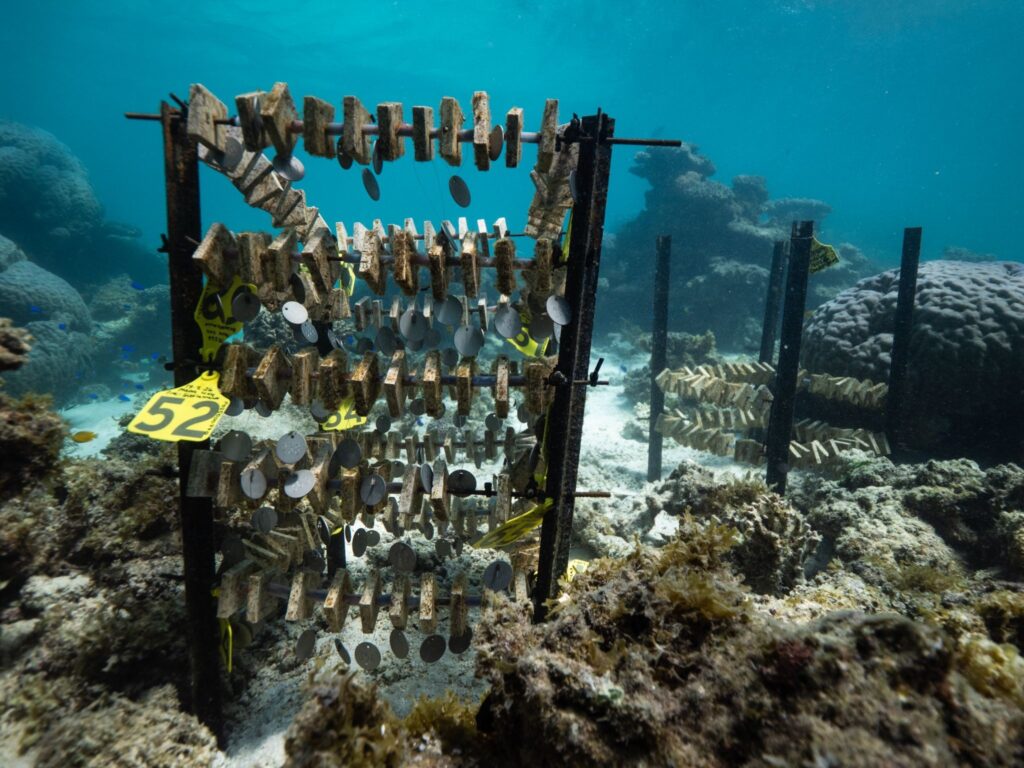
“We settle the spawn of the larvae onto tiles and then put those out in the reef.”
Credit: Supplied by WAMSI
A ROADMAP FOR THE REEF
It’s too early to tell how damaging ex-Cyclone Narelle has been on the Nyinggulu Reef and the impact on this year’s spawning.
Jenny says it will take several more months to properly understand the full picture.
“DBCA, AIMS and CSIRO will be monitoring the areas, and their information is not back yet,” she says.
However, Jenny and her team have already seen some promising results from their efforts over the spawning season, including the tiles placed in the March spawn, before the cyclone hit.
“They’ve survived the cyclone. There was some damage, but amazingly, a lot of the tiles are still there.”
With WAMSI releasing the Roadmap for West Australian Reef Regen in July, more scientists will head for Nyinggulu, working hard to give the reef its best chance of survival.