

READ

Particle 101: The (Un)Feasibility of Space Data Centres

No, launching data centres into space is not a good idea.
Keelan Powell
Keelan Powell
Science Communicator
Particle 101: The (Un)Feasibility of Space Data Centres

Data centres are buildings filled with racks of processors and other assorted components that run various tasks too big for ordinary computers.

Like any computer, they consume energy, produce heat and take up space. 

But while most computers have one or two processors, data centres have tens of thousands. 

Enough that their energy, space and cooling requirements have serious environmental impacts.

To minimise these impacts, could space offer a solution? 

Space is extremely cold, there’s infinite, uninterrupted solar power and a lot of, well … space.

Unfortunately, it’s not that simple.

Keeping Cool

Space is cold, but it’s also empty. There’s no matter for conduction or convection, so the only way to lose heat is by radiation. 

The radiators required to keep a satellite cool are enormous – the ones on the International Space Station (ISS) are each 13.6 metres long and can output 14 kilowatts of heat.
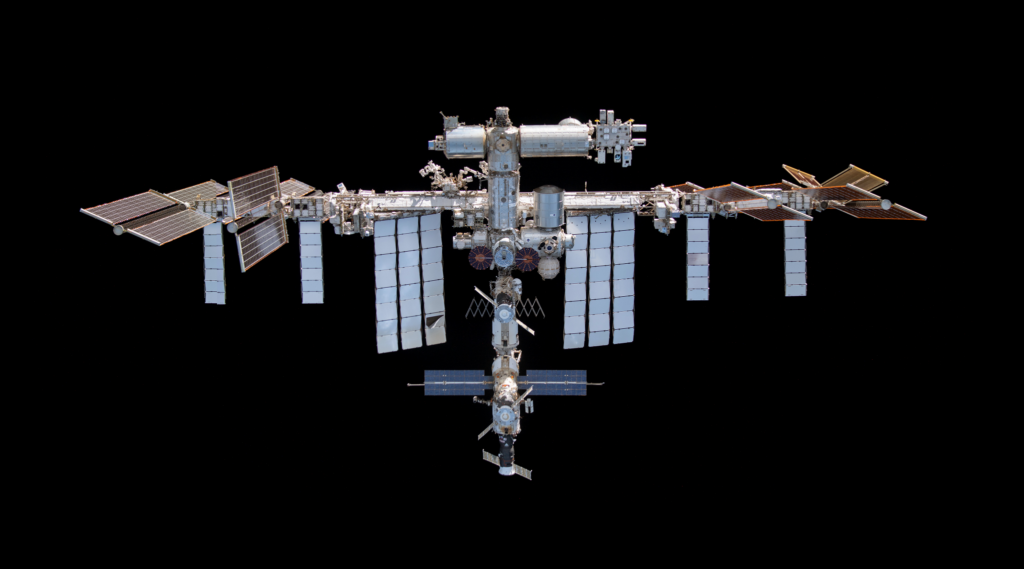
Caption: The ISS with its large, white radiators clearly visible.
Credit: NASA, 2023. Public Domain

Data centres produce megawatts (MW) of heat. A 1 MW space data centre would need 70 ISS radiators to stay cool – enough to cover the area of seven basketball courts.

While such a cooling system is theoretically possible, it would be extremely costly to get it into orbit. 

Space is Expensive

While prices are going down, it’s expensive to launch a satellite. Thousands of dollars per kilogram. 

Data centre processors each weigh around 100 grams. Tens of thousands collectively weigh several tonnes and would cost millions to get into orbit. 

And that’s just the processors. No brackets, racks, wiring or any other components.

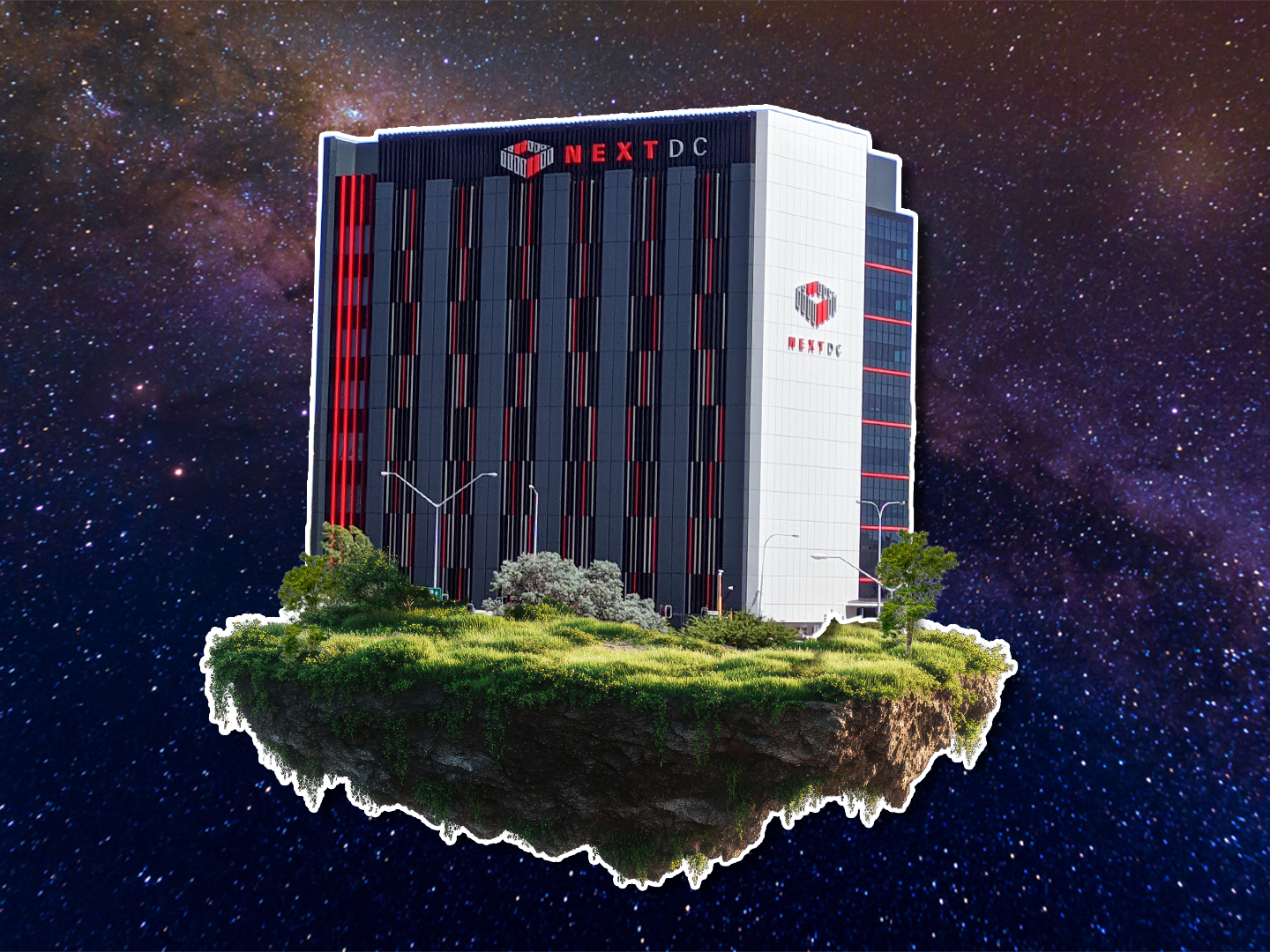
Caption: The NEXTDC building in Perth is a data centre. Imagine trying to send that to space.
Credit: Samuel Wiki, 2021. Public Domain

Constellations, Not Stations

Constellations of satellites might be more viable for space data processing, with each satellite completing one small part of a larger task. 

It’s an idea the European Space Agency is pursuing to help refine the immense datasets produced by observation satellites before they’re sent to Earth.

However, there are risks. The more satellites we put in space, the likelier collisions become

Much of modern life relies on orbital infrastructure. It’s estimated that 18% of UK GDP relies on satellite services like GPS, time keeping and weather forecasting.

Data centres are equally essential because they maintain all the functions and features of the internet.

Is it worth the risk to send another critical industry to space? Or might discretion be a better avenue to data centre sustainability?


Keelan Powell
About the author
Keelan Powell
Keelan is a science communicator and an author of science fiction and fantasy. He has a background in physics, creative writing, literary theory, and science communication. Keelan enjoys bringing science to art and art to science and thrives in the beautiful chaos that always ensues when the two fields mix.
View articles
Keelan is a science communicator and an author of science fiction and fantasy. He has a background in physics, creative writing, literary theory, and science communication. Keelan enjoys bringing science to art and art to science and thrives in the beautiful chaos that always ensues when the two fields mix.
View articles

NEXT ARTICLE

We've got chemistry, let's take it to the next level!

Get the latest WA science news delivered to your inbox, every fortnight.

This field is for validation purposes and should be left unchanged.

Republish

Creative Commons Logo

Republishing our content

We want our stories to be shared and seen by as many people as possible.

Therefore, unless it says otherwise, copyright on the stories on Particle belongs to Scitech and they are published under a Creative Commons Attribution-NoDerivatives 4.0 International License.

This allows you to republish our articles online or in print for free. You just need to credit us and link to us, and you can’t edit our material or sell it separately.

Using the ‘republish’ button on our website is the easiest way to meet our guidelines.

Guidelines

You cannot edit the article.

When republishing, you have to credit our authors, ideally in the byline. You have to credit Particle with a link back to the original publication on Particle.

If you’re republishing online, you must use our pageview counter, link to us and include links from our story. Our page view counter is a small pixel-ping (invisible to the eye) that allows us to know when our content is republished. It’s a condition of our guidelines that you include our counter. If you use the ‘republish’ then you’ll capture our page counter.

If you’re republishing in print, please email us to let us so we know about it (we get very proud to see our work republished) and you must include the Particle logo next to the credits. Download logo here.

If you wish to republish all our stories, please contact us directly to discuss this opportunity.

Images

Most of the images used on Particle are copyright of the photographer who made them.

It is your responsibility to confirm that you’re licensed to republish images in our articles.

Video

All Particle videos can be accessed through YouTube under the Standard YouTube Licence.

The Standard YouTube licence

  1. This licence is ‘All Rights Reserved’, granting provisions for YouTube to display the content, and YouTube’s visitors to stream the content. This means that the content may be streamed from YouTube but specifically forbids downloading, adaptation, and redistribution, except where otherwise licensed. When uploading your content to YouTube it will automatically use the Standard YouTube licence. You can check this by clicking on Advanced Settings and looking at the dropdown box ‘License and rights ownership’.
  2. When a user is uploading a video he has license options that he can choose from. The first option is “standard YouTube License” which means that you grant the broadcasting rights to YouTube. This essentially means that your video can only be accessed from YouTube for watching purpose and cannot be reproduced or distributed in any other form without your consent.

Contact

For more information about using our content, email us: particle@scitech.org.au

Copy this HTML into your CMS
Press Ctrl+C to copy