

You might be interested
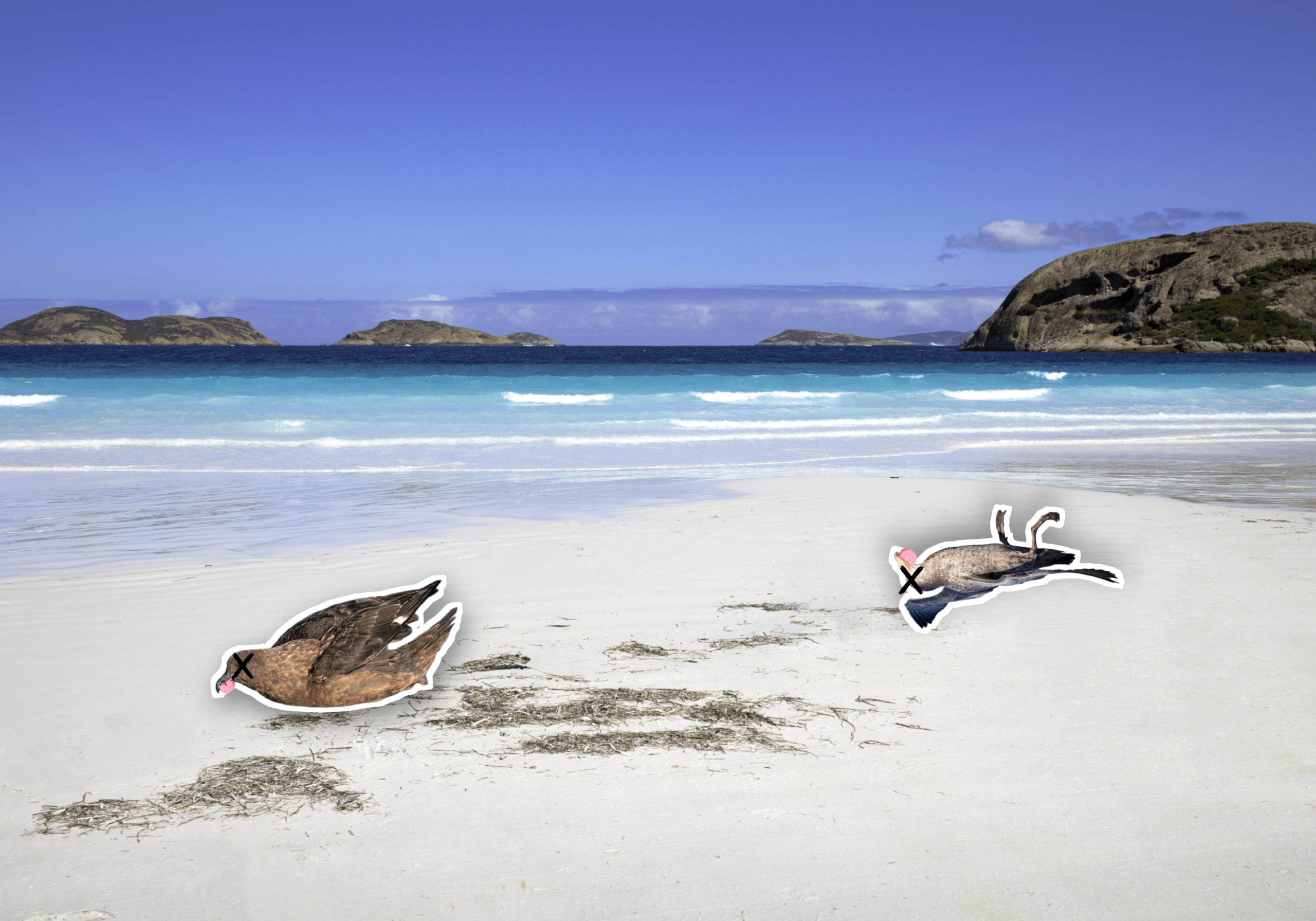
On 19 June, a sick brown skua was found on a beach in Cape Le Grand National Park. The next day, it was confirmed to have H5N1 bird flu – one of the most virulent and deadly forms of avian influenza.
Two more cases in wild birds – one in WA and another in South Australia – have also been recorded since the first detection.
Professor Raina MacIntyre leads the biosecurity program at the Kirby Institute at UNSW. She says that this particular strain of bird flu is “the one that’s really turned everything upside down globally”.
“It arose in 2020 and it spread around the world very rapidly,” she says.
ENVIRONMENT AND ECONOMY
This strain of bird flu is now present on every continent and has left a trail of destruction in its wake.
Poultry farms have had to perform mass culls of birds, wild seal populations are being decimated and there’s a risk to dairy farms, pets and native fauna.
So what does this mean for Australia?
Our poultry and dairy industries are certainly at risk of outbreaks, but it’s difficult to know or model exactly where or when.
“[For farmed animals], you’re going to know pretty much straight away when it hits poultry,” says Raina.
“It’s highly pathogenic. The chickens will die.”
Dairy farms are also a big consideration. In 2024, a dairy farm in the US was infected, which quickly spread across 19 states.
This could be catastrophic for Australia’s dairy industry, as milk exports generate an economic value of $3.3 billion.
For our wildlife, Professor Hugh Possingham says the chance of an outbreak is “very likely”.
“It’s more when, not if,” he says.
Tasmanian devils have been flagged as a particular risk for H5N1 bird flu as they feed on wild bird carcasses.
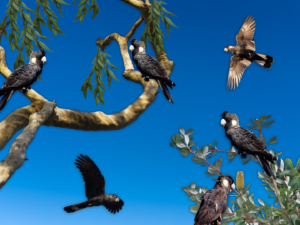
Cockatoos and galahs are also at risk.
“[They] belong to a group of birds that have been infected by this virus in other countries,” says Raina.
HUMAN HEALTH
There is a risk for humans to be infected by this strain of bird flu.
Raina says the primary way humans can be infected is by close contact with infected animals, such as people working on farms.
“The virus itself is still an avian virus, and it seems to be less severe in humans than the previous 30 years,” she says.
“[Bird flu] is highly promiscuous across species, but it’s not highly fatal in all species.
“In the US, which has seen 70 of the 100 human cases in the last few years, it presents with conjunctivitis.
“But it’s still not easily transmitted between humans.”
Currently, the World Health Organization and Australian Centre for Disease Control have judged the risk of a bird flu pandemic in humans as low.
For now, Raina encourages people to get their seasonal flu jab, and Hugh urges people to call the Emergency Animal Disease Hotline on 1800 675 888 if they find any sick or unwell animals.