

You might be interested



While biomethane is flowing into homes across the USA, Asia and Europe, a renewable replacement for natural gas is yet to reach its full potential in Australia.
New research by University of Melbourne scientists has made it easier for biomethane to be used in heating, cooking and transport.
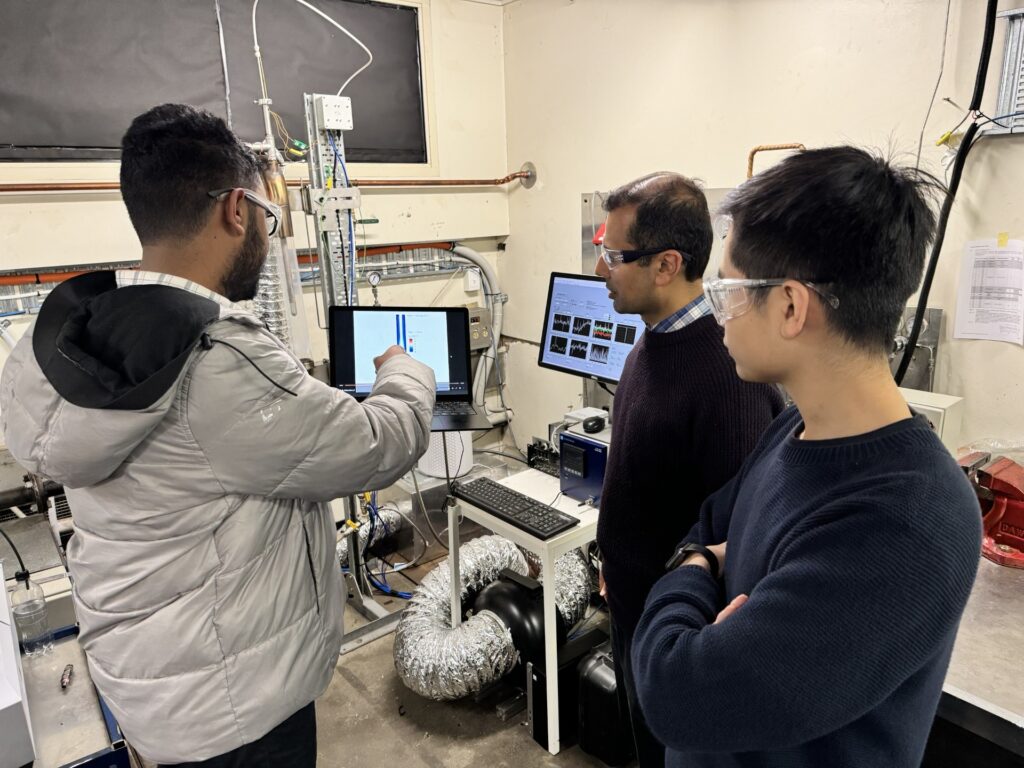
The team, led by Professor Mohsen Talei, studied key contaminants in biomethane to determine safe concentrations for use in home appliances.
Their findings determine guidelines for how much purification biomethane needs before it can reach the market and provide a clearer pathway for scaling up production and making it available for use.
GAS WHO?
Biomethane is chemically identical to natural gas. However, instead of being extracted from nature, it’s produced from waste sources, including landfills, wastewater plants and agriculture waste.
The first phase of production involves microbacteria getting to work on digesting that organic material.
“Anaerobic digestion is basically what happens inside a stomach,” says Mohsen.
“When we eat food, one of the products of that is gas being produced. So the waste that we have in landfill or wastewater plants will produce that kind of gas, called biogas.”
Biogas is roughly equal portions of methane and carbon dioxide plus some other impurities.
To create biomethane, Mohsen says, “We have to clean it up and make sure the impurities that are present are at a safe level.”
Credit: University of Melbourne
THE GASSY COUNTRY
Australia has great potential for producing biomethane because our large agriculture sector generates a lot of organic waste.
Nearly all – 96% – of the east coast’s demand for gas could be met if we harnessed all the biomethane possible with current technologies, according to an Energy Networks Australia report.
As well as saving up to 9 million tonnes of CO2 emissions per year, harnessing biogas creates employment and financial opportunities in rural Australia.
While securing a supply of organic waste, processing it and purifying it can be complex, biomethane can then be supplied straight into existing gas infrastructure.
You could be cooking with gas captured from a wastewater plant and not even notice the difference.
With global conflict causing fluctuating fuel prices and supply concerns, Australia should seek to meet more of its energy needs onshore.
AS CLEAR AS GLASS
The study addresses one part of the puzzle of getting biogas to consumers – impurities.
The experiment focused on a few main contaminants, including siloxanes – a group of chemicals found in haircare, detergents and some foods.
“Out of all the impurities in biomethane, siloxanes are very detrimental,” says Sharin Fernando, a PhD candidate on the project
“If they combust in gas-fired appliances, it will transform into solid-phase silica, which is glass.”
These deposits accumulate on cold surfaces inside appliances, causing reduced performance and failure.
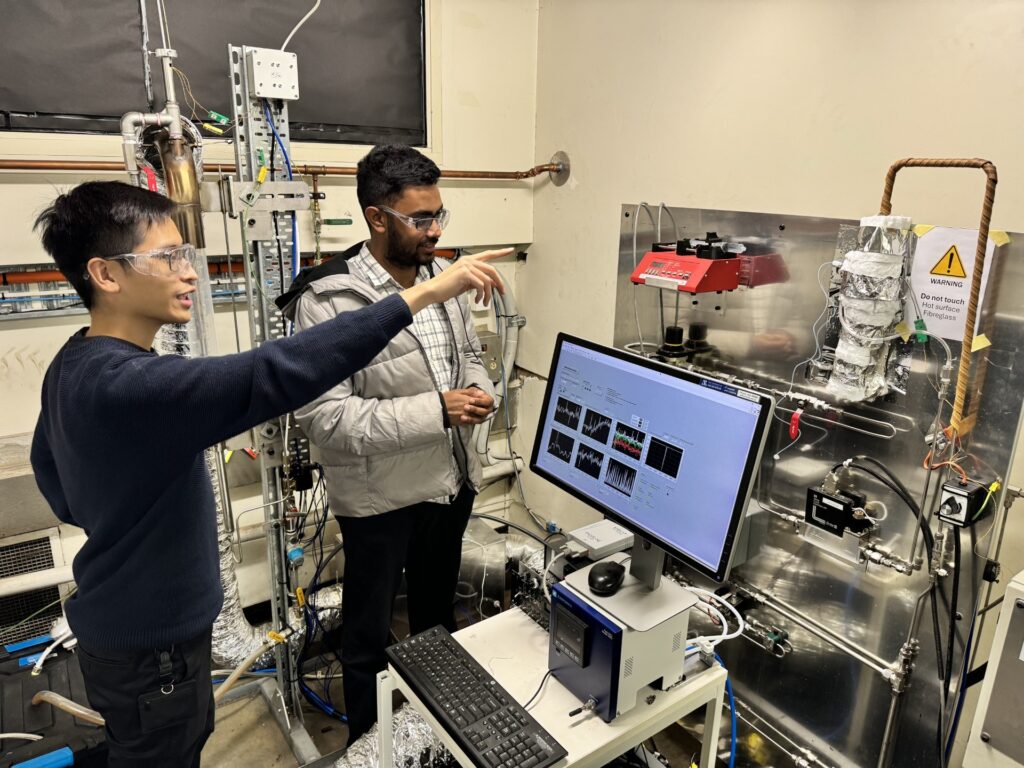
The team ran experiments to mimic different concentrations of siloxanes, then used the data to simulate what would happen to an appliance over 15 years.
This combination of experiments and simulations allowed them to “propose a realistic, reliable concentration limit, based on scientific justification and without using any assumptions”, says Sharin.
This research has had an immediate impact. The Australian standard for general-purpose natural gas and natural gas equivalents was reviewed in 2025, providing the first guidelines about the composition of biomethane.
“We can now safely inject biomethane into the existing natural gas network, and we can safely use it for our cooking or heating purposes,” says Sharin.
Credit: University of Melbourne
HIGH STANDARDS
Mohsen says their recommended limit considers the lifespan of consumer appliances to balance safety with reducing the production costs for biomethane.
“If you look at the standards around the world, there’s different views on what the limits should be,” says Mohsen.
“Some jurisdictions come up with very strict limits, which makes the cleaning costs very high.”
He says California’s limits are too restrictive.
“As a result of that, the industry says that the cost to clean it up is ridiculously high … so they said we’re not going to use landfill or wastewater, we’re just going to use agriculture,” says Mohsen.
“Our limit is a bit more relaxed but still conservative based on the results we find.
“Our recommendation enhances the adoption of this fuel in Australia.”
GAS ME UP
The Australian Government has plans to fund further research into biogas in the roadmap for our transition to net zero, but more could be done.
“In Europe, there are lots of incentives for industry and policy support to produce biomethane. In Australia, we don’t have much support for it,” says Mohsen.
Even with modifications to the Australian standard guided by their research, biomethane still can’t be delivered at a competitive price in comparison to natural gas.
“Biomethane is still twice as expensive, or maybe more,” he says.
Taking inspiration from established biomethane sectors in Canada, Germany and Sweden, measures like tax changes and industry tariffs and incentives could help to make biogas a more attractive alternative.
Sharin is hopeful change is coming
“The policies are going to change a lot to enhance biomethane utilisation. It’s currently on its way, it will take some time, but this is a green light on progress.”