

You might be interested

The Casual Observer
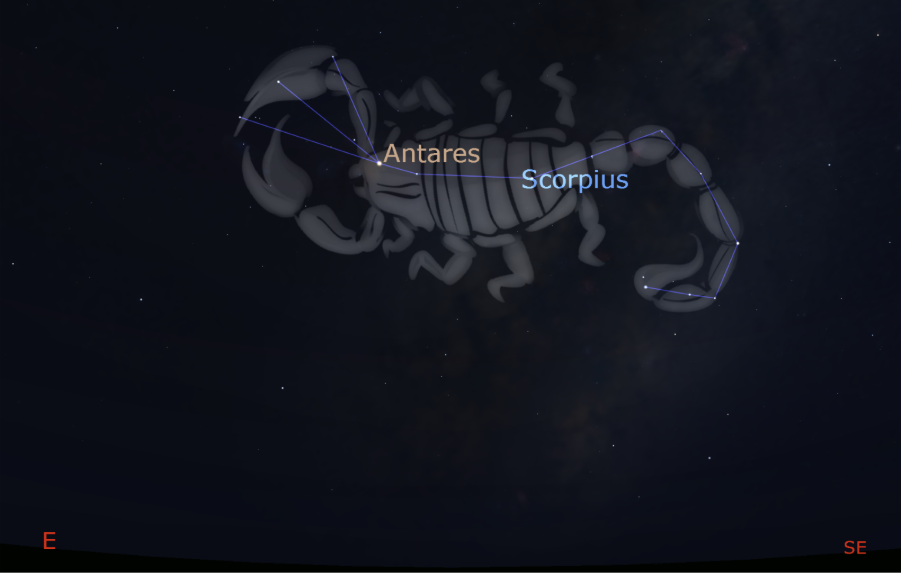
June brings us into the season of Makuru, and the cooler weather finally starts to show. Fittingly, the great summer constellation of Orion is setting in the west as the night arrives and Scorpius rises in the east, marking the onset of winter.
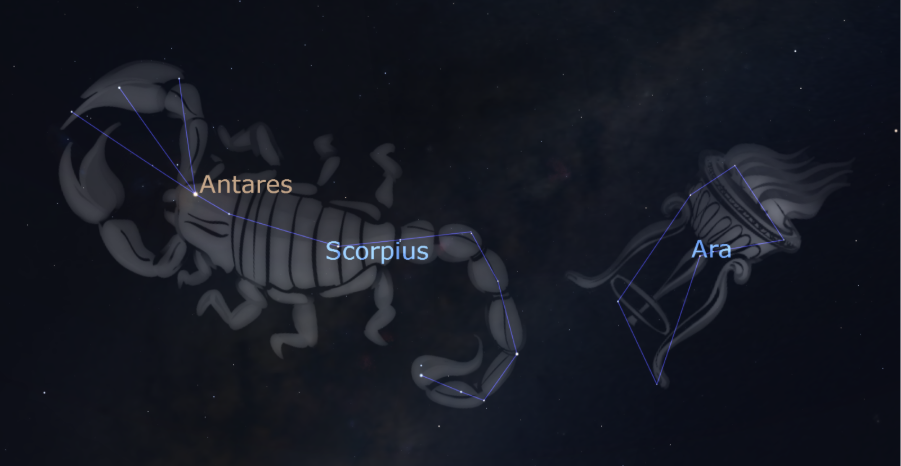
Marked by the bright Antares, the scorpion lies across some of the brightest parts of the Milky Way, if you can get far enough away from the city lights!
Credit: Stellarium
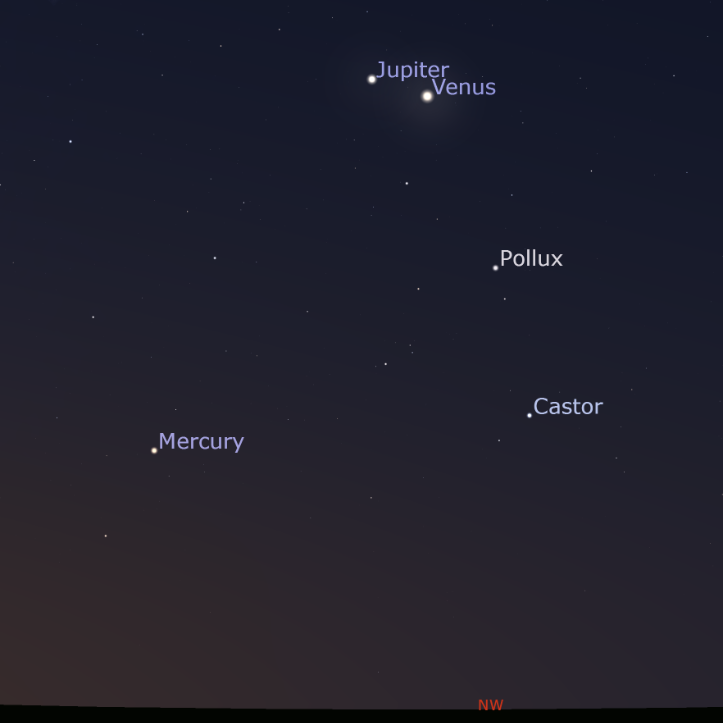
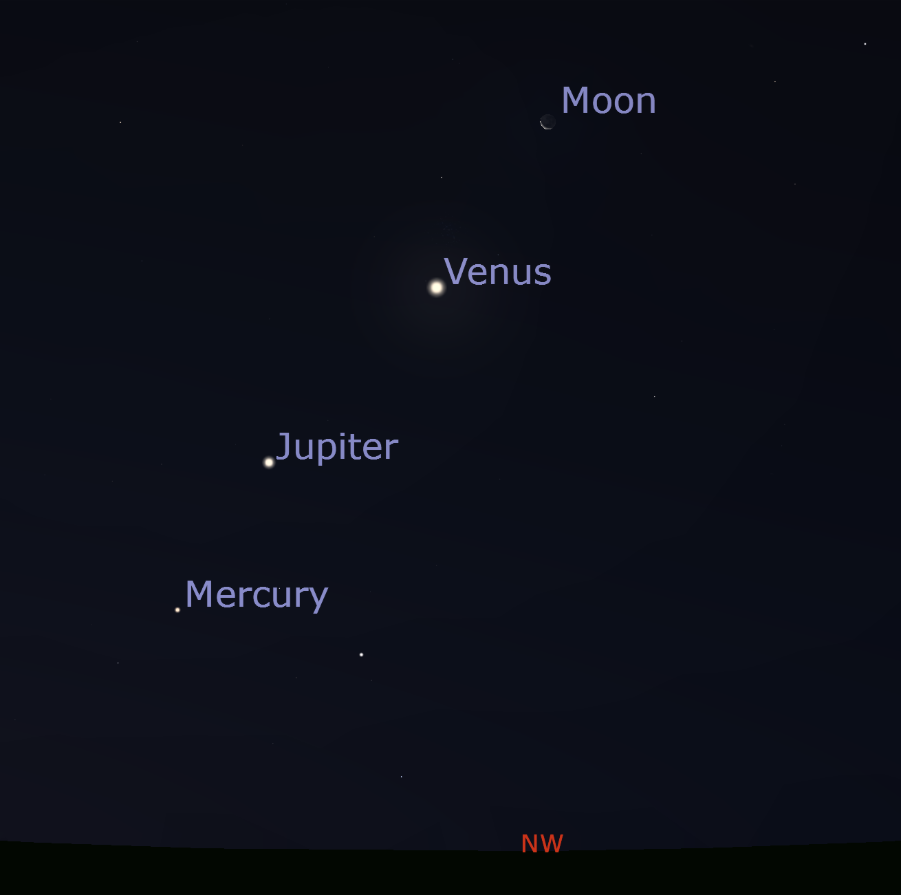
Mercury, Venus and Jupiter put on a show in the western evening sky. You can see them in twilight until about 8 pm when Venus sets last.
This is your last good chance to see Jupiter in the evening sky before it starts to get lost in the Sun’s glare next month. On 10 June, Venus and Jupiter have a close approach separated by only 1.5 degrees – about the width of your thumb at arm’s length.
Credit: Stellarium
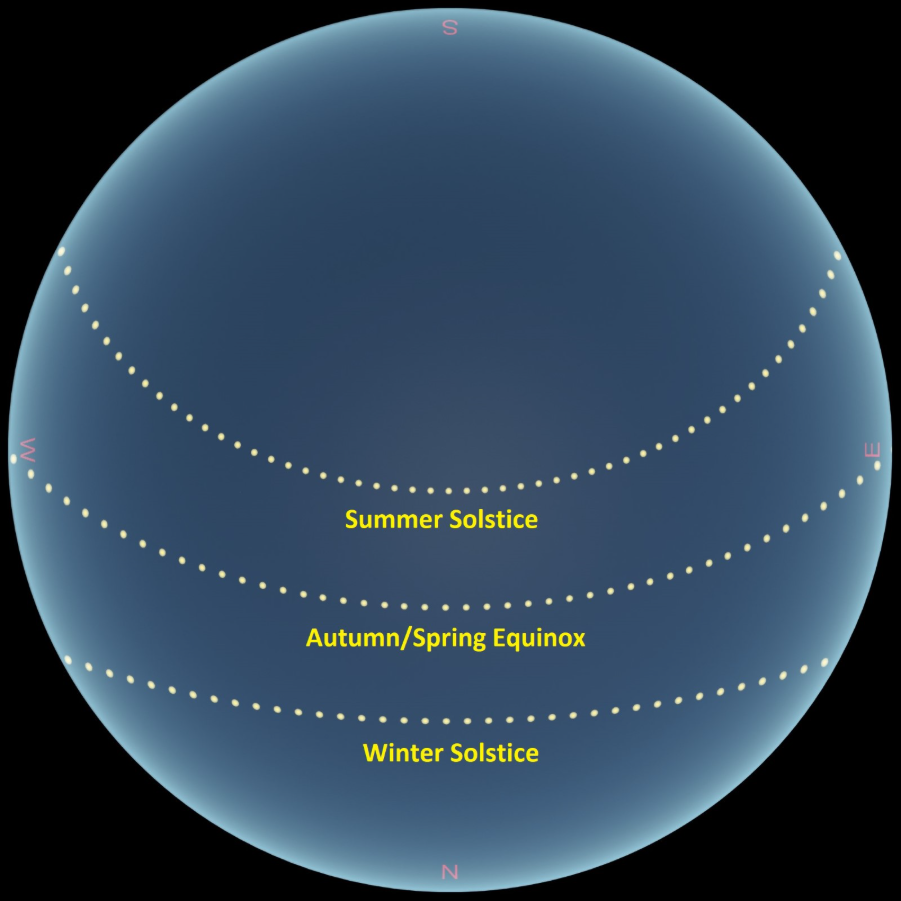
The Winter Solstice occurs on 21 June. This is the point in the Earth’s orbit where the Sun appears lowest in the sky, as seen from people in the southern hemisphere, and it marks the astronomical onset of winter.
If you have a fence or nearby tree to use as reference, from here on out the Sun will appear to be higher in the sky each day until the Summer Solstice in December.
Credit: Smith/Scitech
The full moon on 30 June coincidentally occurs when the Moon is at the furthest point from Earth on its orbit.
This means the full moon will look slightly smaller than average this month, called a ‘micro moon’. This is the opposite of the more well known super moon – when the full moon occurs at the Moon’s closest approach to Earth.
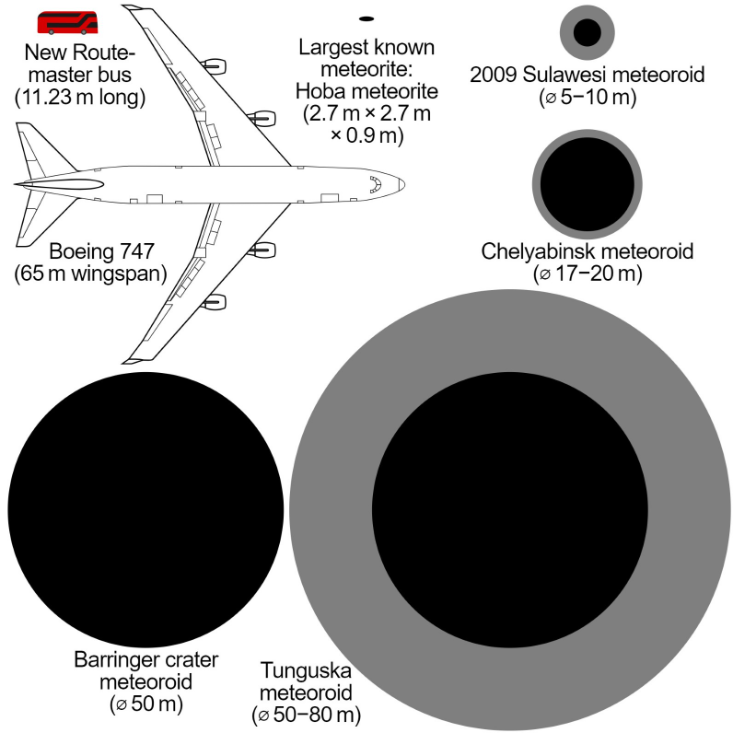
30 June is International Asteroid Day. This day marks the anniversary of the anniversary of the Tunguska Impact of 1908 and is to raise awareness of the threat of asteroid impacts.
Credit: cmglee, Wagner51, domdomegg – Boeing 747.svgLondon bus stop illustration 1.svg (CC BY-SA 4.0)
ISS sightings from Perth
The International Space Station passes overhead multiple times a day. Most of these passes are too faint to see but a couple of notable sightings* are:
| Date, time | Appears | Max Height | Disappears | Magnitude | Duration |
| 3 June 06:14 AM | 16° above SW | 87° | 10° above SE | -3.8 | 6 min |
| 10 June 6:55 PM | 10° above NNW | 54° | 54° above NE | -3.4 | 3 min |
Table: Times and dates to spot the ISS from Perth
Source: Heavens above, Spot the Station
*Note: These predictions are only accurate a few days in advance. Check the sources linked for more precise predictions on the day of your observations.
Moon phases
Last Quarter: 8 June
New Moon: 15 June
First Quarter: 22 June
Full Moon: 30 June
Dates of interest
10 June: Venus and Jupiter close approach
18 June: Mercury, Venus, Jupiter and Moon lined across western evening sky
21 June: Winter Solstice
30 June: International Asteroid Day
Planets to look for
Mercury, Venus and Jupiter are all visible in the western sky after sunset. The best day to see them is on 18 June when they are joined by the waxing crescent moon to make a nice alignment.
Credit: Stellarium
Mars and Saturn are visible in the eastern sky before sunrise.
Constellation of the month
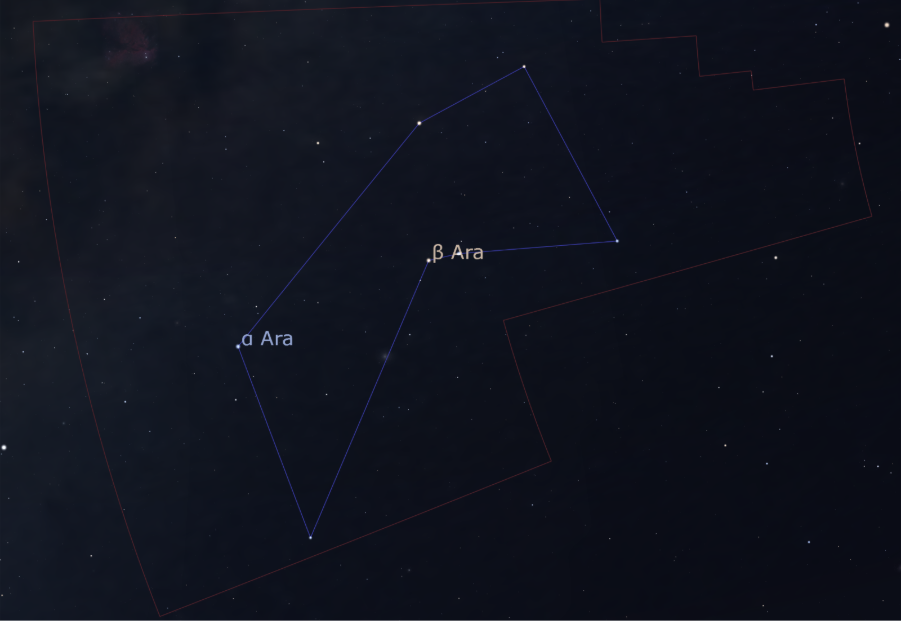
Ara – The Altar
Ara is a small, somewhat bright constellation located in the southeastern sky during June evenings. Its brightest stars Beta and Alpha Arae come in at magnitudes 2.85 and 2.93 respectively, while its boundary encompasses many starfields on the edge of the Milky Way.
Credit: Stellarium
Ara is commonly interpreted as an altar, with some stories associating it as the altar that the Olympians made offerings upon before fighting the Titans in the Titanomachy. You can find it just next to the tail of Scorpius in the sky.
Credit: Stellarium
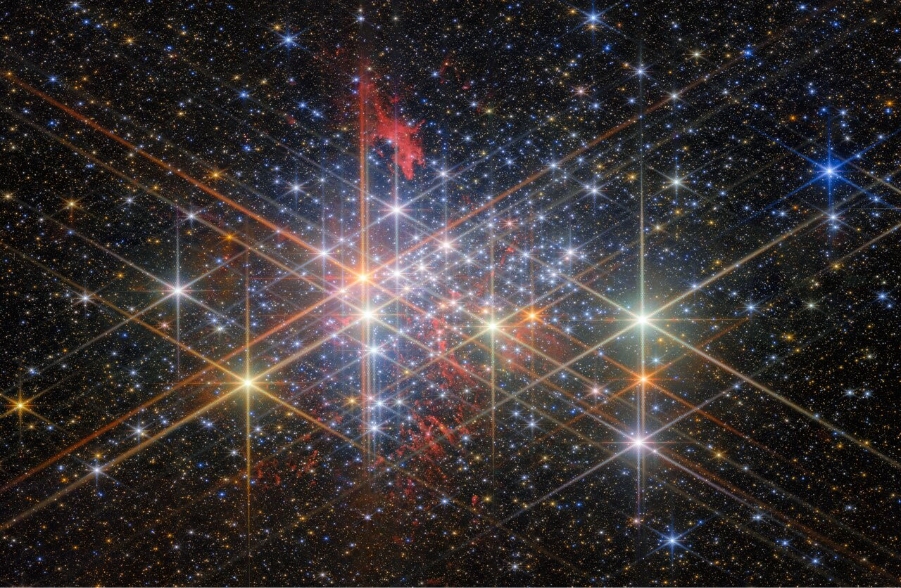
Ara is home to the notable super star cluster Westerland 1. Located about 12,000 lightyears away and containing 50-100,000 solar masses of material, this young cluster of stars is notable for its large number of extraordinarily large and bright stars.
If the Solar System was located in this star cluster, the night sky would be filled with stars as bright as the full moon.
Credit: ESA/Webb, NASA & CSA, M. Zamani (ESA/Webb), M. G. Guarcello (INAF-OAPA) and the EWOCS team
Within the cluster, stars W26 and W237 are red supergiant stars – each about 1,200 times larger and 200,000 times brighter than the Sun, making them some of the largest known stars in the galaxy. If the Sun was replaced with either of these stars, the edges of the star would reach past the orbit of Jupiter.
Objects for the small telescope
NGC 6397 – A sight for the eyes
Within the boundaries of Ara lies the globular cluster NGC 6397. Containing about 400,000 stars and located about 7,200 lightyears away, this cluster is just barely visible to the naked eye at magnitude 6. A small telescope will have no trouble discerning this fuzzy blob of ancient stars.
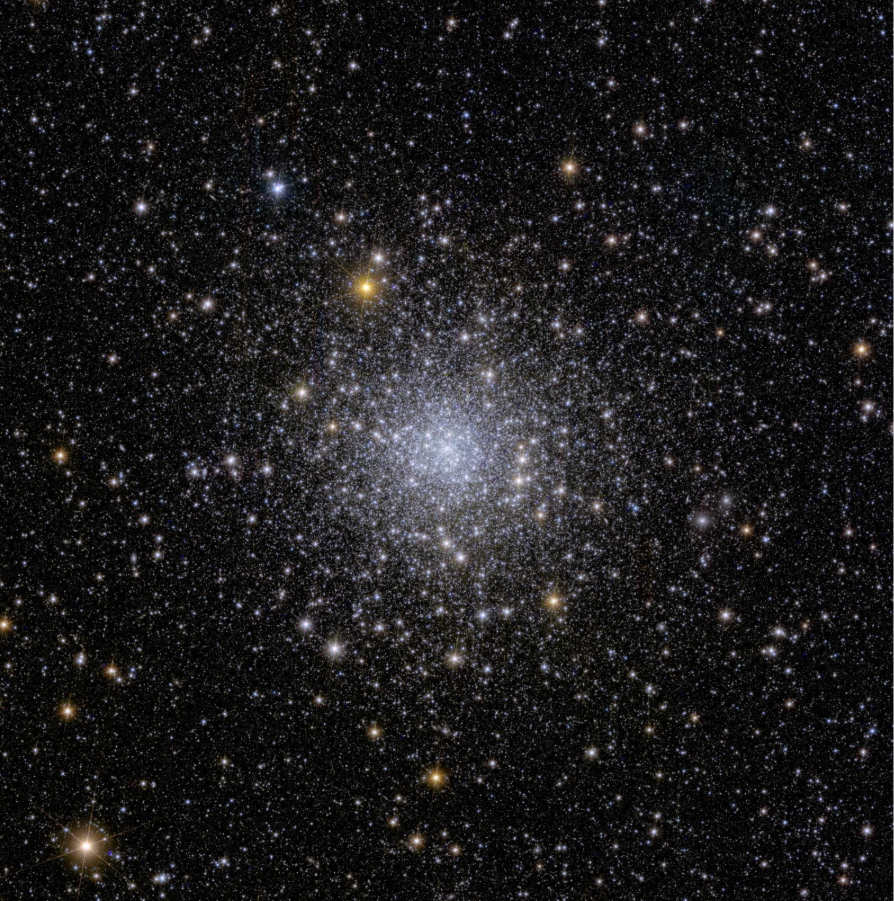
Credit: ESA/Euclid/Euclid Consortium/NASA, image processing by J.-C. Cuillandre (CEA Paris-Saclay), G. Anselmi. CC BY-SA 3.0 IGO