

You might be interested
A scientist wakes up orbiting an alien star 12 light-years from Earth. His crew is dead and his memories are gone.
This is how Andy Weir’s book-turned-movie Project Hail Mary begins.
We soon learn that the scientist, Ryland Grace, is on a mission to save Earth from a Sun-eating microbe called the astrophage.
The (fictional) astrophage baffles scientists by breaking all of life’s known limits.
But what are these limits and can they be broken?
Sci-fi versus science
By the story’s midpoint, Grace encounters two very different lifeforms – the star-eating astrophage and the friendly alien Rocky.
While Rocky is friendly, they breathe caustic ammonia at an air pressure that would crush human lungs.
Rocky’s home planet is no less deadly. It’s a lightless, corrosive, crushing planet where life should be impossible to develop.
That’s an issue for real-world scientists searching for life beyond Earth. All the rules we know for life come from our observations of Earth.
This bias affects NASA’s search for life. This search for exoplanets looks for ingredients of Earth life.
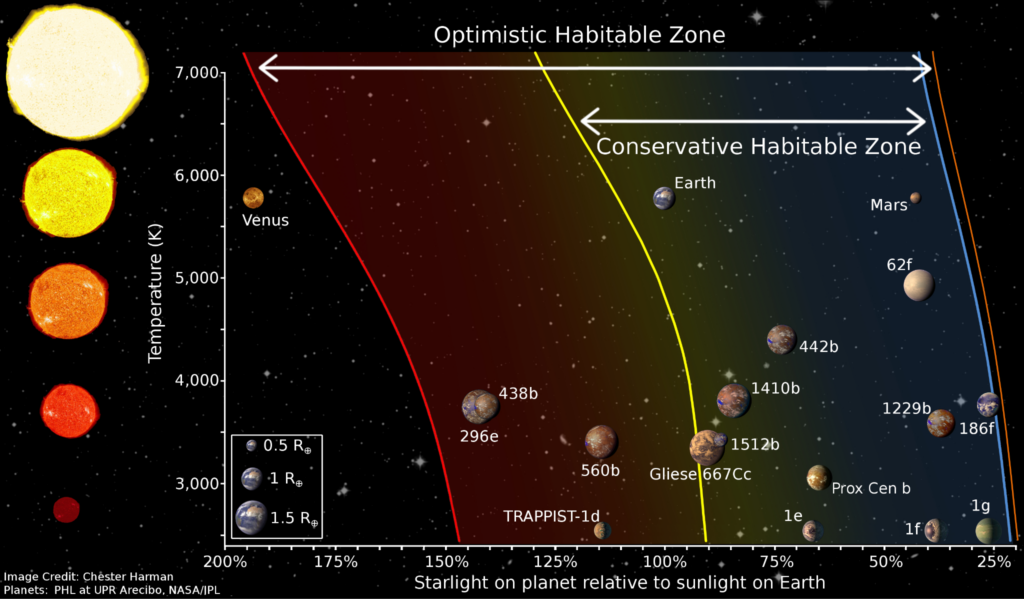
Those essential ingredients are oxygen, carbon dioxide and methane in the planet’s atmosphere and liquid water on its surface.
Of the 6,273 exoplanets NASA has found to date, only 45 appear plausible for life.
But like Rocky, there are forms of Earth life that can thrive without these conditions.
So how do we define life?
Credit: Michael Daly, Uniformed Services University, Wikimedia Commons
Life, but not as we know it
Early in Project Hail Mary, Grace struggles to classify the astrophage as alive.
Grace’s tools and expectations fail, even as the last moments of humanity tick away.
In those moments, the line between life and non-life becomes blurred.
This reflects reality, where the definition of life has changed across time and culture.
Today, there is no single definition, but many biologists accept seven characteristics of life.
These include a basic structure (a cell), environment response, reproduction, growth, regulation (chemical and physical) and energy processing.
Even on Earth, some biology blurs the limits of life. Most biologists believe viruses are non-living despite meeting many of these criteria.
Other examples like prions – disordered proteins – can infect us, causing mad cow disease, kuru and other lethal diseases.
Prions even arise within the body, replicating and responding to stress, but they aren’t alive.
And it’s not just in definition that life fights against our expectations. Life has thrived in environments we would never expect.
Extreme Living
Extremophiles are organisms that can live in the most extreme environments imaginable.
The astrophage would be an extremophile given its ability to travel across the radiation and freezing vacuum of space.
The astrophage isn’t the only tough lifeform around.
In 1956, scientists tried to sterilise cans of meat with gamma radiation, only for bacteria to survive the deadly, mutating rays.
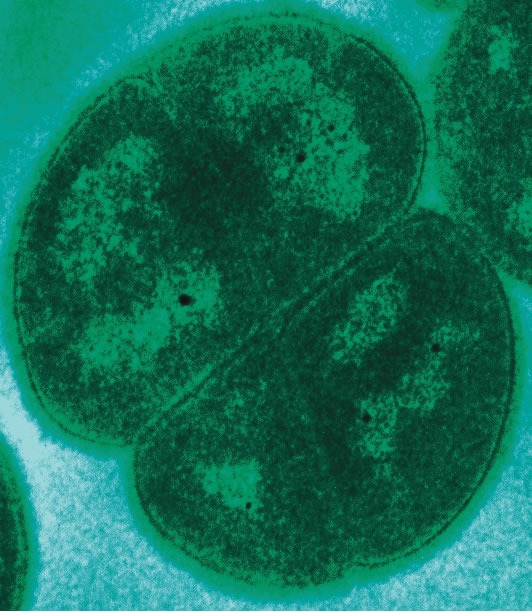
Deinococcus radiodurans was found thriving in the radioactive meat sludge. It was so tough it earned the nickname ‘Conan the Bacterium’.
In 2020, the bacterium was sent to space where it survived outside of the International Space Station for 3 years before returning – alive – to Earth.
Still, life on the Sun’s surface is unlikely. The astrophage’s solar feeding ground would reach temperatures of 5,500˚C.
The hottest known real extremophile (Methanopyrus kandleri) can only survive up to 122˚C.
But it’s hard to discount the astrophage when even our own Earth life can survive radiation, space and boiling temperatures.
Credit: Chester Harman, Wikimedia Commons
A heart of stone
The astrophage takes the spotlight as Project Hail Mary’s Big Bad. But Grace’s other alien encounter guides us in how we should search for life.
Yes, Rocky’s biology is incredible, but the story’s heart is not in survival but cooperation.
Grace and Rocky overcome their mutual fear upon meeting. Soon, they share knowledge, solve problems and trust each other despite the differences between them.
Good science and the search for life beyond our planet is impossible without cooperation.
Before we cooperate with alien species, we should practise on our home planet.