


You might be interested
The Casual Observer
August brings us into the season of Djilba, which can be thought of as the second half of winter. Plenty of rain is still expected, with occasional clearer days as spring rolls around.
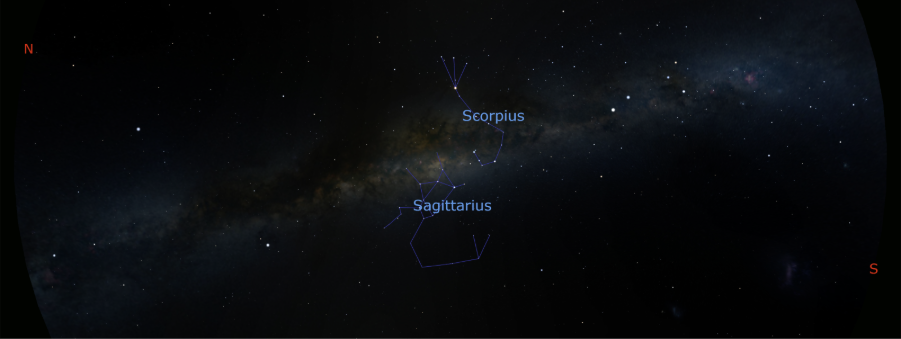
The Milky Way is high overhead all month and makes for spectacular viewing in the evening skies. You don’t really need to face any particular direction, just look up and you should see our galaxy stretching roughly north to south across the sky.
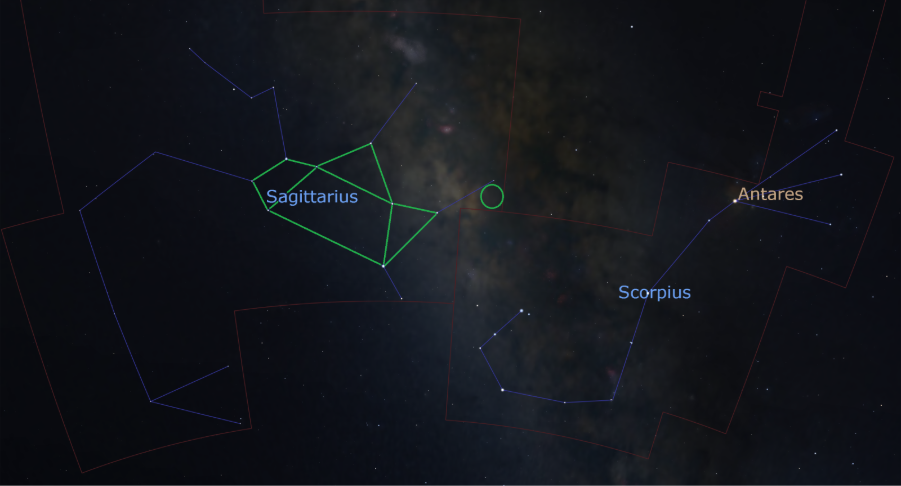
The further you can get from bright lights, the better it will look. Use the bright Scorpius and Sagittarius to guide the way to the middle of the galaxy.
Credit: Stellarium
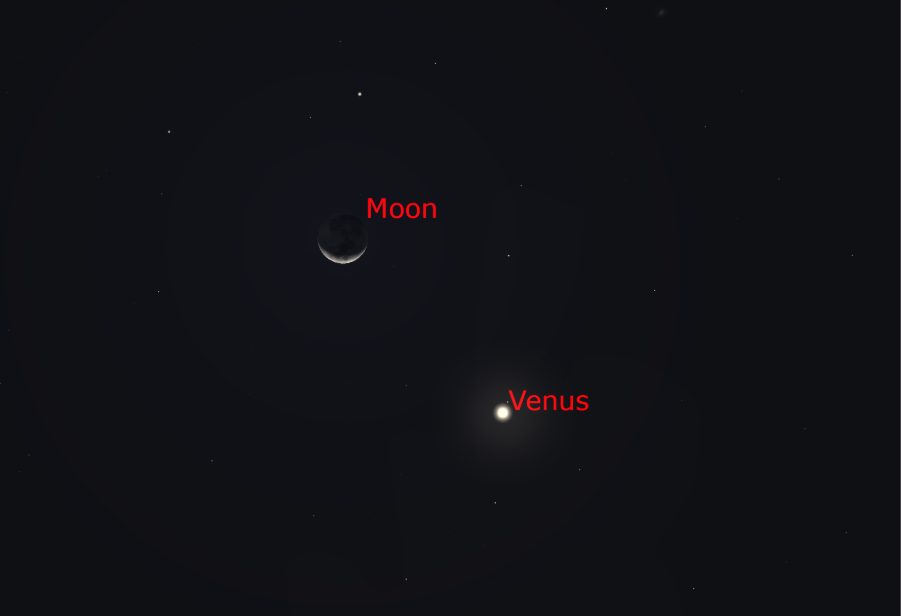
Venus is unmissable in the western evening sky, glowing almost whitish bright, and is joined by the waxing crescent Moon on 16 August for a close encounter.
Credit: Stellarium
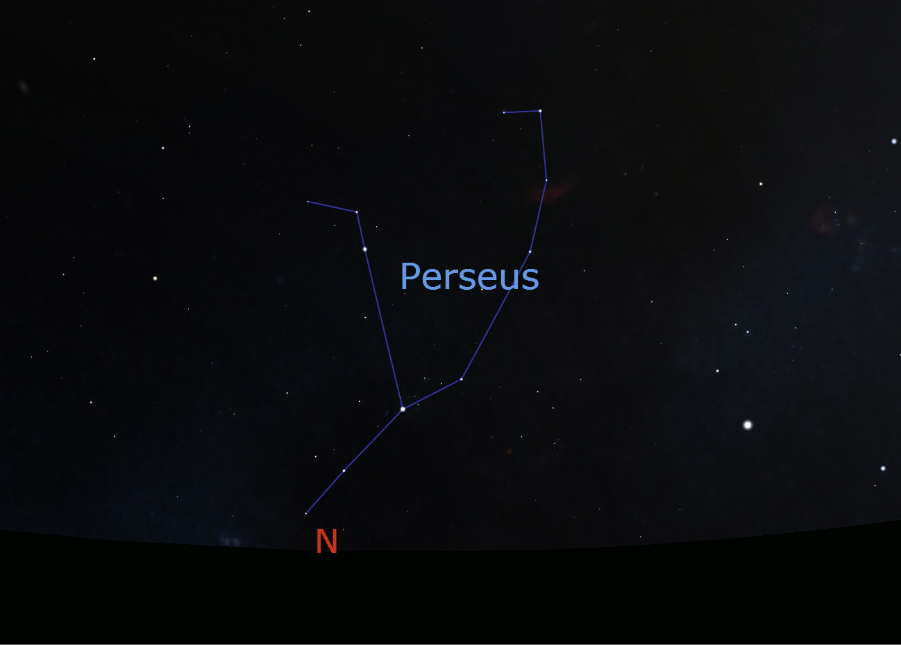
You might hear about the Perseid’s meteor shower, peaking around 12-13 August. Unfortunately for us in Australia, Perseus – the constellation from which the meteors appear to emanate – is very low on the northern horizon. If you are out before sunrise around these dates and you see the occasional meteors streaking in from the north, you might have spotted one of these.
Credit: Stellarium
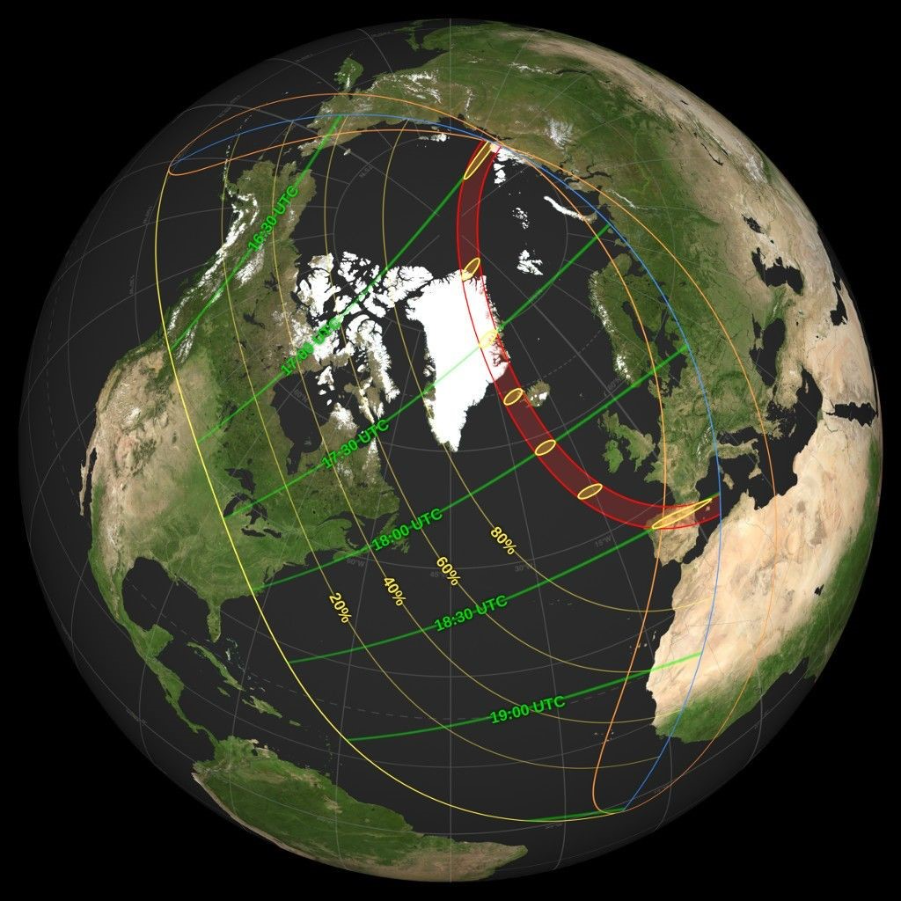
There is a total solar eclipse on the evening of 12 August and into the morning of 13 August AWST. As the solar eclipse is in the middle of the night, we can’t see it from Australia.
Credit: NASA
There is a corresponding partial lunar eclipse two weeks later on 28 August and – you guessed it – we can’t see that one either.
ISS sightings from Perth
The International Space Station passes overhead multiple times a day. Most of these passes are too faint to see but a couple of notable sightings* are:
| Date, time | Appears | Max Height | Disappears | Magnitude | Duration |
| 4 August 06:01 AM | 25° above WSW | 52° | 10° above NNE | -3.5 | 4.5 min |
| 5 August 05:16 AM | 53° above ENE | 53° | 10° above NE | -3.0 | 2.5 min |
Source: Heavens above, Spot the Station
*Note: These predictions are only accurate a few days in advance. Check the sources linked for more precise predictions on the day of your observations.
Moon phases
6 August: Last Quarter
13 August: New Moon
20 August: First Quarter
28 August: Full Moon
Dates of interest
4 August: Moon close to Saturn
12/13 August: Peak of Perseids meteor shower
12/13 August: Total Solar Eclipse over western Europe
16 August: Moon close to Venus
28 August: Partial Lunar Eclipse visible everywhere except Australia
30 August: Potential launch of the Nancy Grace Roman telescope
Planets to look for
Venus continues to dominate the western evening skies, glowing brightly at a whopping magnitude of about – 4.5.
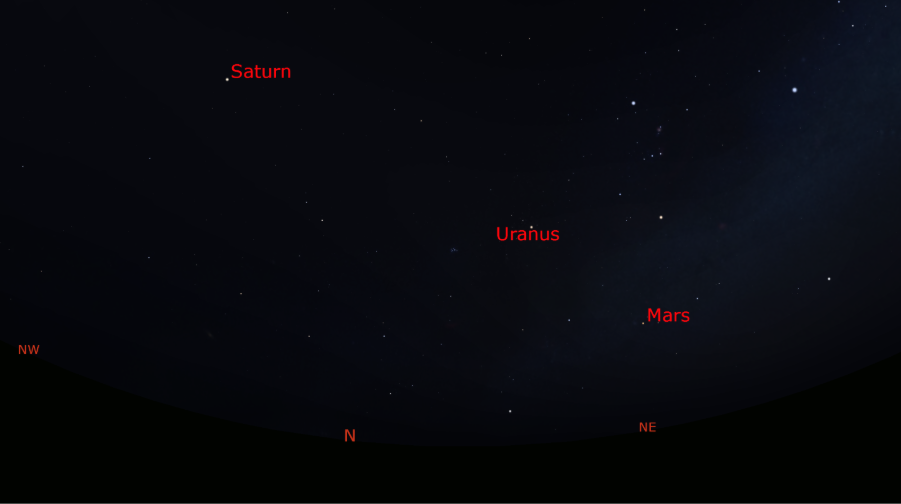
Saturn rises around 10 pm and is visible across the NNW in the hour before sunrise as a yellowish blob. It is joined by Mars still hanging there in the northeast.
Credit: Stellarium
Mercury is barely visible in the eastern sky before sunrise in the first week of the month, but it’s not really worth it. Likewise, Jupiter is emerging from the glare of the Sun, but you’re better of waiting for later in the year to get a better view.
Constellation of the month
Sagittarius – The Centaur Archer
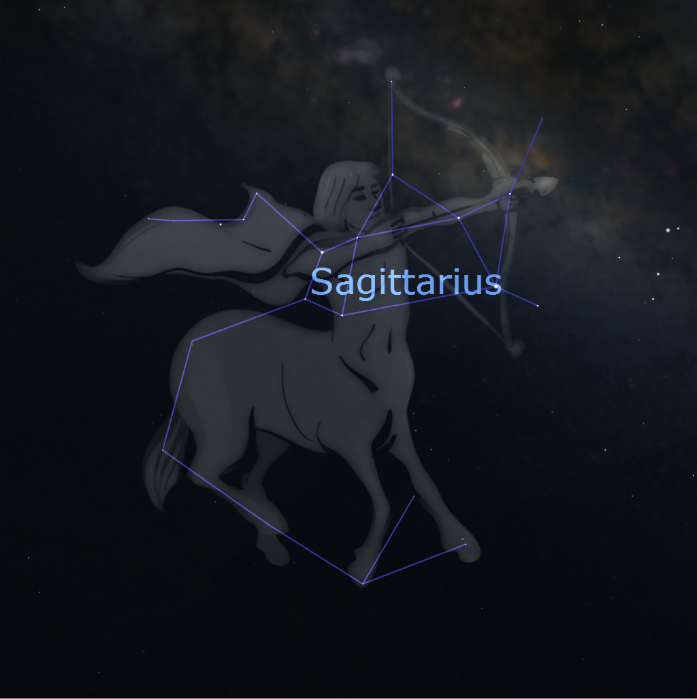
Sagittarius is a large and well-known constellation that lies across the centre of the Milky Way galaxy. A spaghetti mess of stars when drawn out, it is usually interpreted as a centaur archer, with ‘Sagittarius’ being the Latin word for ‘archer’.
Credit: Stellarium
Rather than tracking down every star in its depiction, it is better to look for The Teapot, an asterism made from a subset of stars in Sagittarius close to the tail of Scorpius. By imagining steam emerging from the boiling pot, you can mark out the centre of the Milky Way galaxy.
Credit: Stellarium, markup by Smith/Scitech
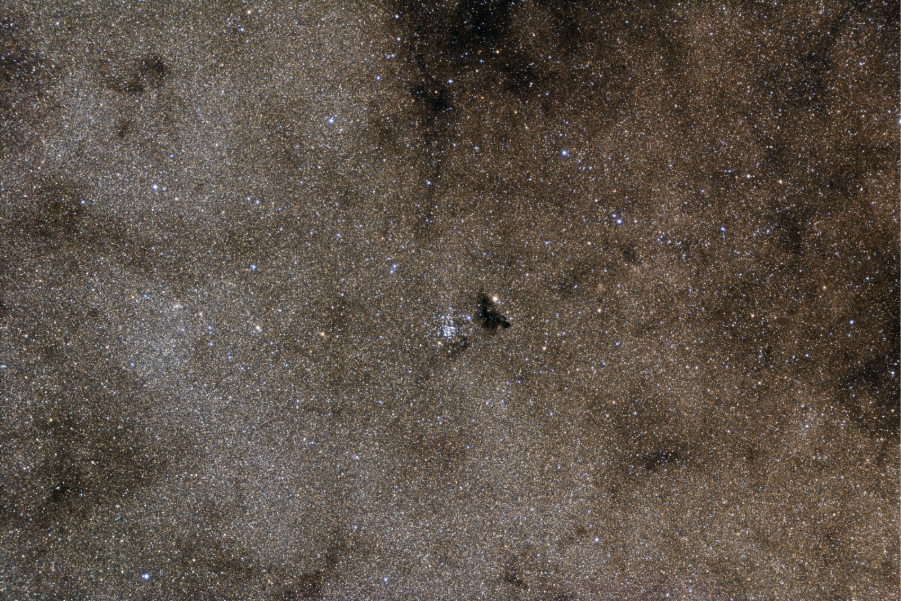
Containing the centre of the Milky Way galaxy, Sagittarius is home to an enormous number of stars, the densest regions of which are named the Sagittarius Large and Small Star Clouds. These are not star clusters in the usual sense – instead they are many thousands of light–years deep and contain millions of stars in the same field of view.
Credit: Panther Observatory
At the very centre of the Milky Way galaxy is the well-known supermassive black hole, Sagittarius A* (pronounced Sagittarius A Star – though it’s obviously not a star).
By studying the orbits of stars in the galactic centre, astronomers were able to infer the existence of this black hole by its dominant gravitational influence over the centre of the galaxy, eventually concluding that it must be 4 million times more massive than the Sun.
More recently, scientists from around the world formed a collaboration called the Event Horizon Telescope (EHT) to utilise a number of radio telescopes working in unison to image objects in the sky.
This effectively behaves like a telescope the size of Earth and gives the EHT a resolution sharp enough to image the centre of the galaxy in detail. In May 2022, scientists from the Event Horizon Telescope released an image of Sagittarius A*, the black hole at the centre of our galaxy.
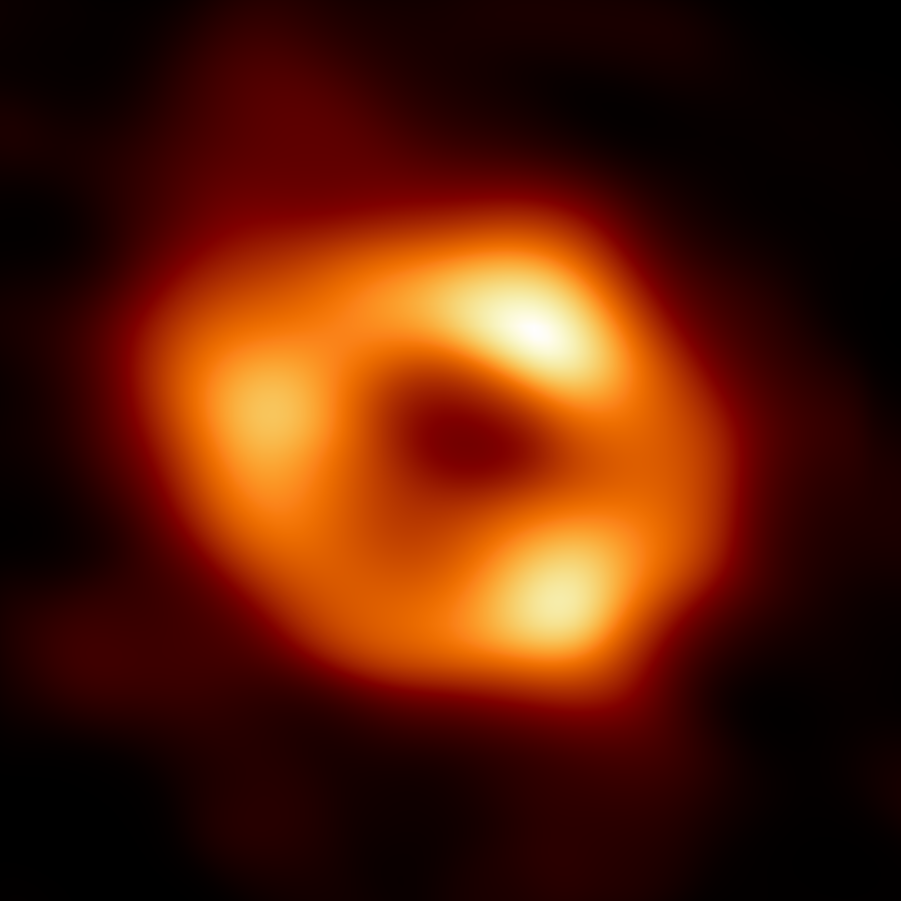
Credit: Event Horizon Telescope
Objects for the small telescope
The Lagoon Nebula
The Lagoon Nebula is a giant emission nebula located inside Sagittarius and technically visible to the naked eye. Through a telescope you should see greyish smudging standing out from background stars.
If you’re feeling fancy you might want to try some long exposure photography, which will be more sensitive to the soft pink glow of the nebula that come from ionised hydrogen gas.
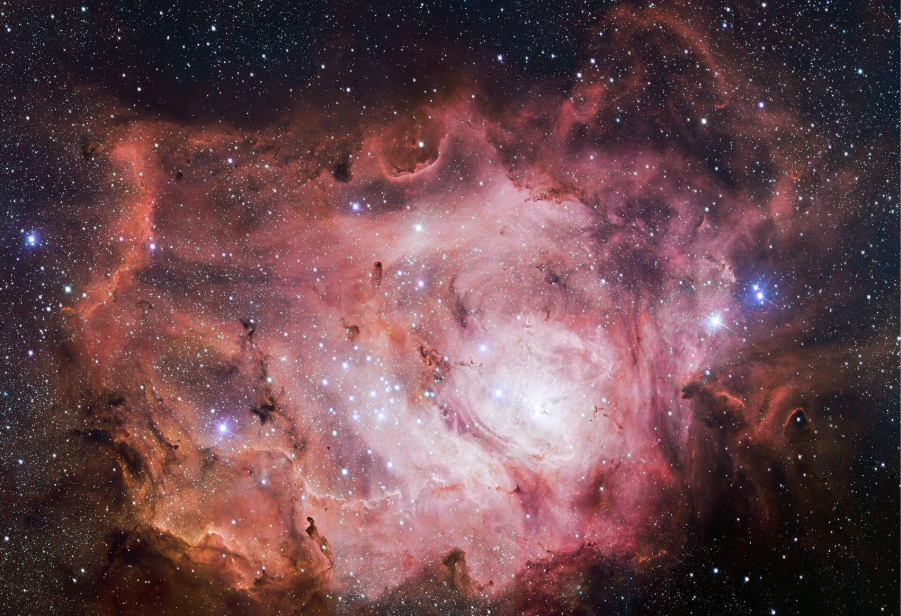
Credit: ESO/VPHAS+ team