

You might be interested

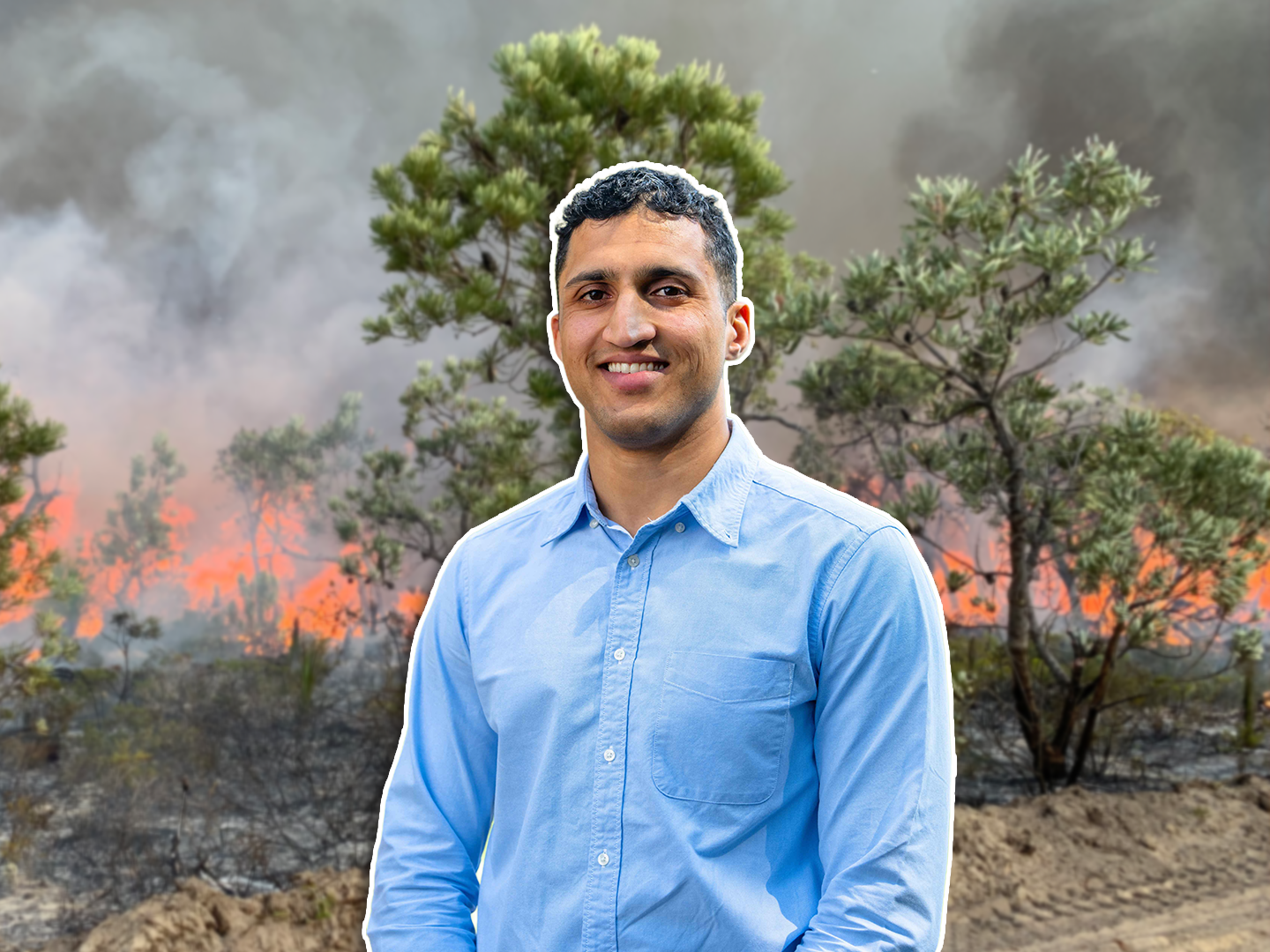
Kiam Padamsey is a lot of things – a father, a Brazilian jiu-jitsu black belt and a volunteer firefighter.
But this finalist for the Premier’s Science Awards as an early career researcher never thought he would become a scientist.
“I’ve always had quite a curious personality,” says Kiam. “Not necessarily for science, but … I want to know why for a lot of things.
“That’s really naturally translated into this line of work.”
Kiam is a teaching and research scholar at Edith Cowan University (ECU), focused on improving the health and wellbeing of firefighters.
Given we can’t control bushfires, it seems like a tall order – but the answer may be simpler than you might expect.
Not here for the exposure
Kiam says he stumbled into his PhD.
“I was looking at all sorts of projects and then I stumbled across my supervisor who was doing something related to fire,” says Kiam.
“I’d been a volunteer [firefighter] for about 7 or 8 years at that point … and there’s a lot of unknowns in the field.”
By marrying his lived experience as a firefighter with his supervisor’s long list of unanswered research questions, they started collaborating on projects.
The first question they tackled was ‘What are firefighters that work in bushfires being exposed to from bushfire smoke?’
“I found that the firefighters are exposed to extremely high levels of particulate matter and chemicals,” says Kiam.
“I looked at the chemicals coming off these fires as well and found that there was a lot of carcinogenic causing compounds.
“If we were to take these levels and compare them to the health and safety standards in mining or other sectors, they would be far exceeding these allowances.”
These chemicals don’t just harm firefighters while they’re at the fire – their clothing can absorb these chemicals and cross-contaminate other people’s clothes, his research found.
“If a firefighter washes their PPE and then washes their baby’s nappies in the next wash, it can transfer these chemicals and potentially bring harm to their children,” says Kiam.
It’s not rocket science, it’s laundry
The goal of Kiam’s research was to improve the health of firefighters.
Working with the Department of Biodiversity, Conservation and Attractions, Kiam built a successful case for all firefighters to have breathing respirators.
He also worked with the Department of Fire and Emergency Services to ensure volunteer firefighters were granted the same protection.
“Before that, no one had access to respirators,” says Kiam. “Today, everyone has access.”
As for the firefighters’ clothing, the simple solution was to install washing machines in fire stations so they don’t take their gear home to wash it.
“Taking PPE home is actually banned,” says Kiam. “That potential of bringing risk to people’s health, children’s health at home is gone now.”
This began in metro WA and is expanding across the state and – Kiam hopes – across the country.
“I’m not doing these massive, ‘big picture, changing the way we think about science’ research,” says Kiam.
“But the fact that I can actually shake hands with people that have actually had their lives changed because of my research … is very invigorating. It gives a lot of purpose to my work.”
“Nature is not going to give a sh*t about this. But an actual West Australian does care, because their uncle is a firefighter or because their son volunteers at the local station. That’s what I like about it.”
What’s next?
While Kiam’s research has already improved the lives of firefighters and their families, he says there’s still a long way to go.
He’s working on an ‘exposure monitoring system’ that would enable firefighters to see how high their level of exposure to bushfire smoke is in certain areas. There’s also whispers of ‘nutritional PPE’, where certain foods can help to detoxify the body, and improving the effectiveness of masks.
“We know that firefighters are being exposed, and we know – unfortunately – they’re going to have to be exposed because we’re not going to let Australia burn to the ground,” says Kiam.
“We just need to move the needle 5%. If we can move it 5%, then maybe that could prevent cancers in the future.”
With the warming, drying climate increasing the risk of more frequent, hotter bushfires, it’s important firefighters are always protected.
“There’s this massive workforce out there that are very unconsidered until we have a massive bushfire event,” says Kiam. “When Black Summer came around, everyone was thinking about the volunteers.
“Once the collective thought of them dies down, they get forgotten about.
“We need to do everything we can to protect and support this workforce so they can protect our community.”