

You might be interested

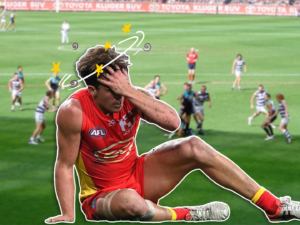
Professor Andrew Whitehouse started his career as a speech pathologist and found himself with questions that he just couldn’t answer.
He turned to science to find them.
It led him to set up the CliniKids centre at The Kids Research Institute, where he’s been ever since.
Part clinic, part research group, CliniKids has been helping kids with autism and their families since 2009.
Their work has been so impactful that Andrew has recently been named Scientist of the Year at the Premier’s Science Awards.
“My professional life since has really tracked the modern history of autism,” says Andrew, “from this rarely diagnosed condition to one that is now diagnosed in one child in pretty much every school classroom.”

Credit: Supplied by Andrew Whitehouse
Shifting definitions
The definition of autism has changed over time. In fact, Andrew is one of the scientists who helped rewrite it.
The way autism is perceived has also changed, and it hasn’t always been science leading the way.
Andrew’s first grant was from an organisation called Cure Autism – a sentiment that seems wildly out of place today.
Andrew says that change in perceptions was “a liberation”.
“What it has enabled us to do is focus on the beautiful human being in front of us and those who love them,” says Andrew.
“My job is not to remove something from them but rather to bring something out of them so they can be whoever they want to be.”
Attitudes among scientists about autism research have shifted too.
“When I started, the idea that clinical trials could be conducted in the area of autism was seen as laughable,” says Andrew.
“It was seen as too hard, that it wouldn’t create significant advances.
“Our approach was just uncompromising – that actually, clinical trials are the greatest source of evidence that we can garner, and that’s what kids and families need and deserve.”
It means that, when someone needs support, they can start with something that’s likely to work for a person like them rather than having to start a process of trial and error from scratch.

Credit: Supplied by Andrew Whitehouse
Beyond trial and error
For that evidence-driven approach to work, someone has to actually collect some evidence. CliniKids is where that work happens, fusing a working NDIS-supported clinic with a research team – and some kids and families willing to give something new a shot, for science.
“It’s no struggle to get families involved in science,” says Andrew. “One of the biggest lessons that 25 years of science has taught me is about the generosity of people.”
“When I’m working with autistic kids and their families, very often they will say, ‘I know that my child might not benefit from this, but I do want the future generation to benefit from it, to have their paths be easier’.”
With families, they’ve studied exercise, probiotics and goal setting. They’re recruiting for studies on sensory vests and a digital tablet to help with language development.
Assessing the situation
The treatments are inspiring, but the biggest challenge – and biggest opportunity for improvement – lies in diagnosis.
“Our diagnostic services have years-long wait lists,” says Andrew.
That means there are children who are years away from accessing support.
Assessments can be days-long affairs, often involving multiple experts, all with their own waiting list and cost.
“We have to think of a way to reinvent assessment that is cheaper, more accurate, faster and ultimately better for kids and families,” says Andrew.
“There’s a lot of work going on in Perth where the use of AI, the use of other digital technology, might be able to speed up, with great accuracy, those assessments, and that would be revolutionary for our health systems.”
It’s a problem that can’t be solved with technology alone. It means a career that started in the clinic and moved into research is, increasingly, about getting science into policy.
Luckily, Andrew seems to find that prospect just as exciting.
“I get to go to work every day and be both nerdy and idealistic,” he says, “and I just can’t think of a better profession than that.”