

READ

Can the pill be side-effect free and taken on demand?

Hint: we’re giving it to the wrong person.
Dennis Power
Dennis Power
Freelance Writer
Can the pill be side-effect free and taken on demand?

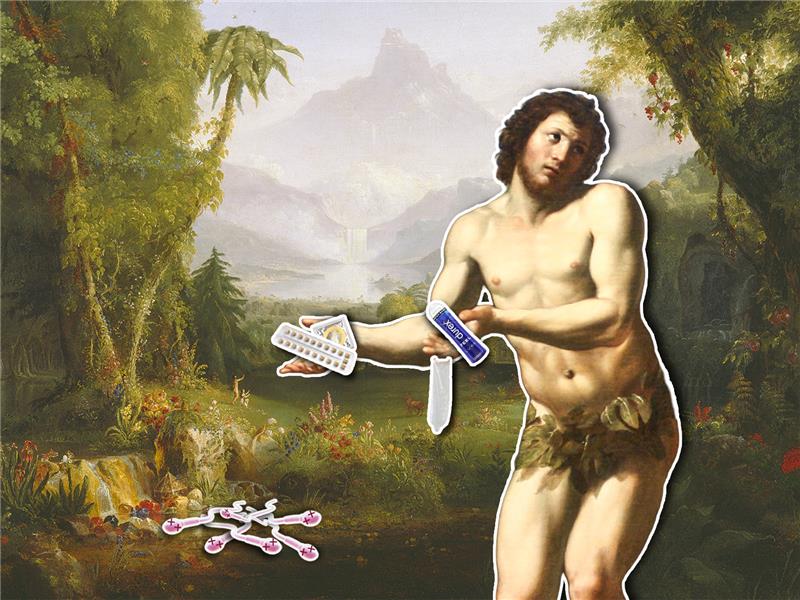
Preventing pregnancy is largely viewed as the responsibility of anyone who can become pregnant. 

It’s a burden that can hold significant emotional, financial and physical weight (not just the bathroom scales kind).

Since the introduction of the contraceptive pill in Australia in 1961, there are now more than a dozen hormonal and non-hormonal contraception options for women, yet the list of potential side effects is ever present.

We’re talking irregular bleeding, nausea, headaches, breast tenderness, bloating, weight gain, mood swings, libido loss, cramps – the list goes on.

a cartoon of spongebob holding a piece of paper with memecenter.com written on the bottom
Credit: Tenor

It begs the question: Can contraception be side-effect free?

YES, BUT …

First the pills need to be in male hands.

Contraception options for men are limited to condoms and non-reversible vasectomies. End of list. But it’s not the end of the story.

Multiple new male contraceptives are in development. Some are well into clinical trials, and initial results look promising.

Some of these new drugs are non-hormonal, effectively eradicating hormonal side effects.

Men could have control over their fertility while maintaining their libido, weight, sexual function and mood. This is also the case for their female counterparts. However, these methods still come with other side effects such as painful periods (in the case of the copper IUD).

Credit: GIPHY

PASS THE PILL

Sarcastic gifs and 65 years of side effects aside – we arrive at YCT-529

This drug is turning heads with its non-hormonal, side-effect free, sperm-nuking potential. It’s an oral pill taken daily (like the OG) but boasts no nasties.

Male animals deprived of vitamin A become infertile. This is because the retinoic acid receptor alpha (RAR-α) – where vitamin A binds in our bodies – is essential for normal sperm production, making it an ideal drug target.

YCT-529 stops vitamin A binding in cells, leading to a dramatic decrease in sperm count. 

YCT-529 was 99% effective and 100% reversible when tested on mice. In primates, sperm count fell below fertile level within 2 weeks of daily dosing.

The contraceptive compound successfully completed a human phase 1a clinical trial and is now in a phase 2b trial where researchers hope to better understand dosing and safety.

SLOW DOWN, LITTLE SWIMMERS

Another male contraceptive pill in development can be taken on demand – like Viagra, but for a different purpose. 

Soluble adenylyl cyclase (sAC) is an enzyme with many responsibilities. One is to act as a starting pistol for sperm – without which they won’t swim.

Some males can be born with mutations in the genes that influence sAC function, rendering them infertile but otherwise healthy, making it another ideal contraceptive drug target.

TDI-11861 is an oral contraceptive pill that interferes with sAC function for a short time – about 2–3 hours.

During this time, sperm remains immobile, making conception nearly impossible.

Repeat mouse studies have shown that, after the effects of TDI-11861 have worn off, unused sperm returns to normal.

A larger consequence of TDI-11861’s unique modus operandi is that it could also be developed into an on-demand, side-effect free female contraceptive – the contraceptive equity we’re all waiting for.

Credit: GIPHY

Either way, it leaves plenty of time for foreplay while you wait for TDI-11861 to do its thing.

DID SOMEONE SAY CLINICAL TRIALS?

TDI-11861 is still awaiting human trials, but other male contraception options are closer to market.

Beyond oral pills, we have Contraline’s NES/T and ADAM™ 2.0. (Not exactly the sexiest names, Contraline.)

NES/T is a hormonal gel applied daily to a male’s shoulders, suppressing sperm production for months while maintaining libido without side effects. NES/T is lubing up for phase 3 clinical trials.

Another ‘not a pill’ option is ADAM™ 2.0 – a 21st century vasectomy. 

A non-hormonal hydrogel is injected into the vas deferens to block sperm flow. Unlike the traditional vasectomy, it’s easily reversible. 

This simple 15-minute procedure has demonstrated it can block sperm release for up to 24 months. ADAM™ 2.0 is currently undergoing phase 2 clinical trials.

With these new drugs in development, it’s only a matter of time before the burden of contraception is equally shared amongst all sexually active humans. 

But for how much longer will the burden of side effects continue to be one-sided? 
Dennis Power
About the author
Dennis Power
They say that curiosity killed the cat, but Dennis knows satisfaction brought it back. Obsessed with asking questions, getting answers, and learning new facts to share with anyone who will listen, science journalism was his logical destination. Dennis loves synthetic chemistry and is a regular contributor to the Chemistry in Australia magazine. He is also the science editor for The Metamorphosis Project Journal. After four years of his PhD he decided he’d rather not handle nasty chemicals every day and built a tiny house on wheels instead.
View articles
They say that curiosity killed the cat, but Dennis knows satisfaction brought it back. Obsessed with asking questions, getting answers, and learning new facts to share with anyone who will listen, science journalism was his logical destination. Dennis loves synthetic chemistry and is a regular contributor to the Chemistry in Australia magazine. He is also the science editor for The Metamorphosis Project Journal. After four years of his PhD he decided he’d rather not handle nasty chemicals every day and built a tiny house on wheels instead.
View articles

NEXT ARTICLE

We've got chemistry, let's take it to the next level!

Get the latest WA science news delivered to your inbox, every fortnight.

This field is for validation purposes and should be left unchanged.

Republish

Creative Commons Logo

Republishing our content

We want our stories to be shared and seen by as many people as possible.

Therefore, unless it says otherwise, copyright on the stories on Particle belongs to Scitech and they are published under a Creative Commons Attribution-NoDerivatives 4.0 International License.

This allows you to republish our articles online or in print for free. You just need to credit us and link to us, and you can’t edit our material or sell it separately.

Using the ‘republish’ button on our website is the easiest way to meet our guidelines.

Guidelines

You cannot edit the article.

When republishing, you have to credit our authors, ideally in the byline. You have to credit Particle with a link back to the original publication on Particle.

If you’re republishing online, you must use our pageview counter, link to us and include links from our story. Our page view counter is a small pixel-ping (invisible to the eye) that allows us to know when our content is republished. It’s a condition of our guidelines that you include our counter. If you use the ‘republish’ then you’ll capture our page counter.

If you’re republishing in print, please email us to let us so we know about it (we get very proud to see our work republished) and you must include the Particle logo next to the credits. Download logo here.

If you wish to republish all our stories, please contact us directly to discuss this opportunity.

Images

Most of the images used on Particle are copyright of the photographer who made them.

It is your responsibility to confirm that you’re licensed to republish images in our articles.

Video

All Particle videos can be accessed through YouTube under the Standard YouTube Licence.

The Standard YouTube licence

  1. This licence is ‘All Rights Reserved’, granting provisions for YouTube to display the content, and YouTube’s visitors to stream the content. This means that the content may be streamed from YouTube but specifically forbids downloading, adaptation, and redistribution, except where otherwise licensed. When uploading your content to YouTube it will automatically use the Standard YouTube licence. You can check this by clicking on Advanced Settings and looking at the dropdown box ‘License and rights ownership’.
  2. When a user is uploading a video he has license options that he can choose from. The first option is “standard YouTube License” which means that you grant the broadcasting rights to YouTube. This essentially means that your video can only be accessed from YouTube for watching purpose and cannot be reproduced or distributed in any other form without your consent.

Contact

For more information about using our content, email us: particle@scitech.org.au

Copy this HTML into your CMS
Press Ctrl+C to copy