



You might be interested


The Casual Observer
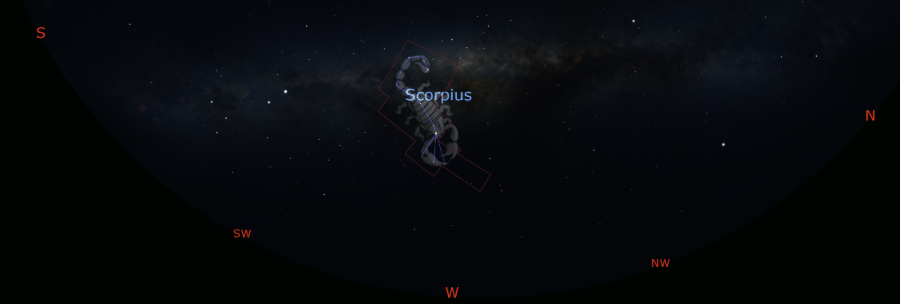
September continues the season of Djilba and brings us into Spring, with the weather continuing to warm up. The Milky Way still makes for impressive viewing overhead during September, though is noticeably getting closer to the western sky by the end of the month.
Credit: Stellarium
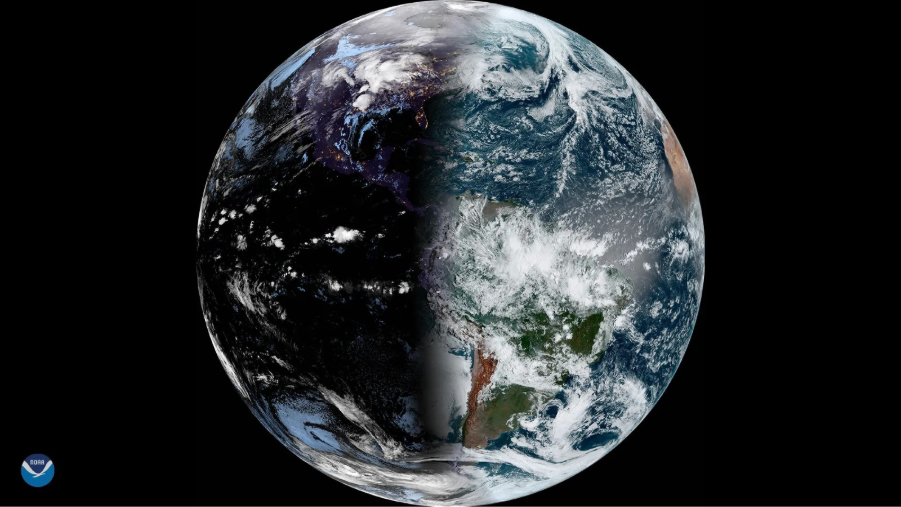
The spring equinox arrives on 23 September. On this day, the Sun passes directly over the equator, marking the astronomical beginning of Spring, and every place on Earth receives (pretty close to) 12 hours of day and 12 hours of night.
Viewed from space, the sunlight is shining on Earth ‘side on’ to the imaginary line connecting the north and south poles.
Credit: NASA
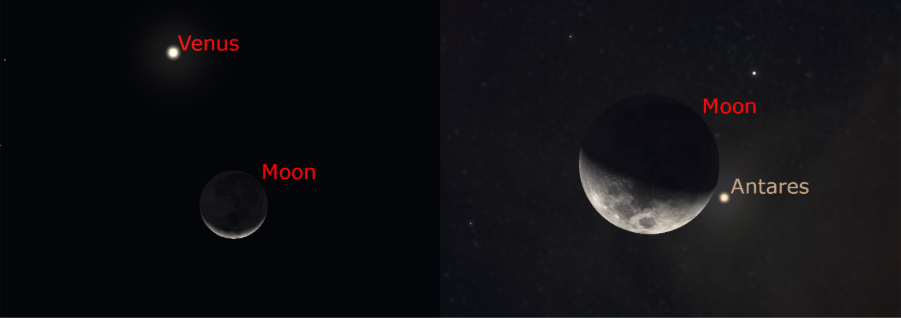
The Moon has a close encounter with Venus on 14 September, and a few days later a very close pass by of Antares on 17 September.
Credit: Stellarium
Moon phases
4 September: Last Quarter
11 September: New Moon
19 September: First Quarter
27 September: Full Moon
Dates of interest
14 September: Moon close to Venus
17 September: Moon very close to Antares
23 September: Spring Equinox
Planets to look for
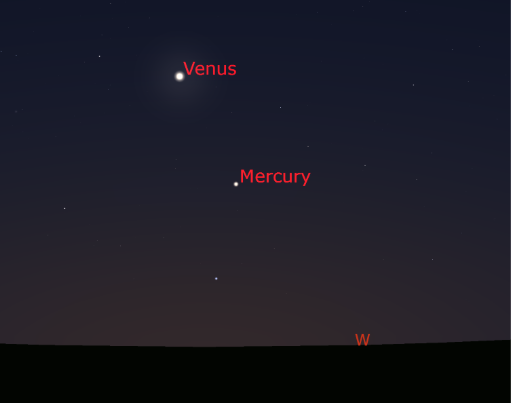
Venus continues to shine brightly in the western sky during the evenings. It has a close encounter with the Moon on 14 September that is worth going outside for. It is joined by Mercury in the second half of the month, making for nice viewing after sunset.
Credit: Stellarium
Saturn can be seen in the northeastern sky after about 9pm this month, though it makes for better viewing during October.
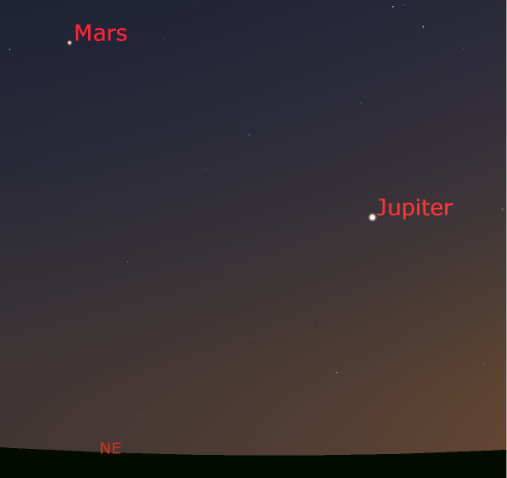
Mars continues its months long habit of staring silently from the northeastern sky in the hours before sunrise. It is joined by Jupiter, re-emerging from behind the Sun where it was lost in its glare last month.
Credit: Stellarium
Constellation of the month
Ophiuchus – The Serpent Bearer
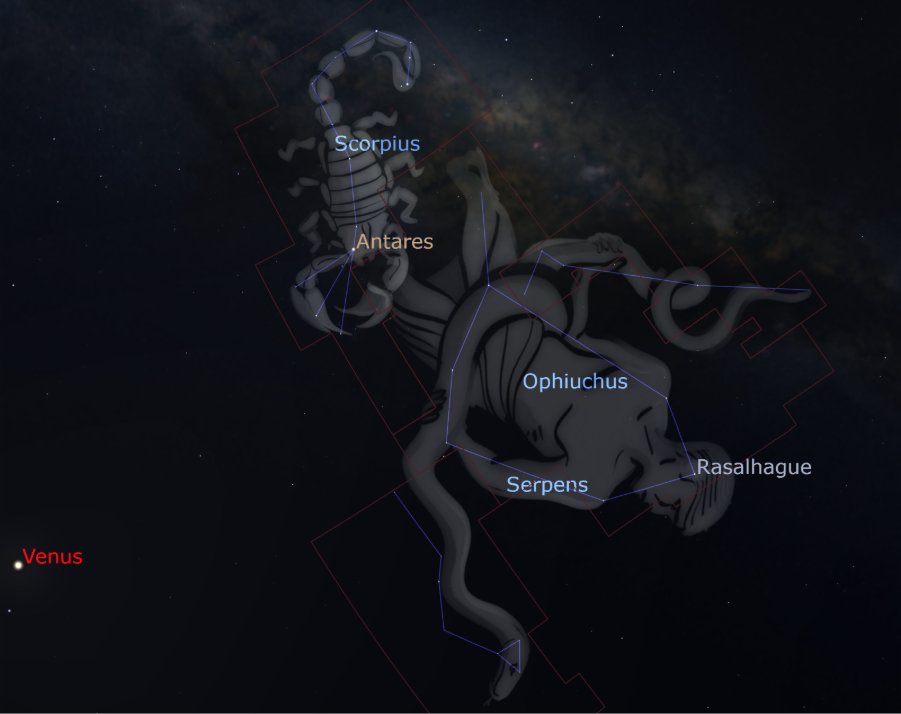
Ophiuchus is a large constellation located just underneath Scorpius in the northwestern skies during September evenings. Translated literally as ‘serpent bearer’, the constellation is often shown as exactly that.
The serpent is associated with the constellation Serpens, which borders Ophiuchus on either side as Serpens Caput (the head) and Serpens Cauda (the tail). Observationally, Ophiuchus is a ‘pointed rectangle’ of stars.
The brightest star Alpha Ophiuchi is more commonly known as Rasalhague, meaning ‘Head of the Serpent Charmer’.
Credit: Stellarium
Ophiuchus crosses the celestial equator – the imaginary projection of Earth’s equator into space, so is equally visible to people in the Northern and Southern Hemisphere. The apparent path of the Sun through the sky – called the ecliptic – also passes through Ophiuchus, making it a zodiacal constellation.
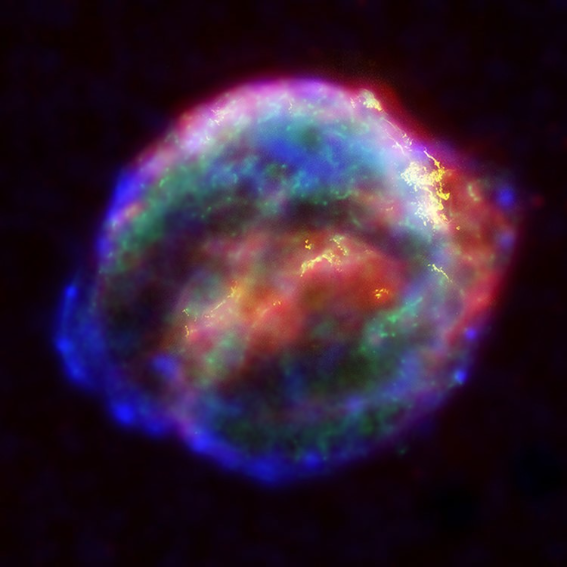
In 1604, Ophiuchus was the location of Kepler’s Supernova – an event described in detail by Johannes Kepler in his book On the New Star in the Foot of the Serpent Handler.
This supernova is the most recent supernova to be observed in the Milky Way and, for a short period, was brighter than any star in the night sky with an estimated magnitude of about –2.5.
Credit: NASA
Modern analysis has identified Kepler’s Supernova as a type 1a event, a special type of supernova where a white dwarf star strips matter off a nearby companion star until it gets so heavy it collapses and explodes.
The same scenario can be observed playing out in the nearby object RS Ophiuchi, a binary system containing a white dwarf star and a red giant companion. Over time, material stripped from the red giant gradually accumulates on the surface of the white dwarf.
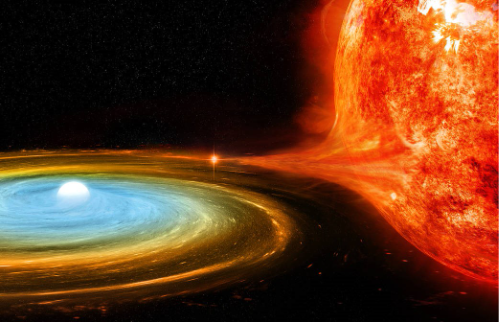
Credit: NASA/CXC/M.Weiss
Every now and then, when enough material has built up, conditions are perfect for a brief and intense period of fusion on the surface of the white dwarf. This brief period of activity makes the otherwise dim white dwarf star hundreds of times brighter, often making it visible to the naked eye. Historical astronomers called these ‘nova’, meaning ‘new’ stars.
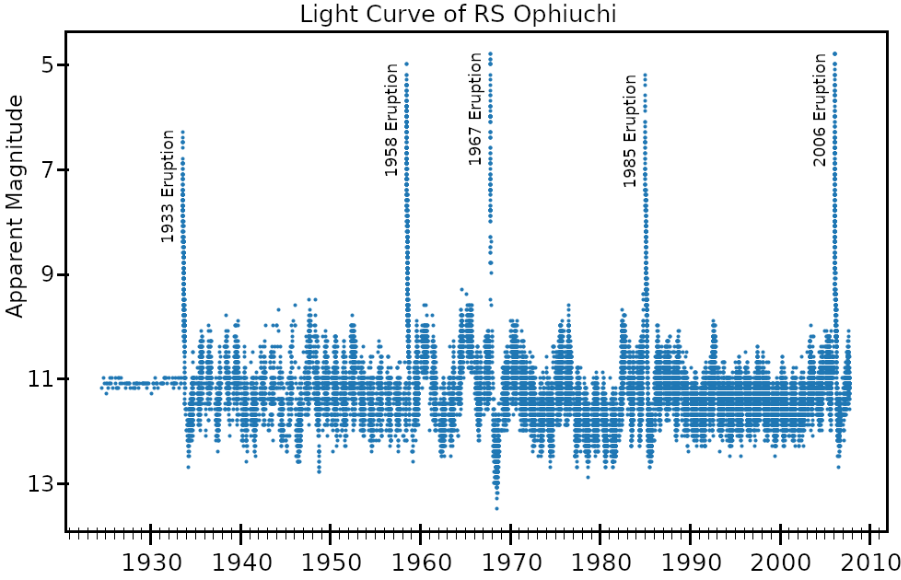
Credit: PopePompus CC BY-SA 4.0
White dwarfs can only exist up to a certain mass – called the Chandrasekhar Limit. As a white dwarf strips matter from a companion star, occasionally flaring up as a nova, it slowly gets heavier and heavier.
When its mass reaches the Chandrasekhar Limit, the electron degeneracy that holds the star together fails, and the star collapses and explodes in a supernova. This will be the fate of RS Ophiuchi sometime in the future, just like Kepler’s Supernova a few centuries ago.
Object for the small telescope
Barnard’s Star – The second closest star system to us
Located in the constellation of Ophiuchus, the faint Barnard’s star wasn’t properly studied until the early 20th century, when it’s rapid motion across the sky suggested it was nearby to the Sun. Its measured distance of 5.29 light years places it as the second closest star system, and the fourth closest star to the Sun (after the three stars in the Alpha Centauri system).
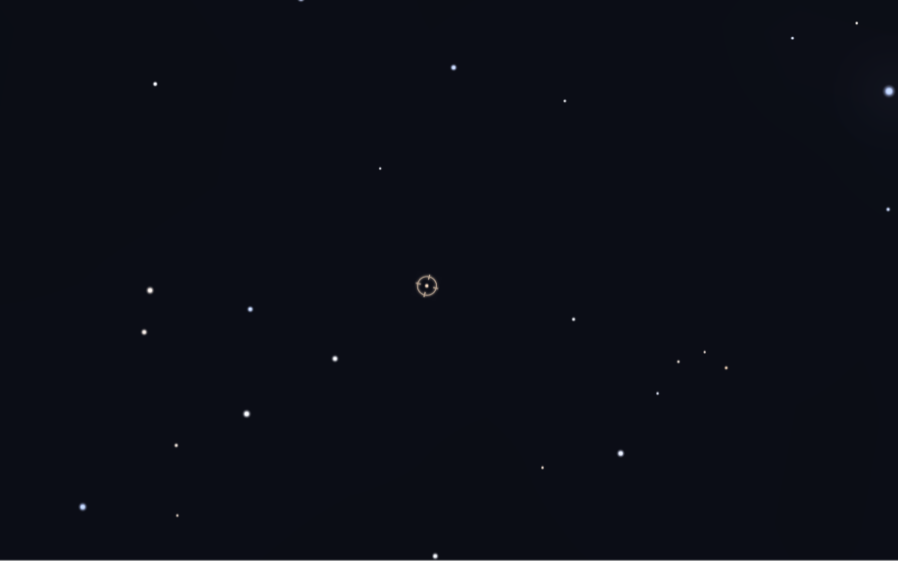
Credit: Stellarium
Barnard’s Star is moving at about 142km/s in the general direction of the solar system and will make its closest approach in about 9000 years where it will almost, but not quite, become the closest star to the Sun. It will still just be edged out of that title by the Alpha Centauri system, which is also getting closer to the Sun.
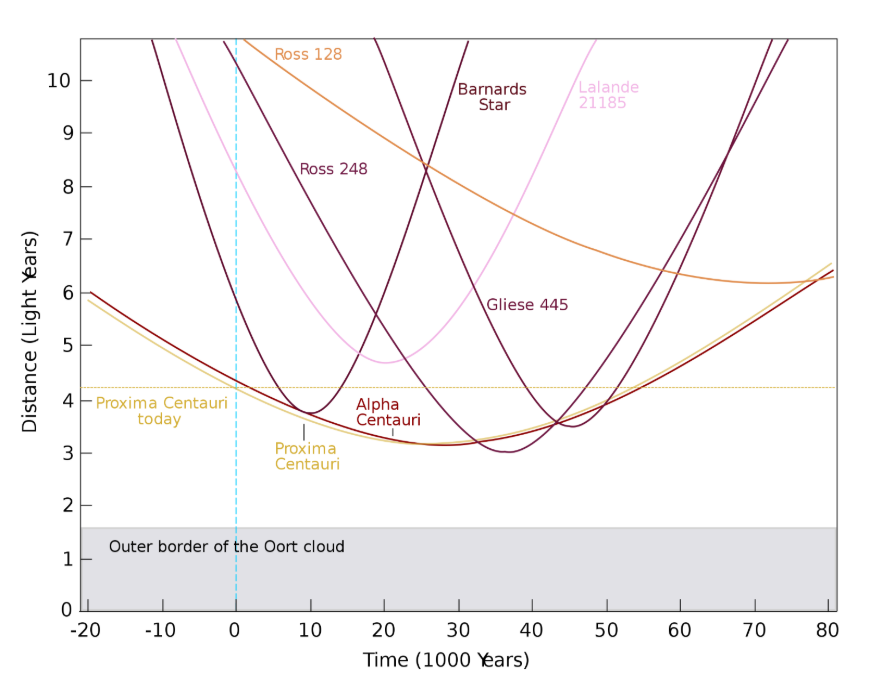
Credit: FrancescoA CC BY-SA 3.0