

You might be interested
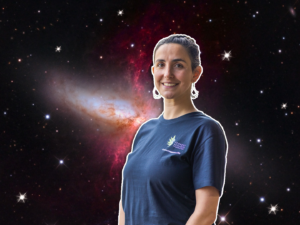
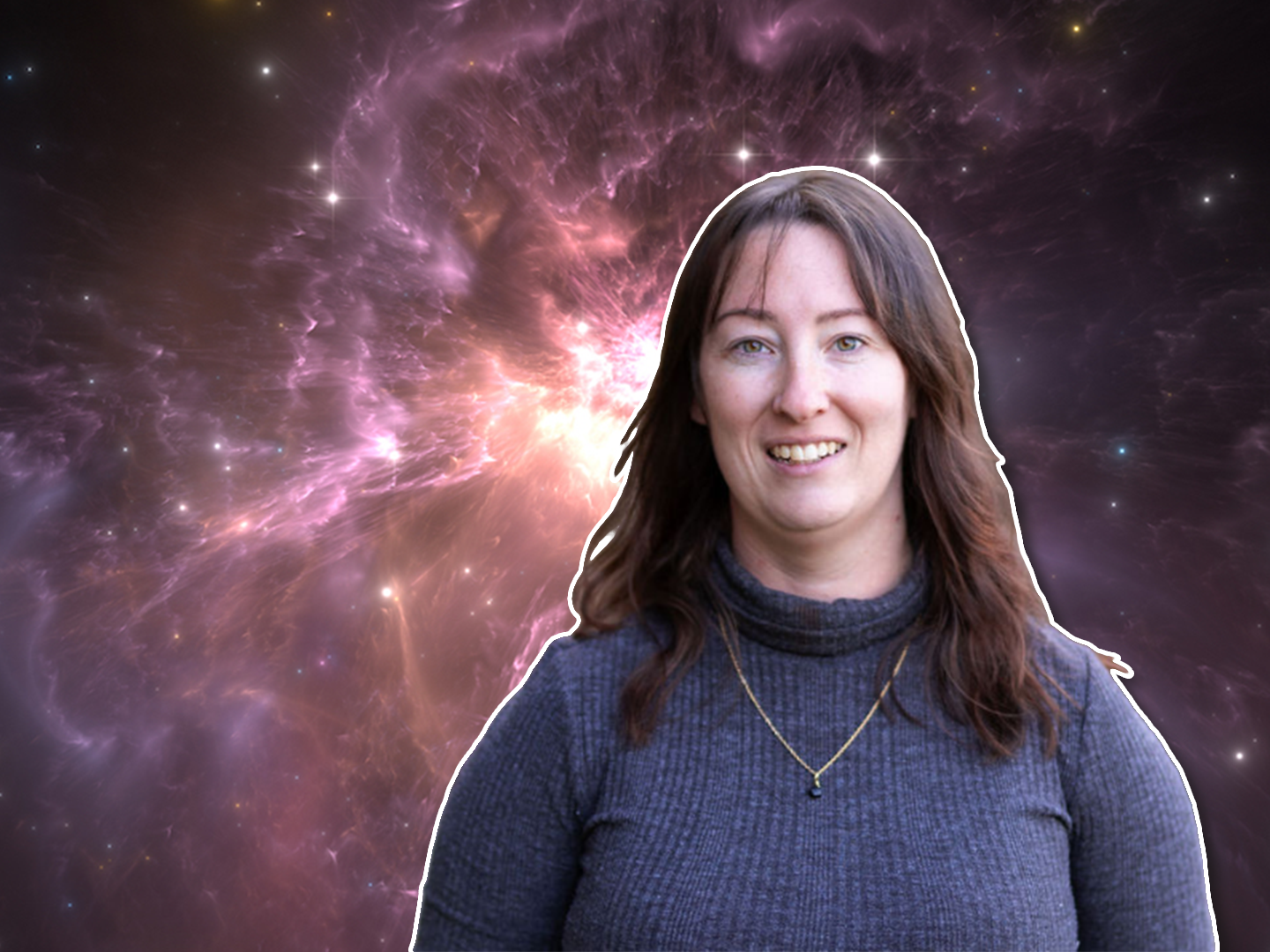
Fiona Panther’s fascination with space started at a young age.
“I was probably under the age of 10, and I remember my parents taking me out into the garden really late at night to look at [a comet] through the binoculars and I was just kind of fascinated from there,” says Fiona.
“I had an absolutely excellent physics teacher when I started high school, and he had done a PhD in astronomy and kind of put the seed in my brain that this was a job you could actually do.
“From there, it’s kind of just been a bit of an obsession.”
This obsession motivated Fiona to pursue a career in astronomy and astrophysics, where she now tackles some of the biggest mysteries in the universe.
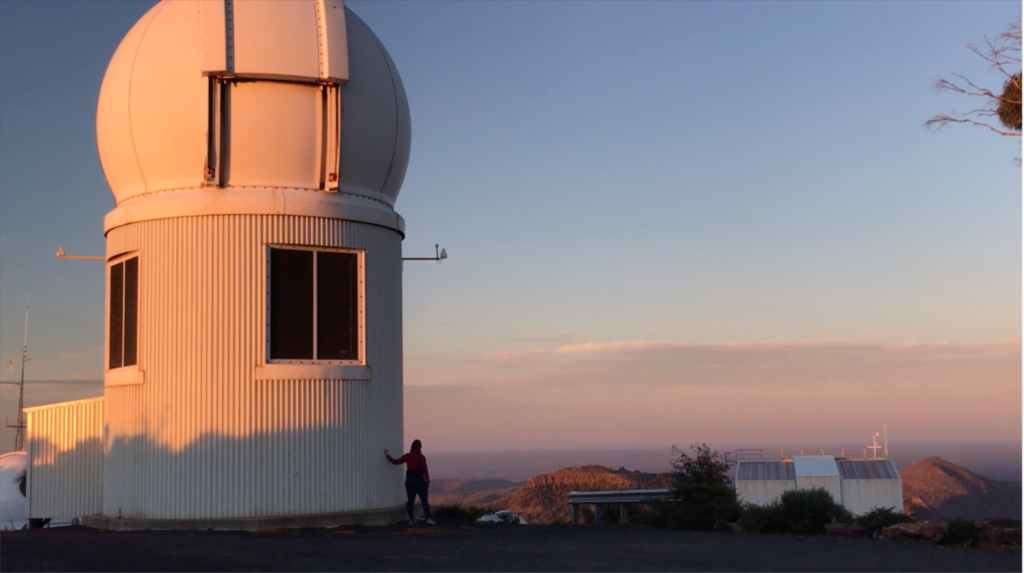
Credit: Supplied Fiona Panther
“One of the big questions that I want to try and understand is what is causing the expansion of the universe to accelerate?” says Fiona.
“We know that the universe’s expansion is accelerating, [and] we think that this is being caused by something we call dark energy.”
THE BIG UNKNOWN
While dark energy is estimated to make up about 70% of the universe, scientists still don’t know what it is.
Researchers believe it could be behind the accelerating expansion of the universe, which was discovered in 1998.
One of the teams behind the discovery was led by Australian National University astronomer Brian Schmidt, who shared the 2011 Nobel Prize in Physics for the revelation.
Decades later, questions about the universe’s expansion remain unanswered.
“The two different most well-known ways that you measure the expansion rate of the universe … disagree with one another,” says Fiona.
“I’m quite interested in this because I work with gravitational waves, and they offer us a whole new way of making this measurement of the expansion rate of the universe.”
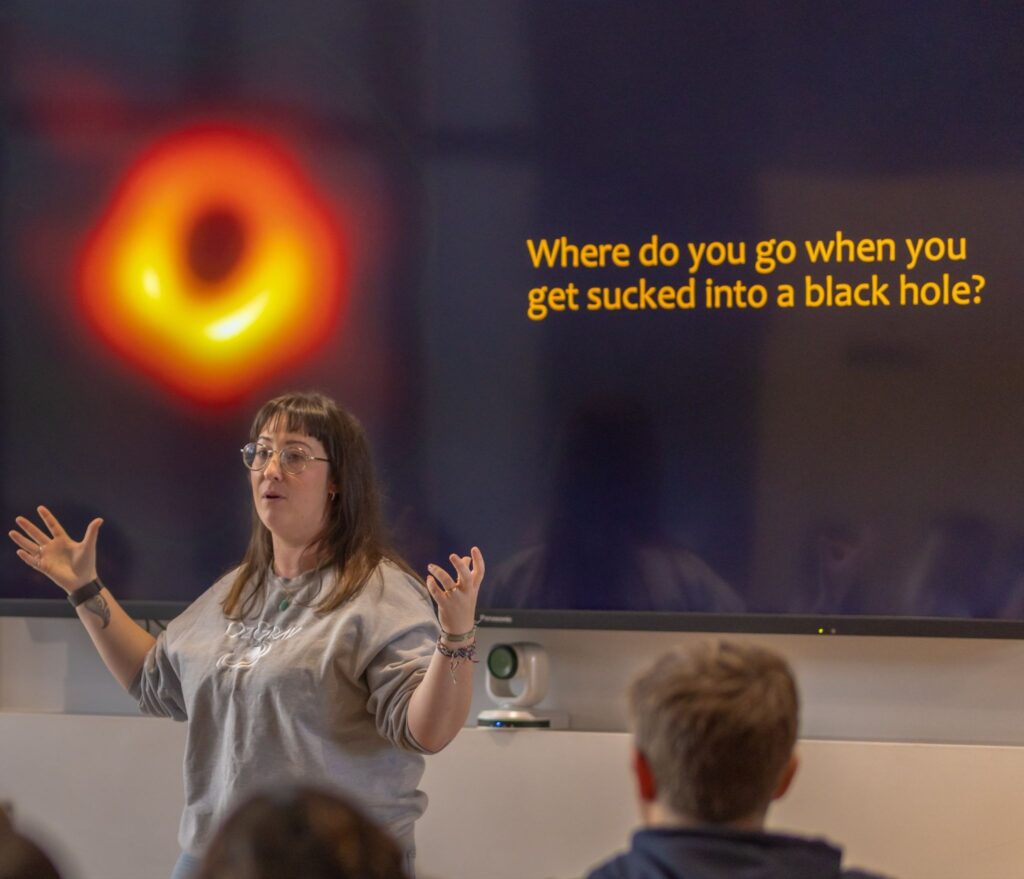
Credit: Supplied Fiona Panther
“It might shed light on why these measurements disagree with one another and what dark energy actually is.”
“Currently, this is a really big unknown in science and cosmology, and we want to have an explanation for that so it’s very satisfying to search for an explanation.”
WAVES OF DISCOVERY
As a Forrest Research Fellow at UWA, Fiona uses different techniques to study gravitational waves, which are tiny ripples in space-time produced by extreme events in the universe.
Western Australia has a long history in gravitational wave research. UWA researchers were integral to developing the technology that led to the world’s first detection of gravitational waves from colliding black holes in 2015.
More than a decade later, the techniques used by Fiona to study events billions of light years away could help researchers make much closer-to-home discoveries.
“It’s been quite interesting to speak to colleagues who are doing things that you’d never think were remotely related to anything that I work on,” says Fiona.
“I’m looking at things that are millions or billions of light years away, but it turns out that there are people who are trying to make measurements in the lab … [who] can use very similar techniques to analyse their data.”
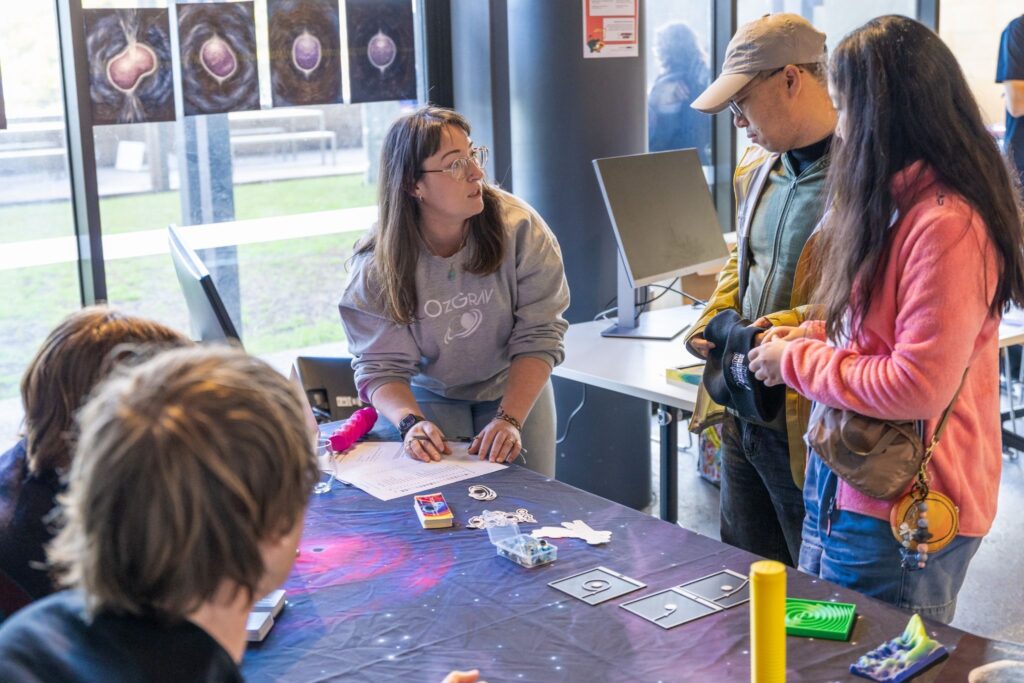
Credit: Supplied Fiona Panther
FROM SPACE TO THE BRAIN
These techniques could help people living with tinnitus, which can cause a person to hear ringing or buzzing in their ears.
“I have a colleague in neuroscience I’ve started working with and we’ve figured out that we can apply gravitational wave detection technology to identifying changes in brain waves that indicate [when] someone’s experiencing tinnitus,” says Fiona.
“We’re currently investigating whether we can use this to diagnose people objectively with tinnitus rather than just relying on their self-reporting.”
This collaboration shows how techniques used to answer questions about the universe could be applied to seemingly unrelated fields of science.
“All scientists think in a very sort of similar way. You make a hypothesis, you design experiments, you test things,” says Fiona.
“Because we’re all trained to think in this quite objective way, it means that you have this ability to apply things from one area to another.
“If you just get talking to someone, there’s usually some common ground somewhere.”