

READ

PARTICLE 101: STIMULANT MEDICATION AND ADHD

The meth-conception of ADHD.
Kate Holmes
Kate Holmes
Freelance Writer
PARTICLE 101: STIMULANT MEDICATION AND ADHD

The first time I took stimulant medication for my lifelong neurodevelopmental condition felt like I was going against everything a friendly itinerant giraffe puppet had told me about not doing illicit drugs. 

I was apprehensive – it was basically “medical meth”, right?

I swallowed the pill and waited for something to happen. Nothing did. 

Literally, nothing. For the first time in my adult life, I felt calm. The chaotic squirrels that live inside my head and insist on constantly changing the TV channel finally decided to take their own advertisement break.

The thing is, ADHD stimulant medication is not meth, and it comes down to chemistry.

BREAKING DOWN BREAKING BAD

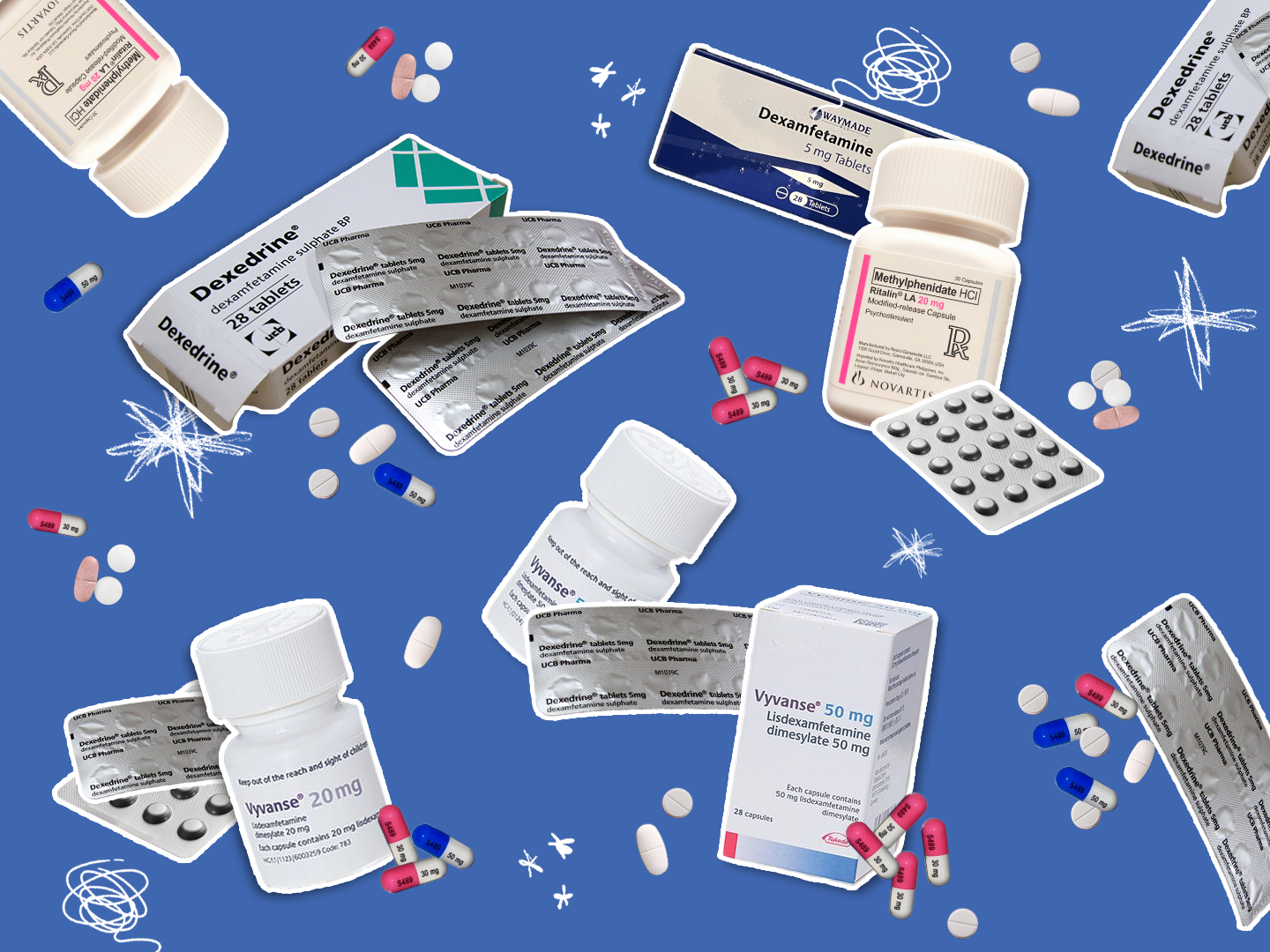
Stimulant medications used to treat ADHD include methylphenidate (brand names like Concerta and Ritalin LA) and dexamphetamine (Adderall, Vyvanse).

They work by increasing the activity of neurotransmitters, including dopamine and noradrenaline. These chemicals help regulate attention, motivation and executive function.

These medications belong to the same chemical family as methamphetamine.
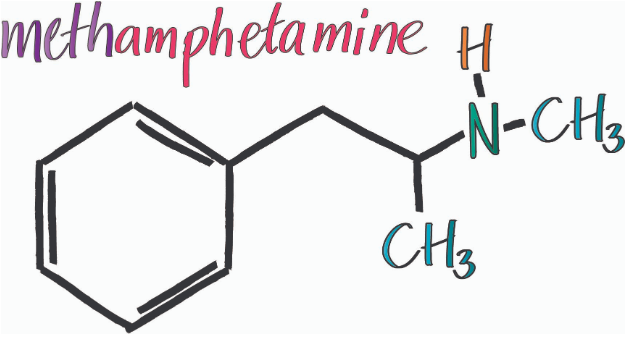
Caption: There are three atoms separating amphetamine and methamphetamine –  this difference in chemistry matters.
Credit: Kate Holmes

For someone without ADHD, the extra stimulation may feel energising or euphoric by ‘speeding up’ their heart rate, breathing and mental processing.

For someone with ADHD, it can feel like the opposite. It helps regulate executive function and attention and successfully tune out the white noise in my head to be able to write this article that you are reading now.
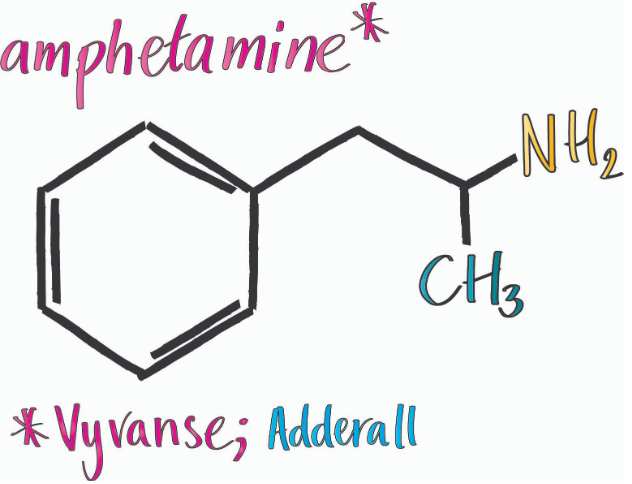
Caption: Amphetamine’s chemical composition is C9H13N. Vyvanse and Adderall are common brand names for amphetamines.
Credit: Kate Holmes

PILLS DON’T MAKE SKILLS

If amphetamines are similar to meth, does that mean ADHD medication is addictive? 

Hardly. I regularly forget to take my medication. Like, a lot.
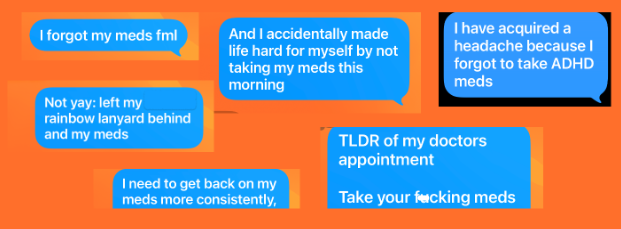
Caption: ADHD commonly affects executive functions like planning, organisation and remembering future tasks.
Credit: Kate Holmes

Ironically, the reason I forget to take my medication is probably the same reason I need it. 

The misconceptions around ADHD medication can delay diagnosis and treatment, fuelled by fear rather than evidence.

There are three atoms separating amphetamine and methamphetamine but only one atom separating table salt (NaCl) and bleach (NaClO). Yet nobody calls sprinkling chicken salt on their hot chips “basically bleach”.

The conversations we have around ADHD treatment matter: there’s no medication needed for empathy, understanding and better societal structures.


Kate Holmes
About the author
Kate Holmes
Kate is a former West Aussie farm kid, linguist and speech pathologist. A jack of all trades, she’s worked with everyone from medical students to radio astronomers, and appreciates the beauty of a well crafted spreadsheet. She still wants to be Ms Frizzle and Simone Giertz when she grows up.
View articles
Kate is a former West Aussie farm kid, linguist and speech pathologist. A jack of all trades, she’s worked with everyone from medical students to radio astronomers, and appreciates the beauty of a well crafted spreadsheet. She still wants to be Ms Frizzle and Simone Giertz when she grows up.
View articles

NEXT ARTICLE

We've got chemistry, let's take it to the next level!

Get the latest WA science news delivered to your inbox, every fortnight.

This field is for validation purposes and should be left unchanged.

Republish

Creative Commons Logo

Republishing our content

We want our stories to be shared and seen by as many people as possible.

Therefore, unless it says otherwise, copyright on the stories on Particle belongs to Scitech and they are published under a Creative Commons Attribution-NoDerivatives 4.0 International License.

This allows you to republish our articles online or in print for free. You just need to credit us and link to us, and you can’t edit our material or sell it separately.

Using the ‘republish’ button on our website is the easiest way to meet our guidelines.

Guidelines

You cannot edit the article.

When republishing, you have to credit our authors, ideally in the byline. You have to credit Particle with a link back to the original publication on Particle.

If you’re republishing online, you must use our pageview counter, link to us and include links from our story. Our page view counter is a small pixel-ping (invisible to the eye) that allows us to know when our content is republished. It’s a condition of our guidelines that you include our counter. If you use the ‘republish’ then you’ll capture our page counter.

If you’re republishing in print, please email us to let us so we know about it (we get very proud to see our work republished) and you must include the Particle logo next to the credits. Download logo here.

If you wish to republish all our stories, please contact us directly to discuss this opportunity.

Images

Most of the images used on Particle are copyright of the photographer who made them.

It is your responsibility to confirm that you’re licensed to republish images in our articles.

Video

All Particle videos can be accessed through YouTube under the Standard YouTube Licence.

The Standard YouTube licence

  1. This licence is ‘All Rights Reserved’, granting provisions for YouTube to display the content, and YouTube’s visitors to stream the content. This means that the content may be streamed from YouTube but specifically forbids downloading, adaptation, and redistribution, except where otherwise licensed. When uploading your content to YouTube it will automatically use the Standard YouTube licence. You can check this by clicking on Advanced Settings and looking at the dropdown box ‘License and rights ownership’.
  2. When a user is uploading a video he has license options that he can choose from. The first option is “standard YouTube License” which means that you grant the broadcasting rights to YouTube. This essentially means that your video can only be accessed from YouTube for watching purpose and cannot be reproduced or distributed in any other form without your consent.

Contact

For more information about using our content, email us: particle@scitech.org.au

Copy this HTML into your CMS
Press Ctrl+C to copy