Read next

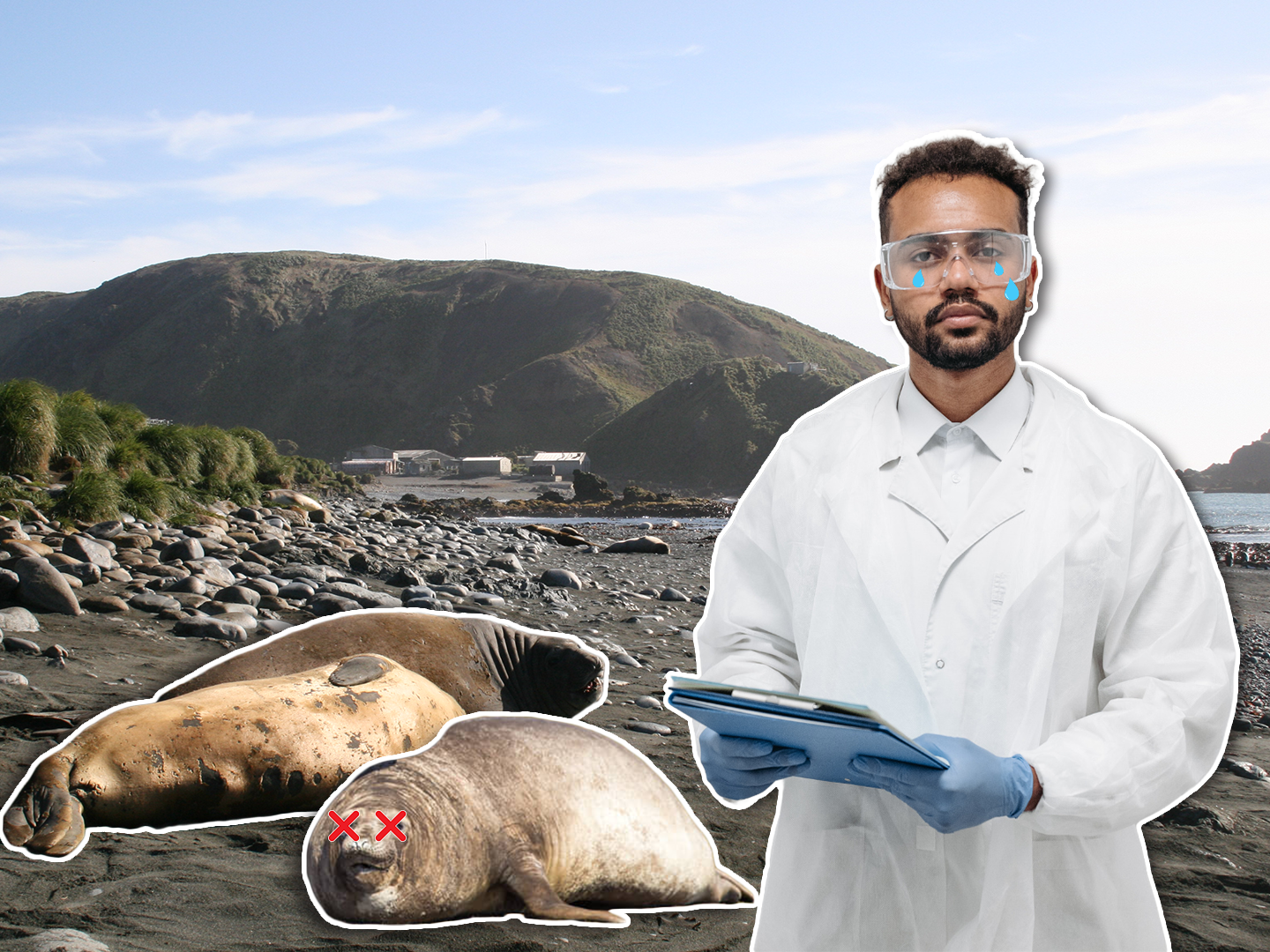
In an unusual move, staff have been withdrawn from Macquarie Island over concerns for their psychological safety.
The decision comes as cases of H5 avian influenza (bird flu) rise, with hundreds of positive events detected in Australia so far.
The Department of Climate Change, Energy, the Environment and Water announced the temporary withdrawal in August, due to the high likelihood of a mass wildlife mortality event during the island’s elephant seal breeding season.
In a statement, a Department spokesperson said that, “while the risk to humans remains low, a significant wildlife mortality event could expose expeditioners to prolonged psychological stress and other workplace impacts”.

Credit: Pete Harmsen/Australian Antarctic Division
PROTECTING MORE THAN PARTICIPANTS
Withdrawing staff highlights an often-overlooked aspect of research.
As Emeritus Professor Bruce Smyth from the Australian National University explains, the focus is often on protecting research participants rather than the researchers conducting the work.
“Everyone’s concerned about participants’ wellbeing and safety – and rightly so – but there’s not a lot written about or thinking about researchers’ safety,” he says.
“Sometimes you can forget that researchers themselves are at risk and there need to be safety checks in place to make sure everyone’s OK.”
At Macquarie Island, the station’s remote location was another factor in the decision.
Located about 1,500 kilometres south of Tasmania, the island is one of Australia’s most isolated research locations.
The Department states “an unplanned evacuation could take months”, which is why it is taking “a planned and deliberate approach ahead of a wildlife mortality event”.

Credit: Marcus Hochuli/Australian Antarctic Division
But the risks associated with remote research aren’t unique to Macquarie Island.
“A lot of researchers do work in isolation in research centres or research can take people to all sorts of remote locations,” says ARC Laureate Professor Maureen Dollard from Adelaide University.
“Just like any other worker, remote work itself carries some extra burdens, like you are separated from your families, you’re separated from other social supports.
“You’ve got to think about the health and wellbeing of the workers and talk with them about what the psychosocial risks are that might be associated with the experience of a traumatic episode or event, in the situation that you are isolated and away from normal supports.”
RISKY BUSINESS FOR RESEARCHERS
Concerns about psychological safety go further than remote research stations.
A report released in February this year found psychosocial safety climate (PSC) risks in Australian universities are more than double those in the general workforce.
As the lead researcher, Maureen says the results weren’t surprising.
“We’ve been doing this kind of research in the university sector for the last 5 years,” she says.
“The results that we got from this much larger sample were pretty similar to what our suspicions were.
“It is true that our sample might be different from the population of university workers, but it did paint a very worrying picture.”
TO RESEARCH OR NOT TO RESEARCH
For researchers working with human participants, ethics committees are one part of the system designed to manage risks associated with research by weighing the benefits of research with the risks involved.
“If the benefit exceeds the risk, then we’ll look at that, but most importantly, it’s about identifying those risks and then explaining how you mitigate them,” says Bruce, who has served on several human research ethics committees.

Credit: Greg Stone/Australian Antarctic Division
“The biggest thing now is just being prepared to know what you’re walking into, which is why ethics committees have to approve these things in case there are blind spots.”
A SAFETY NET FOR SCIENCE
Safety protocols can also help protect researchers as they conduct their work.
“We look very carefully at safety plans, at exit interviews and around the ability of people to have checks on their own wellbeing when they do any kind of research,” Bruce explains.
“Sometimes committees will ask for a fortnightly or monthly report to be sent in by … a team member, just to keep an eye on things if they’re looking like there’s some sign of harm or danger.
“Society’s changed in many ways very rapidly. There are a lot more checks and balances.”
At Macquarie Island, the decision to withdraw staff shows how seriously these risks are being taken.
In the meantime, specialist equipment has been installed to monitor both wildlife and infrastructure on the island while it’s unstaffed, allowing research to continue from a distance.