READ

Buzzed up on native bees

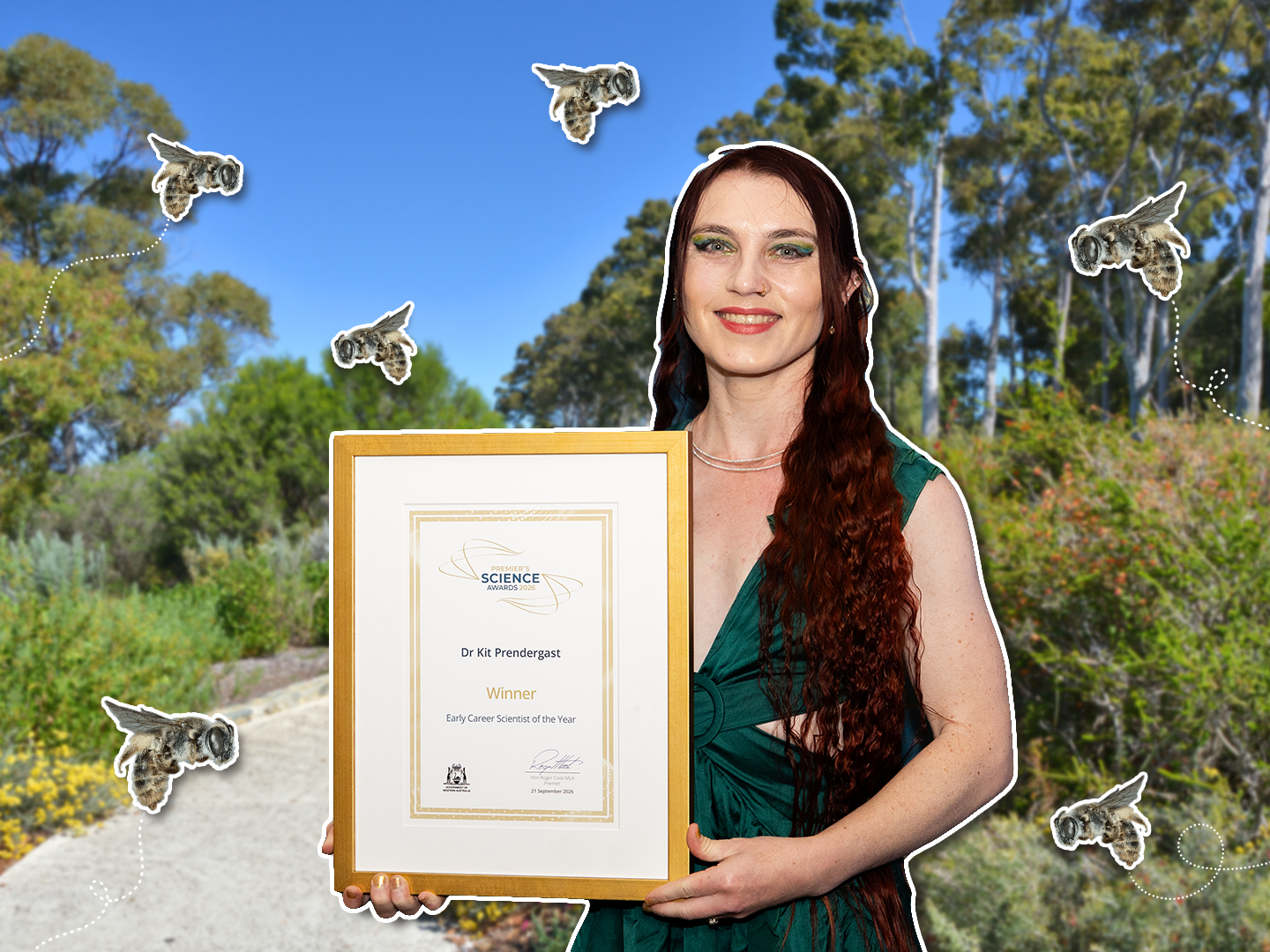
Dr Kit Prendergast is the bee’s knees. She just won Early Career Scientist of the year.
Dennis Power
Dennis Power
Freelance Writer
Buzzed up on native bees

Dr Kit Prendergast has long been fascinated by the natural world. 

“I love discovering things,” says Kit. 

“I also love being able to find out how, through science, we can conserve the amazing biodiversity that’s evolved on this planet.”

This curiosity has now landed her as the 2026 Early Career Scientist of the Year for the WA Premier’s Science Awards.

Kit’s research largely focuses on the conservation of native bees around Perth’s urban spaces. But that wasn’t always the case.

MAKING A MUSE

“I didn’t know that native bees existed when I was a kid … it wasn’t until I was at uni that I first even learnt about them during a lecture on alternative mating strategies,” says Kit.

In some species of bee, the lecturer illuminated, the males use different mating strategies based on their body size.

It made Kit think, “Wow, that’s really interesting.”

Soon after, she went to a photographic display of native bees, which would render that remark wildly understated.

“I thought, ‘Aww, these are really cute!’,” says Kit.

“I didn’t know that there were all these diverse native bees literally all around Perth,” she says, “and none of them look like a honeybee.”
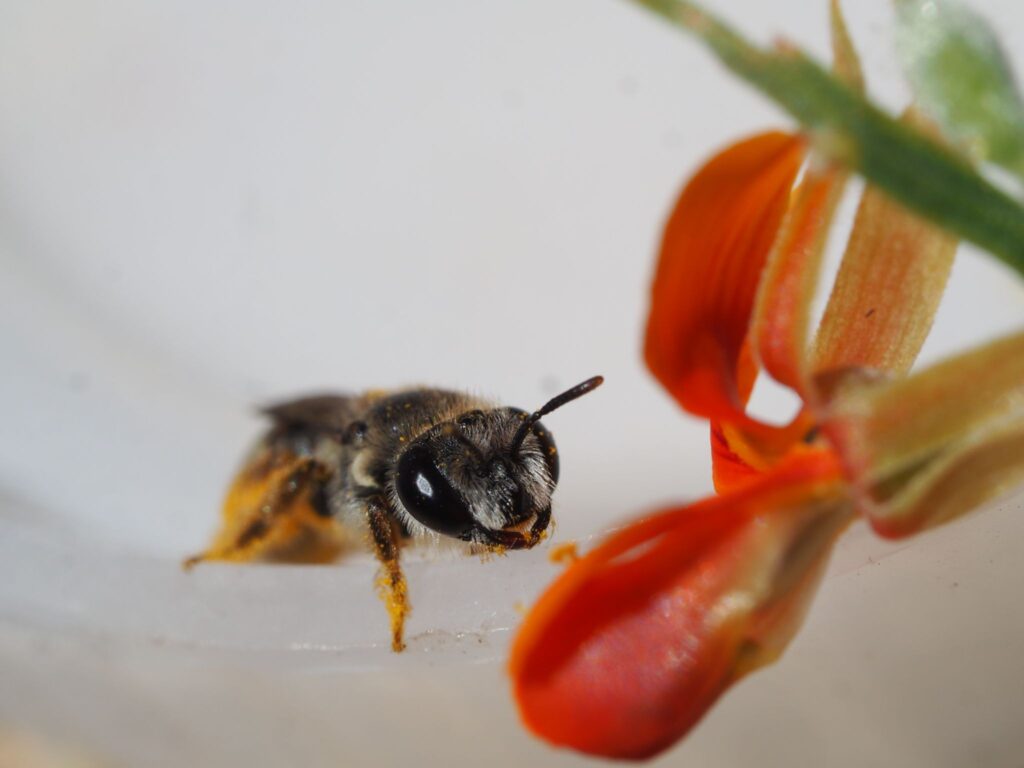
Caption: Aww, what a cutie!
Credit: Dr Kit Prendergast/@dr.beebabette

“From there, I became obsessed.”

MAKING A BEELINE

Upon completing her undergrad, Kit was drawn to postgraduate studies and she remembered those little native bees. She then went on to design a PhD project all about them.

“I wanted to know how we can conserve native bees in urban areas because it hadn’t been looked into that much,” says Kit.

Although Kit has just completed her first postdoctorate position researching the role of pollinators for canola, she still has plenty more she wants to find out.

“I am going to be a bee scientist until I die, it’s what I love.”

Five hours north of Perth, Kit and her colleague conducted the first survey of native bees and invertebrates in the region.

She’s also conducting surveys for the City of Perth and South West NRM to record the biodiversity in their green spaces.

All of this data contributes to one of Kit’s passion projects: an open-source database that helps people identify which plants are important for which pollinators and vice versa.

“I started this huge database of plants and pollinators when I was working with Greening Australia and [there are] 8,000 records there which are now being refined,” says Kit.

It will be the first database of its kind available in Australia.

YOU’D BETTER BEELIEVE IT

Kit has spent so long looking for native bees that she has even described two new species. The discoveries are among Kit’s many proud research moments.

Her first discovery was in 2022, an incredibly rare species called Leioproctus zephyr, named after her dog, Zephyr. It’s only found in seven locations around Perth (including King’s Park) and is internationally recognised as endangered.

“That was really special to me,” says Kit. 

“It’s so important to be able to document, monitor and assess the conservation status of species. If they aren’t described, you can’t do that.”

Her second bee discovery had local media buzzing, thanks to its demonic appearance. Megachile lucifer has distinctive, tiny devil-like ‘horns’.

And the origin of this species name? “I loved the Netflix show Lucifer,” laughs Kit.
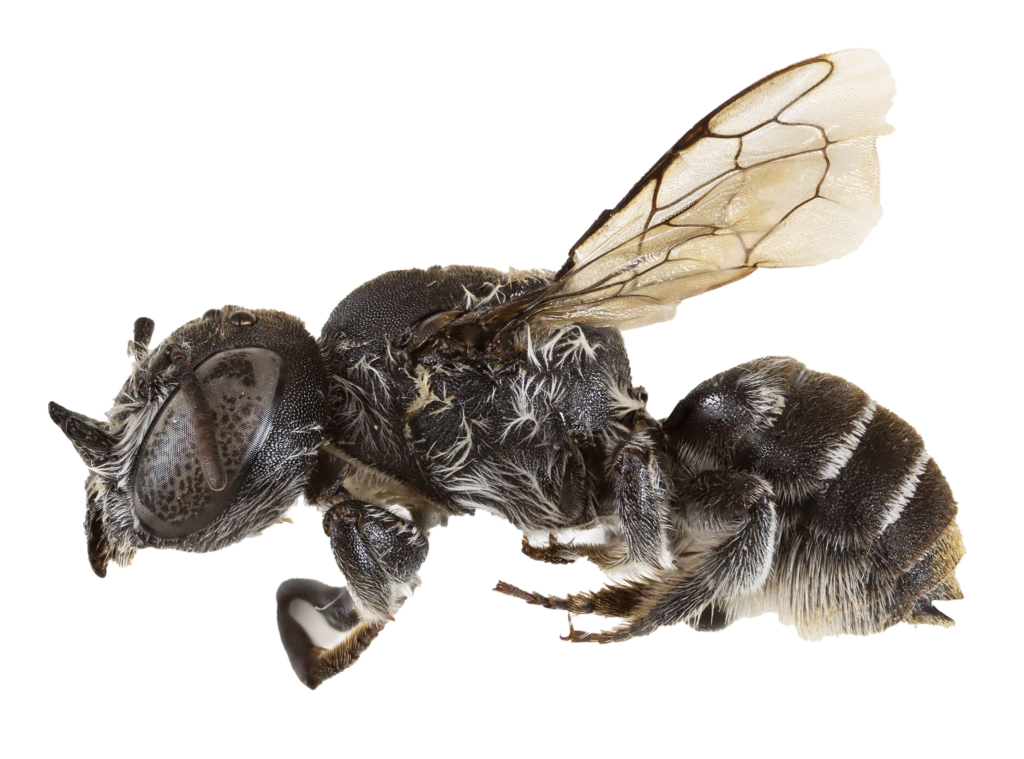
Caption: “I loved the Netflix show Lucifer.” 
Credit: Greg S/@aurorasos13

A BUSY BEE

Winning the Premier’s Science Awards isn’t the first time that Kit has been in the spotlight. In fact, she’s used to it.

By day, ‘the Bee Babette’ is a science communicator, frequently travelling Western Australia to teach kids about native bee conservation through her book, Amy the Amegilla.

By night, she’s a performance artist blurring the lines of what it means to be a scientist.

Kit describes her adults-only Perth Fringe Festival show, The Birds and the Bees, as a circus/science comedy with a sexy take on pollination.

Her advice to the next generation of aspiring scientists is simple.

“Science is the best career to pursue because you’re always learning and discovering new things,” says Kit.

“You can really feel like you’re having an impact on the world.”
Dennis Power
About the author
Dennis Power
They say that curiosity killed the cat, but Dennis knows satisfaction brought it back. Obsessed with asking questions, getting answers, and learning new facts to share with anyone who will listen, science journalism was his logical destination. Dennis loves synthetic chemistry and is a regular contributor to the Chemistry in Australia magazine. He is also the science editor for The Metamorphosis Project Journal. After four years of his PhD he decided he’d rather not handle nasty chemicals every day and built a tiny house on wheels instead.
View articles
They say that curiosity killed the cat, but Dennis knows satisfaction brought it back. Obsessed with asking questions, getting answers, and learning new facts to share with anyone who will listen, science journalism was his logical destination. Dennis loves synthetic chemistry and is a regular contributor to the Chemistry in Australia magazine. He is also the science editor for The Metamorphosis Project Journal. After four years of his PhD he decided he’d rather not handle nasty chemicals every day and built a tiny house on wheels instead.
View articles

NEXT ARTICLE

We've got chemistry, let's take it to the next level!

Get the latest WA science news delivered to your inbox, every fortnight.

This field is for validation purposes and should be left unchanged.

Republish

Creative Commons Logo

Republishing our content

We want our stories to be shared and seen by as many people as possible.

Therefore, unless it says otherwise, copyright on the stories on Particle belongs to Scitech and they are published under a Creative Commons Attribution-NoDerivatives 4.0 International License.

This allows you to republish our articles online or in print for free. You just need to credit us and link to us, and you can’t edit our material or sell it separately.

Using the ‘republish’ button on our website is the easiest way to meet our guidelines.

Guidelines

You cannot edit the article.

When republishing, you have to credit our authors, ideally in the byline. You have to credit Particle with a link back to the original publication on Particle.

If you’re republishing online, you must use our pageview counter, link to us and include links from our story. Our page view counter is a small pixel-ping (invisible to the eye) that allows us to know when our content is republished. It’s a condition of our guidelines that you include our counter. If you use the ‘republish’ then you’ll capture our page counter.

If you’re republishing in print, please email us to let us so we know about it (we get very proud to see our work republished) and you must include the Particle logo next to the credits. Download logo here.

If you wish to republish all our stories, please contact us directly to discuss this opportunity.

Images

Most of the images used on Particle are copyright of the photographer who made them.

It is your responsibility to confirm that you’re licensed to republish images in our articles.

Video

All Particle videos can be accessed through YouTube under the Standard YouTube Licence.

The Standard YouTube licence

  1. This licence is ‘All Rights Reserved’, granting provisions for YouTube to display the content, and YouTube’s visitors to stream the content. This means that the content may be streamed from YouTube but specifically forbids downloading, adaptation, and redistribution, except where otherwise licensed. When uploading your content to YouTube it will automatically use the Standard YouTube licence. You can check this by clicking on Advanced Settings and looking at the dropdown box ‘License and rights ownership’.
  2. When a user is uploading a video he has license options that he can choose from. The first option is “standard YouTube License” which means that you grant the broadcasting rights to YouTube. This essentially means that your video can only be accessed from YouTube for watching purpose and cannot be reproduced or distributed in any other form without your consent.

Contact

For more information about using our content, email us: particle@scitech.org.au

Copy this HTML into your CMS
Press Ctrl+C to copy