
You might be interested



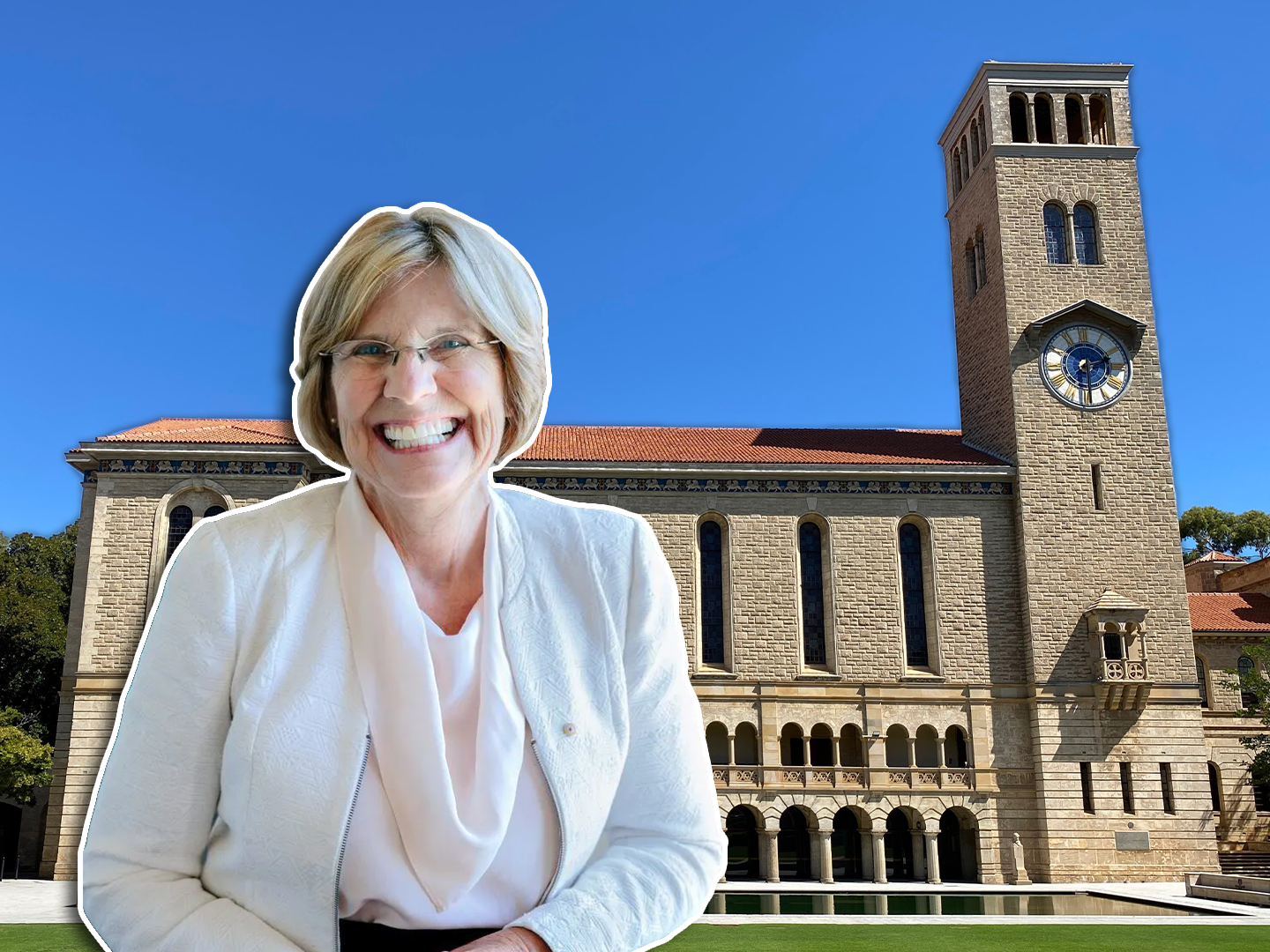
Professor Lyn Beazley’s love for science was sparked during a school excursion to Charles Darwin’s house in the United Kingdom.
“I would never forget, his front room was laid out with his desk, with a lot of his specimens and it included his microscope,” explains Lyn.
“I walked away from that visit, got on the bus and thought – I want to be a biologist.”
Lyn went on to study at the Universities of Oxford and Edinburgh, but her journey took a few twists and turns.
“When I did my degree, I started in botany, switched to zoology [and] I was going to go and do a PhD to learn research on fossils,” says Lyn.
“At the last minute, I went to a lecture by a gentleman who was working on recovery from brain damage at a time when everybody thought it was impossible.
“That’s how my career in neuroscience started.”
STUDYING THE BIOLOGICAL MACHINE
Lyn would go on to dedicate more than 30 years to neuroscience research.
Based at the University of Western Australia, Lyn delved into the neuroscience field, studying a range of topics from prevention of brain damage to changes in premature babies.
In 2008, Lyn was offered the role as Western Australia’s Chief Scientist, in which she served for 5 years, advising the government of the day on science, technology and innovation.
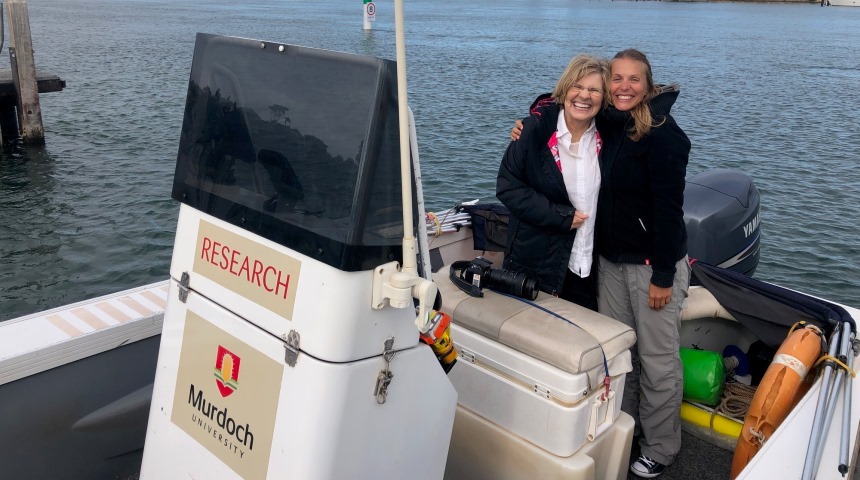
During this time, Lyn visited schools across the state to talk about science.
“Science and technology have driven history from the very beginning when humans decided they were going to be upright and walk on the plains,” says Lyn.
Credit: Supplied Lyn Beazley
“The ability to make a bucket, to pick up water, to be able to grind seeds for food, to design a spear or, even more amazing, a boomerang – this is all science in action.”
“You can read about it, you can see it on a TV screen, you can see it on your laptop, but it’s doing it that makes all the difference.”
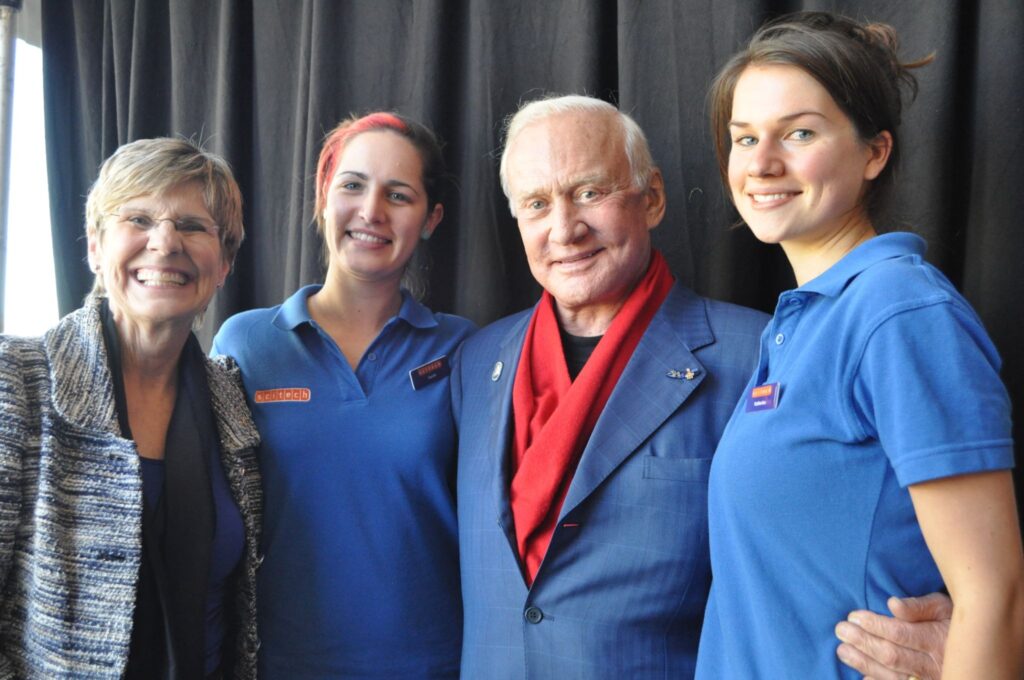
Lyn wanted to encourage children’s natural curiosity about the world and encourage them to consider a career in science.
“We have to inspire the next generation of scientists, technologists, engineers, mathematicians, social scientists,” says Lyn.
“If you look at people who’ve won the Nobel Prize … in science and in medicine, in particular, most of those discoveries were made when the person was within 5 years of their highest university degree.”
Credit: Supplied Lyn Beazley
“It might not have been awarded until later – or the relevance appreciated until later – but young brains seem particularly good at coming up with great ideas.”
LIFETIME OF RECOGNITION
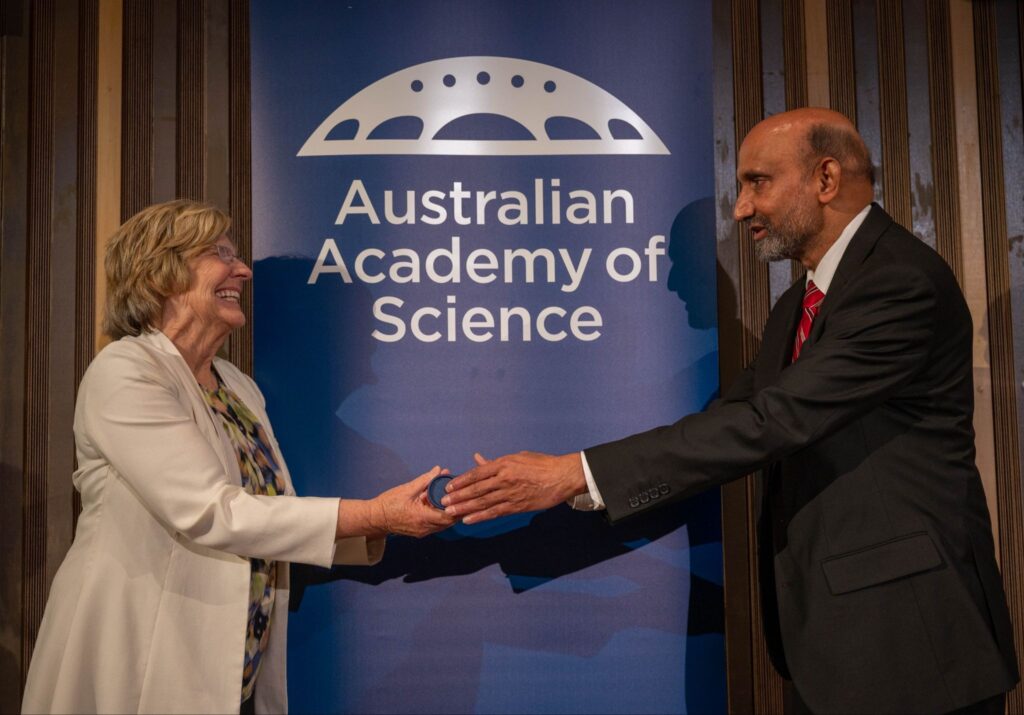
This passion and commitment to encouraging the next generation of scientists have earned Lyn some of the nation’s highest honours.
Lyn was awarded Officer of the Order of Australia, which recognises the outstanding achievements and service of Australians, in 2009.
In 2014, Lyn was inducted into the Western Australian Science Hall of Fame. A year later, she was selected as WA’s Australian of the Year for her work in neuroscience.
Credit: Supplied Lyn Beazley
Lyn currently sits on the Board of the Lyn Beazley Academy, a school dedicated to providing a research-driven environment for home-schooled teenagers.
Last year, the academy launched a new program for young people aged 15–17 living with autism that is focused on science, technology, engineering, the arts and mathematics.
“It’s the interaction of science, technology and engineering, backed up completely by mathematics, which underpins so much of what we do,” says Lyn.
“[Science and technology] will continue to play an increasing role in our future and I can’t tell you how.”
“All I can tell you is that trajectory is off and running and it’s getting steeper and steeper all the time.”