
Read next

Losing a baby tooth usually means a visit from the tooth fairy.
But for communities in WA’s Goldfields and Western Desert, the tooth fairy has a newfound purpose – to help researchers find answers about heavy metal exposure in children, whilst advocating for their right to access clean drinking water.
And this tooth fairy is relying on the communities themselves to get the job done.
RESEARCH SHAPED BY COMMUNITY
Dr Christine Jeffries-Stokes is a paediatrician who has spent over 20 years trying to improve health outcomes within communities in the Goldfields.
Her ties to the region run deep.
“My husband Geoffrey is a Wongatha man,” says Christine.
“I moved to Kalgoorlie and started a family, but continued working in research … with my sister-in-law Annette Stokes.”
From 2007 to 2014, Christine and Annette co-led the Western Desert Kidney Health Project.
Credit: © Centre for Water and Spatial Science at The University of Western Australia
During this time, they were attending a lot of funerals of people who were dying of kidney disease or diabetes complications.
“That got us thinking that maybe there was something we were missing.”
Yet, the results of the kidney project showed that for both Aboriginal and non-Aboriginal people in the Goldfields, the rates of kidney disease and Type 2 diabetes were similar.
Christine and Annette were then contacted by Sarah Bourke, a hydrogeologist at UWA, who helped them link a few new ideas together.
Toxic chemicals in drinking water are linked to different health issues in remote communities, but Sarah provided Christine and Annette with some more information about heavy metals and their solubility.
And so the Heavy Metal Tooth Fairy Project was born.
FAIRIES ON A MISSION
The Heavy Metal Tooth Fairy Project aims to identify children’s exposure to heavy metals in remote WA communities – from Wiluna to the Central Desert.
Unlike other tissues or fluids (like blood or urine), teeth can provide reliable clues about past exposure to heavy metals.
“Baby teeth start forming in utero, and so they’re there for the whole life of the child until they fall out,” says Christine.
“We decided to look at the baby teeth of children and have them analysed to see … if teeth can be used as a measure for heavy metal exposure.”
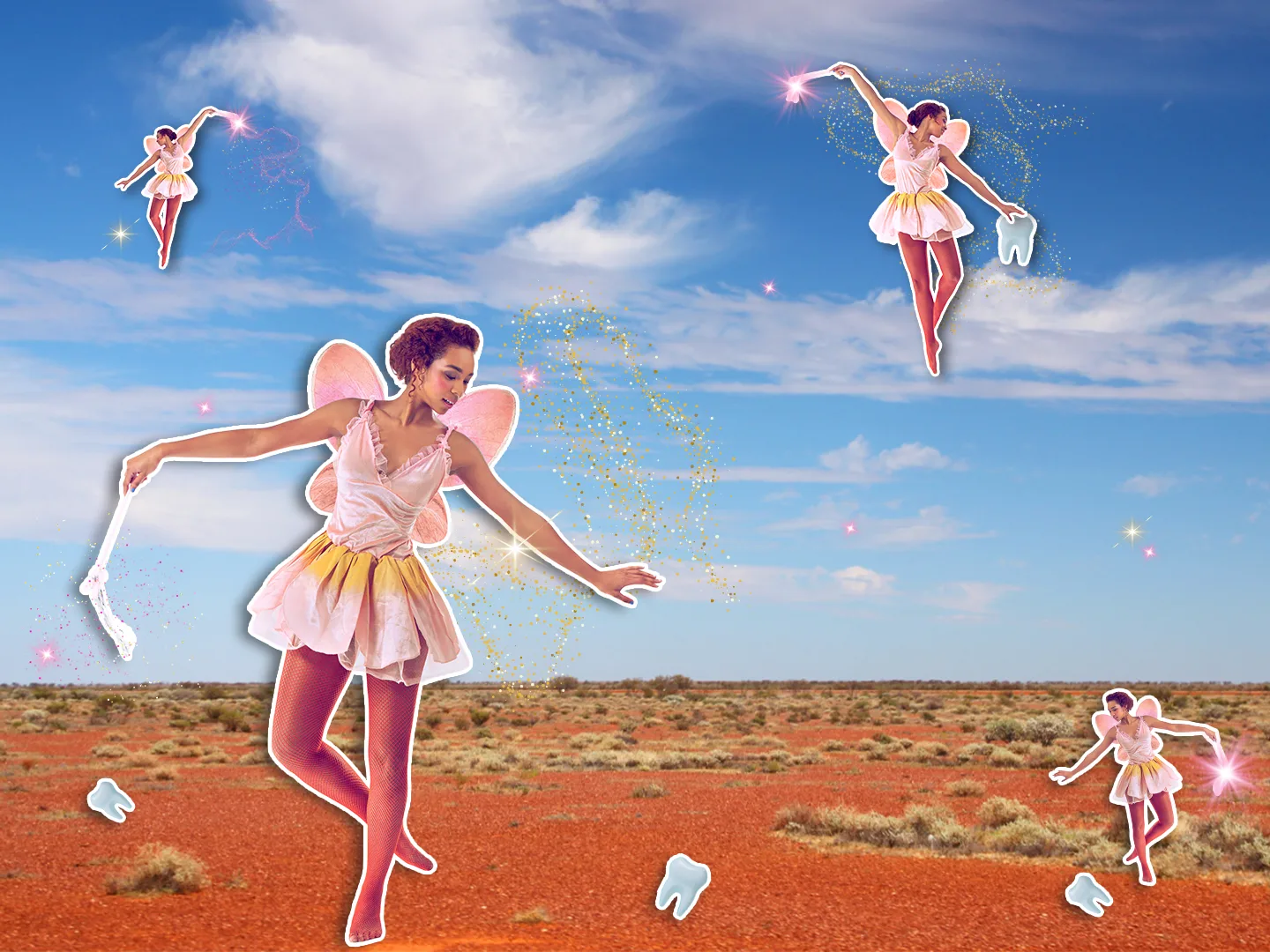
The researchers have enlisted the help of the beloved tooth fairy to achieve their goal and bring a little magic into the communities.
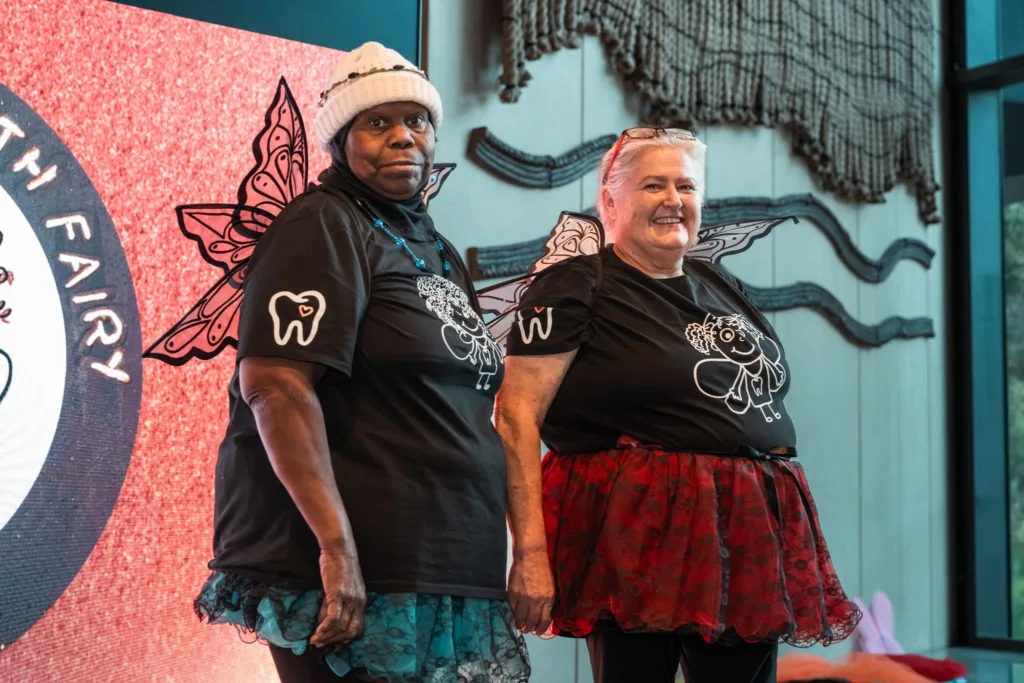
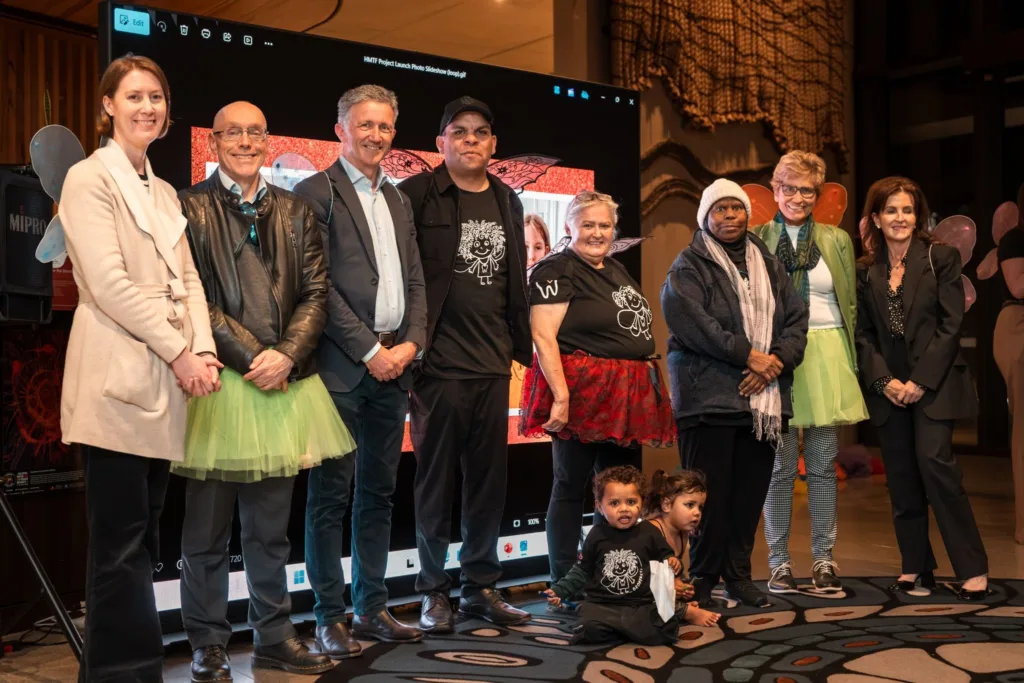
“Our research assistants are tooth fairies who visit the schools and do science activities,” says Christine.
“And yes, we do wear wings and tutus.”
Credit: © Centre for Water and Spatial Science at The University of Western Australia
THE STORY BEHIND THE TEETH
Once the fairies have collected their bounty, 125 teeth will be compared against those of children living in Perth, collected and stored by the ORIGINS Project.
ORIGINS has been collecting tissues and other samples from parents and children for ten years to find clues about how a child’s environment can impact their health and development.
“The kids in the Perth region are the control for the study,” says Nina D’Vaz, ORIGINS biobank manager.
“Looking at the teeth alone … we don’t really know what’s normal.”
Nina says it’s expected that heavy metal concentrations will be higher in children in remote communities.
Higher concentrations of heavy metals could be attributed to unclean drinking water, high levels of dust or being in close proximity to mining areas.
But Christine and her team need the ORIGINS biobank to understand how different heavy metal accumulation actually is in Aboriginal and non-Aboriginal children.
TWO(OTH)-WAY COLLABORATION
Instead of money, kids will obtain valuable knowledge in exchange for their baby teeth.
Part of the heavy metal tooth fairies job is to help communities assess the quality of their drinking water.
“We’ll be working with the schools and the children will … learn how to test the water [using] simple methods of purification, and they’ll provide information back to us,” says Christine.
The project aims to ensure that activities are carried out in meaningful ways that respect cultural traditions.
For instance, children have used artistic expressions like milpindi, or sand drawing, to share information about the Heavy Metal tooth fairy’s mission.
At the end of the project, the families will participate in the sharing and interpretation of results, and children will be given the opportunity to explain to their families what they learned.
Science is important, but elevating Aboriginal culture and knowledge is the key to a successful collaboration.
“This project grew out of the demand from the community to know more,” says Christine.
“We have Annette, but our tooth fairies are Aboriginal researchers who have also joined our team from the community.”
LOOKING AHEAD
The Heavy Metal Tooth Fairy Project seeks to change the future of WA’s remote communities.
“The science experiments with the children … will hopefully broaden their horizons about potential employment and interest in environmental health,” says Christine.
She says “we should be more concerned” about the health outcomes of Aboriginal children in the Goldfields and Central Desert.
“There’s a lot we don’t know, but we do know that clean, safe drinking water would give you a much better start in life,” says Christine.
Through community action, she hopes this project will provide strong data to enact meaningful change and ensure that clean water is no longer a luxury in WA.