


You might be interested


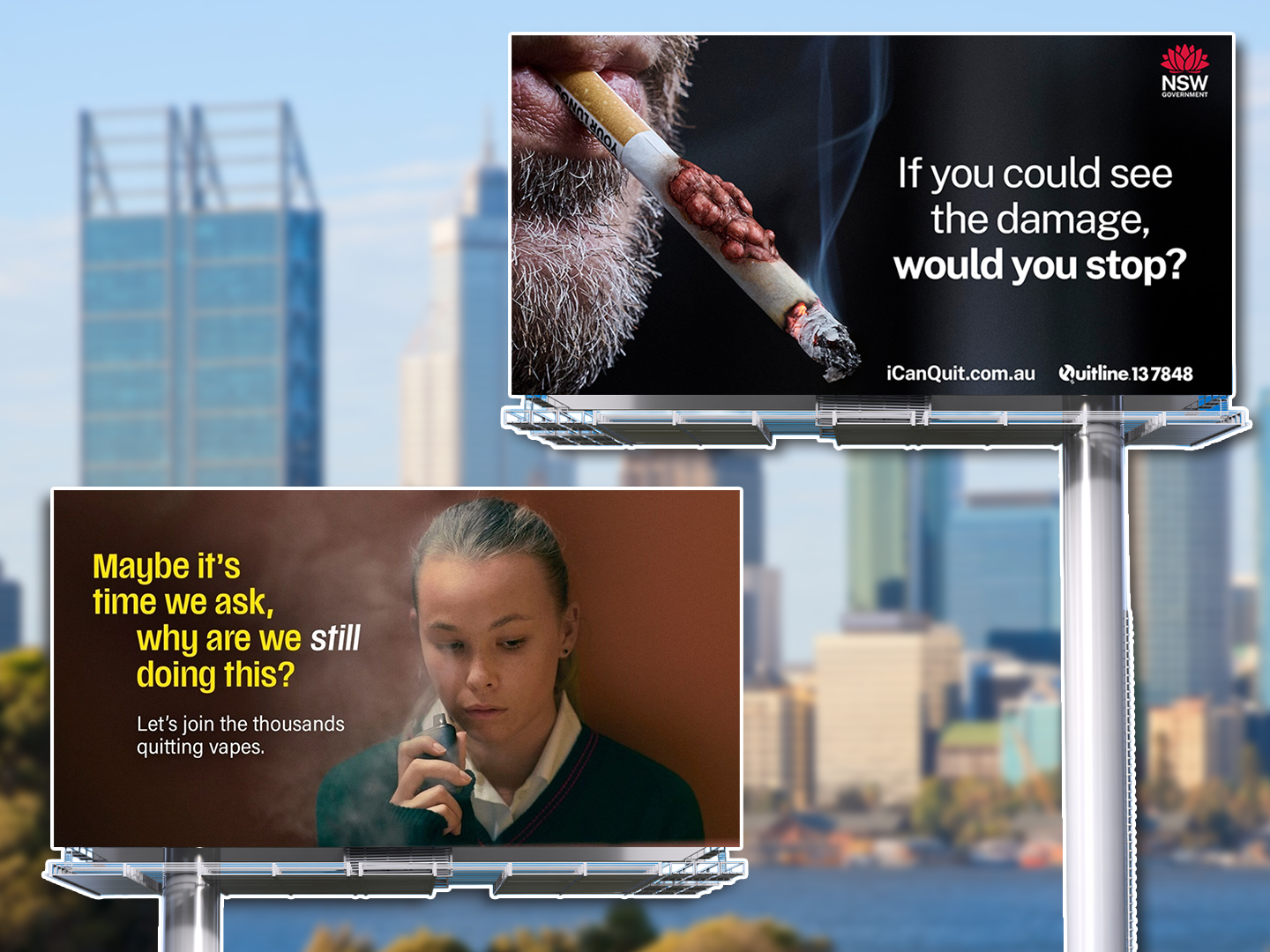
Smokers are confronted with disfigured body parts on their cigarette packets.
But vapers? They get a lesson in chemistry.
Australian public health campaigns have changed over the years, even when tackling the same issue: nicotine.
While anti-smoking campaigns use fear and social factors to try to reduce smoking rates, anti-vaping campaigns focus on individual physical health.
But why?
SMOKING, MEET FEAR
Beginning in the 1960s, anti-smoking campaigns have leaned on fear-based motivators like death and disease, and social shame. Similar motivators have been used recently too.
Cancer Council WA’s Make Smoking History campaign showed the surgical removal of a smoker’s voice box as a result of throat cancer in 2019.
In 2022, the Worried About You campaign encouraged smokers to quit for their family.
By 2026, the Beat the Cravings campaign, run by the Cancer Institute NSW, has a softer tone and provides simple and actionable steps to quit smoking tobacco.
These campaigns are targeted at adults for good reason.
According to Australia’s peak cancer authority Cancer Council Australia, anti-smoking education campaigns that target teenagers are largely ineffective.
Reducing adult smoking rates is what actually prevents smoking uptake in teenagers.
VAPE, MEET CHEMISTRY
The introduction of electronic nicotine delivery systems, more commonly known as e-cigarettes or vapes, shifted the demographics of advertising with anti-vaping campaign videos for 14 to 24-year-olds as brief as 6 seconds.
The main message of the recent NSW Government Every Vape is a Hit to Your Health campaign was that the vapour produced by vapes is full of harmful chemicals like formaldehyde, arsenic and chlorine.
These campaign videos feature testimonials from young vapers who struggle to walk up the stairs.
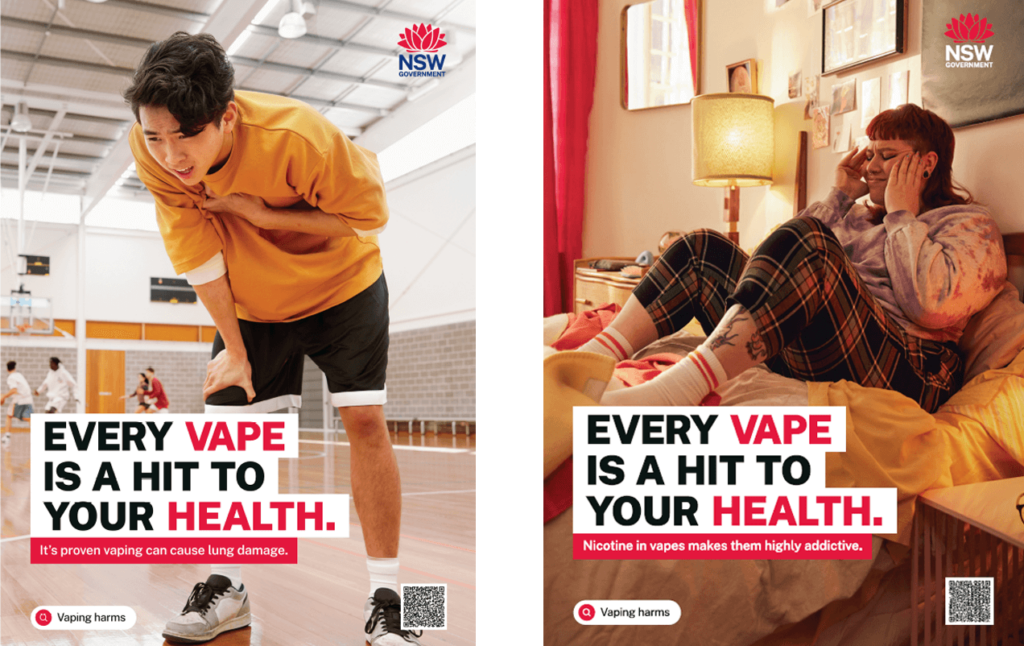
Credit: Cancer Institute NSW
A 2025 analysis found only 6% of anti-vaping campaigns framed the social consequences of nicotine use compared to 26% of tobacco cessation campaigns.
Does this mean young people don’t think vaping has social consequences?
Michelle Lampis, a Student Drug and Alcohol Counsellor at a New South Wales university, says the lack of social stigma has been a problem – but perhaps not for much longer.
“I think it’s changing,” says Michelle. “[Vaping is] the thing that people are doing, and that’s very powerful … but we are seeing a downturn.”
A 2025 Australian survey reports that vape use is becoming increasingly stigmatised.
Young Australians are starting to feel shame and embarrassment surrounding their use, realising it is unhealthy.
A NOT-SO-SAFE ALTERNATIVE
A University of Queensland study of 24 Australian vaping education campaigns between 2021 and 2025 found more than half of the campaigns depicted vapes as equally or more harmful or addictive than cigarettes.
These researchers might be onto something.
“What we have found with a lot of the illegal black market vapes is that the amount of chemicals and the amount of nicotine in these vapes outweighs any combustible cigarette, which is heavily regulated,” says Michelle.
“You’re generally having, sometimes, 10 times more nicotine in a vape.”
With vaping rates among teens thought to be declining, will this just encourage them to smoke cigarettes instead?
According to a 2025 study, the decline of adolescent smoking has slowed since the introduction of vapes.
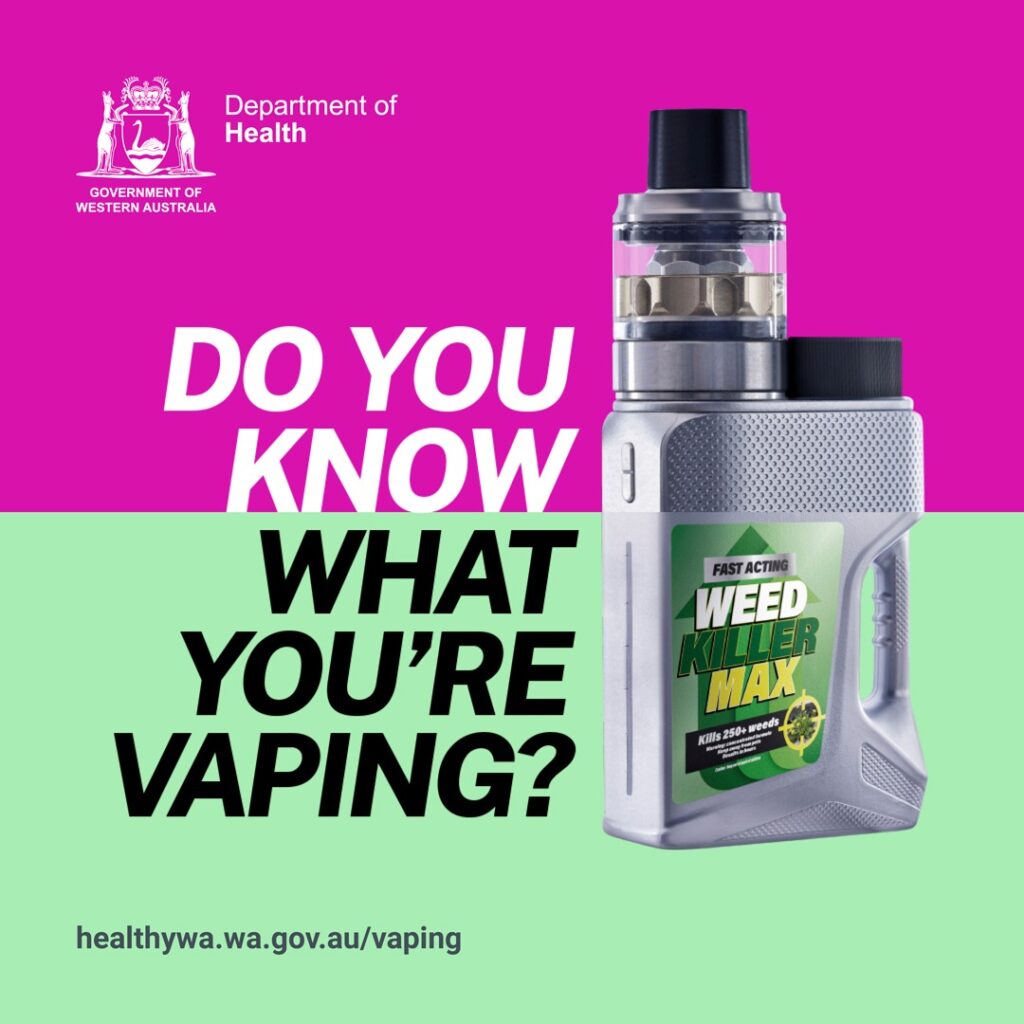
Credit: WA Department of Health
UP IN SMOKE
So are these campaigns working?
Daily smoking among Australians has dropped from 19.5% in 2001 to 5.6% in 2025, according to the 2025 National Drug Strategy Household Survey.
A 2026 evaluation of the Every Vape is a Hit to Your Health campaign found young Australian vapers who recognised the campaign were almost twice as likely to have made a quit attempt and more than twice as likely to have cut down their use compared to those who hadn’t seen it.
“I would say young people are very responsive to marketing,” says Michelle.
“What we have noticed is since there has been a campaign to inform people of the health effects and the dangers of vaping, there has been a downturn in use.”
Maybe a chemistry lesson does teach us something after all.