

READ

Particle 101: Diphtheria

The forgotten disease making headlines again.
Tarryn Basden
Tarryn Basden
Science communicator
Particle 101: Diphtheria

Diphtheria is one of those diseases most of us haven’t heard of. 

It’s so rare in Australia that many doctors haven’t seen a case outside a textbook.

Which is where we like diseases to stay – filed alongside smallpox and iron lungs under ‘things we beat’. 

So what is causing its resurgence?

The Forgotten Disease

Diphtheria is an infectious, toxin-driven bacterial disease.

The bacterium that causes diphtheria (Corynebacterium diphtheriae or C. ulcerans) is unremarkable. The real damage comes from the toxin it releases. The bacterium is the courier, delivering a toxic parcel you didn’t order. 

The first and most deadly form (C. diphtheriae) sets up shop in the nose and throat. For a few days, you might assume it was just a bad cold – fever, sore throat, general misery.

But within days, the toxin can produce a thick grey membrane across the throat. It can cause swelling in the neck, difficulty swallowing and eventually block the airway completely. Left untreated, it can creep into the heart and nervous system

The second form (C. ulcerans) infects the skin and causes large, slow-healing ulcers.

The development of a vaccine in the 1930s made diphtheria something we didn’t have to worry about. And eventually … we stopped.

Forgotten But Not Gone

Diphtheria was a common cause of death in Australian children before vaccinations became routine. In contrast, it caused two deaths in unvaccinated adults here in the 20 years prior to the COVID-19 pandemic.

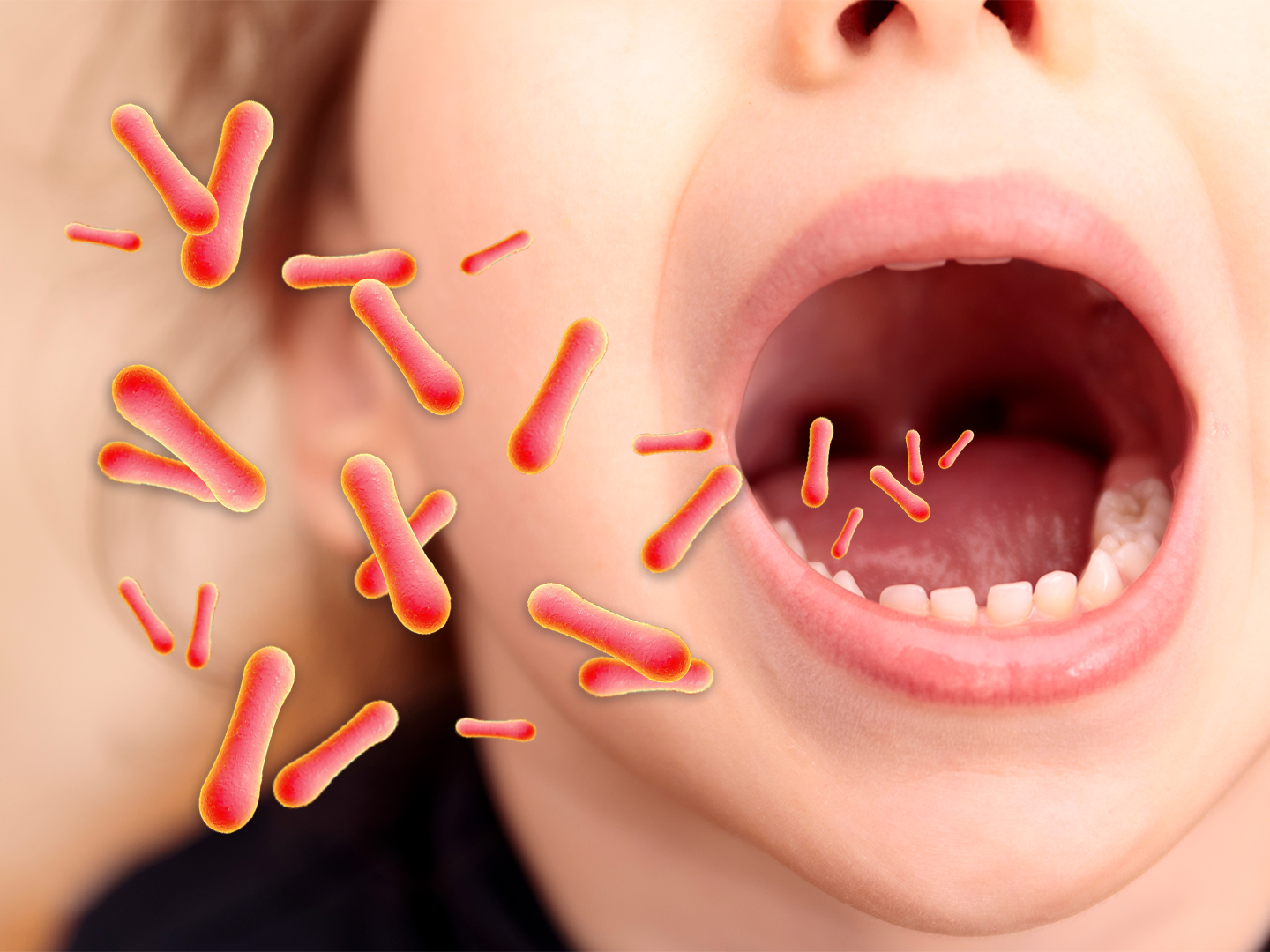
Caption: Diphtheria was made rare in Australia through successful vaccination programs.
Credit: Shutterstock

With 442 cases reported this year, Australia is experiencing its largest diphtheria outbreak since national records began in 1991.

The outbreaks are concentrated in Aboriginal communities across the Northern Territory, Western Australia, South Australia and Queensland.

Diphtheria spreads as you would expect – coughing, close contact, infected wounds or surfaces – and it spreads faster in areas where healthcare is harder to access and homes are crowded.

This isn’t a mysterious outbreak. It’s a predictable one.

Lessons For The Future

The response – expanded vaccine access, treatment and local outreach – is already working, with the number of new cases falling

This is exactly what vaccines are supposed to do: work so well you forget why you needed them.

That’s the paradox at the heart of public health. Success looks like nothing happening. And nothing happening, for long enough, makes it easy to forget why it was necessary in the first place.

While our attention shifts to newer threats, old ones can continue to lurk in the background.

Infectious diseases don’t take turns – they take opportunities. Diphtheria’s return isn’t evidence that vaccines failed. It’s a reminder of what they were quietly doing all along.

Tarryn Basden
About the author
Tarryn Basden
Tarryn Basden is a biologist and science communicator from Western Australia. While she has had the privilege of working with lions and tigers and bears, oh my! She really enjoys teaching people about weird animals and making terrible puns as part of her science communication. While she is slowly coming to terms with Pluto’s demotion, she still refers to it as a planet.
View articles
Tarryn Basden is a biologist and science communicator from Western Australia. While she has had the privilege of working with lions and tigers and bears, oh my! She really enjoys teaching people about weird animals and making terrible puns as part of her science communication. While she is slowly coming to terms with Pluto’s demotion, she still refers to it as a planet.
View articles

NEXT ARTICLE

We've got chemistry, let's take it to the next level!

Get the latest WA science news delivered to your inbox, every fortnight.

This field is for validation purposes and should be left unchanged.

Republish

Creative Commons Logo

Republishing our content

We want our stories to be shared and seen by as many people as possible.

Therefore, unless it says otherwise, copyright on the stories on Particle belongs to Scitech and they are published under a Creative Commons Attribution-NoDerivatives 4.0 International License.

This allows you to republish our articles online or in print for free. You just need to credit us and link to us, and you can’t edit our material or sell it separately.

Using the ‘republish’ button on our website is the easiest way to meet our guidelines.

Guidelines

You cannot edit the article.

When republishing, you have to credit our authors, ideally in the byline. You have to credit Particle with a link back to the original publication on Particle.

If you’re republishing online, you must use our pageview counter, link to us and include links from our story. Our page view counter is a small pixel-ping (invisible to the eye) that allows us to know when our content is republished. It’s a condition of our guidelines that you include our counter. If you use the ‘republish’ then you’ll capture our page counter.

If you’re republishing in print, please email us to let us so we know about it (we get very proud to see our work republished) and you must include the Particle logo next to the credits. Download logo here.

If you wish to republish all our stories, please contact us directly to discuss this opportunity.

Images

Most of the images used on Particle are copyright of the photographer who made them.

It is your responsibility to confirm that you’re licensed to republish images in our articles.

Video

All Particle videos can be accessed through YouTube under the Standard YouTube Licence.

The Standard YouTube licence

  1. This licence is ‘All Rights Reserved’, granting provisions for YouTube to display the content, and YouTube’s visitors to stream the content. This means that the content may be streamed from YouTube but specifically forbids downloading, adaptation, and redistribution, except where otherwise licensed. When uploading your content to YouTube it will automatically use the Standard YouTube licence. You can check this by clicking on Advanced Settings and looking at the dropdown box ‘License and rights ownership’.
  2. When a user is uploading a video he has license options that he can choose from. The first option is “standard YouTube License” which means that you grant the broadcasting rights to YouTube. This essentially means that your video can only be accessed from YouTube for watching purpose and cannot be reproduced or distributed in any other form without your consent.

Contact

For more information about using our content, email us: particle@scitech.org.au

Copy this HTML into your CMS
Press Ctrl+C to copy