

You might be interested
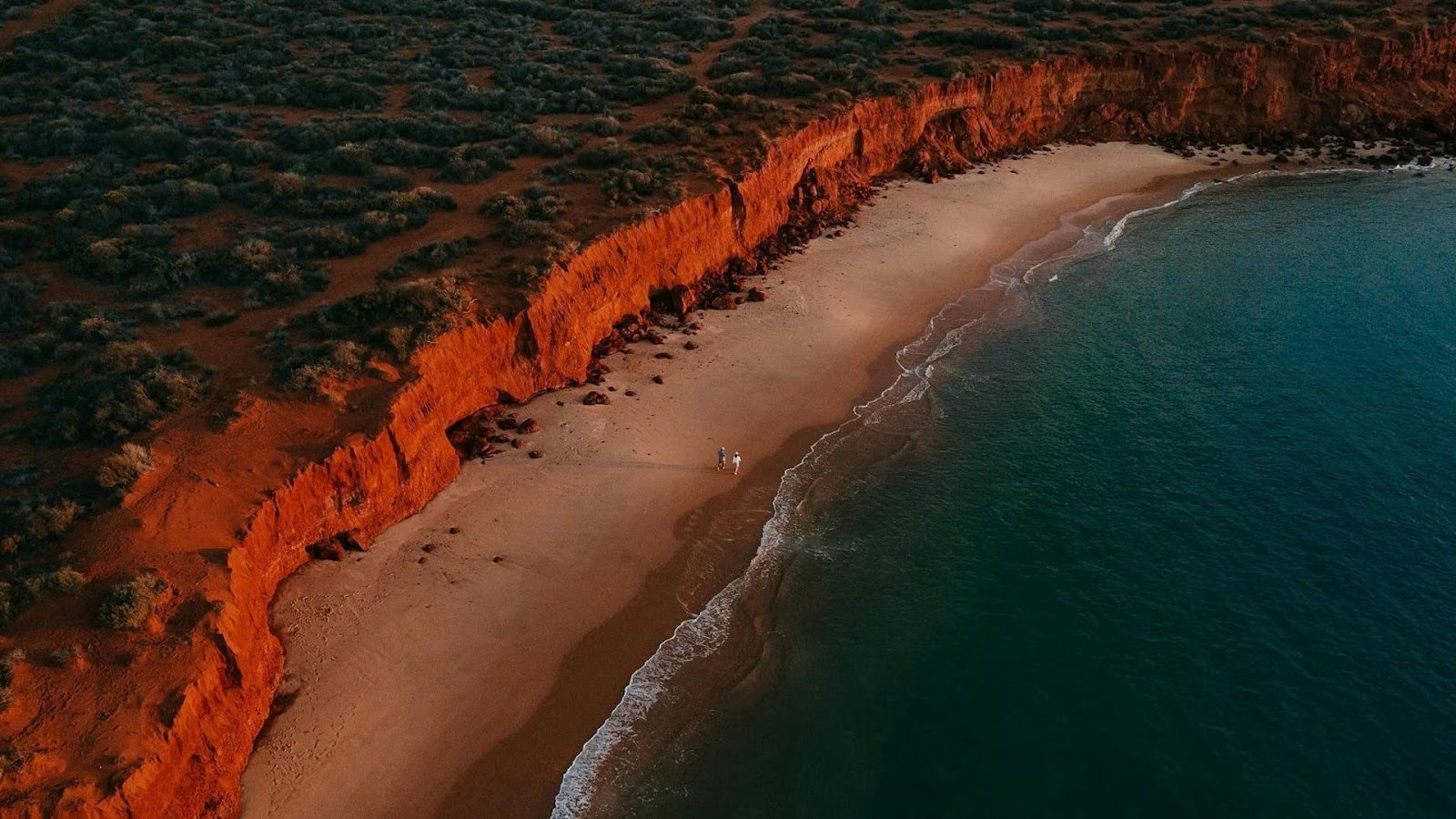
Gathaagudu/Shark Bay is located on Malgana (pronounced Mal-guh-nuh) Country.
It’s a place of great natural beauty and a UNESCO World Heritage Site.
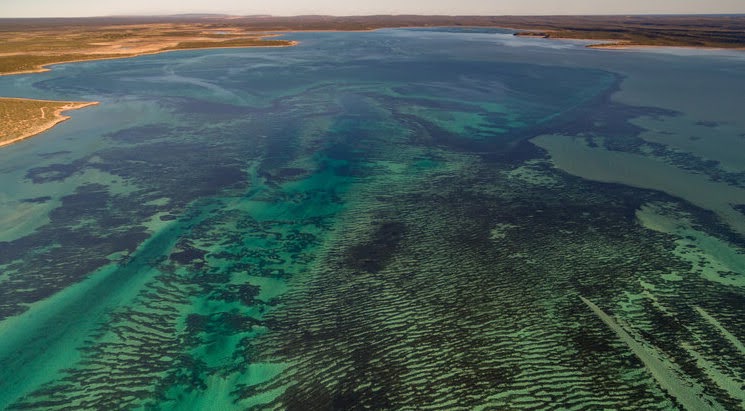
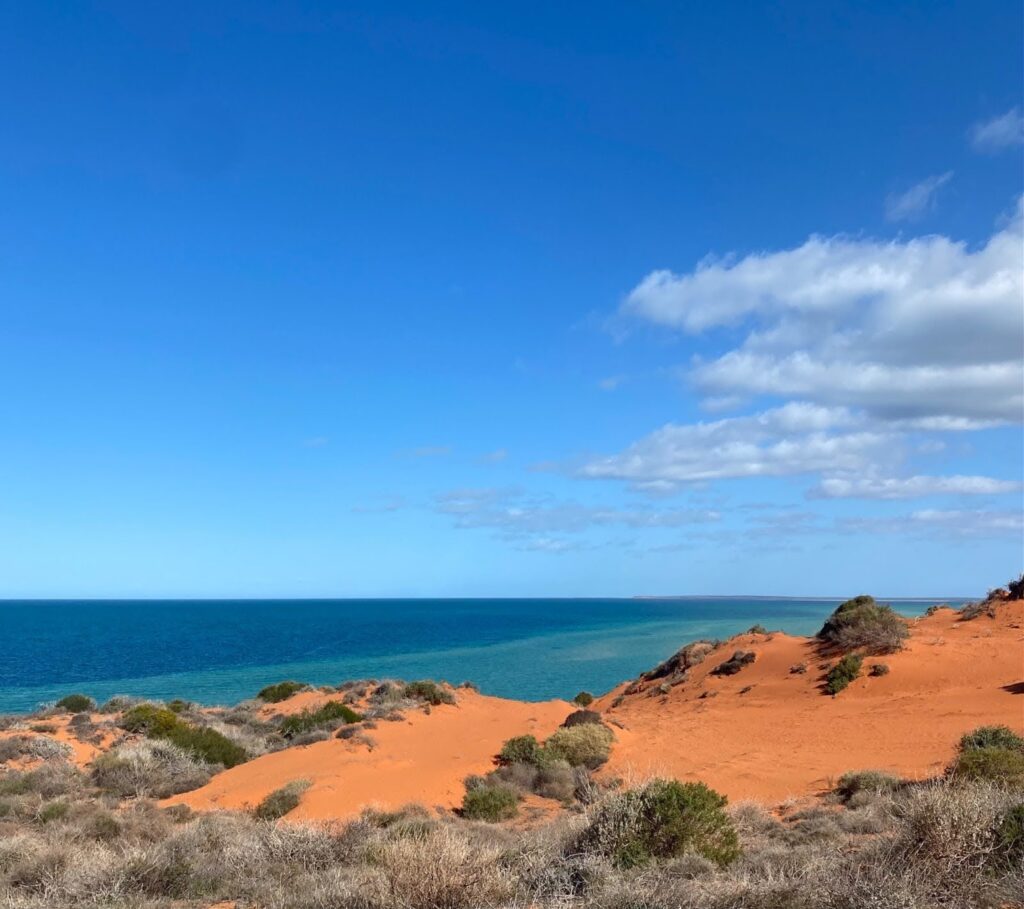
The landscape is a stunning array of colours as the desert meets the ocean.
Below the sea’s surface, 4000 square kilometres of seagrass meadows sway. That’s equivalent to 226 AFL footy fields.
The Shark Bay Heritage Area is home to 12 of the world’s 72 seagrass species.
Credit: Philip Schubert via Shutterstock
Unfortunately, more than a quarter of the seagrass died during the 2010/11 marine heatwave.
To restore the seagrass, a deep knowledge of the area and its plants are needed as well as scientific tools for genetic testing.
Malgana mob brought their knowledge and UWA researchers brought their tools. Together, they’re bringing the wirriya jalyanu back to life.
A DEEP CONNECTION
Malgana people have a 30,000-year connection with Gathaagudu. They have a deep knowledge of Country and are passionate about looking after the area.
Aunty Pat is a Malgana Gantharri/Elder. She says Gathaagudu is paradise.
“If we look after Country, Country will look after us,” says Aunty Pat.
Malgana people had known Sea Country was changing for a long time.
“The fishermen knew it,” says Aunty Pat.
“Fishermen know Sea Country better than anyone.”
“You talk to any of those fishermen and they will tell you stories about the changes in biology and the marine environment.”
UNESCO only recognises Gathaagudu as an important ecological site, not a cultural site.
Credit: Cat Williams
“We’re trying to [get] our cultural values listed alongside our natural values,” says Aunty Pat. “They’re of equal importance.”
These cultural values and knowledge are key to the wirriya jalyanu restoration to provide a broader historical context of Sea Country in Gathaagudu.
TEAMWORK
Dr Elizabeth Sinclair is an Adjunct Senior Research Fellow at UWA. She worked with Aunty Pat and Malgana Traditional Owners to restore the seagrass.
Liz says researchers have been working on the seagrass for around 15 years.
Seagrass grows extremely well in Gathaagudu because the bay area is very shallow, has a sandy bottom and has no big ocean swells.
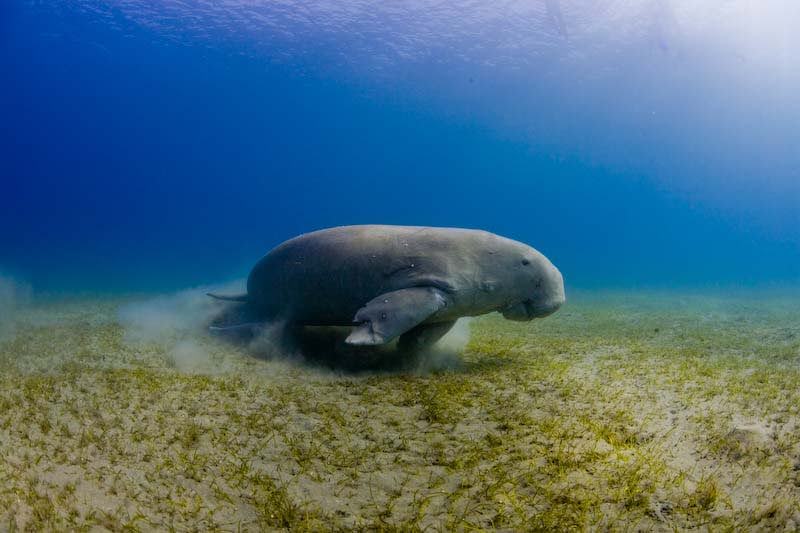
The main seagrass disturbance is dugongs feeding on it.
Credit: via SeagrassWatch
When seagrass is gone, the sandy floor is left exposed to tides. The sand shifts a lot, making the water cloudy.
With sand constantly moving, it’s difficult for new plants to grow. This creates a system that’s hard to reverse.
“By the time the heatwave came along and in the following years, it was clear that parts of the seagrass meadow were not going to recover naturally and they needed a bit of help,” says Liz.
Liz and the research team looked at genetic markers in the seagrass DNA to understand how the population was structured and how to best restore it.
DISTRIBUTION
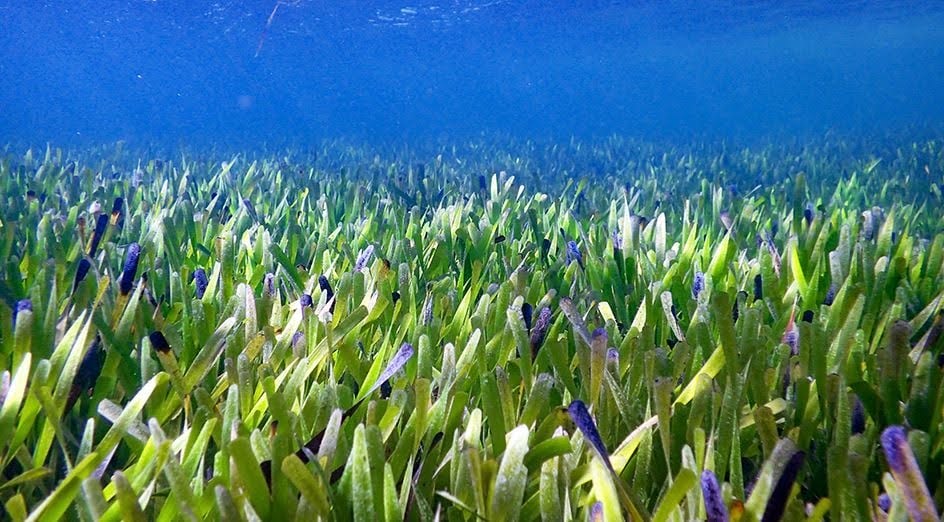
There are two large species of seagrass that grow on Gathaagudu Sea Country: ribbon weed and wire weed.
These plants can grow up to 2 metres tall, creating an underwater forest and crucial habitat for marine life.
Growing different types of seagrass requires different strategies.
Ribbon weed grows like lawn, with new shoots emerging from the sand.
Credit: Rachel Austin via UWA
“If you stick your head underwater, all you see is the green shoots,” says Liz.
“You don’t see [a] massive network of roots.”
In Gathaagudu, most of the ribbon weed is one giant clone that is 180 kilometres long.
That’s longer than the drive from Perth to Bunbury. It’s the largest known plant on Earth.
Knowing how the seagrass is genetically connected informs how the team approaches restoring the meadow.
Wire weed grows entire seedlings that break off and float around until they land in the sand.
This distribution strategy means wire weed has much more genetic diversity spread further around the bay.
“We have the genetics to understand how the plants are related and then we use that information to figure out which plants to collect and where to grow them,” says Liz.
UNDERWATER GARDENING
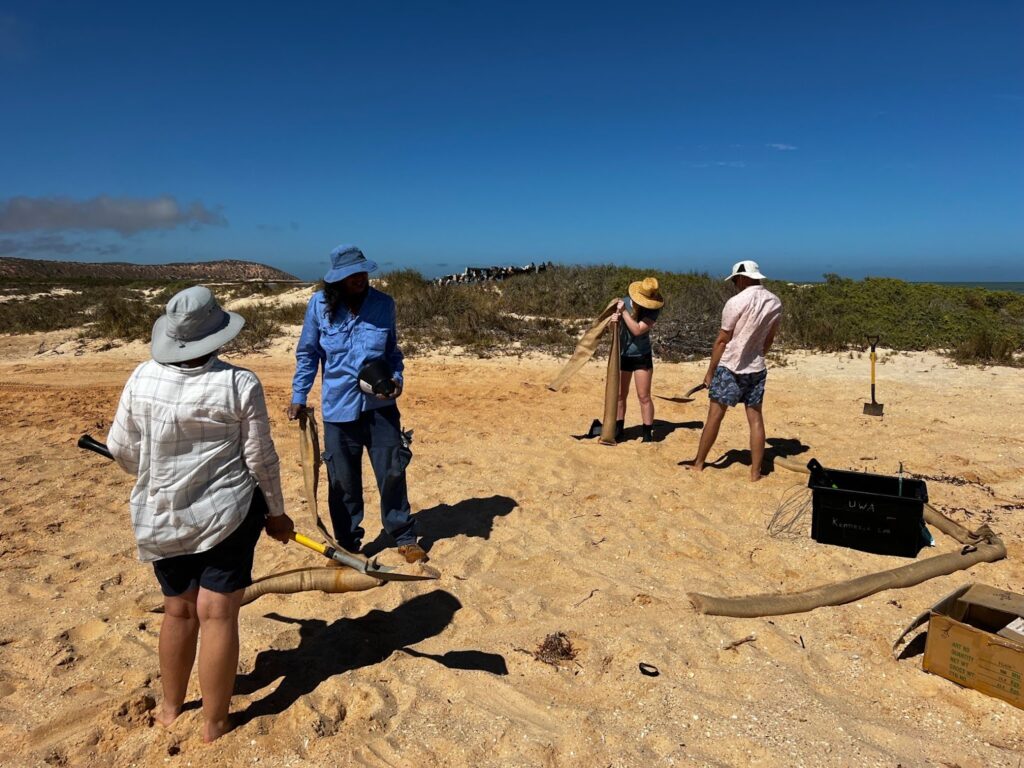
The Malgana rangers were heavily involved in the restoration process.
“Rangers collected a lot of the restoration material because some now have dive tickets,” says Liz.
“If you’re working in really shallow water, you can do it on a snorkel, but it’s much easier to do it on scuba.”
To collect ribbon weed, rangers would take 10–15cm cuttings.
These could be replanted and held in place with a U-shaped piece of wire for about 6 months until they grew new roots.
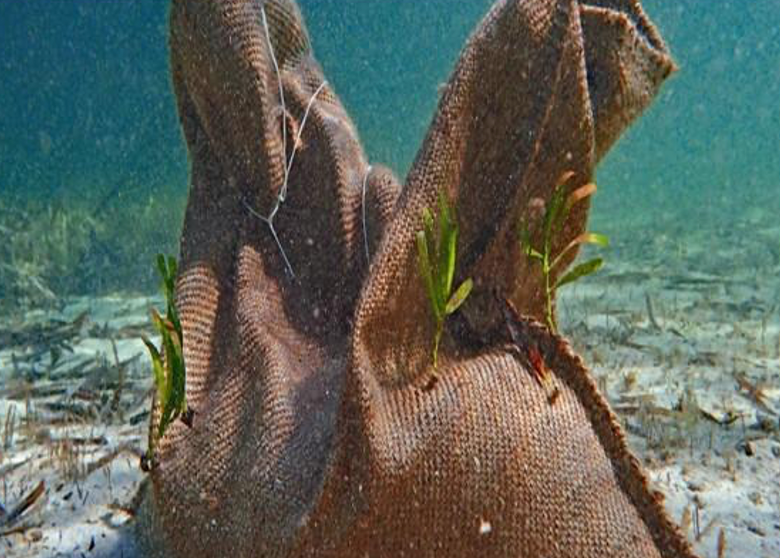
For the wire weed restoration, the team collected seedlings and replanted them at a new location. Instead of being secured with wire, they would hang onto snaggers, a ‘sand-filled sausage’ with a hessian coating.
Credit: Gary Kendrick, UWA
The hessian provided an anchor for the wire weed seedlings to attach to.
Aunty Pat says the rangers loved working with the research team because it was a meaningful way to care for Country.
“They couldn’t get enough of it,” says Aunty Pat.
“To be working in a trial like that, they learnt so much. They were happy to be doing something that was meaningful.”
“MEDICINE FOR US”
Opportunities for Malgana people to return to Country are few and far between.
They can’t participate on a regular basis because of a housing shortage at Gathaagudu.
“The Malgana Aboriginal Corporation currently have several rangers in the program, unfortunately everyone has to rely on staying with family or friends who live in Gathaagudu because there isn’tenough accommodation due to the housing crisis,” says Aunty Pat.
These types of partnerships enable Malgana people to work on Country and the younger generation the chance to reconnect to the land.
“It helps them with their healing [and] their cultural and personal identity,” says Aunty Pat.
“Being on Country is medicine for us.”
Credit: Gary Kendrick, UWA
SHARED KNOWLEDGE
“Shared knowledge leads to an improved understanding of our environment,” says Liz.
“As Western researchers, we come in, look at a site and focus on one little thing … We have fairly narrowly focused research areas.
“When you start talking with Traditional Owners, maybe they don’t have that detailed knowledge of the seagrass, but they understand how it fits in the big picture and how all ecosystems are connected, the land and the sea.”
“The collaboration provides a broader, fully informed way of understanding what is happening and what we could achieve in the future,” says Aunty Pat.
Although the project funding has ended, efforts to restore the wirriya jalyanu continue.
“There’s been some natural recovery of [ribbon weed],” says Liz.
“There are large patches of wire weed that have not recovered.”
“If we lose our seagrass, we lose everything,” says Aunty Pat.
The partnership between the research team and Malgana people was supported through the Australian Government’s National Environmental Science Program and the WA Department of Biodiversity, Conservation and Attractions.