You might be interested

On 23 January 2020, reports became reality as the first COVID-19 case was detected in Australia. It was a grim foreshadowing of further disaster for a nation experiencing its most intense and catastrophic bushfire season, known as the Black Summer.
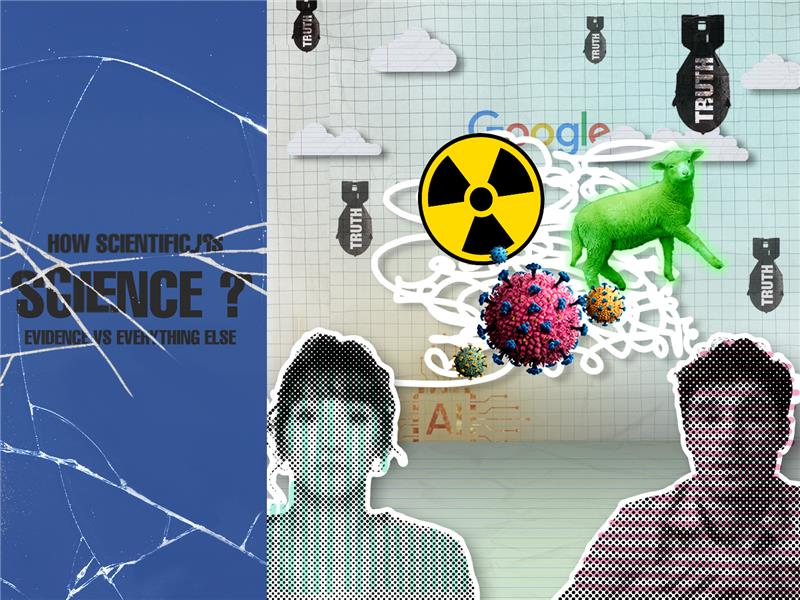
The COVID-19 years transformed how science was talked about in Australia.
Australia’s ideas of science changed from ‘business as usual’ to medical scepticism and AI uncertainty.
Now scientists are learning how to talk to a public that has more distrust, more cynicism and more capacity for backlash.
In July 2024, the Australian Government held the COVID-19 Response Inquiry to evaluate its performance.
The COVID-19 response was mostly successful, according to the Inquiry, which highlighted a few key issues.
The pandemic legacy
The Inquiry found the government lacked two-way communication with the public. Data wasn’t always open and accessible.
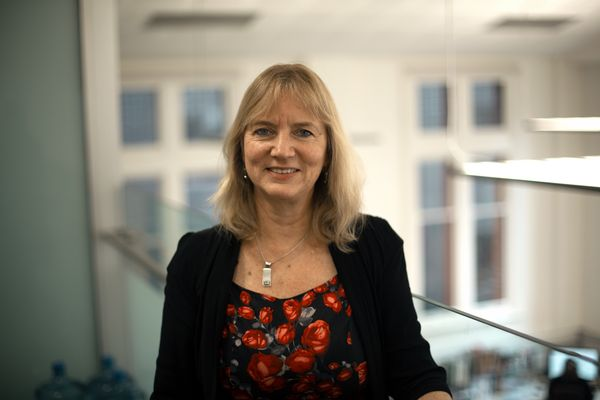
Dr Susannah Eliott is CEO of the Australian Science Media Centre – a resource for accurate, research-based science news in Australia.
“The distrust that people ended up feeling towards government and health officials was partly because [these officials] didn’t work out how to communicate the uncertainty,” says Susannah.
Credit: via AusSMC
“People don’t tend to trust institutions as much as they trust individuals. I think that transparency is really important.”
Public distrust is fuelled by increased costs, lethal hospital wait times and a health system pushed to the brink.
“It’s not that easy to get a GP appointment these days,” says Susannah.
“People do a lot of Doctor Google-ing. If you have outrageous headlines about health, it’s a good way to get people to click on [your article].”
Restoring trust isn’t a quick fix, but there is an existing roadmap – if you consider radioactive sheep.
Why farmers ignored nuclear sheep
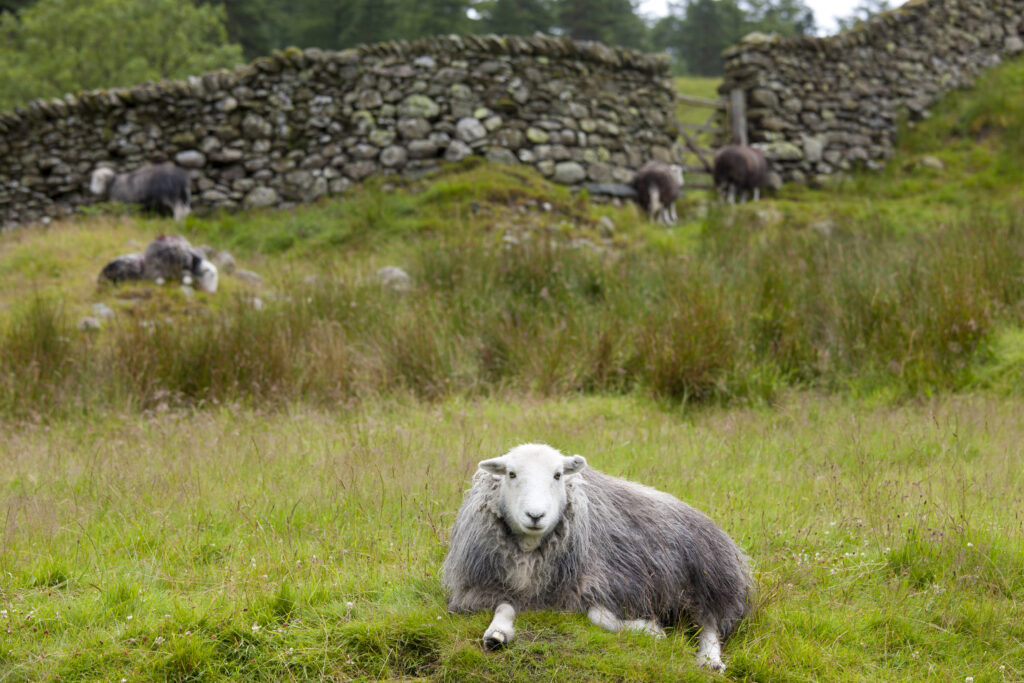
Following the 1986 Chernobyl disaster, the UK Government was battling farmers over guidelines for managing the radioactive contamination of Cumberland sheep.
Sociologist Bryan Wynne decided to find out why Cumbrian sheep farmers didn’t trust scientists.
Wynne’s research was iconic because he didn’t try to persuade the farmers. He simply listened.
Wynne developed a framework of values the public uses to judge scientists.
Scientists were judged by prediction accuracy, openness to other knowledge and criticism, conspiracy and conflicted interests, accountability and other connected issues in the public eye.
The message dies when scientists confuse the empirical with the imperial.
Credit: Tim Graham/Getty Images
“I feel science communication done right is the way to break down stereotypes,” says WA’s new Chief Scientist Professor Sharath Sriram.
“People assume a scientist is always wearing a lab coat and leaning over a beaker.”
Sharath is softly spoken and doesn’t dominate a conversation. He uses empathy and emotional intelligence to erode suspicion.
“It’s about first building trust,” says Sharath.
“Go in there with an open mind for a conversation. Show that you don’t have a bias or stubbornness.”
Here, kindness doubles as strategy. Confronting differing world views can trigger a divisive mindset called the tribes effect.
Despite the research, enduring myths in science communication keep failing us.
The deficit model of science
When science communication flops, there are two common culprits.
The first and most common source of online backlash is fact bombing.
Dropping your research into public spaces without being aware of the existing discourse has become more risky with social media.
The second pitfall comes from scientists communicating with the deficit model of science.
This model assumes science literacy is decreasing (it is mostly unchanged in school-aged children) and imagines we could fix the problem with more charisma.
It imagines a past golden age for science but conflicts with reality.
Australia today has some of the highest global trust in scientists.
When scientists assume ignorance from the public, they show ignorance of the public.
“I think there’s been a trend where we present the decision, not the evidence,” says Sharath. “We say I’m the scientist, this is what it says, trust me and follow. I don’t think people are willing to do that.”

Credit: RMIT University
Artificial communication
The biggest unknown factor to the current equilibrium in public opinion of science is artificial intelligence.
A case study in teething problems happened in 2024 when Cosmos experimented with large language models (LLMs) to write explainer articles. Its own writers revolted.
As more people turn to tools like ChatGPT to answer their query, hallucinations, outdated information and lack of context can lead to false answers.
Meanwhile, some of the largest LLMs have already demonstrated they can be used to spread medical disinformation.
“You can increase media literacy by talking to people about what to look out for,” says Susannah. “Though AI is improving so quickly that, by next year, that information is already obsolete.”
Responsible LLM tools are being developed to fight disinformation, including LLM fact-checkers and LLM disinformation detectors that fight fire with fire.
Yathu Sivarajah is a Senior Visualisation Specialist at Pawsey Supercomputing Centre. He helps scientists work with new technology to communicate their research.
“AI is having a big impact on all technologies and all domains,” says Yathu. “We are looking to adapt and make use of that technology.”
Pawsey runs yearly visualisation conferences where scientists can learn about new tools to communicate complex data with examples like 3D imaging of killer T cells engineered to fight cancer, used to help patients understand their medical treatment.
Where do we go from here?
Scientists are communicating to a new public so they have to be more aware of what they’re saying outside the lab.
“It’s what we call a paddock-to-plate approach to science communication,” says Susannah.
“From the actual creation of the science, through to its peer review and publication and then release out to the public.
“All those points along the chain, things can go wrong and you need to take responsibility for that and not just blame the media and social media.”
If scientists don’t prepare for open dialogue on their research, the public will talk to someone or something else. We may not like the answers they return with.