
READ

Blazing a trail into space

The countdown is on to get Katherine Bennell-Pegg to space.
Connie Greeve
Connie Greeve
Writer
Blazing a trail into space

In 2024, Katherine Bennell-Pegg graduated from Basic Astronaut Training with the European Space Agency (ESA) – after being selected from more than 22,500 other applicants. 

She was the first astronaut to be qualified under the Australian flag.

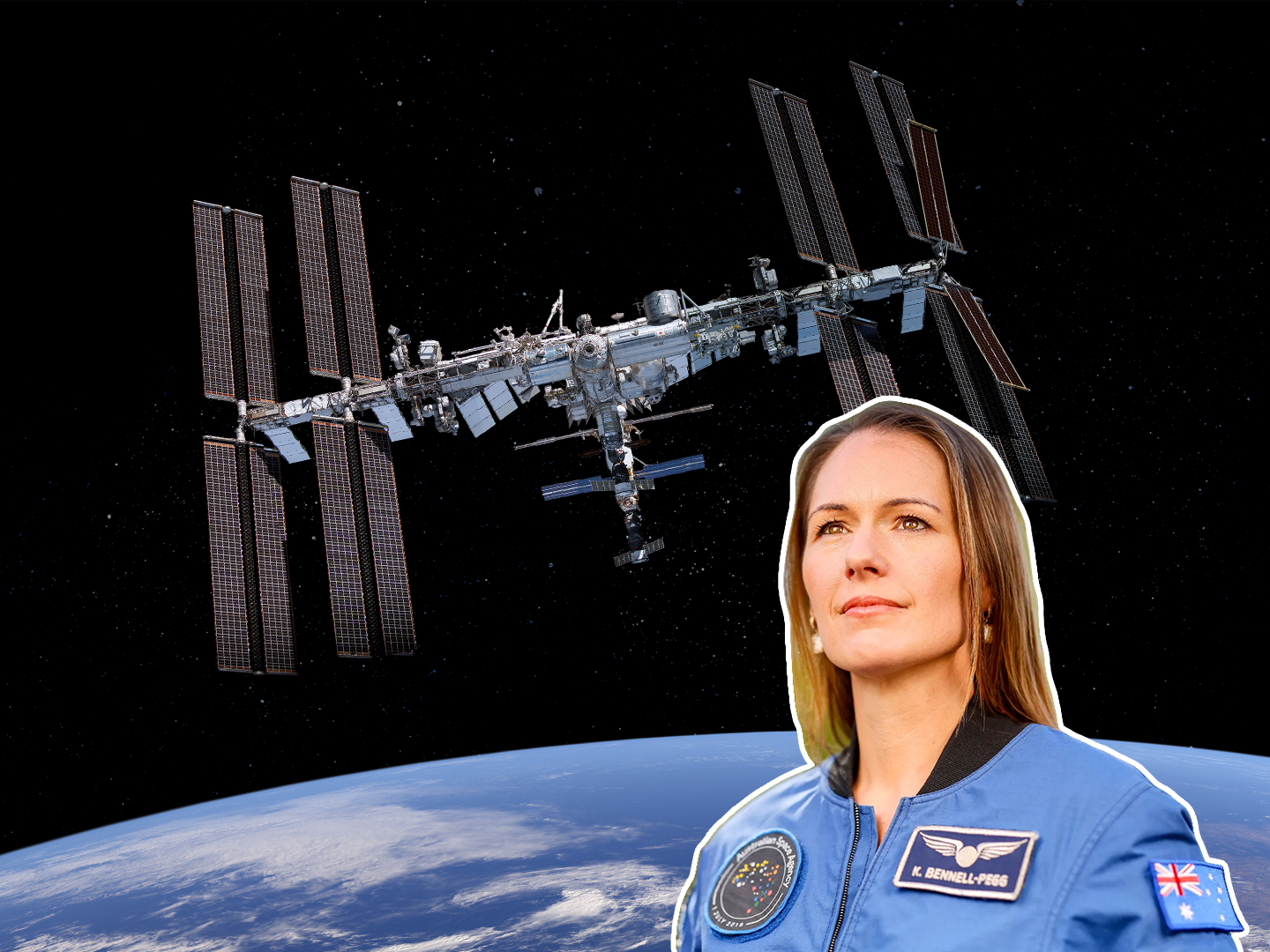
Katherine is the 2026 Australian of the Year and part of the campaign for the Australian Government to partner with ESA for an upcoming mission to the International Space Station (ISS).

According to Larissa Wiese, Deputy Director of the International Space Centre at UWA, Katherine could be on it. 

The offer

But what exactly is on offer for having an Aussie on the next ESA mission? 

The short answer is we don’t know (exactly).

In January, Joseph Aschbacher, Director General of ESA, sent Anthony Albanese an offer for a partnership that would include a space flight mission for Katherine. 
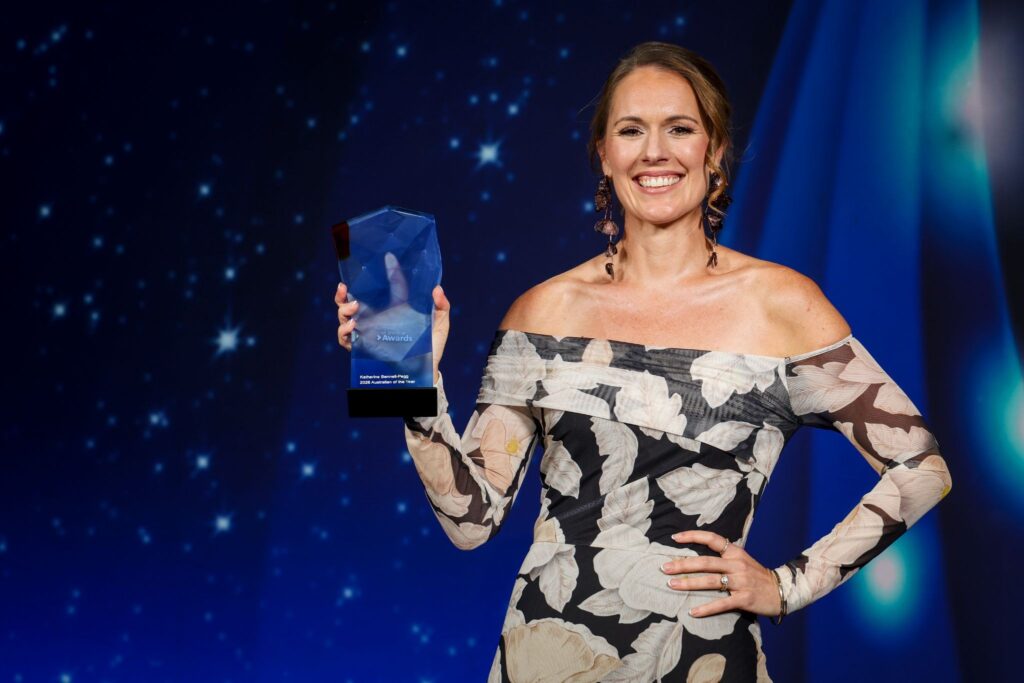
Caption: Katherine Bennell-Pegg was awarded 2026 Australian of the Year. 
Credit: NADC/Salty Dingo

The offer is time critical.

The ISS is set to deorbit in 2031, and ESA only puts out astronaut training calls every 10 years. If we don’t send an Aussie to space now, we might lose the opportunity for a generation. 

“If [the mission] is not in this budget, which happens in May,” says Larissa, “we won’t be responding in time for the European Space Agency to be able to accept.”

Getting into space 

Larissa says the partnership is mutually beneficial.

ESA works on a barter system – governments invest in the technology, research and development needed for the mission, and in return, they get an astronaut on the flight. 

Australia has a lot to offer. 

Our unparalleled view of the sky means we are already sites for NASA and ESA Deep Space Networks.

Across the country, groups are working on laser communications, with ANU providing support for the Artemis II mission

We also conduct physiological research for humans in space and are developing techniques and technology for growing plants in space.
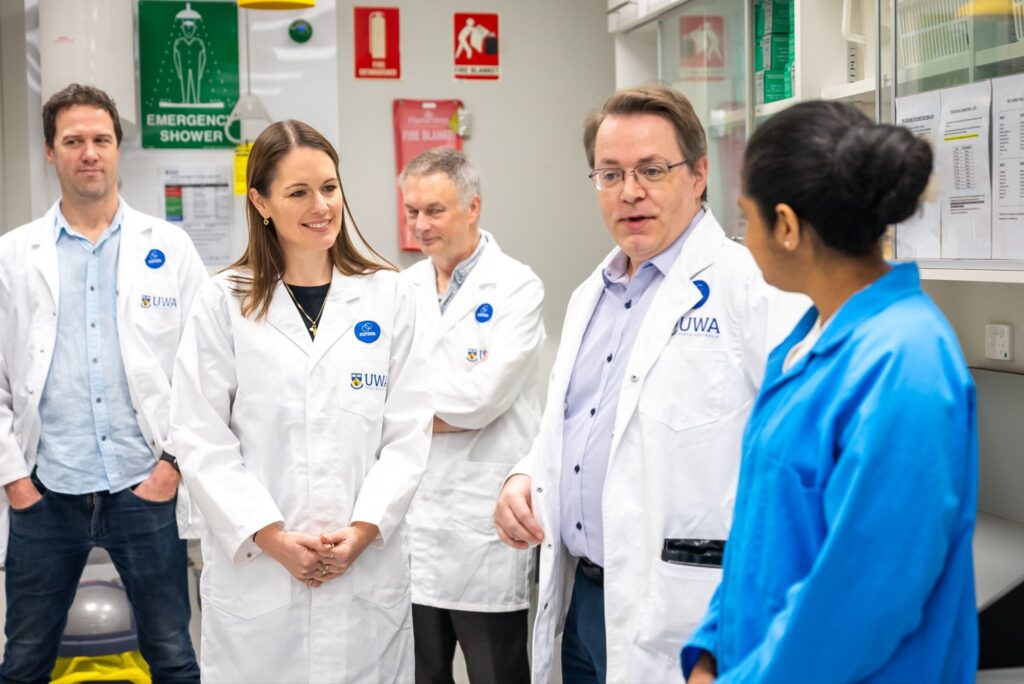
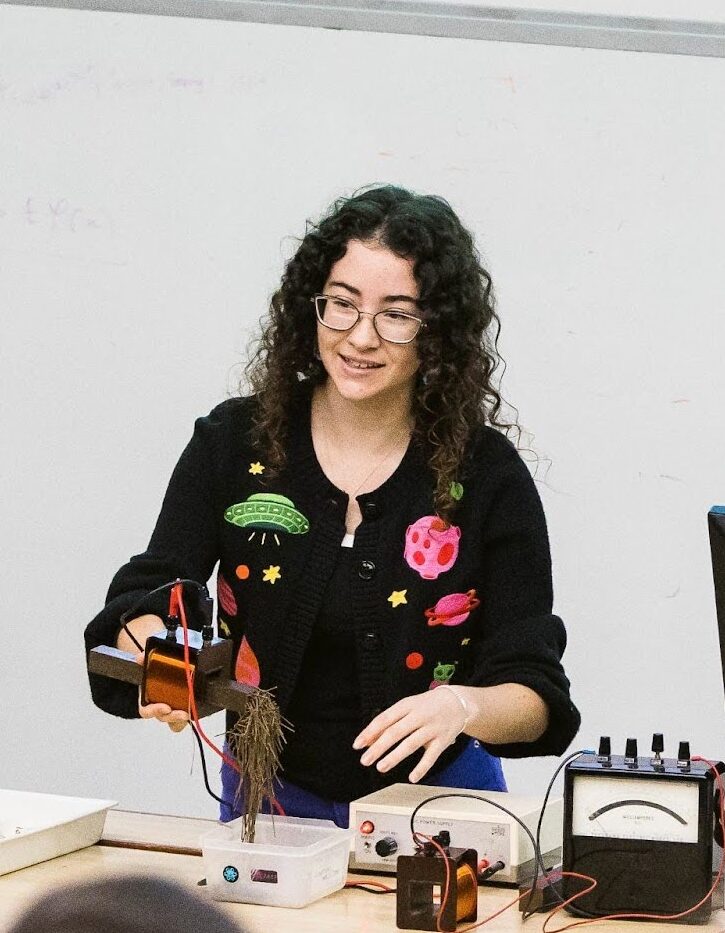
Caption: Katherine Bennell-Pegg at the ARC Centre for Excellence in Plants for Space in 2024.
Credit: Jarryd Gardner/University of Western Australia

A seat at the table 

Sending Katherine to space would be more than an individual achievement. 

Once you have an Australian astronaut in space, “then you have a seat at the table, and you can influence decisions”, says Larissa. 

“It opens up the space sector for Australia.”

This research and development can benefit everyday Aussies, with our reliance on satellites for telecommunications and national security. 

Shooting for the stars 

Astronauts are also national points of aspiration. 

During the Apollo era, enrolments in physics and engineering in the US doubled

In Australia, the number of Year 12 students currently taking maths-related subjects is declining

We need some space-related motivation.
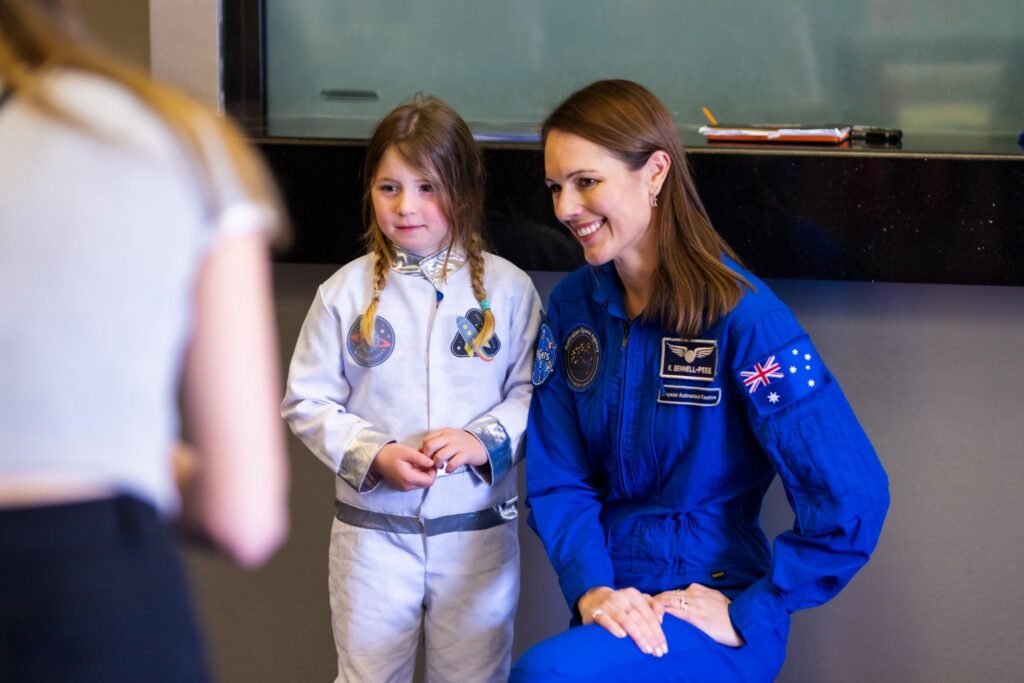
Caption: Katherine Bennell-Pegg at ‘How to Become an Astronaut and Other Cool Careers’ in 2024 at the University of Western Australia.
Credit: Michael Goh

Imagine school kids across the country watching as the first Australian astronaut launches into space. 

Not to mention all the young girls who could see themselves represented among the stars. 

“It would be really great to see … an Australian experiment, up there with her,” says Larissa.

Businesses and leaders across the country are signalling their support. 

For now, we’re waiting for the May Budget to know if Katherine is going to space. 
Connie Greeve
About the author
Connie Greeve
Connie is a freelance science communicator with a background in physics and science communication. She is completing her Master of Science Communication while collaborating with Pawsey and Einstein-First. When she’s not sharing her passion for science, you’ll find her sewing, painting, or hunting through op-shops.
View articles
Connie is a freelance science communicator with a background in physics and science communication. She is completing her Master of Science Communication while collaborating with Pawsey and Einstein-First. When she’s not sharing her passion for science, you’ll find her sewing, painting, or hunting through op-shops.
View articles

NEXT ARTICLE

We've got chemistry, let's take it to the next level!

Get the latest WA science news delivered to your inbox, every fortnight.

This field is for validation purposes and should be left unchanged.

Republish

Creative Commons Logo

Republishing our content

We want our stories to be shared and seen by as many people as possible.

Therefore, unless it says otherwise, copyright on the stories on Particle belongs to Scitech and they are published under a Creative Commons Attribution-NoDerivatives 4.0 International License.

This allows you to republish our articles online or in print for free. You just need to credit us and link to us, and you can’t edit our material or sell it separately.

Using the ‘republish’ button on our website is the easiest way to meet our guidelines.

Guidelines

You cannot edit the article.

When republishing, you have to credit our authors, ideally in the byline. You have to credit Particle with a link back to the original publication on Particle.

If you’re republishing online, you must use our pageview counter, link to us and include links from our story. Our page view counter is a small pixel-ping (invisible to the eye) that allows us to know when our content is republished. It’s a condition of our guidelines that you include our counter. If you use the ‘republish’ then you’ll capture our page counter.

If you’re republishing in print, please email us to let us so we know about it (we get very proud to see our work republished) and you must include the Particle logo next to the credits. Download logo here.

If you wish to republish all our stories, please contact us directly to discuss this opportunity.

Images

Most of the images used on Particle are copyright of the photographer who made them.

It is your responsibility to confirm that you’re licensed to republish images in our articles.

Video

All Particle videos can be accessed through YouTube under the Standard YouTube Licence.

The Standard YouTube licence

  1. This licence is ‘All Rights Reserved’, granting provisions for YouTube to display the content, and YouTube’s visitors to stream the content. This means that the content may be streamed from YouTube but specifically forbids downloading, adaptation, and redistribution, except where otherwise licensed. When uploading your content to YouTube it will automatically use the Standard YouTube licence. You can check this by clicking on Advanced Settings and looking at the dropdown box ‘License and rights ownership’.
  2. When a user is uploading a video he has license options that he can choose from. The first option is “standard YouTube License” which means that you grant the broadcasting rights to YouTube. This essentially means that your video can only be accessed from YouTube for watching purpose and cannot be reproduced or distributed in any other form without your consent.

Contact

For more information about using our content, email us: particle@scitech.org.au

Copy this HTML into your CMS
Press Ctrl+C to copy