

You might be interested


In the wide, golden fields of Western Australia, a tiny fungus slowly attacks one of the state’s most important crops.
Blackleg fungus is the largest disease impacting canola in Australia, capable of causing yield losses of up to 90%.
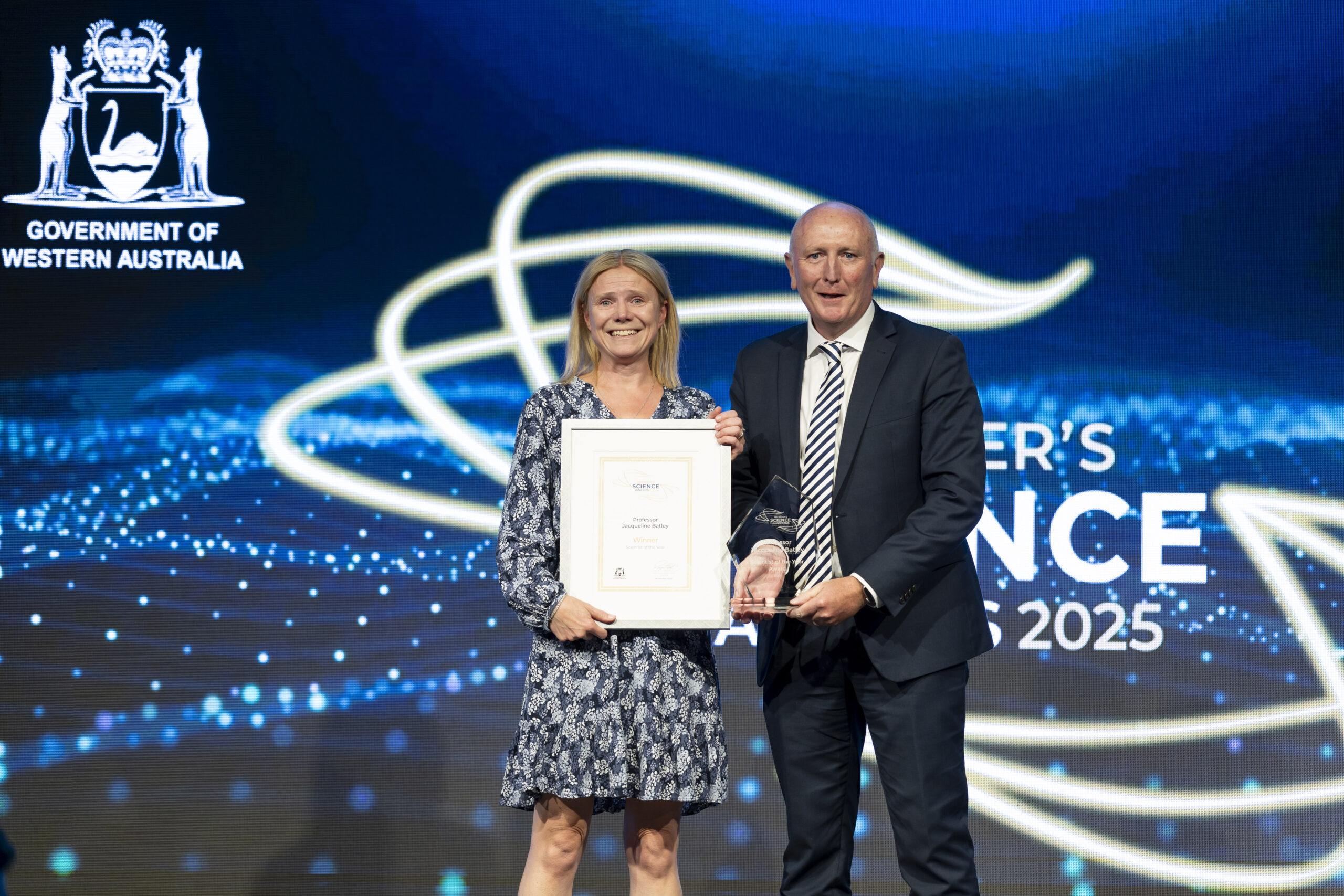
Professor Jacqueline Batley, WA’s 2025 Scientist of the Year, is at the forefront of defending these crops.
“I feel really honoured and grateful, but it’s really for my team as well,” says Jacqueline of the accolade.
“Everybody who’s been in the group has contributed in some way so everybody should be so proud that their research has been recognised.”
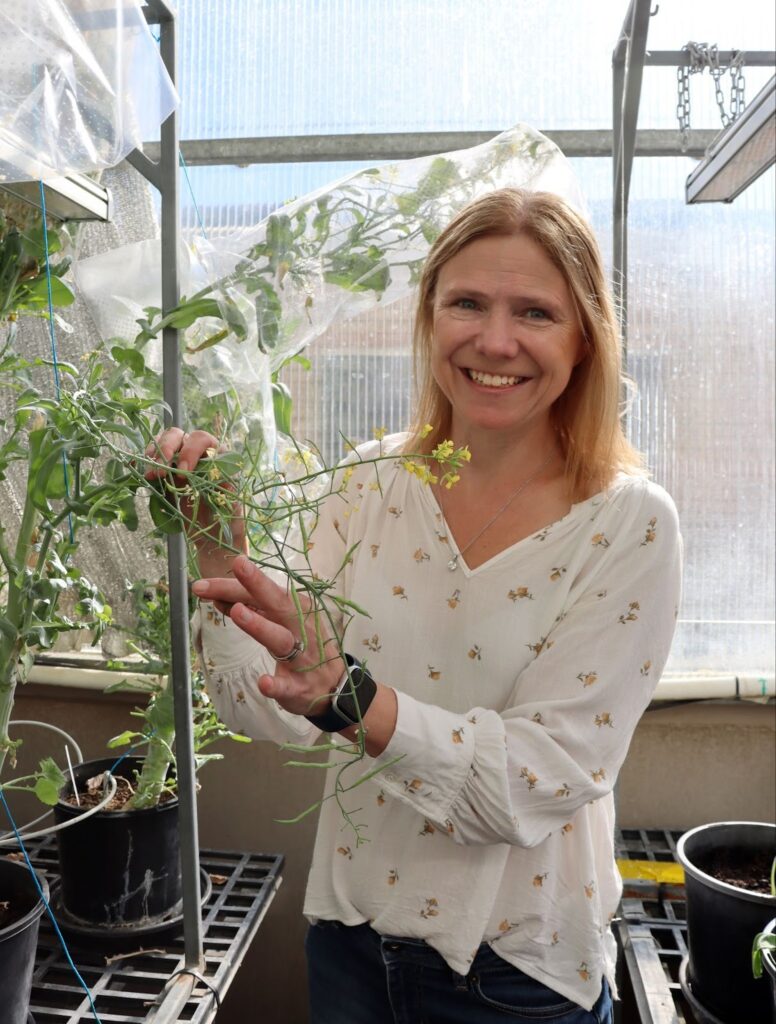
As an ARC Laureate Fellow at the University of Western Australia, Jacqueline leads a research group using genome sequencing and plant crosses to understand canola’s resilience and help it survive the destructive nature of blackleg fungus.
Credit: Supplied by Professor Jacqueline Batley
“Most of the work we do is identifying disease-resistance genes in canola,” says Jacqueline.
“Once we find them, we develop markers which the breeders can use in their breeding programs.”
But a genetic marker that works now may not be effective later.
“The fungus is clever. It mutates its genome … so we keep having to try and find new sources of resistance to deploy,” says Jacqueline.
“It keeps us busy, but it’s frustrating at the same time.”
FROM A LAB TO THE OUTBACK
Jacqueline entered the world of canola genomics in 2002 after moving to Australia from the United Kingdom.
A major breakdown of resistance to blackleg in South Australia and New South Wales had wiped out fields of canola, prompting a national effort to understand how the fungus evolves.
Credit: Supplied by Professor Jacqueline Batley
“[I] was absolutely fascinated by the interaction,” says Jacqueline. “How does the host recognise the fungus and how does the fungus evade it?”
“Once you start doing it and you get bitten by the challenge, you just want to keep digging in a bit more to try and find a new way to solve the problem.”
This drive has fuelled Jacqueline’s passion for canola over more than two decades.
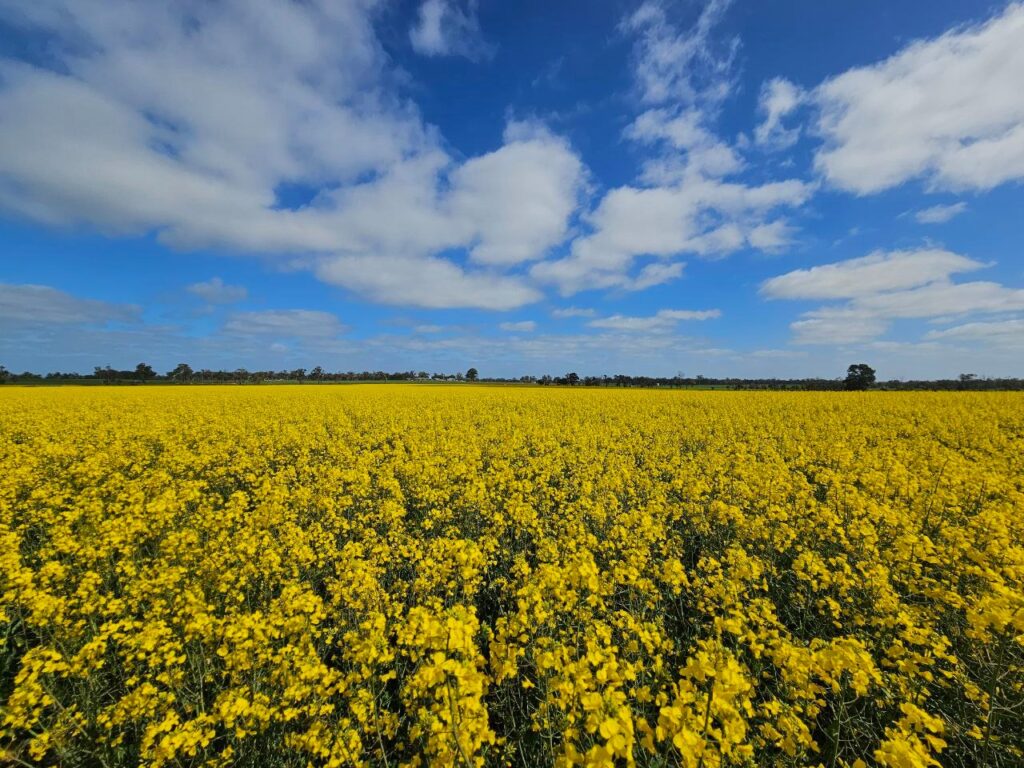
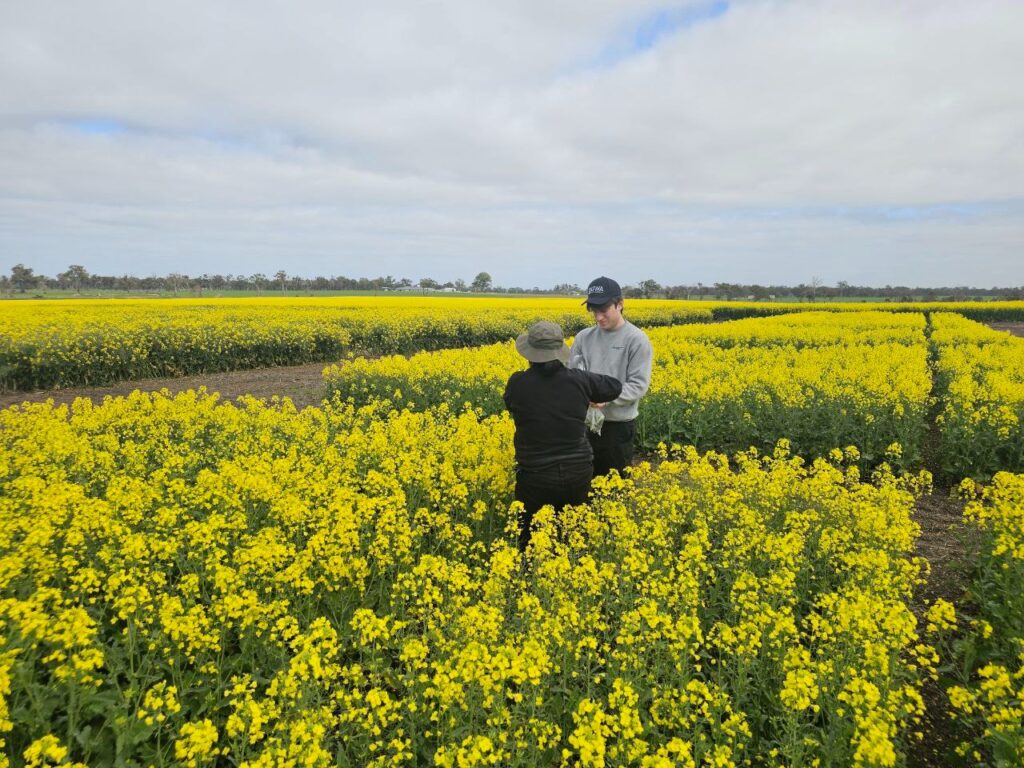
A passion that grows when she sees the sea of yellow flowers.
“The sheer scale of it is incredible,” says Jacqueline. “When you go and see really healthy plants, you [think] I helped do this.”
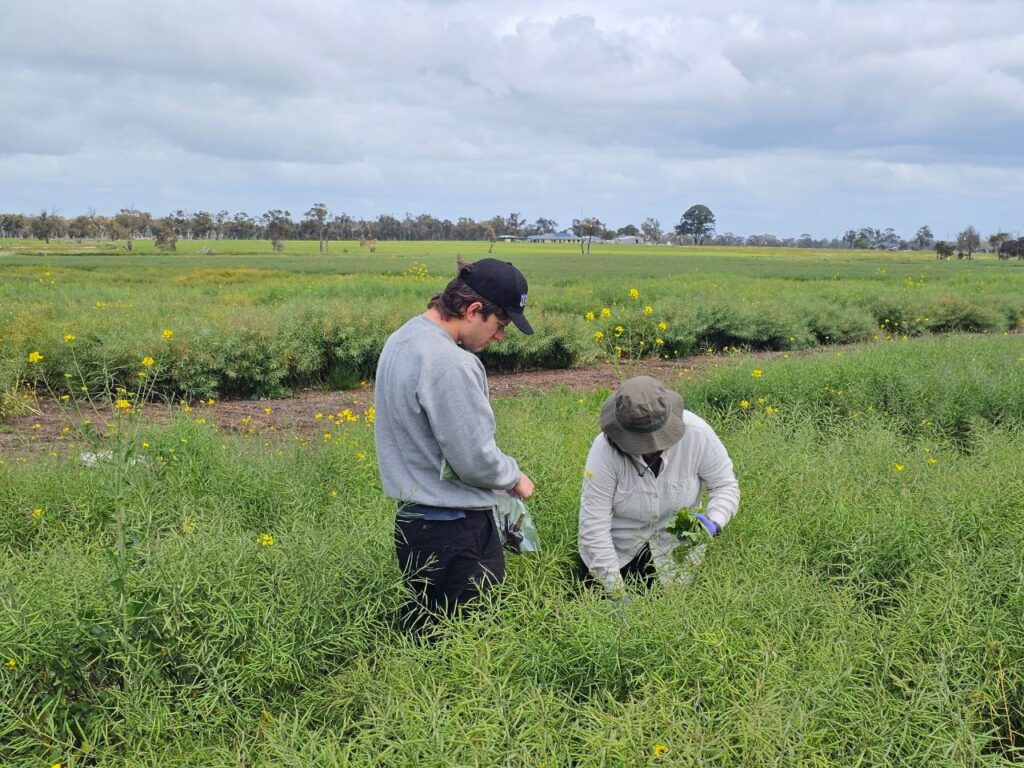
She encourages her students to visit field sites too.
“When you’re just working with tubes of DNA, you forget the bigger picture.”
FIGHTING MORE THAN FUNGUS
Jacqueline’s research offers growers more than a shield against blackleg fungus.
As farmers try to reduce reliance on fungicides due to growing resistance, genetics provides an alternative.
“It really is satisfying knowing that not only are we doing this science to make discoveries, but we are actually helping people as well,” says Jacqueline.
Credit: Supplied by Professor Jacqueline Batley
Her team has also started preparing for future threats.
“There isn’t enough forward thinking of what happens as the population increases and as the climate changes,” says Jacqueline.
“The group is starting to look at other emerging diseases because we realise that, with climate change, some other diseases might become more prevalent.
“We want to be a bit proactive in trying to find some sources of resistance.”
GROWING NEW SCIENTISTS
These challenges could be solved by the next generation of scientists.
Jacqueline works closely with postdoctoral researchers to build their careers.
“I’m giving them the opportunity to develop their own research projects for their own interest so they can develop something that shows it’s very much them,” says Jacqueline.
Credit: Supplied by Professor Jacqueline Batley
“I’m really trying to mentor and get the next generation to be able to establish themselves.”
Her advice to emerging researchers is to seize every opportunity.
“Never think a challenge is too hard,” says Jacqueline.
“Take opportunities … and collaborate as much as you can.
“More collaboration brings more success rather than trying on your own.”