

READ

PARTICLE 101: CLIMATE REFUGEES

Climate change is forcing people out of their homes – we need to acknowledge this new reality.
Camila Pardo Uribe
Camila Pardo Uribe
Freelance Writer
PARTICLE 101: CLIMATE REFUGEES

The UNHCR’s 1951 Refugee Convention describes a refugee as someone forced to leave their country because of war, violence or prosecution. 

The Convention was created after World War II and is still considered the cornerstone for the protection of refugees.

But now, climate change is causing a wave of displacement around the world. 

There’s no legal framework that protects or recognises climate refugees as a category in its own right. It might be time to change this. 

HIGH AND DRY

A climate refugee is someone who has been displaced by the effects of climate change, including floods, sea-level rise and extreme weather events.

In the last 10 years, it is estimated that 220 million people have been displaced from their homes due to unpredictable and increasingly harsh climate conditions.

Some climate refugees can move within their home countries. But for others, crossing international borders becomes the safest (and only) option.

Given their legal standing, relocating can be a tricky option for climate refugees. 

However, some countries are setting unprecedented legal standards to give them new opportunities.

THE TIDES ARE TURNING

Tuvalu is one country that has been most impacted by the effects of climate change. Scientists predict that, by 2100, 95% of the country will be under water.

Despite being labelled as climate refugees, Tuvaluans have rejected this label and advocated for mobility alternatives that protect their sovereignty

With this in mind, the Australia-Tuvalu Falepili Union treaty was signed in 2023.
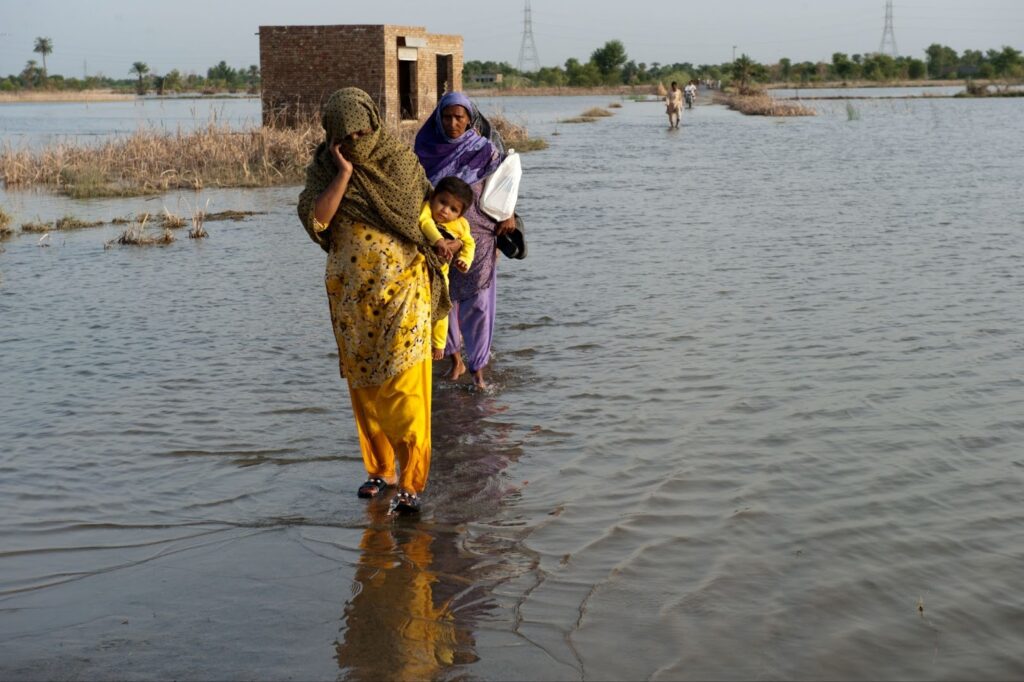
Caption: Climate change is now one of the main causes of displacement around the world.
Credit: Asian Development Bank/Flickr (CC BY-NC-ND 2.0)

The treaty focuses on ‘in-situ’ adaptation, meaning that Australia will provide Tuvaluans who stay in their country with financial and technical assistance to improve the resilience of their social and ecological systems.

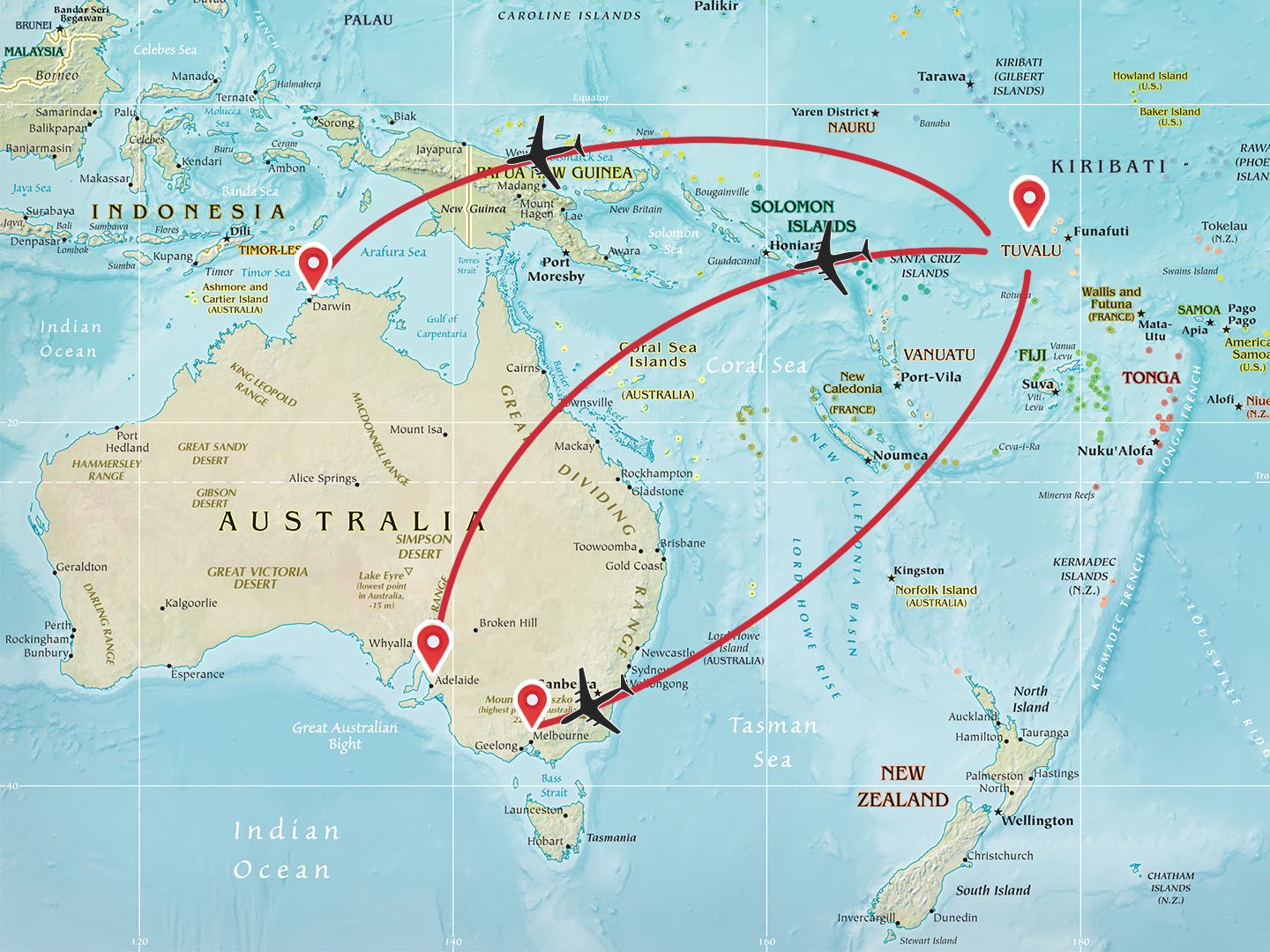
But the treaty also created the Falepili Mobility Pathway, a permanent residency visa that allows Tuvaluans to live and work in Australia should they follow the migration route.

The first group of visa holders from Tuvalu arrived in Melbourne earlier this year.

CLIMATE-PROOFING WA

There are no specific policies concerning climate refugees in WA. 

Instead, the state has focused on adaptation and mitigation to climate change, as described in the state government’s Climate Adaptation Strategy from 2022.

First Nations peoples and remote communities in WA are experiencing the effects of climate change most intensely

Through mutual learning and collaboration, the climatic future of the state can be secured and – hopefully – WA won’t generate any climate refugees of our own.

Camila Pardo Uribe
About the author
Camila Pardo Uribe
Camila is a science communicator from Colombia with a background in literature and biology. When she's not talking about hummingbirds with the people around her, you will find her trying to master the perfect selfie with any animal that comes her way or complaining about the weather.
View articles
Camila is a science communicator from Colombia with a background in literature and biology. When she's not talking about hummingbirds with the people around her, you will find her trying to master the perfect selfie with any animal that comes her way or complaining about the weather.
View articles

NEXT ARTICLE

We've got chemistry, let's take it to the next level!

Get the latest WA science news delivered to your inbox, every fortnight.

This field is for validation purposes and should be left unchanged.

Republish

Creative Commons Logo

Republishing our content

We want our stories to be shared and seen by as many people as possible.

Therefore, unless it says otherwise, copyright on the stories on Particle belongs to Scitech and they are published under a Creative Commons Attribution-NoDerivatives 4.0 International License.

This allows you to republish our articles online or in print for free. You just need to credit us and link to us, and you can’t edit our material or sell it separately.

Using the ‘republish’ button on our website is the easiest way to meet our guidelines.

Guidelines

You cannot edit the article.

When republishing, you have to credit our authors, ideally in the byline. You have to credit Particle with a link back to the original publication on Particle.

If you’re republishing online, you must use our pageview counter, link to us and include links from our story. Our page view counter is a small pixel-ping (invisible to the eye) that allows us to know when our content is republished. It’s a condition of our guidelines that you include our counter. If you use the ‘republish’ then you’ll capture our page counter.

If you’re republishing in print, please email us to let us so we know about it (we get very proud to see our work republished) and you must include the Particle logo next to the credits. Download logo here.

If you wish to republish all our stories, please contact us directly to discuss this opportunity.

Images

Most of the images used on Particle are copyright of the photographer who made them.

It is your responsibility to confirm that you’re licensed to republish images in our articles.

Video

All Particle videos can be accessed through YouTube under the Standard YouTube Licence.

The Standard YouTube licence

  1. This licence is ‘All Rights Reserved’, granting provisions for YouTube to display the content, and YouTube’s visitors to stream the content. This means that the content may be streamed from YouTube but specifically forbids downloading, adaptation, and redistribution, except where otherwise licensed. When uploading your content to YouTube it will automatically use the Standard YouTube licence. You can check this by clicking on Advanced Settings and looking at the dropdown box ‘License and rights ownership’.
  2. When a user is uploading a video he has license options that he can choose from. The first option is “standard YouTube License” which means that you grant the broadcasting rights to YouTube. This essentially means that your video can only be accessed from YouTube for watching purpose and cannot be reproduced or distributed in any other form without your consent.

Contact

For more information about using our content, email us: particle@scitech.org.au

Copy this HTML into your CMS
Press Ctrl+C to copy