

READ

Chocolate, Conservation and the Reluctant Influencer

Can your Easter treats really help save the bilby?
Tarryn Basden
Tarryn Basden
Science communicator
Chocolate, Conservation and the Reluctant Influencer

The greater bilby is endangered, partly due to competition with introduced rabbits. The obvious solution? Compete with bunnies.

If they can’t beat them in the wild, maybe they can beat them in the chocolate aisle.

The idea is simple – crowdfunding, but edible. Conservation economics disguised as confectionery. 

Replace the rabbit invading our country and our chocolate aisles with a native species that needs protecting. Then direct a portion of the profits toward conservation.

The Unlikely Influencer

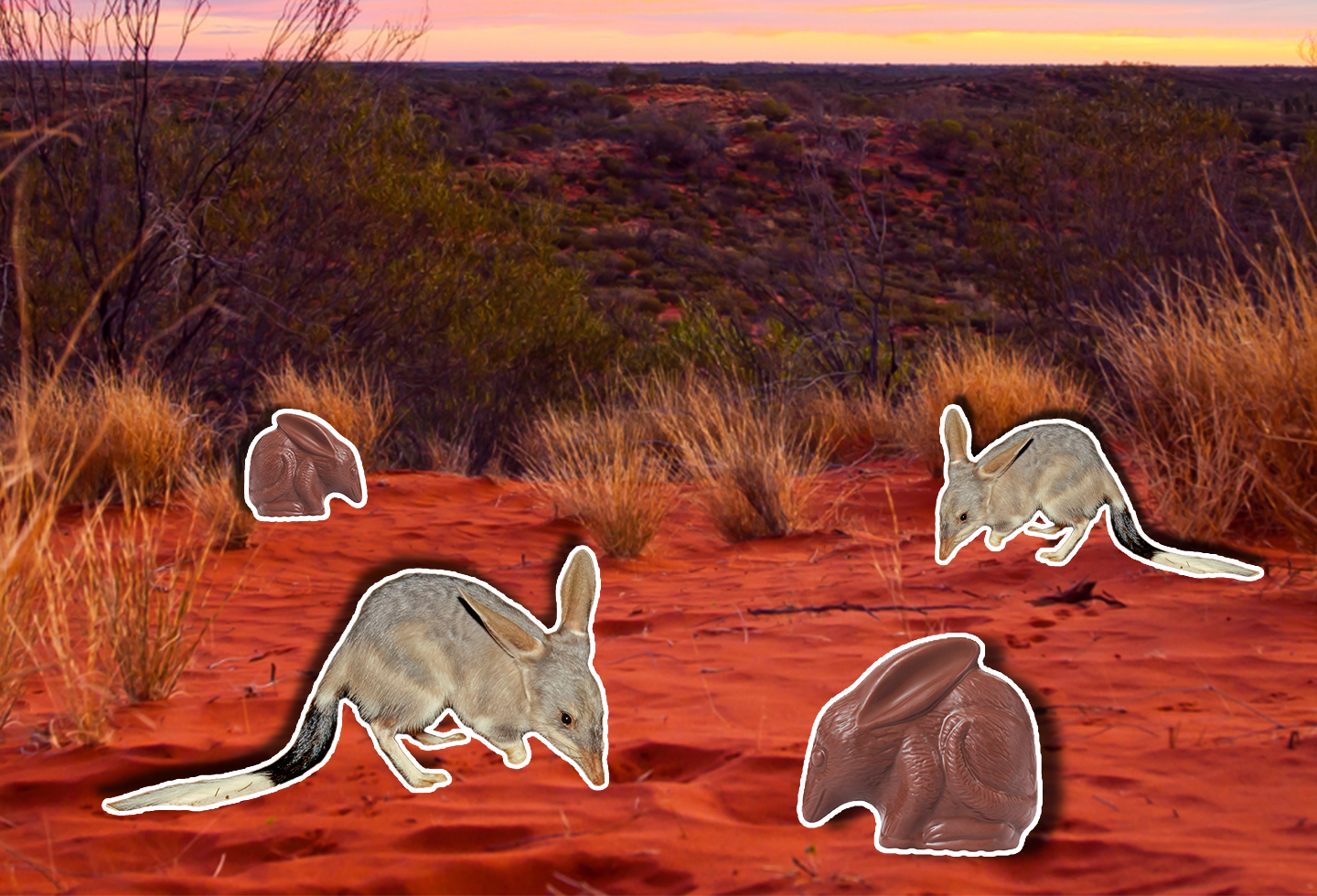
With its distinctive long ears and pointed snout, the bilby became the perfect poster marsupial.

Unfortunately, the bilby wasn’t built for the spotlight. It’s nocturnal, shy and spends most of its life trying to avoid being eaten by predators.

Yet every Easter, it’s drafted into a nationwide marketing campaign. Cast as the delicious face of conservation and moulded into a hollow chocolate shell.

But does it actually help, or is the bilby just another virtue influencer wrapped in shiny foil?
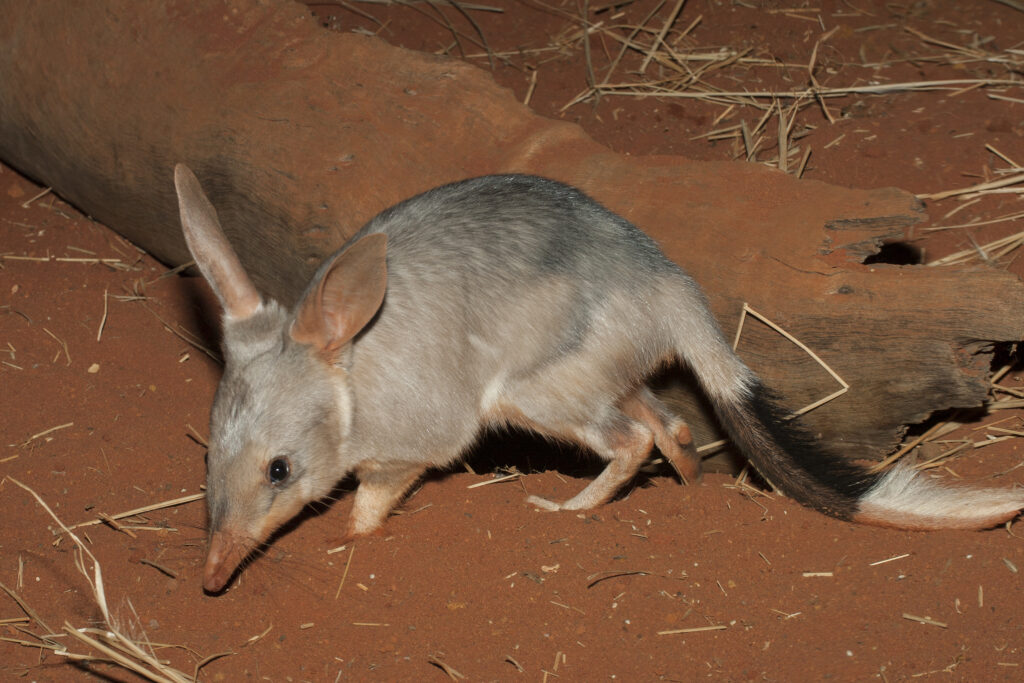
Caption: Bilbies are unintentional conservation influencers at Easter.
Credit: Ken Griffiths/Getty Images

Influence That Matters

Chocolate alone won’t save a species – it’s not quite as simple as ‘enjoy snack → save species. But it can help fund the people doing the hard work. 

Organisations like Save the Bilby Fund, Rabbit-Free Australia and Currumbin Wildlife Hospital rely on Easter fundraising to support conservation efforts, including predator-proof fencing, captive breeding and population monitoring.

These programs also restore habitat, control rabbit populations, rehabilitate wildlife and conduct research that benefits many native species.

The Real Influencers

Bilbies are ecosystem engineers. Their digging aerates soil, cycles nutrients and creates microhabitats for plants and animals.

Protecting bilbies has environmental benefits beyond a single charismatic, long-eared ambassador.

But, like most influencer partnerships, it’s important to read the fine print.

Down the Rabbit Hole

While chocolate bilby products do contribute to conservation programs, the level of influence varies between brands. 

Some brands donate a fixed amount per sale. Others contribute a percentage of profits. Some “promote awareness” without defining what that means or committing financial support.

That doesn’t mean the campaign isn’t a sweet idea. 

The Easter Bilby initiative has raised millions of dollars since the 1990s, helping bring national attention to an endangered species that would otherwise avoid the spotlight.
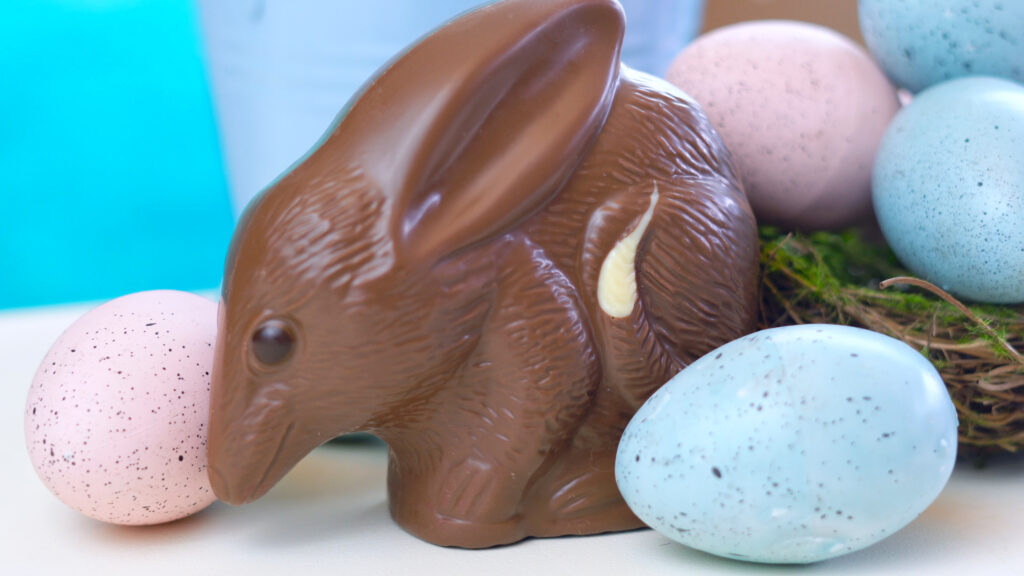
Caption: Chocolate bilbies have helped raise millions of dollars for the non-chocolate bilbies.
Credit: MillefloreImages/Getty Images

Inspired Not Influenced

The bilby may be a reluctant influencer, but it has real impact potential. 

Australians spend an average of $62 per person on Easter chocolate each year. If even some of that spending followed the “Bilbies not Bunnies” approach, the cumulative effect could make a meaningful difference. 

But how can you tell which bilby is a genuine conservation influencer? Or a bunny in bilby-shaped foil?

Impact depends on transparency.

Look for products that identify conservation partners or specify donation amounts. Awareness is valuable, but it doesn’t pay for predator-proof fencing. 

For those wanting their contribution to outlast the sugar rush, consider donating directly to bilby‑focused organisations. 

Brand recognition may seem an unusual conservation strategy. But if a little time in the chocolate aisle can help save a species, maybe this influencer deserves a follow.

Tarryn Basden
About the author
Tarryn Basden
Tarryn Basden is a biologist and science communicator from Western Australia. While she has had the privilege of working with lions and tigers and bears, oh my! She really enjoys teaching people about weird animals and making terrible puns as part of her science communication. While she is slowly coming to terms with Pluto’s demotion, she still refers to it as a planet.
View articles
Tarryn Basden is a biologist and science communicator from Western Australia. While she has had the privilege of working with lions and tigers and bears, oh my! She really enjoys teaching people about weird animals and making terrible puns as part of her science communication. While she is slowly coming to terms with Pluto’s demotion, she still refers to it as a planet.
View articles

NEXT ARTICLE

We've got chemistry, let's take it to the next level!

Get the latest WA science news delivered to your inbox, every fortnight.

This field is for validation purposes and should be left unchanged.

Republish

Creative Commons Logo

Republishing our content

We want our stories to be shared and seen by as many people as possible.

Therefore, unless it says otherwise, copyright on the stories on Particle belongs to Scitech and they are published under a Creative Commons Attribution-NoDerivatives 4.0 International License.

This allows you to republish our articles online or in print for free. You just need to credit us and link to us, and you can’t edit our material or sell it separately.

Using the ‘republish’ button on our website is the easiest way to meet our guidelines.

Guidelines

You cannot edit the article.

When republishing, you have to credit our authors, ideally in the byline. You have to credit Particle with a link back to the original publication on Particle.

If you’re republishing online, you must use our pageview counter, link to us and include links from our story. Our page view counter is a small pixel-ping (invisible to the eye) that allows us to know when our content is republished. It’s a condition of our guidelines that you include our counter. If you use the ‘republish’ then you’ll capture our page counter.

If you’re republishing in print, please email us to let us so we know about it (we get very proud to see our work republished) and you must include the Particle logo next to the credits. Download logo here.

If you wish to republish all our stories, please contact us directly to discuss this opportunity.

Images

Most of the images used on Particle are copyright of the photographer who made them.

It is your responsibility to confirm that you’re licensed to republish images in our articles.

Video

All Particle videos can be accessed through YouTube under the Standard YouTube Licence.

The Standard YouTube licence

  1. This licence is ‘All Rights Reserved’, granting provisions for YouTube to display the content, and YouTube’s visitors to stream the content. This means that the content may be streamed from YouTube but specifically forbids downloading, adaptation, and redistribution, except where otherwise licensed. When uploading your content to YouTube it will automatically use the Standard YouTube licence. You can check this by clicking on Advanced Settings and looking at the dropdown box ‘License and rights ownership’.
  2. When a user is uploading a video he has license options that he can choose from. The first option is “standard YouTube License” which means that you grant the broadcasting rights to YouTube. This essentially means that your video can only be accessed from YouTube for watching purpose and cannot be reproduced or distributed in any other form without your consent.

Contact

For more information about using our content, email us: particle@scitech.org.au

Copy this HTML into your CMS
Press Ctrl+C to copy