

READ

Professor Jacqueline Batley is fighting fungus with genetics

How defending canola crops led to national recognition.
Emily Evans
Emily Evans
Freelance Writer
Professor Jacqueline Batley is fighting fungus with genetics

In the wide, golden fields of Western Australia, a tiny fungus slowly attacks one of the state’s most important crops.

Blackleg fungus is the largest disease impacting canola in Australia, capable of causing yield losses of up to 90%.

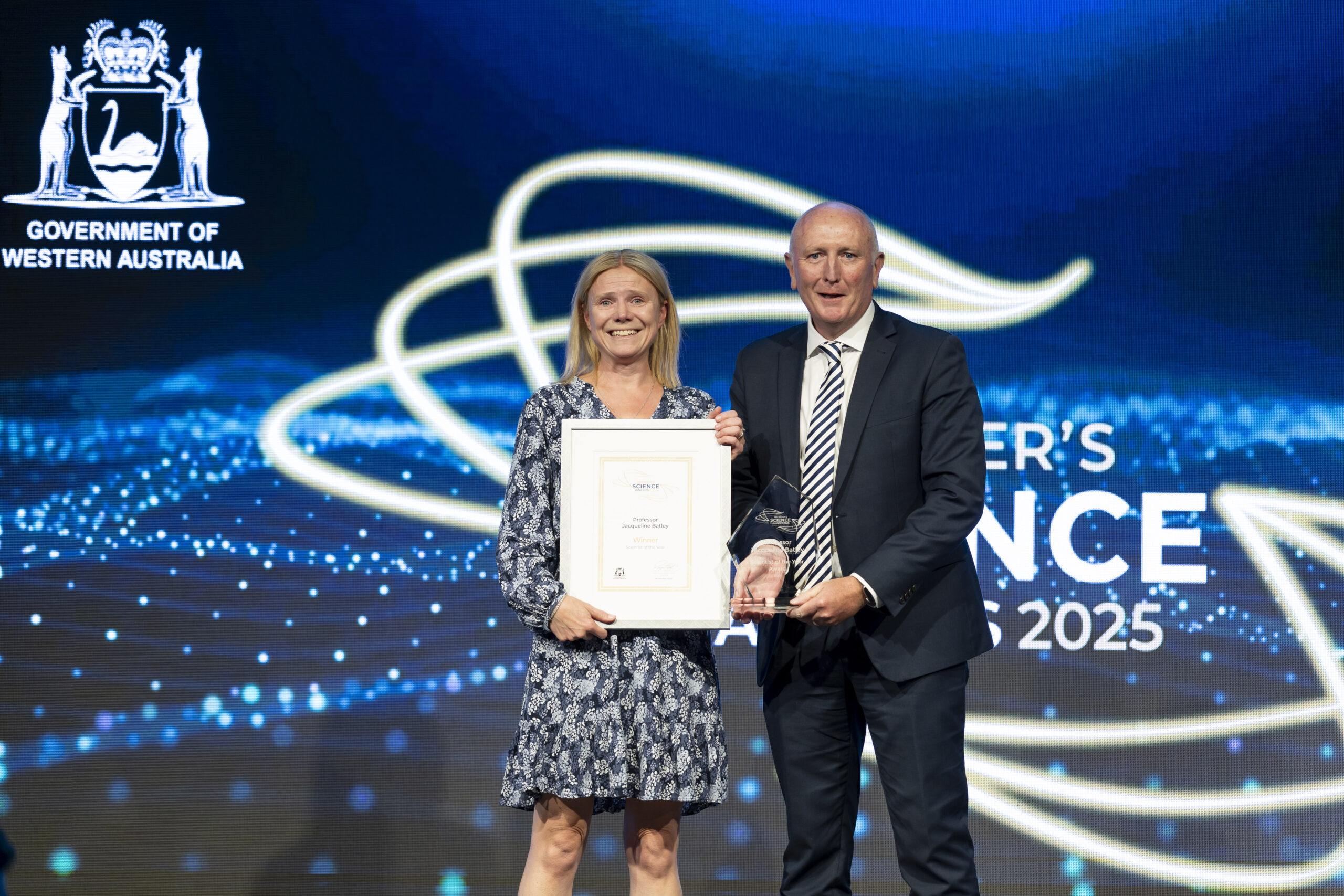
Professor Jacqueline Batley, WA’s 2025 Scientist of the Year, is at the forefront of defending these crops.

“I feel really honoured and grateful, but it’s really for my team as well,” says Jacqueline of the accolade.

“Everybody who’s been in the group has contributed in some way so everybody should be so proud that their research has been recognised.”

As an ARC Laureate Fellow at the University of Western Australia, Jacqueline leads a research group using genome sequencing and plant crosses to understand canola’s resilience and help it survive the destructive nature of blackleg fungus.

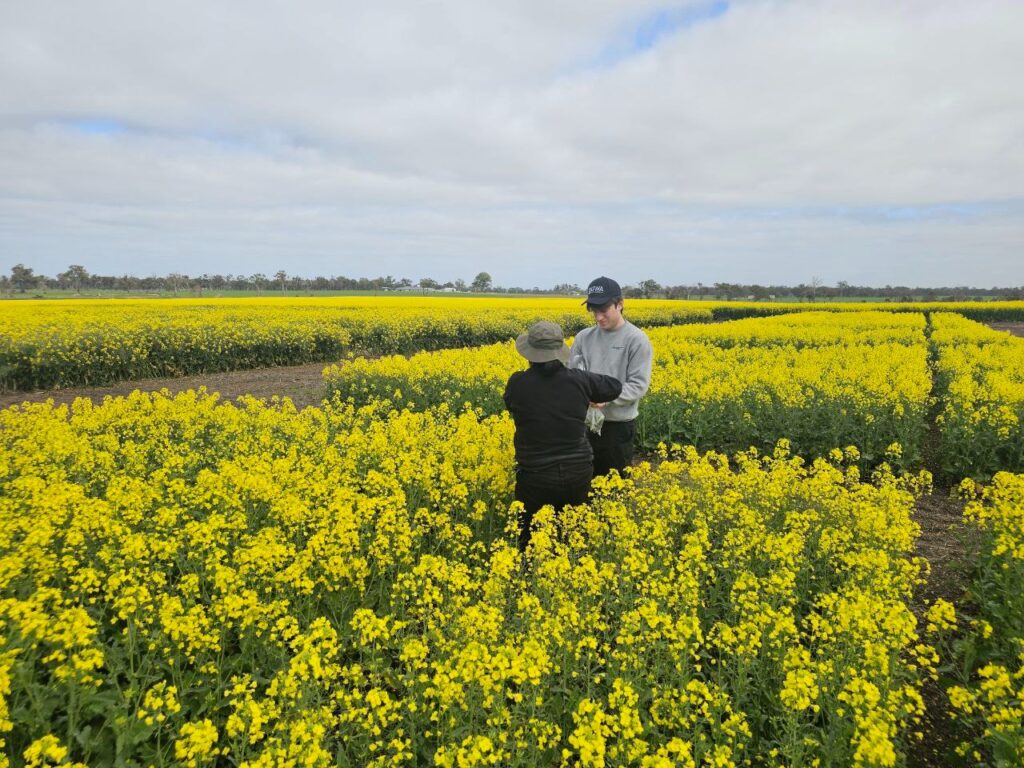
Caption: One of many canola fields Jacqueline’s team is fighting to defend in Western Australia.
Credit: Supplied by Professor Jacqueline Batley

“Most of the work we do is identifying disease-resistance genes in canola,” says Jacqueline.

“Once we find them, we develop markers which the breeders can use in their breeding programs.”

But a genetic marker that works now may not be effective later.

“The fungus is clever. It mutates its genome … so we keep having to try and find new sources of resistance to deploy,” says Jacqueline.

“It keeps us busy, but it’s frustrating at the same time.”

FROM A LAB TO THE OUTBACK

Jacqueline entered the world of canola genomics in 2002 after moving to Australia from the United Kingdom.

A major breakdown of resistance to blackleg in South Australia and New South Wales had wiped out fields of canola, prompting a national effort to understand how the fungus evolves.
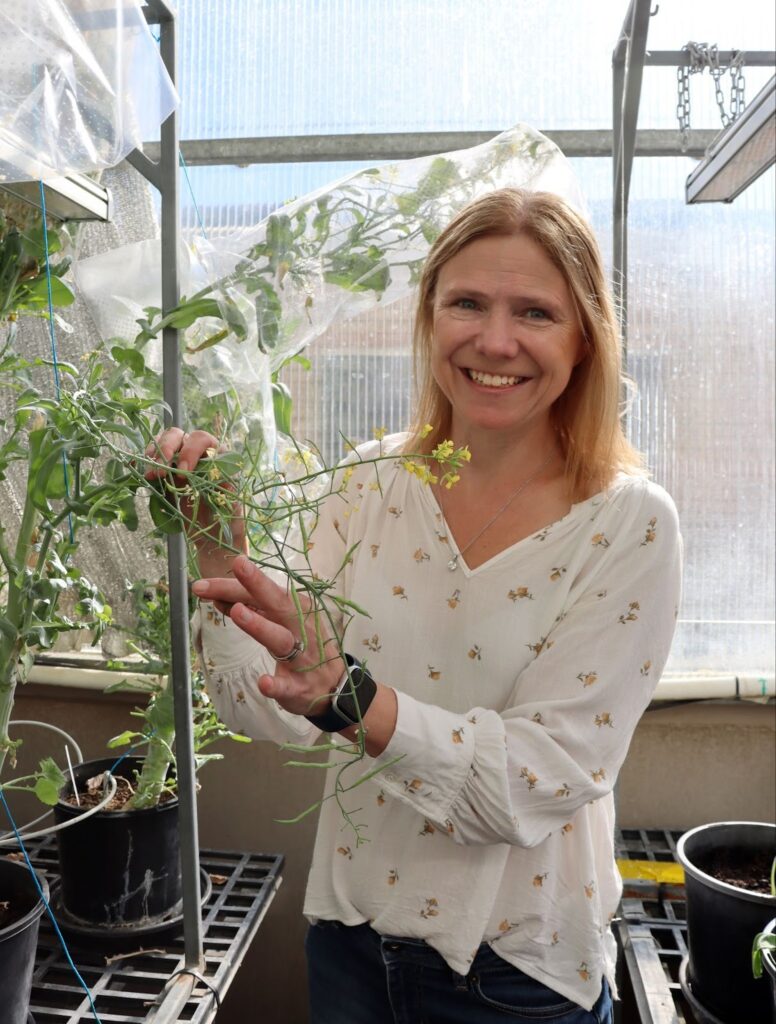
Caption: The passion for canola began when Jacqueline joined a national research effort in 2002.
Credit: Supplied by Professor Jacqueline Batley

“[I] was absolutely fascinated by the interaction,” says Jacqueline. “How does the host recognise the fungus and how does the fungus evade it?”

“Once you start doing it and you get bitten by the challenge, you just want to keep digging in a bit more to try and find a new way to solve the problem.”

This drive has fuelled Jacqueline’s passion for canola over more than two decades.

A passion that grows when she sees the sea of yellow flowers.

“The sheer scale of it is incredible,” says Jacqueline. “When you go and see really healthy plants, you [think] I helped do this.”

She encourages her students to visit field sites too.

“When you’re just working with tubes of DNA, you forget the bigger picture.”

FIGHTING MORE THAN FUNGUS

Jacqueline’s research offers growers more than a shield against blackleg fungus.

As farmers try to reduce reliance on fungicides due to growing resistance, genetics provides an alternative.

“It really is satisfying knowing that not only are we doing this science to make discoveries, but we are actually helping people as well,” says Jacqueline.
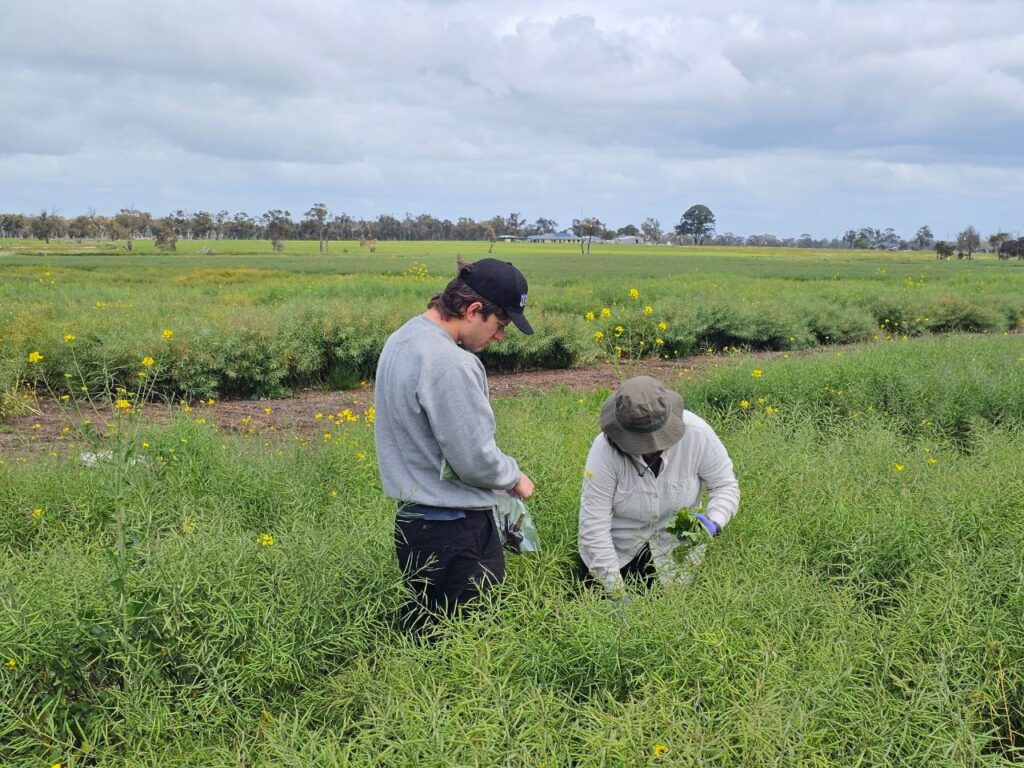
Caption: Jacqueline’s team is proactively looking for future threats to crops.
Credit: Supplied by Professor Jacqueline Batley

Her team has also started preparing for future threats.

“There isn’t enough forward thinking of what happens as the population increases and as the climate changes,” says Jacqueline.

“The group is starting to look at other emerging diseases because we realise that, with climate change, some other diseases might become more prevalent.

“We want to be a bit proactive in trying to find some sources of resistance.”

GROWING NEW SCIENTISTS

These challenges could be solved by the next generation of scientists.

Jacqueline works closely with postdoctoral researchers to build their careers.

“I’m giving them the opportunity to develop their own research projects for their own interest so they can develop something that shows it’s very much them,” says Jacqueline.
Caption: Jacqueline has become a mentor to postdoctoral researchers from all fields of science.
Credit: Supplied by Professor Jacqueline Batley

“I’m really trying to mentor and get the next generation to be able to establish themselves.”

Her advice to emerging researchers is to seize every opportunity.

“Never think a challenge is too hard,” says Jacqueline.

“Take opportunities … and collaborate as much as you can.  

“More collaboration brings more success rather than trying on your own.”

Emily Evans
About the author
Emily Evans
Emily has worked in the media and communications industry in Western Australia as both a TV journalist and media advisor. She has a passion for scientific research and enjoys writing about the latest and quirkiest discoveries. Emily is also a big fan of going on adventures, eating Mexican food, and travelling the world.
View articles
Emily has worked in the media and communications industry in Western Australia as both a TV journalist and media advisor. She has a passion for scientific research and enjoys writing about the latest and quirkiest discoveries. Emily is also a big fan of going on adventures, eating Mexican food, and travelling the world.
View articles

NEXT ARTICLE

We've got chemistry, let's take it to the next level!

Get the latest WA science news delivered to your inbox, every fortnight.

This field is for validation purposes and should be left unchanged.

Republish

Creative Commons Logo

Republishing our content

We want our stories to be shared and seen by as many people as possible.

Therefore, unless it says otherwise, copyright on the stories on Particle belongs to Scitech and they are published under a Creative Commons Attribution-NoDerivatives 4.0 International License.

This allows you to republish our articles online or in print for free. You just need to credit us and link to us, and you can’t edit our material or sell it separately.

Using the ‘republish’ button on our website is the easiest way to meet our guidelines.

Guidelines

You cannot edit the article.

When republishing, you have to credit our authors, ideally in the byline. You have to credit Particle with a link back to the original publication on Particle.

If you’re republishing online, you must use our pageview counter, link to us and include links from our story. Our page view counter is a small pixel-ping (invisible to the eye) that allows us to know when our content is republished. It’s a condition of our guidelines that you include our counter. If you use the ‘republish’ then you’ll capture our page counter.

If you’re republishing in print, please email us to let us so we know about it (we get very proud to see our work republished) and you must include the Particle logo next to the credits. Download logo here.

If you wish to republish all our stories, please contact us directly to discuss this opportunity.

Images

Most of the images used on Particle are copyright of the photographer who made them.

It is your responsibility to confirm that you’re licensed to republish images in our articles.

Video

All Particle videos can be accessed through YouTube under the Standard YouTube Licence.

The Standard YouTube licence

  1. This licence is ‘All Rights Reserved’, granting provisions for YouTube to display the content, and YouTube’s visitors to stream the content. This means that the content may be streamed from YouTube but specifically forbids downloading, adaptation, and redistribution, except where otherwise licensed. When uploading your content to YouTube it will automatically use the Standard YouTube licence. You can check this by clicking on Advanced Settings and looking at the dropdown box ‘License and rights ownership’.
  2. When a user is uploading a video he has license options that he can choose from. The first option is “standard YouTube License” which means that you grant the broadcasting rights to YouTube. This essentially means that your video can only be accessed from YouTube for watching purpose and cannot be reproduced or distributed in any other form without your consent.

Contact

For more information about using our content, email us: particle@scitech.org.au

Copy this HTML into your CMS
Press Ctrl+C to copy