


You might be interested

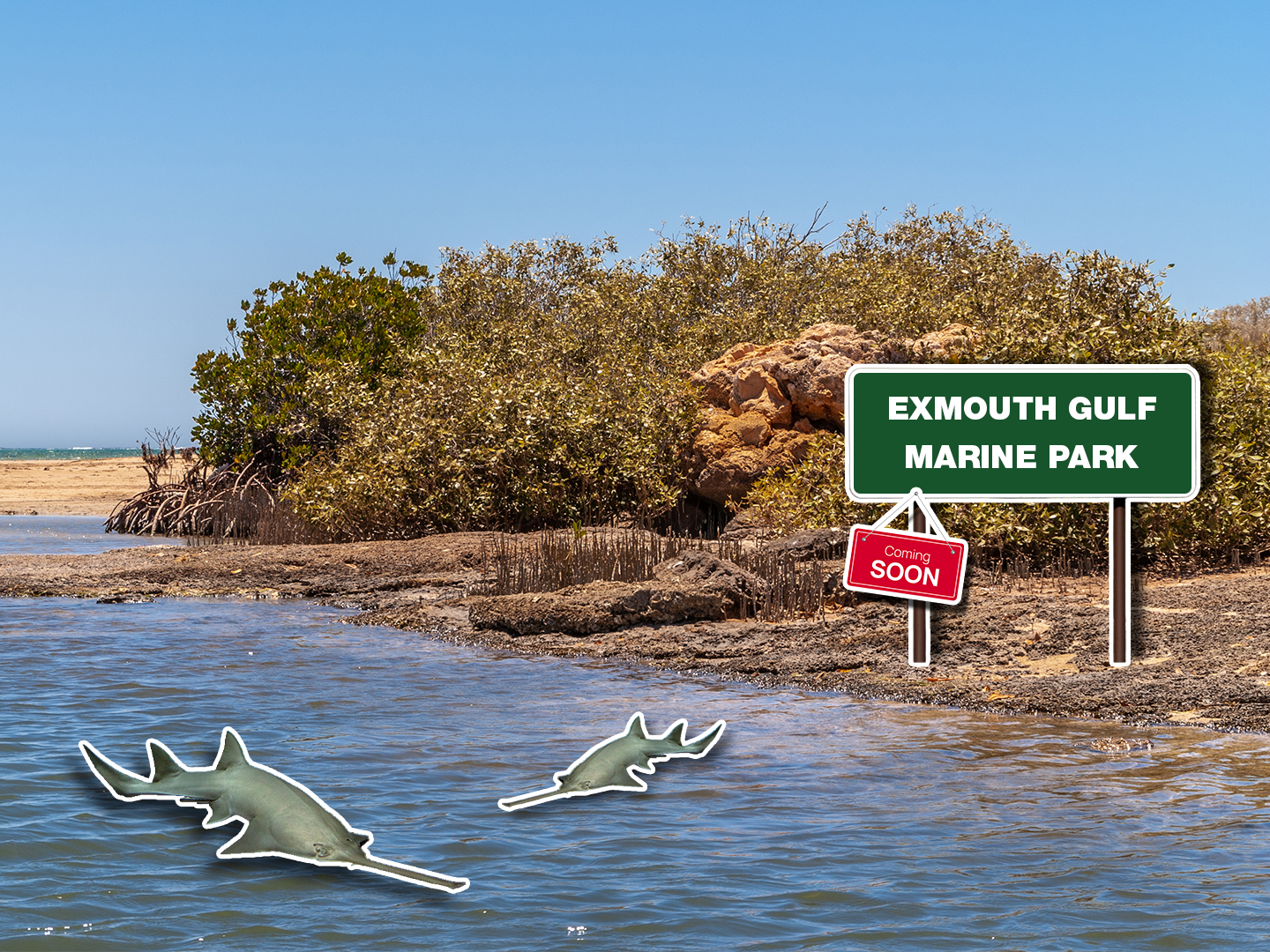
In September 2025, the Western Australian Government announced its intent to create the Exmouth Gulf Marine Park.
The park would conserve the biodiversity of the Exmouth Gulf for future generations.
Marine parks are areas of the ocean protected by governments, with zoning for biodiversity sanctuaries, tourism, energy industries and fisheries.
“Marine parks can be useful for dealing with direct threats [to biodiversity],” says Dr Justin Alger, Senior Lecturer in global environmental politics at the University of Melbourne.
The state government proposes 30% of the marine park will be made up of sanctuary zones, where fishing and extraction are excluded.
It has also promised a $5 million investment into marine heatwave recovery in the area.
Traditional Owners will have a say in the running of the park, with the Nganhurra Thanardi Garrbu Aboriginal Corporation jointly managing it with the Department of Biodiversity, Conservation and Attractions.
SIGNIFICANT WATERS
Exmouth Gulf sits 1,000 kilometres north of Perth and is under threat from warming oceans and coral reefs bleaching.
Environmental lobby groups have been campaigning for mandated protections for Exmouth Gulf for some time, with Protect Ningaloo at the forefront.
Humpback whales nurse their calves in its deep and quiet waters, and it is home to one of the world’s largest dugong populations.
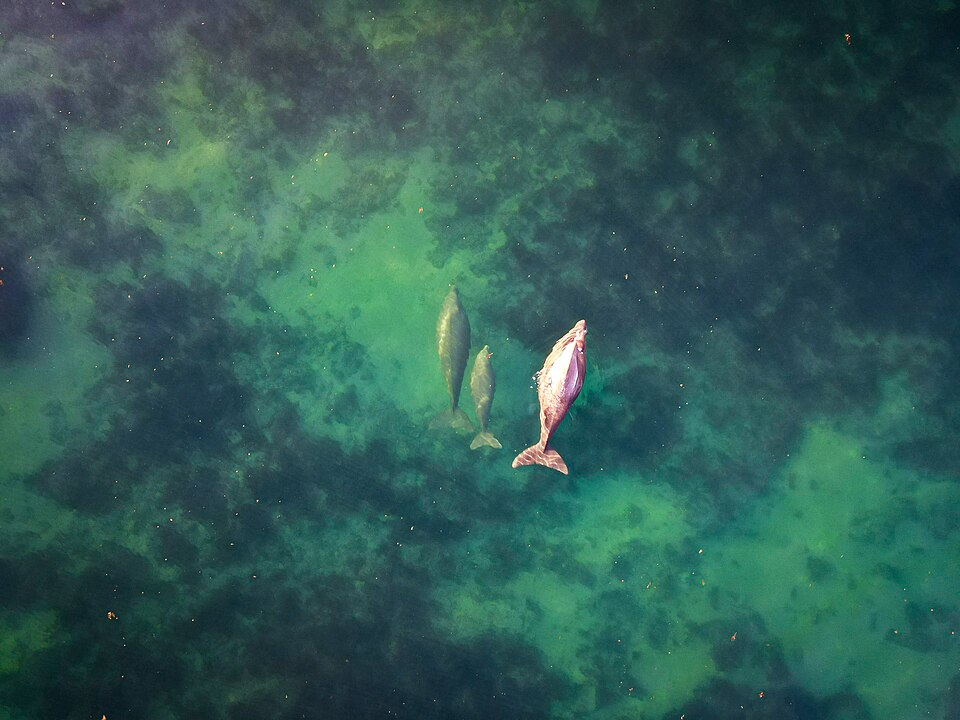
Credit: Nicocoll/Wikimedia Commons
Threatened species of sawfish, wedgefish and previously-thought-extinct sea snakes can be found in the Gulf.
Dr Martial Depczynski is a Senior Research Scientist and part of the Indigenous Partnerships Team at the Australian Institute of Marine Science.
“A lot of different species have a role to play,” says Martial. “If that role gets diminished, or gets increased, or disappears altogether, then you have a dysfunctional ecosystem.”
The area is also home to significant Aboriginal cultural heritage sites, at least 40,000 years old. Both land and water in the area hold importance to Aboriginal people from the Emu Spirit Dreaming.
MIXED-USE
The Exmouth Gulf Marine Park will be a mixed-use marine park, with conservation not the only goal.
“It’s unfortunately fairly common in Australia that the goal with a lot of these [mixed-use] marine parks is to create a marine park but to do so in a way that doesn’t actually require anyone to really change their behaviour,” says Justin.
Existing activities like commercial and recreational fishing, tourism and defence are set to continue, but with greater protections for biodiversity.
“People may lose their favourite fishing spot,” says Martial, “[but] at the end of the day, those exist because the environment has been there for thousands and thousands of years.”
“It’s the environment itself that provided the potential for a commercial fishery, or a salt mine, or even an oil and gas structure.
“You’re kind of biting the hand that feeds you if you’re going against preserving those ecosystems that are the foundation for the business in the first place.”
PAPER PARKS
This all sounds very win-win – greater conservation and business as usual?
But Justin cautions against ‘paper parks’ – marine parks that appear on maps and as government statistics but with little conservation action.
“The government will establish a marine protected area but then not really do much to change how that space gets used,” says Justin.
“It can give the false impression that we’re making progress towards something when we are in fact not.”
However, Martial argues any protection of an area is better than none.
“Nothing is going to go backwards by announcing a park,” he says.
“It promotes understanding of where the most sensitive spots are, the hotspots of biodiversity or the hotspots of endangered or critically important species.
“There’s so much we’re losing that we don’t know … and the more focus we can have on it, the greater probability that it is going to be there for the kids and the grandkids.”
CAUTIOUS OPTIMISM
Establishing the Exmouth Gulf Marine Park is an inherently good thing, but it’s important to remain vigilant and ensure that its mixed use is benefiting the environment.
It’s essential to get the balance right – support those who depend on the area for job and economic security while protecting the ecosystem, especially in light of the ongoing impacts of climate change.