



You might be interested


Did you ever do the science experiment at school where you fuelled little plastic cars with water?
Those neat little guys were a cool way to learn about electrolysis, the process of using electricity to split water into two gases: hydrogen and oxygen. These gases became the fuel, and zip! The car would move.
A fun science demonstration, sure. But what if this technology could be used to decarbonise the economy and establish a valuable export industry for Australia?
Key to unlocking the energy industry potential of liquid hydrogen is Steph Munro. She’s a chemical engineering whiz and Visiting Student Researcher at UWA’s Australian Centre for LNG Futures. Steph is part of a team working towards making hydrogen a viable energy source.
“In recent years, we’ve seen growing pressure to decarbonise the economy, and government is encouraging this,” Steph says.
“Future energy use will come from greener sources, and hydrogen will potentially be a major player in this area.”
So how does hydrogen work as a fuel?
Burn, baby!
When burned, hydrogen produces water and releases a lot of heat as energy. That makes it a great fuel with no carbon emissions. But how does the process work?
Until now, hydrogen has mainly been used for various industrial processes. But there’s a significant opportunity for hydrogen to be used for electricity, transport, heat and more.
“Hydrogen has become a major player in this area. And that’s because it’s perfect for decarbonising parts of the economy that are difficult to electrify,” Steph says.
Take long-haul trucks, for example. Because they travel such vast distances, electric batteries aren’t suitable. No battery can cover the distance required, and they take too long to recharge. But a hydrogen-fuelled truck can be quickly refuelled, just like a diesel-fuelled truck.
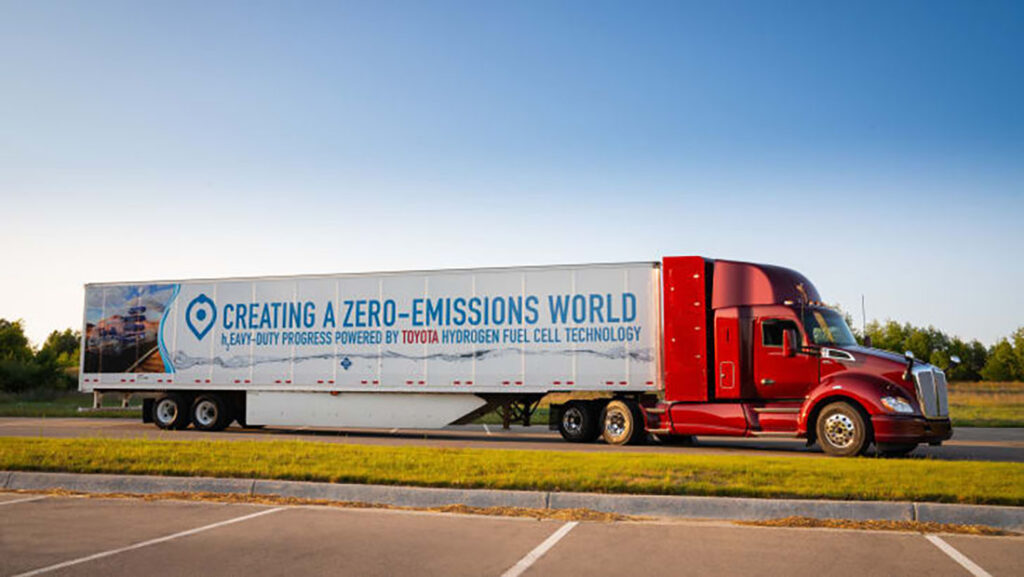
So that little toy fuel cell car from science class? Imagine that, but a long-haul truck.
Going global
As the global demand for hydrogen grows, exporting hydrogen could be big for Australia.
In 2030, the annual liquid hydrogen demand from China, Japan, South Korea and Singapore is likely to be 3.8 million tonnes, according to CSIRO. That could represent almost $10 billion a year for the Australian economy.
“There is an opportunity for Australia to export hydrogen to nations that don’t have the renewable energy infrastructure to decarbonise their economy,” Steph says.
So what are we waiting for?
The challenges
Like anything requiring new infrastructure, there are significant challenges to overcome.
“The main challenge with hydrogen is that it exists at atmospheric conditions as a gas, which takes up a large volume,” Steph says. “That can be a problem if you want to import 900,000 tonnes as a fuel.”
“This is why natural gas is exported as LNG or liquefied natural gas.”
But that doesn’t mean it’s easy to liquefy hydrogen. In order to liquefy gases, you need to cool them to very cold temperatures.
“Natural gas liquefies at -161°C, but hydrogen gas liquefies at -253°C. That requires a lot of energy,” Steph says.
It’s so hard to cool things down that, in a tank of liquid hydrogen, more than one-third of the energy goes towards liquefying it.
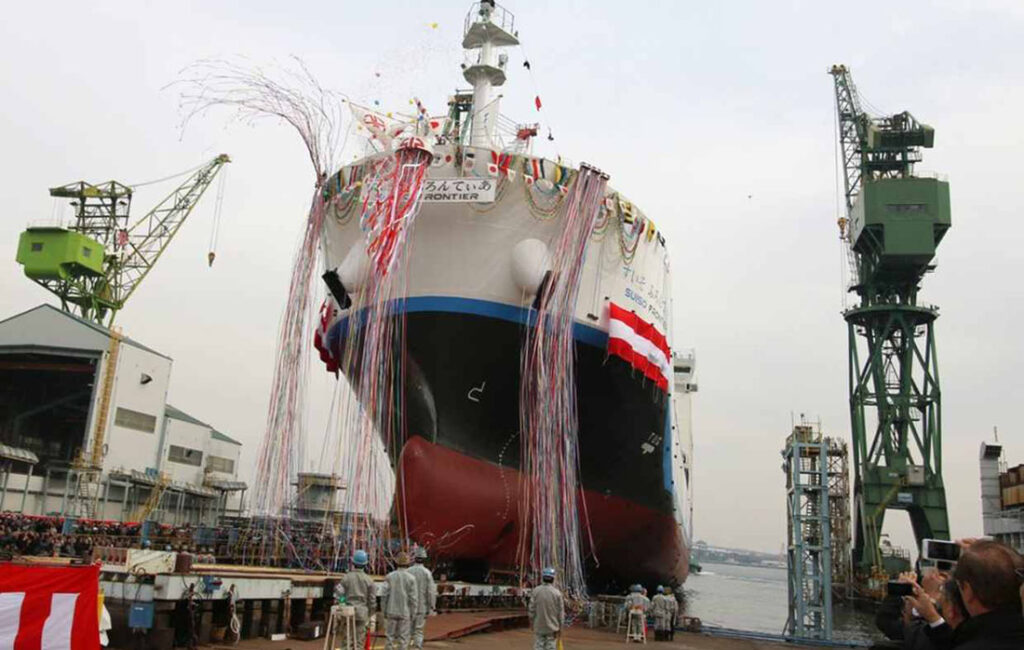
“We’re currently working on leveraging our knowledge in LNG to make liquefaction more energy efficient,” Steph says.
“There are a number of conceptual models of liquefaction plants that are much more efficient. The next step is developing those conceptual plants into reality.”
And lastly, liquid hydrogen is just a bit weird. “Because liquid hydrogen exists at such cold temperatures, we don’t yet totally understand it. That makes ironing out inefficiencies quite difficult,” Steph says.
“Due to these challenges, we’re likely to see a hydrogen industry that embraces multiple technologies, not just liquid hydrogen.”
The next steps
While there are challenges, bright minds are working on meeting them.
In the meantime, we’ll be playing with our fuel-cell toys …
Find out more about Steph’s work at the Australian Centre for LNG Futures.
To find out more about Australia’s national hydrogen strategy, listen to this Grattan Institute podcast featuring Australia’s Chief Scientist, Dr Alan Finkel AO.