

You might be interested


The Casual Observer
December signals the arrival of Birak, marking the transition into noticeably warmer weather. Represented by the colour red, Birak is all about heat, Sun and fire! As the temperature climbs, the skies clear and the evenings grow longer and warmer, providing perfect conditions for stargazing.
The Milky Way remains low along the western horizon and a little tricky to see this month, but there’s still plenty to enjoy in the sky. As Scorpius sets in the west, Orion the Hunter rises in the east, signalling that it’s now Orion’s time in the spotlight.
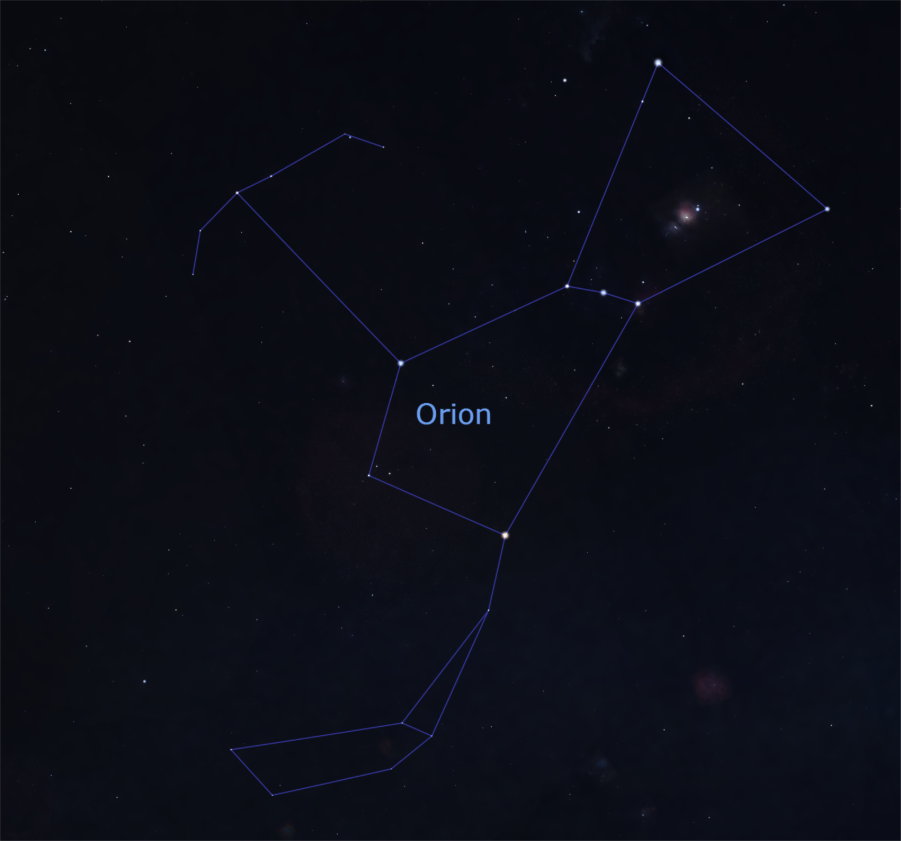
Credit: Stellarium
This month we are treated to the Geminids Meteor Shower, one of the year’s most spectacular and reliable meteor showers. The Geminids will be visible for much of the month and are at their peak around December 14th. Known for their bright, colourful meteors, the Geminids can produce 40–50 meteors per hour under dark skies — a dazzling show for night-sky watchers! Best viewed after midnight, looking toward Gemini in the north. You can use the bright Jupiter as a guide as well.
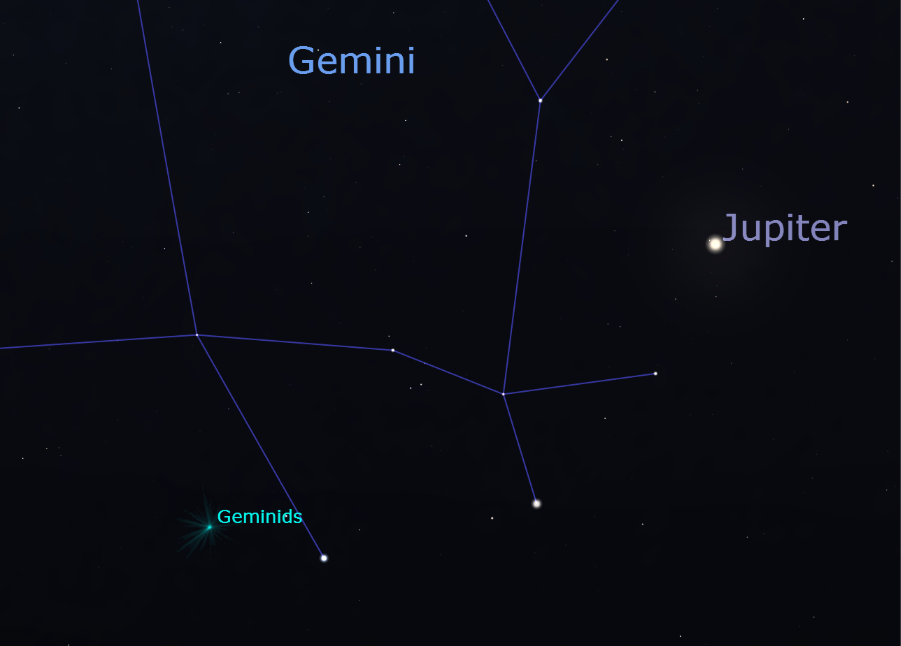
Credit: Stellarium
Meteor showers are the result of debris from space burning up in Earth’s atmosphere. Most of this debris is left behind when comets streak into our inner solar system, leaving behind a trail of ice and dust. Unlike most meteor showers however, which originate from comets, the Geminids come from an asteroid named 3200 Phaethon, not a comet. As the Earth passes through the debris trail left by Phaethon, tiny dust particles burn up in our atmosphere, creating brilliant streaks of light.
The Summer Solstice occurs on December 21 and marks the astronomical beginning of summer in the southern hemisphere. On this day, the southern hemisphere experiences its longest day and shortest night of the year as the Sun reaches its most southerly point, directly over the Tropic of Capricorn (23.4°S).
On December 25 we celebrate the birth of the most significant thinker in history, Isaac Newton.
ISS sightings from Perth
The International Space Station passes overhead multiple times a day. Most of these passes are too faint to see but a couple of notable sightings* are:
| Date, time | Appears | Max Height | Disappears | Magnitude | Duration |
| 6 Dec 8:07 PM | 10° above NNW | 32° | 10° above ESE | -3.1 | 5.5 min |
| 8 Dec 8:06 PM | 10° above NW | 64° | 10° above SE | -3.3 | 6.5 min |
Source: Heavens above, Spot the Station
*Note: These predictions are only accurate a few days in advance. Check the sources linked for more precise predictions on the day of your observations.
Moon phases
December 5: Full Moon
December 12: Last Quarter
December 20: New Moon
December 28: First Quarter
Dates of interest
December 5: Super Full Moon
December 21: Summer Solstice
December 25: Isaac Newton’s birthday
Planets to look for
Mercury appears in the eastern sky before sunrise for the early birds this month. Meanwhile, Mars and Venus are lost in the glare of the Sun this month and can’t be seen.
Saturn is nicely visible in the northwestern sky during the early evenings.
Jupiter is the highlight this month, rising about 10pm and visible across the northern skies until sunrise as a bright white point. It is joined by the Moon on December 8 for a nice encounter and definitely worth going out for.
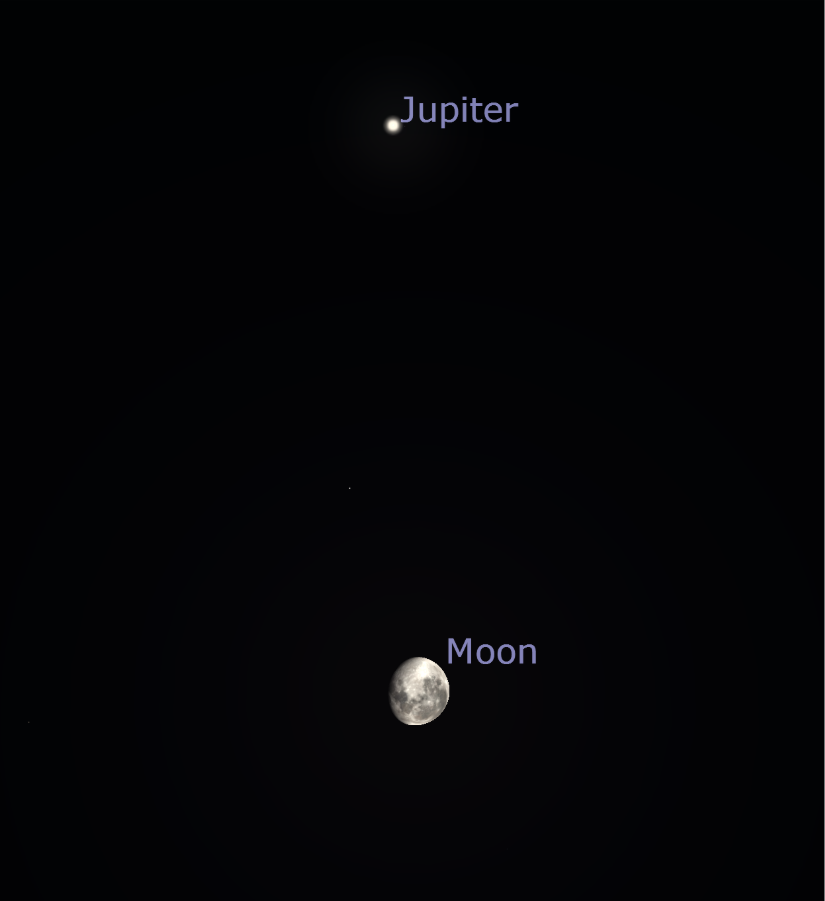
Credit: Stellarium
Constellation of the month
Pisces – The Fish
Pisces is a large, faint constellation visible in the northwest during December evenings. It appears as a V-shaped pattern of stars stretching gracefully across the sky and is best viewed just after sunset.
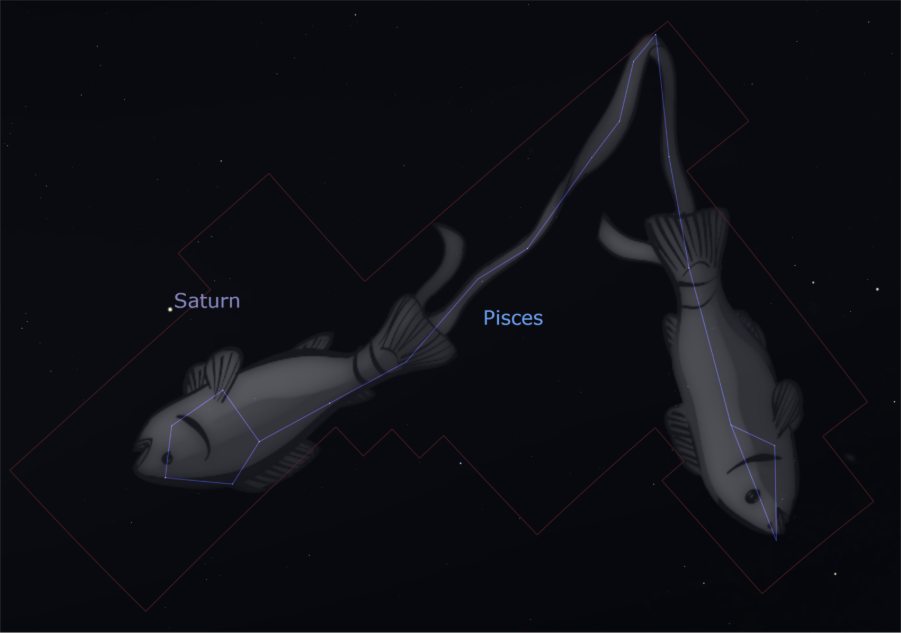
Credit: Stellarium
Pisces represents two fish tied together by a cord, a symbol that has been recognised for thousands of years. In Greek mythology, the fish are said to be Aphrodite and her son Eros, who transformed into fish to escape the monster Typhon. To ensure they would not lose each other, they tied themselves together with a long ribbon.
The brightest star in the constellation Alpha Piscium shines at a relatively dim magnitude 3.62, making this a challenging constellation to observe for the keen naked eye observer.
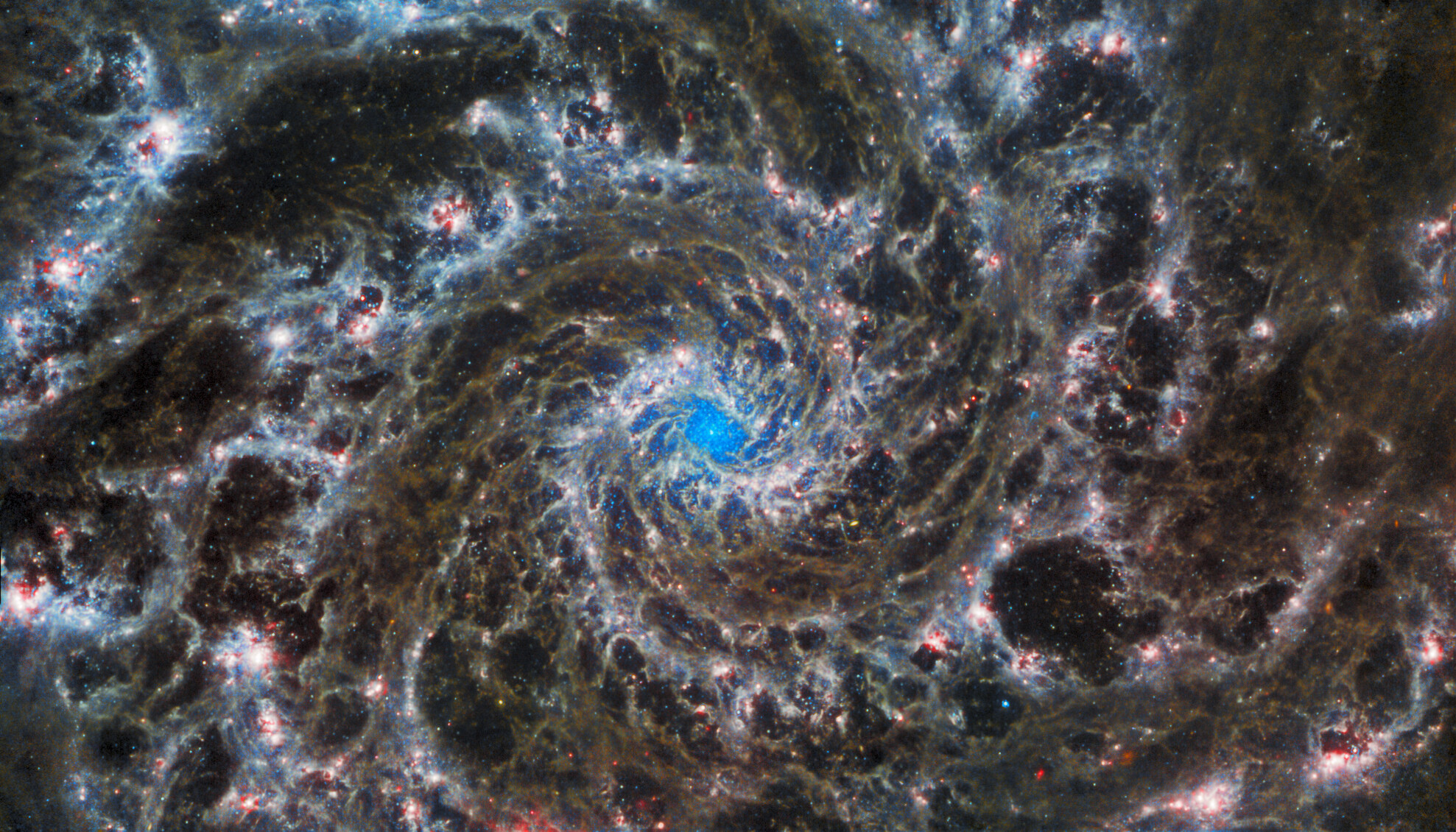
Pisces is home to the galaxy Messier 74, a target of interest for professional and amateur astronomers. With its clearly defined blue spiral arms coiling from a dense yellowish core, M74 demonstrates a perfect textbook grand design spiral galaxy.
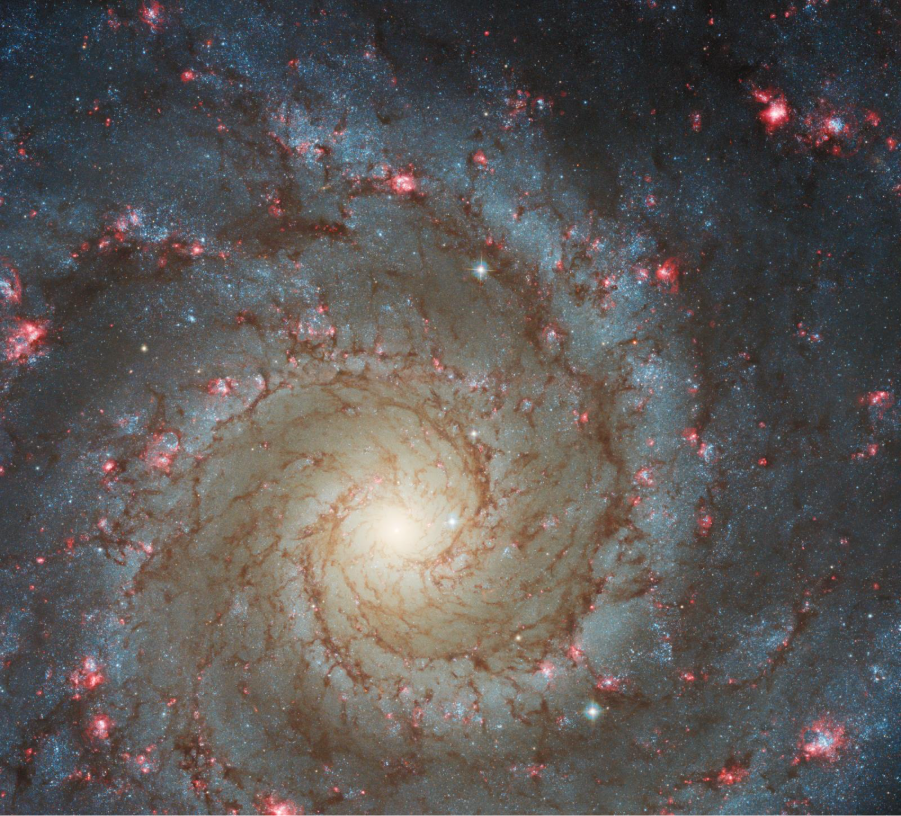
Credit: ESA/Hubble & NASA, R. Chandar
The Milky Way is known to be a spiral galaxy, but with a bar structure running through the middle. Studying galaxies like M74 allows astronomers to better understand how galaxies form spiral arms and how different shapes of galaxies across the universe are related to each other.
Curious astronomers used the James Webb Space Telescope to image M74, which revealed filaments of gas and dust in the bright spiral arms. It is generally understood that spiral galaxies form new stars in the spiral arms by compressing these clouds of gas to form new stars. Bursts of star formation often produce many hot stars – and hot stars are blue – giving the characteristic blue appeance to the arms of spiral galaxies.
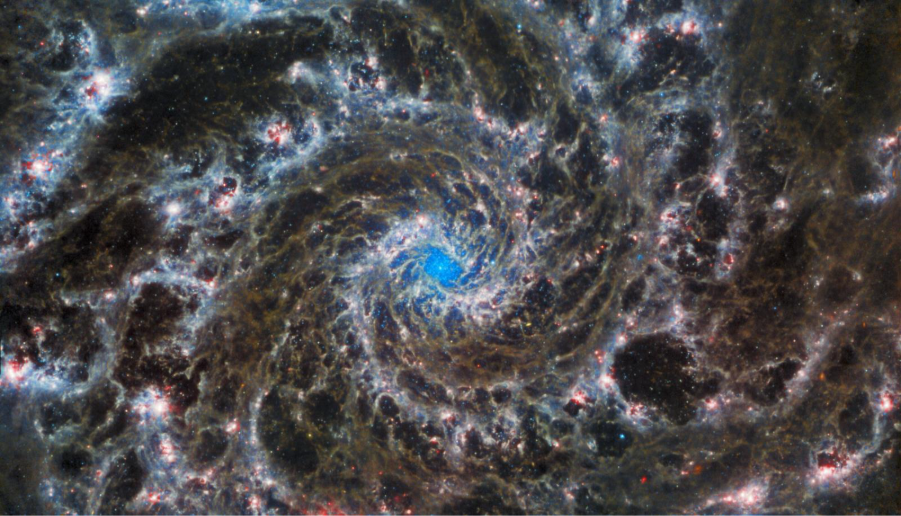
Credit: ESA/Webb, NASA & CSA, J. Lee and the PHANGS-JWST Team.
Object for the small telescope
Neptune
The eighth planet in the Solar System is located in Pisces this month. At a magnitude of about 7.8 throughout December, this faint planet will make for a challenging target for the keen observer. Currently it is sitting about 5 degrees away from Saturn which makes for a good reference point. Through a decent telescope it should appear as a small blue point or disk.
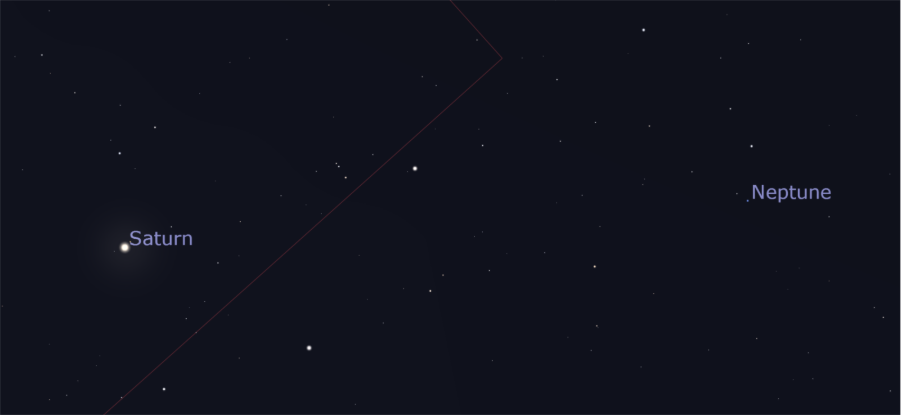
Credit: Stellarium.