


You might be interested


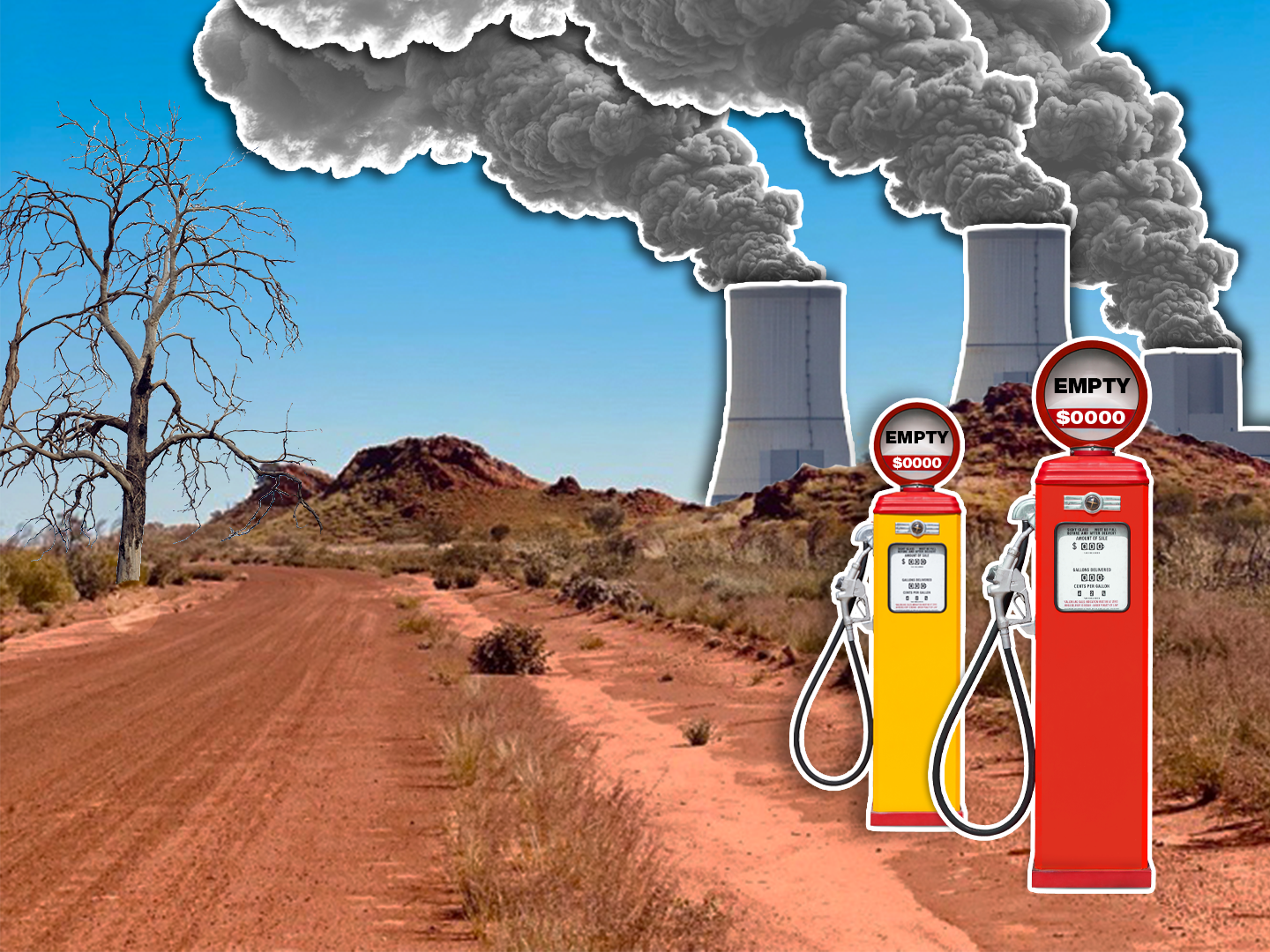
Australia has a heavy reliance on fossil fuels. It powers our homes, our cars, our workplaces and the services we rely on, including healthcare and food supply.
For Western Australia – being quite the distance from the rest of Australia’s major cities – this reliance can be risky. And now, with conflict in the Middle East, fuel prices are skyrocketing and many regional and remote towns are experiencing shortages.
We know the impact that using fossil fuels has on the environment, and now it’s burning a hole in our pocket.
So why is the WA Government leaning further into fossil fuels?
SUBSIDIES, AND MORE SUBSIDIES
“Fossil fuels in Australia are massively, massively subsidised by the government,” says Gerard Mazza, Fossil Fuels Program Manager at the Conservation Council of Western Australia.
“In Western Australia, the state government gave $397.9 million in subsidies to the fossil fuel industry, which is really, really significant.”
Our fossil fuel use doesn’t appear to be slowing down and neither do the subsidies. In the last year, national subsidies increased by 9.4% from the previous year.
The irony of Western Australia’s reliance on fossil fuels is that we have everything we need to be a global leader for renewable energy production.
“We have plentiful sun, we have plentiful wind [and] we have the public will for renewables,” says Gerard.
Despite this, two fossil fuel announcements came from the WA Government last week. The first was extending the life of a Griffin Coal mine in Collie to 2031 and freeing the company from clean-up and rehabilitation.
RELIANT AND NON-COMPLIANT
“It’s concerning to us that the government is further subsidising coal,” says Gerard.
The WA Government has made a commitment to retire all state-owned coal mines by 2030, yet this new agreement will extend Griffin Coal’s mining activity for up to 5 years – into 2031.
Premier Roger Cook said in a press release that the decision was made to focus on “delivering energy security for households and business as it diversifies Western Australia’s economy”.
“Collie remains critical to our government’s vision of becoming a renewable energy powerhouse, with coal-fired power generation underpinning energy security,” Cook continued.
But Gerard says, “We don’t want this extension to Griffin Coal mine to be used to further push back the deadline on those two state-owned coal-fired power stations.”
“We’re also really concerned that the mining agreement has changed to allow Griffin to get away with not rehabilitating the site.
“It’s the first thing we teach our children – to clean up after yourselves. Somehow, in Western Australia, that doesn’t seem to apply to fossil fuel companies.”
The Collie Just Transition is a world-leading project to ensure that the region can move away from coal but retain job and economic security throughout the transition phase.
“That’s the kind of leadership we should be seeing from the WA Government – transitioning workers out of fossil fuels and into renewables,” says Gerard.
DEALING WITH LNG
The second announcement was a new deal between the state government and Woodside regarding gas export and domestic supply requirements.
The new deal requires Woodside to provide more gas to the domestic market, and in return, they’re allowed to export more gas overseas.
In WA, the domestic gas policy requires companies that export liquified natural gas (LNG) to reserve 15% of the product for domestic use. Woodside haven’t been fulfilling this expectation.
“Woodside – through the Pluto gas facility – have gotten away for a long, long time now with supplying almost nothing into the domestic gas market,” says Gerard.
“The state government has made this deal that will allow Woodside to increase export capacity for a tiny bit more into the domestic market.
“Woodside still aren’t meeting their obligations and certainly not meeting what Western Australians expect of these big multinational companies.”
Fossil fuel companies are continually propped up and supported by the government. But WA can change this.
TO RENEWABLES AND BEYOND
Gerard says renewables are not only better in terms of climate impacts but are cheaper for the economy. Not to mention, “In times of geopolitical uncertainty, reliance on fossil fuels can be quite dangerous,” he says.
“Western Australia is the only state without a 2030 emissions reduction target or a renewable energy target.
“That would be a good first step from the WA Government.”
Despite not having committed to a renewable energy target, the state renewable electricity generation last year was quite high – mostly from household solar and batteries.
There is a strong public want for a renewable transition, with 74% of West Australians supporting a government-led renewable energy target.
Just like the Collie Just Transition, Gerard says other communities “need to be brought along with the renewable energy transition”.
In the Pilbara, Yindjibarndi peoples and Ngarluma peoples are leading renewable energy projects on Country, including constructing transmission corridors and solar farms.
“Those projects are really good examples of how renewables can be done – led by First Nations people, in ways that are really taking into account nature and country,” says Gerard.
For now, we’ll continue to fill our cars and empty our bank accounts.