You might be interested
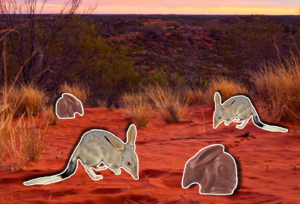

I’m not a scientist. She’s not sick. This is not a last resort and will not save her life.
We chose to expose her, through her mum, to a substance that may or may not prevent an allergy. We did so deliberately, from the day she was born, just to see what would happen. The outcome of this decision will likely affect her – and thousands of other kids like her – for the rest of her life.
It’s nuts. No, literally. The substance we’re experimenting with – is nuts.
Nut your average science experiment
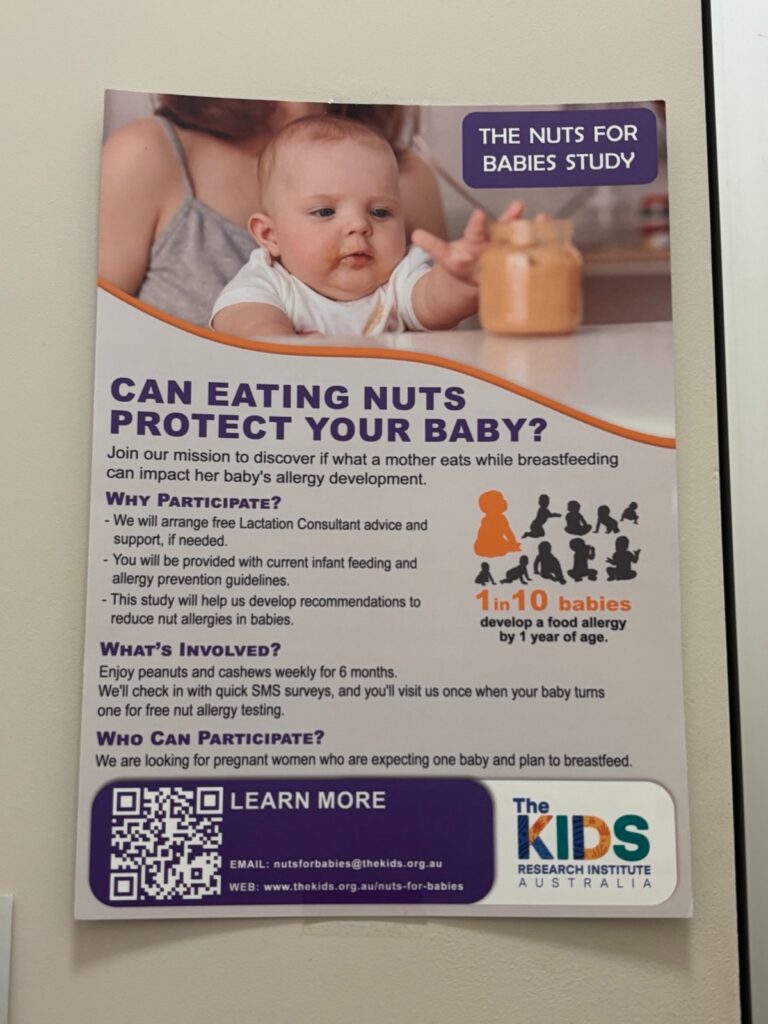
It started with a poster on the back of a toilet door.
Credit: Rockwell McGellin
Our daughter, along with around 4,000 other kids across WA and Victoria, is part of the Nuts for Babies Study.
It’s the first and biggest study of its kind, being run by Associate Professor Debbie Palmer at The Kids Research Institute in Boorloo/Perth.
“The study is looking to see if we can work out whether higher or lower amounts of peanuts and cashew nuts in the mum’s diet while she’s breastfeeding can influence babies developing or not – hopefully not – peanut and cashew nut allergies,” says Debbie.
“We know that, when mum eats peanuts and cashew nuts, little tiny bits of the proteins from those foods pass through to her breast milk.”
“Our thought is that this is a good thing. What we don’t know is what amount is needed to make a difference.”
That’s where we come in.
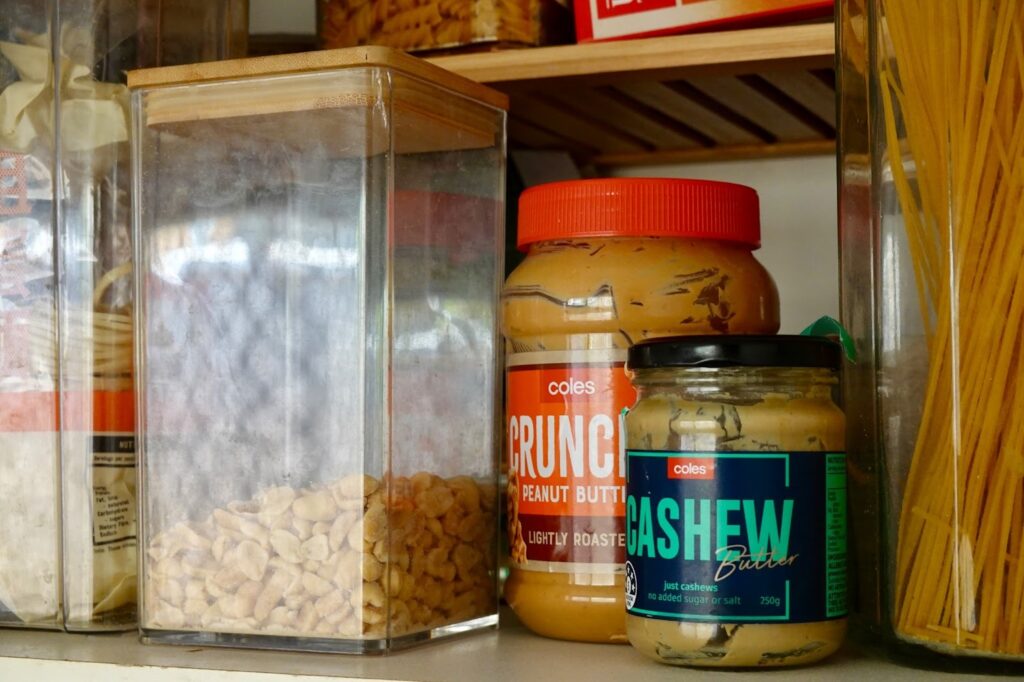
Once signed up, we were randomly assigned to either the ‘high nut’ or ‘low nut’ group. The randomness, Debbie explains, helps even out all the other factors that might affect the outcome, balancing them evenly between the groups.
It’s also a blind trial, which is why I’m being cagey about whether we’re scoffing nuts or not, in case someone from the study reads this story.
Credit: Rockwell McGellin
“We have two teams working on the study,” says Debbie. “We have the intervention team … who let you know what to eat and follow you in that first phase of the study.
“When baby reaches 6 months of age, you swap over to what we call the assessment team. They’re the ones who don’t and shouldn’t know what group mum and baby are in so that … their assessments are not biased.”
It’s serious science – at least on Debbie’s end. For us, it mostly looks like a slightly different grocery shop, a lot more label reading and fortnightly surveys to keep track of whether we’re sticking to our allocated nut quota.
After 12 months, the big day arrives. An allergy test to see if we prevented an allergy or not.
Why nut?
When people learn about this experiment, they ask why? To be honest, I haven’t always had a great answer.
I’m a big science fan. I envision one day telling our daughter she was part of an experiment and hope she finds that as cool as I do.
But is that a good enough reason to risk her having a deadly allergy?
I asked my wife why she agreed to sign up, hoping for a more philosophical answer.
She had looked into lactation advice and allergy tests already, as part of that first-time mum anxiety. Both are pretty expensive, so getting them for free seemed appealing. But ‘getting free stuff’ doesn’t seem like a great reason to experiment on your kid either.
So was this really the right thing to do? It’s one thing to sign ourselves up for a cool story and some freebies, but was it OK to involve our kid who can’t understand or consent?
The consent conundrum
To find out, I asked Dr Tim Dean, resident philosopher at The Ethics Centre, if I did the wrong thing.
“It depends what you mean by wrong, which is probably where any philosopher will start,” says Tim.
One consideration, he says, is the outcome of the study. Do the benefits outweigh the harms?
“You have a possible outcome where your child develops a peanut allergy, and that could be quite harmful for them,” says Tim.
“However, you might be contributing valuable data to a study that helps a broader societal problem, and that might have a beneficial impact.”
He says we can also think about it in terms of rights and responsibilities. Had we violated the rights of our daughter, or was it our responsibility to care for her as parents?
Credit: Rockwell McGellin
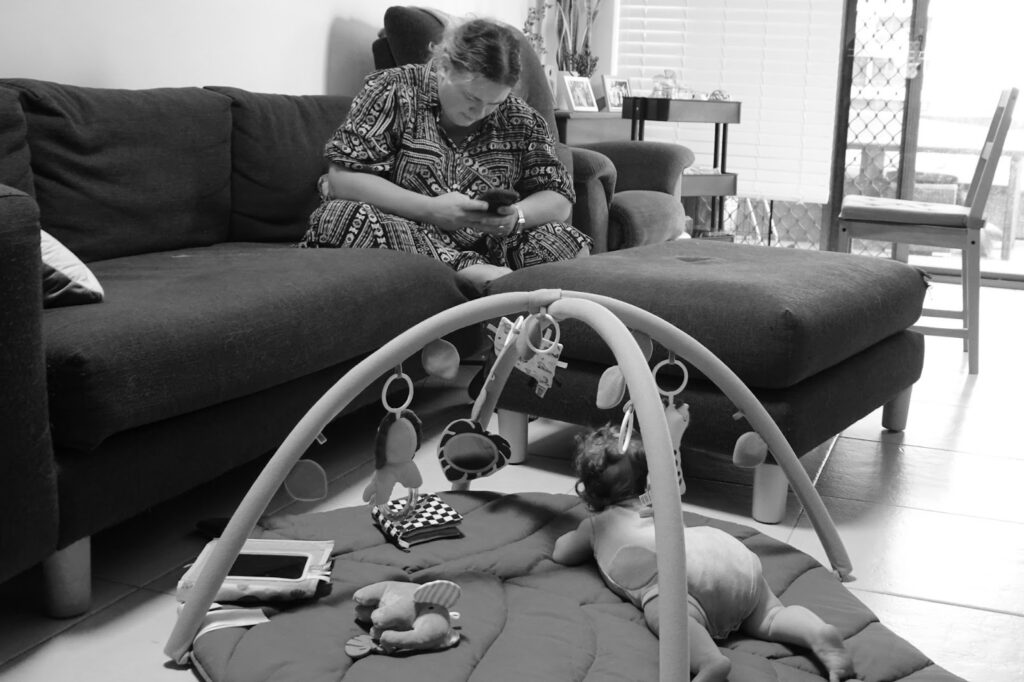
“You’ve made a choice on behalf of your child,” says Tim. “They’re unable to make an informed choice of their own on this situation. And we could reasonably ask your child, 20 years down the track, would have you agreed? And if they say that, in retrospect, they wouldn’t have, well, you might be violating their rights or their autonomy.
“If you take a question like this and make a really rapid decision on the basis of ‘I think that sounds interesting’ without considering is this respecting autonomy? Am I doing the right thing as a parent? Is this likely to have a beneficial outcome? Could I be harming my child?”
“Well, then you might be failing on the ethical level.”
Nut their first rodeo
But while this is our first experiment, it’s not theirs.
“When I first got your email I was like … hang on, are you just doing a bit of pocket science at home?” says Tim. “Or is this part of a bigger study? Because that is really relevant.
“A study run by a medical institution will have done some serious thinking about this.”
Credit: Supplied The Kids Research Institute
Modern medical ethics, Tim says, is all about not using people “instrumentally” as a means to an end.
“By the time they print a pamphlet and drop it in a doctor’s office, they’ve done years of work thinking about whether the benefits outweigh the harms, getting ethics approval and making sure that to get informed consent. They’ve laid down all of that information for you,” says Tim
“It also means that, when that information is packaged and sent to us, we don’t just let them do all the work.”
“We need to do some work as well and really think about these things.”
Nutting it out
So this is me, really thinking about it.
I look back at how we joined the trial – the bit I skip past, when I tell the story, between the toilet door and the birth of our daughter. We’d been supported, over months, to make an ethical decision, even if we weren’t great at explaining it. There were emails and phone calls talking us through the decision and asking us each time if we wanted to continue.
Even the language, I realise, was careful. Although I jokingly called my daughter a ‘test subject’, the researchers always called us ‘participants’. They treated us as equals, collaborators and as people who benefited too.
As new parents, we received lots of advice. Studies like this are where that advice comes from.
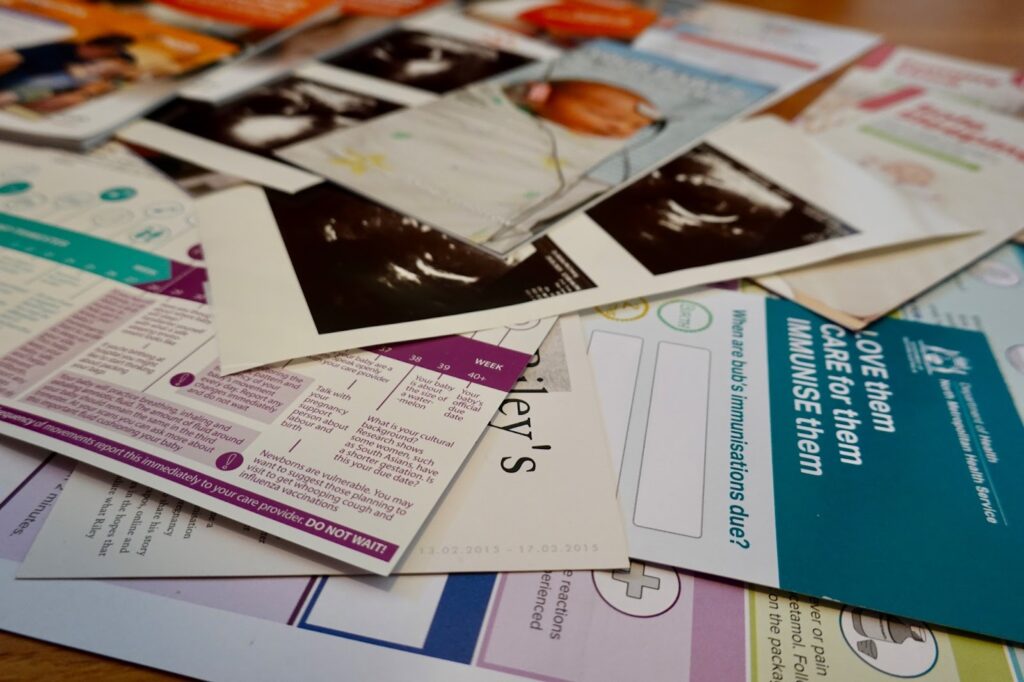
Credit: Rockwell McGellin
“One of the reasons we do these big trials in Australia is, unfortunately, for whatever reason, we have quite a high rate of allergies in Australia,” says Debbie.
“The advice from our past studies has ended up in … international guidelines. It’s shaped what we teach healthcare professionals and advice for families.”
Maybe participating in science isn’t just ‘neat’. Maybe we have a responsibility to give back, if we can.
Maybe our daughter benefits too, in a way that – yes – outweighs the potential harm. The ‘free perks’ that drew us in aren’t a payment for letting them ‘experiment’ on our kid. They’re exactly the kind of questions we turn to science to answer in the first place.
The allergy test we might not have done, the expert advice on breastfeeding and allergies. By participating, we learn things that help us care for her that we might otherwise have had to learn the hard way.
That’s a feeling Debbie knows well.
“I’m originally a clinical paediatric dietitian,” she says.
“I started my research two decades ago, because I’d be seeing a family with a child with an allergy, and the parents would say, ‘I’ll do anything to prevent an allergy in my next child … I don’t want to have this happen again.’”
“But back then, we had no evidence. We were basically going, ‘I’m really sorry, but we don’t have an answer to that.’ Which was very, very frustrating.”
It’s a little late, and it took writing this story to find it, but I finally have an answer to the big ‘Why?’.
Because, to quote Carl Sagan, “we can do science, and with it, we can improve our lives”.
Maybe we risk giving her an allergy – without asking. But what we learn along the way helps us care for her and helps future parents care for their kids too.
I hope she finds that as cool as I do.