


You might be interested
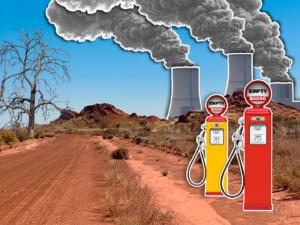


Western Australia is often described as the engine room of the nation’s economy, but it is also home to some of Australia’s most emissions-intensive industries.
Powering that engine is a $220 billion resources sector, built on exports of commodities such as iron ore from the Pilbara and gold from the Goldfields.
WA’s minerals and petroleum account for nearly half of Australia’s total goods exports. Yet these same industries also account for a significant share of WA’s greenhouse gas emissions, which have only continued to rise.
Between 2005 and 2023, WA’s net emissions rose by 17%. Over the same period, Australia’s net emissions decreased by more than 25%.
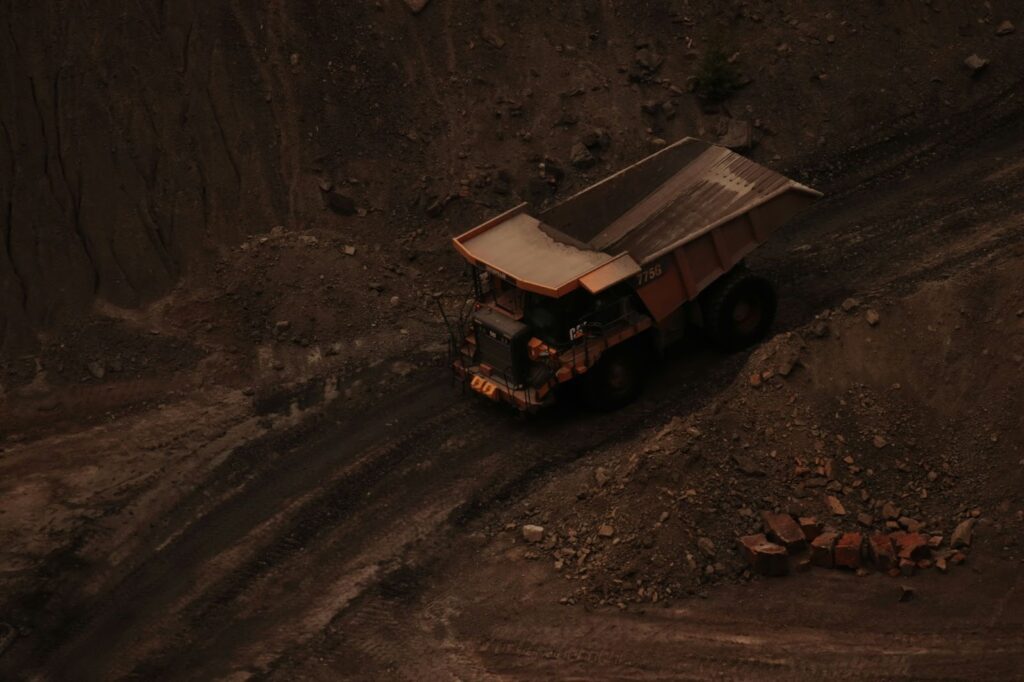
“Mining contributes 23% of overall state carbon emissions,” says Research Portfolio Manager Geoff Batt from Minerals Research Institute of WA (MRIWA).
“Because of the way WA mining in particular is set up, it’s very dispersed, it’s very remote [and] it’s very reliant on fossil fuel.”
MRIWA conducts research to support the state’s resources industry. This includes exploring pathways to net-zero emissions mining to align with the WA Government’s commitment to reach net-zero emissions by 2050.
Credit: Lars Portjanow/Unsplash
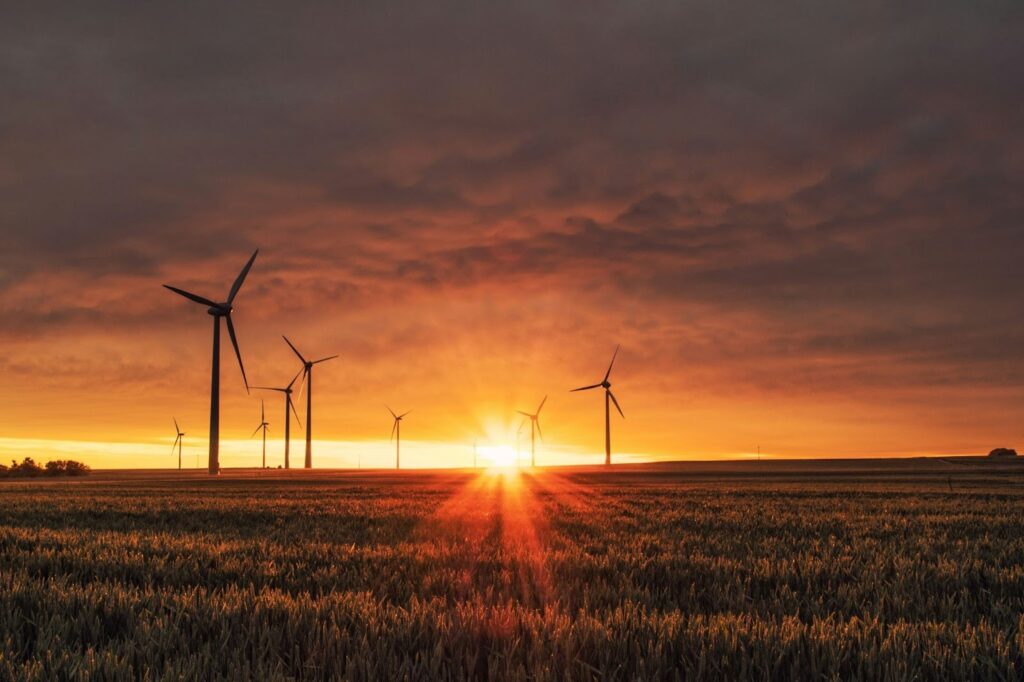
The group is working to support electrification to replace diesel motors and support renewable energy projects for industry. This includes improving solar and wind energy in remote locations to power the mines, Geoff says.
“Anything which can move us … along that pathway to either reduce the amount of carbon that is being put out by industry or capture and store or remediate that carbon when it’s produced.”
In many cases, industry has already made the first move.
ELECTRIFYING EXTRACTION
In the Goldfields region, Bellevue Gold has achieved net-zero greenhouse gas emissions on site at its Bellevue Gold Project.
Global mining company Gold Fields has installed a massive wind and solar farm to power more than 70% of its St Ives mining operations near Kambalda.
These projects demonstrate what is possible, but scaling these initiatives across the state requires coordinated policy and long-term investment.
The government has a critical role to play in accelerating decarbonisation across the broader economy.
Following the 2025 State Election, the WA Government announced a new portfolio focused on decarbonisation, led by Minister Amber-Jade Sanderson.
The role has been framed around establishing WA as a renewable energy powerhouse while supporting the state’s trading partners to decarbonise their own industries.
Credit: Karsten Würth/Unsplash
It’s an ambitious vision, particularly for a state that is the world’s largest supplier of iron ore.
“The government is focused on helping industry to achieve those targets while remaining competitive,” says Geoff.
“It’s an ethical priority for us to deliver emissions reduction, but the reality of the commercial marketplace we work in means we have to deliver that in a cost-effective way.
“That’s the real double-edged challenge that we’re working to address through research.”
Decarbonisation requires a system-wide transformation rather than resting solely on the mining industry.
BUILDING A RENEWABLE BACKBONE
A wide range of government-led initiatives have been launched to reshape WA’s energy system.
Large-scale renewable projects like the Warradarge Wind Farm in the Midwest and Merredin Solar Farm in the Wheatbelt have been feeding into the South West Interconnected System, where renewables now account for 40% of the state’s electricity supply.
The Clean Energy Future Fund contains $37 million in grants for emissions-reducing projects while $50 million has been allocated to local manufacturing of battery energy storage systems.
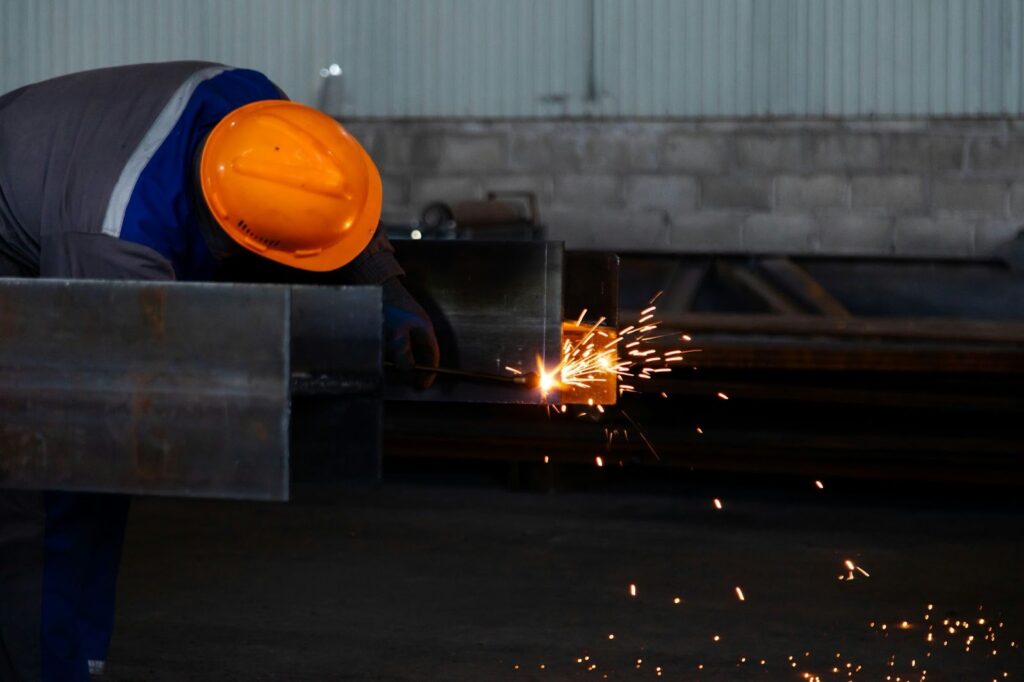
The WA Government is also positioning itself as a future producer of green steel, which is created when iron ore is processed using renewable energy.
A report by the Chamber of Minerals and Energy found large-scale green steel production in WA could reduce global emissions by up to 1.2% by 2050.
Credit: Collab Media/Unsplash
However, the investment required is immense. More than $37 billion would be needed to build new energy infrastructure, upgrade existing industrial facilities and establish specialised production plants.
As Curtin Institute for Energy Transition Director Professor Peta Ashworth explains, more groundwork must occur before that ambition becomes reality.
“There’s talk about the manufacturing of green steel, [but] I think those sorts of things are further down the line,” she says.
“They’re only going to be decarb-oriented if we’ve got the renewable energy deployed.
“The infrastructure build-out is massive and the workforce required to do that is massive, and that in itself is really challenging.”
COMMUNITIES IN TRANSITION
The shift to net zero is technical but it is also social.
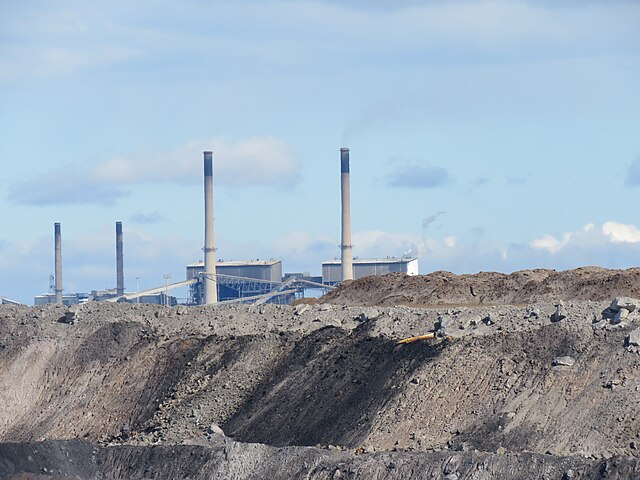
In 2022, the WA Government announced plans to shut down coal-fired power stations by 2030, including in Collie.
The phase-out is expected to reduce emissions produced by state-owned energy provider Synergy by 80%.
The decision was controversial, as it required an entire town, with a coal-mining history of more than 120 years, to pivot into renewables.
Peta says engagement with the community must remain a priority throughout the transition.
“We’ve seen the efforts of Collie, which has been successful, but there’s still a long way to go there,” she says.
Credit: Calistemon/Wikimedia Commons
“We’re actually changing, in many ways, people’s lifestyle and livelihoods if you’re thinking [about] regional communities.
“We often talk about the sheep farmer or the wheat farmer who is suddenly actually being asked to become a wind farmer as well.
“It’s a real change to their identity if it’s been four or five generations that have been farming that land.
“We’ve got to really work alongside these communities to work out what’s the best way.”
THE EMISSIONS GAP
While there are numerous initiatives underway, WA’s rising emissions highlight the scale of the task ahead.
Decarbonising a resource-dependent state while continuing to maintain a strong export economy is a major challenge.
“Speed and scale are the critical things if we’re wanting to be at the forefront,” says Peta.
“There’s a lot of opportunity if we get this right, but it does need a lot of strategic planning and input, and we need to crack on with it.”
Only time will tell if the WA Government will take the necessary steps to ensure that the state can not only reduce emissions but reach net zero by 2050.