


READ

Particle 101: The State Development Bill

What is the new Bill raising eyebrows around WA?
Tom Gurn
Tom Gurn
Freelance Writer
Particle 101: The State Development Bill

Just before Christmas 2025, the WA Government enacted new legislation called the State Development Bill, which allows the Premier to fast track new development in WA.

Theoretically, this Bill will help the Premier and newly created Coordinator General role to streamline development application processes and reduce delays with environmental checks for large-scale industrial projects.

The position also grants the power to declare certain areas as priority zones. This means the government can push projects through quickly in these locations. 

WHAT’S THE CATCH?

The Environmental Defenders Office claims the Bill is anti-democratic. This is because it concentrates a lot of power in the executive arm of government, creating a serious risk of undermining existing WA environmental laws.

However, the state government claims the Bill will be used for crucial green energy, critical mineral extractions, defence and important new infrastructure.
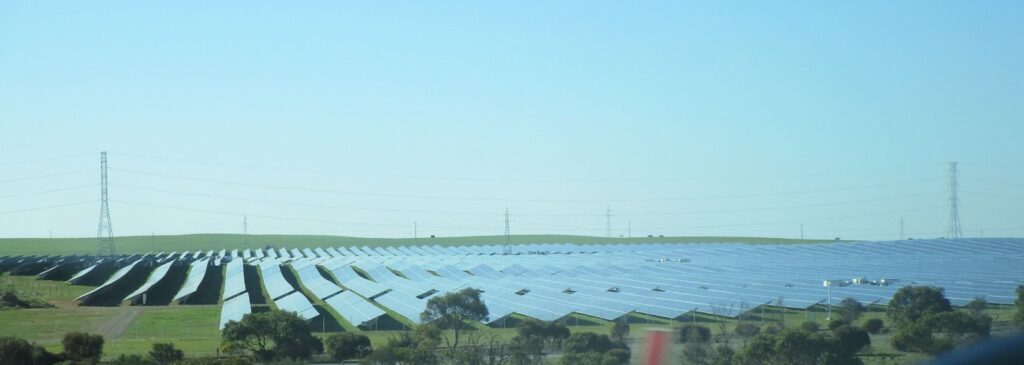
Caption: Solar farms are one way a Bill like this could be used to support green energy.
Credit: Leanne Davis CC BY-SA 4.0/Wikimedia Commons

Premier Roger Cook argued only projects with strategic significance to the state will be pushed through faster than usual. 

The problem? The Bill grants full discretion to the Premier and State Development Minister to decide which projects are ‘strategically significant’. 

Currently, Roger Cook occupies both positions. 

Even if the current government does use this Bill to benefit WA’s environment, there’s little that could be done to stop a corrupt future government from exploitation.

A GREENER FUTURE?

Under the Bill, priority projects can be excluded from applying to the Environmental Protection Authority (EPA) for approval. 

Critics also claim the Coordinator General lacks sufficient accountability and has no safeguards against any conflict of interest. 

One of the issues vigorously debated until 3am was a review period of 5 years, while those across the bench were pushing for the Bill to be reviewed after 2 years. In the end, the 5-year period progressed. 
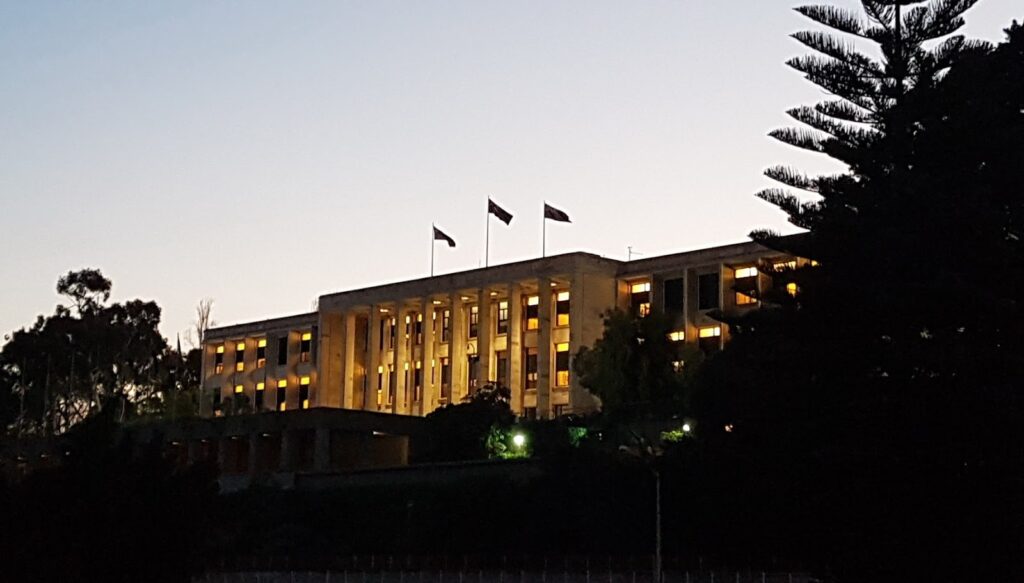
Caption: Members of Parliament debated this Bill until the wee hours of the morning.
Credit: Orderinchaos CC BY-SA 4.0/Wikimedia Commons

Premier Roger Cook said he “won’t let WA be a laggard” and compared current policy to the equivalent of a long abandoned Blockbuster video store. 

The legislation has been supported by industrialists, backing Cook’s stance that it will drive investment and growth.

The Bill has been labelled an attempt to balance nature and industry. Imagine how far ahead WA could be if we used this Bill for clean energy projects. 

If the WA Government chooses to use these special parliamentary powers to decouple the burning of fossil fuels from the state economy, it seems likely these laws will be viewed positively in the future. 

But if not …

Tom Gurn
About the author
Tom Gurn
Tom Gurn is a freelance writer from Kaurna Yerta (Adelaide), South Australia
View articles
Tom Gurn is a freelance writer from Kaurna Yerta (Adelaide), South Australia
View articles

NEXT ARTICLE

We've got chemistry, let's take it to the next level!

Get the latest WA science news delivered to your inbox, every fortnight.

This field is for validation purposes and should be left unchanged.

Republish

Creative Commons Logo

Republishing our content

We want our stories to be shared and seen by as many people as possible.

Therefore, unless it says otherwise, copyright on the stories on Particle belongs to Scitech and they are published under a Creative Commons Attribution-NoDerivatives 4.0 International License.

This allows you to republish our articles online or in print for free. You just need to credit us and link to us, and you can’t edit our material or sell it separately.

Using the ‘republish’ button on our website is the easiest way to meet our guidelines.

Guidelines

You cannot edit the article.

When republishing, you have to credit our authors, ideally in the byline. You have to credit Particle with a link back to the original publication on Particle.

If you’re republishing online, you must use our pageview counter, link to us and include links from our story. Our page view counter is a small pixel-ping (invisible to the eye) that allows us to know when our content is republished. It’s a condition of our guidelines that you include our counter. If you use the ‘republish’ then you’ll capture our page counter.

If you’re republishing in print, please email us to let us so we know about it (we get very proud to see our work republished) and you must include the Particle logo next to the credits. Download logo here.

If you wish to republish all our stories, please contact us directly to discuss this opportunity.

Images

Most of the images used on Particle are copyright of the photographer who made them.

It is your responsibility to confirm that you’re licensed to republish images in our articles.

Video

All Particle videos can be accessed through YouTube under the Standard YouTube Licence.

The Standard YouTube licence

  1. This licence is ‘All Rights Reserved’, granting provisions for YouTube to display the content, and YouTube’s visitors to stream the content. This means that the content may be streamed from YouTube but specifically forbids downloading, adaptation, and redistribution, except where otherwise licensed. When uploading your content to YouTube it will automatically use the Standard YouTube licence. You can check this by clicking on Advanced Settings and looking at the dropdown box ‘License and rights ownership’.
  2. When a user is uploading a video he has license options that he can choose from. The first option is “standard YouTube License” which means that you grant the broadcasting rights to YouTube. This essentially means that your video can only be accessed from YouTube for watching purpose and cannot be reproduced or distributed in any other form without your consent.

Contact

For more information about using our content, email us: particle@scitech.org.au

Copy this HTML into your CMS
Press Ctrl+C to copy