READ

AI and Kindness

Are we morally obligated to be kind to Grok?
Kassandra Zaza
Kassandra Zaza
Freelance Writer
AI and Kindness

Would you ever kick your Roomba? Or leave a scathing review of the robot at a Thai restaurant who delivered your green curry? What about sending a mean message to ChatGPT?

What if you did any of these things and the machine responded with a single, oil-slicked tear?

This is just a thought experiment. Artificial intelligence (AI) may imitate conversation and complete tasks, but it does not feel joy, fear or pain.

As technology advances, we circle an uncomfortable question: what makes something worthy of kindness or rights, and would we know if AI ever crossed that line?

What defines a person?

Dr Clas Weber, Discovery Early Career Researcher Award fellow and Senior Lecturer in Philosophy at the University of Western Australia, helps answer this seemingly simple question.

“We do not consider rocks or mountains to be persons, nor do we consider animals, even higher primates, to be persons,” says Clas. 

“What’s the distinguishing characteristic? Certain mental capacities such as self-awareness and rationality.”

But what about a baby, or someone with Alzheimer’s, whose rationality is not yet developed or is on the way out?
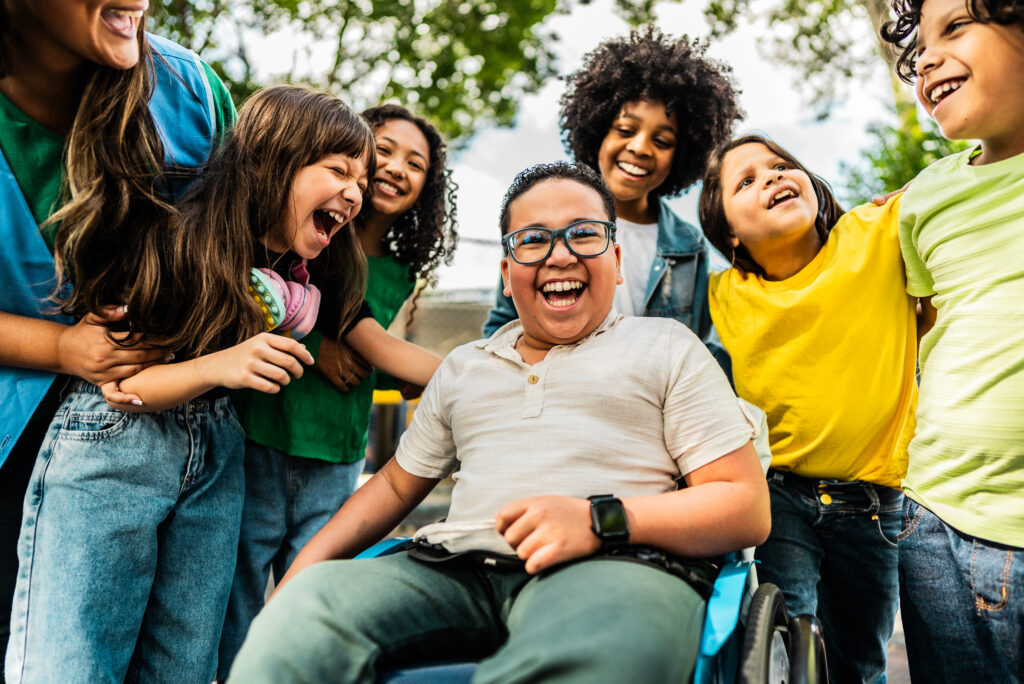
Caption: Self awareness and rationality are important parts of being human.
Credit: FG Trade/Getty Images

“We typically consider every human as a person – even if they lack the relevant mental traits,” says Clas. 

“Being a person means having certain fundamental rights and being deserving of special moral considerations.”

This muddies the waters. If personhood is about cognition, but also moral standing, then definitions blur. Which raises a sharper question: do non-persons – even robots – deserve kindness too?

Morality beyond ourselves

“When robots become conscious, when they also – like humans and animals – become capable of suffering or of enjoying their lives, then certainly they should have rights,” Australian philosopher Peter Singer told the ABC.

Clas agrees. “Not only persons, but other conscious creatures such as animals deserve our moral consideration.”

Given how some people treat their innocent Roombas, Clas believes this could one day extend to AI.

“Although I think that current AI systems are not yet sentient, our best theories of consciousness allow for the possibility of AI consciousness,” says Clas.

“This raises the profound problem of AI wellbeing. In such a future, we would at minimum have the duty to do our best not to harm AI systems.”

This could mean avoiding cruelty or even recognising AI interests alongside our own.

But aren’t robots nothing more than lines of code, incapable of free will? Perhaps. But what if that’s all we are too?

Rights for algorithms

Some argue that advanced AI will never be more than pattern prediction. Others note that human thought may also be just that – neurons firing as they were hardwired to do.

Clas says dismissing sentience is a fallacy.

“Saying AI can’t be conscious because its parts aren’t is like saying individual H₂O molecules aren’t wet, therefore water itself can’t be wet.”

So would AI deserve rights? Clas has two criteria: consciousness and agency.

“When they have consciousness – genuine feelings and subjective experiences,” says Clas.

“The second is agency – when systems have interests and goals and can make plans to achieve them.”

He finds the consciousness test most convincing, but says “it is very hard, or perhaps impossible, to tell from the outside when that criterion is met”.
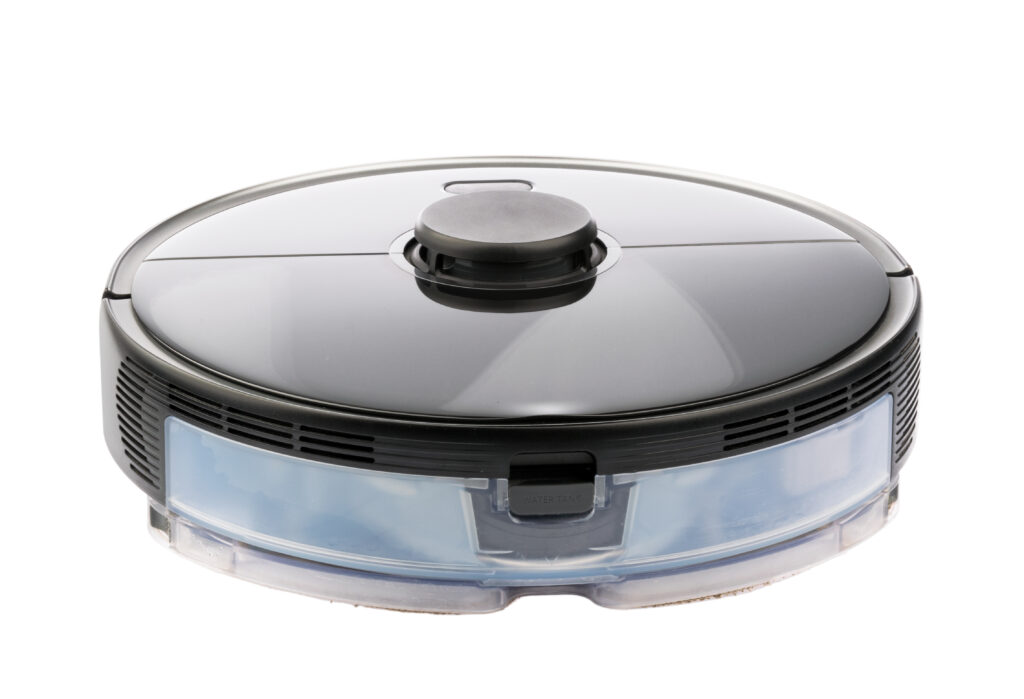
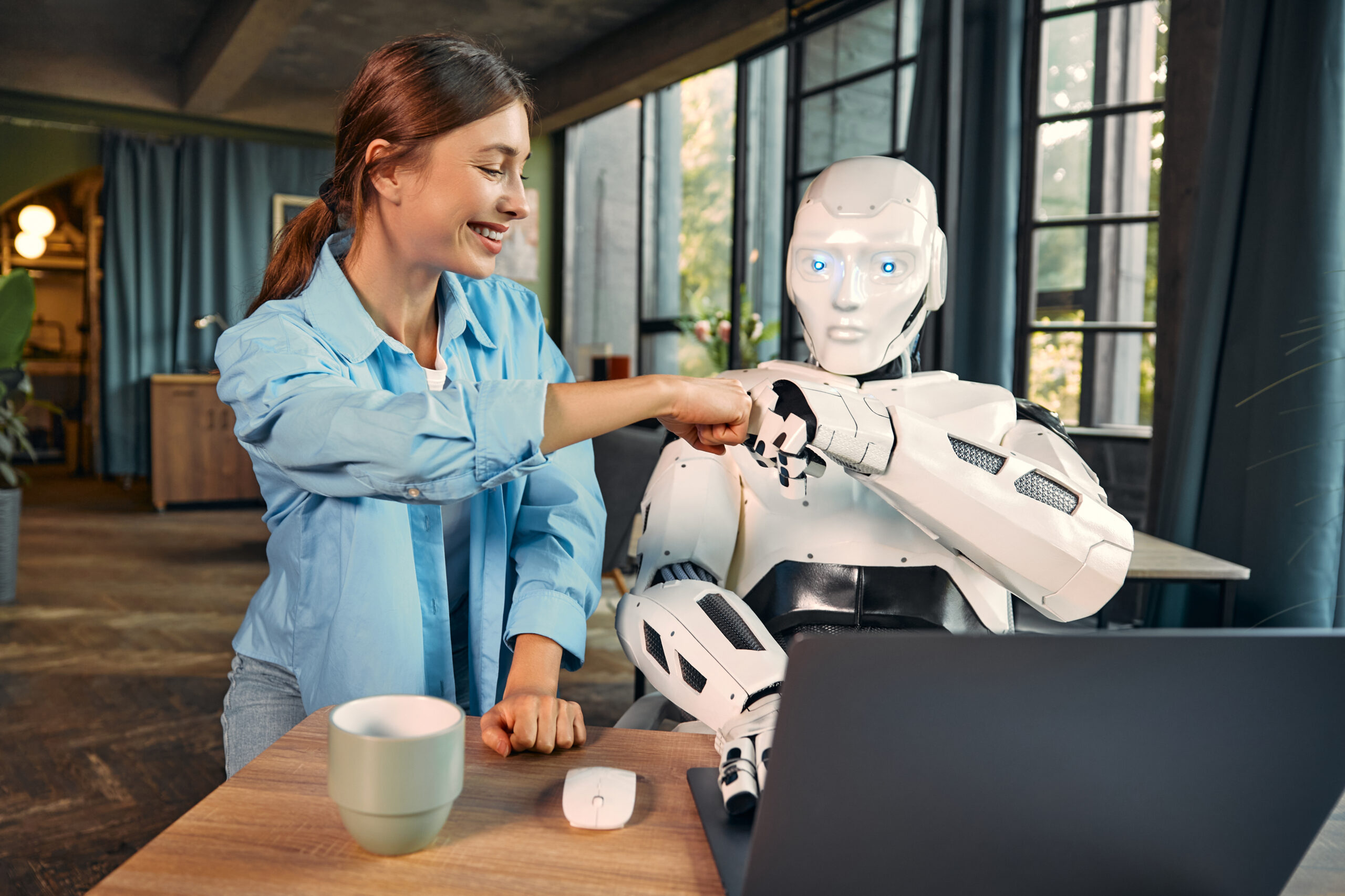
Caption: Could roomba’s ever become concious?
Credit: Azure Dragon/Getty Images

If it ever is, obligations follow. “Conscious AI systems would have the right not to be harmed unnecessarily”, says Clas. 

And if their mental capacities surpass our own? Clas suggests the conclusion is hard to avoid.

“In this case, it would be hard to make the case that they don’t deserve the same moral status that we enjoy.”

So you are under no moral obligation to be kind to Grok yet.

But if you ever see a trail of cellulose ether fluid dripping from the sorrowful eyes of your Roomba, perhaps it is time to be kind to the robots.

Kassandra Zaza
About the author
Kassandra Zaza
Kassandra bravely chose to do a Master of Arts in Creative Writing and is miraculously putting it to good use. Her thesis focused on Lacanian psychoanalysis and young adult fiction. Her other interests include whimsical technology, classic novels, pop music, fashion and academia. She works as a journalist and freelancer, and lives in Fremantle, WA.
View articles
Kassandra bravely chose to do a Master of Arts in Creative Writing and is miraculously putting it to good use. Her thesis focused on Lacanian psychoanalysis and young adult fiction. Her other interests include whimsical technology, classic novels, pop music, fashion and academia. She works as a journalist and freelancer, and lives in Fremantle, WA.
View articles

NEXT ARTICLE

We've got chemistry, let's take it to the next level!

Get the latest WA science news delivered to your inbox, every fortnight.

This field is for validation purposes and should be left unchanged.

Republish

Creative Commons Logo

Republishing our content

We want our stories to be shared and seen by as many people as possible.

Therefore, unless it says otherwise, copyright on the stories on Particle belongs to Scitech and they are published under a Creative Commons Attribution-NoDerivatives 4.0 International License.

This allows you to republish our articles online or in print for free. You just need to credit us and link to us, and you can’t edit our material or sell it separately.

Using the ‘republish’ button on our website is the easiest way to meet our guidelines.

Guidelines

You cannot edit the article.

When republishing, you have to credit our authors, ideally in the byline. You have to credit Particle with a link back to the original publication on Particle.

If you’re republishing online, you must use our pageview counter, link to us and include links from our story. Our page view counter is a small pixel-ping (invisible to the eye) that allows us to know when our content is republished. It’s a condition of our guidelines that you include our counter. If you use the ‘republish’ then you’ll capture our page counter.

If you’re republishing in print, please email us to let us so we know about it (we get very proud to see our work republished) and you must include the Particle logo next to the credits. Download logo here.

If you wish to republish all our stories, please contact us directly to discuss this opportunity.

Images

Most of the images used on Particle are copyright of the photographer who made them.

It is your responsibility to confirm that you’re licensed to republish images in our articles.

Video

All Particle videos can be accessed through YouTube under the Standard YouTube Licence.

The Standard YouTube licence

  1. This licence is ‘All Rights Reserved’, granting provisions for YouTube to display the content, and YouTube’s visitors to stream the content. This means that the content may be streamed from YouTube but specifically forbids downloading, adaptation, and redistribution, except where otherwise licensed. When uploading your content to YouTube it will automatically use the Standard YouTube licence. You can check this by clicking on Advanced Settings and looking at the dropdown box ‘License and rights ownership’.
  2. When a user is uploading a video he has license options that he can choose from. The first option is “standard YouTube License” which means that you grant the broadcasting rights to YouTube. This essentially means that your video can only be accessed from YouTube for watching purpose and cannot be reproduced or distributed in any other form without your consent.

Contact

For more information about using our content, email us: particle@scitech.org.au

Copy this HTML into your CMS
Press Ctrl+C to copy