
READ

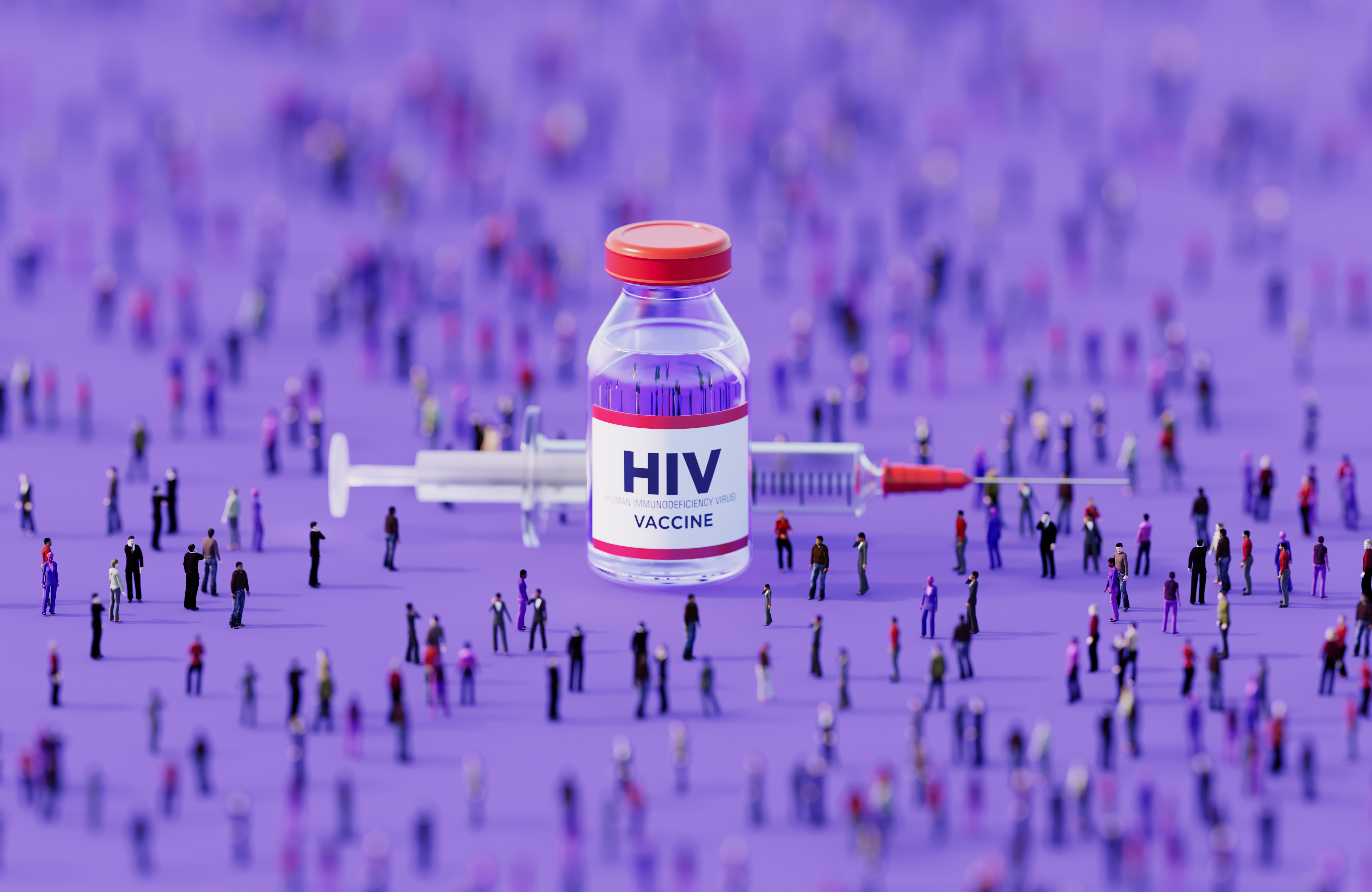
PARTICLE 101: A NEW HIV VACCINE

There’s a silver lining to COVID-19, and it’s an HIV vaccine.
Dr Jae
Dr Jae
Freelance Writer
PARTICLE 101: A NEW HIV VACCINE

The COVID-19 vaccine was unique. It used mRNA, which teaches the human body to make proteins to fight off the disease. 

Now, scientists have found that mRNA vaccine technologies could be used to prevent or help control HIV.

BACK TO BASICS

Traditional HIV vaccines target a protein on the surface of the virus. It appears spiky and is the part of the virus that latches on and enters human cells. 

Block this, and the virus can’t get in. 

Early vaccine attempts explored the use of dead or weakened versions of the virus. However, safety concerns encouraged scientists to move towards simulating parts of the virus instead. 

One approach focused on synthetic free-floating versions of the protein to trigger an immune response. Unfortunately, this method doesn’t always work.

If the protein is free floating, the immune system may target the wrong part of the protein that is inaccessible when attached to a membrane like the real virus. 
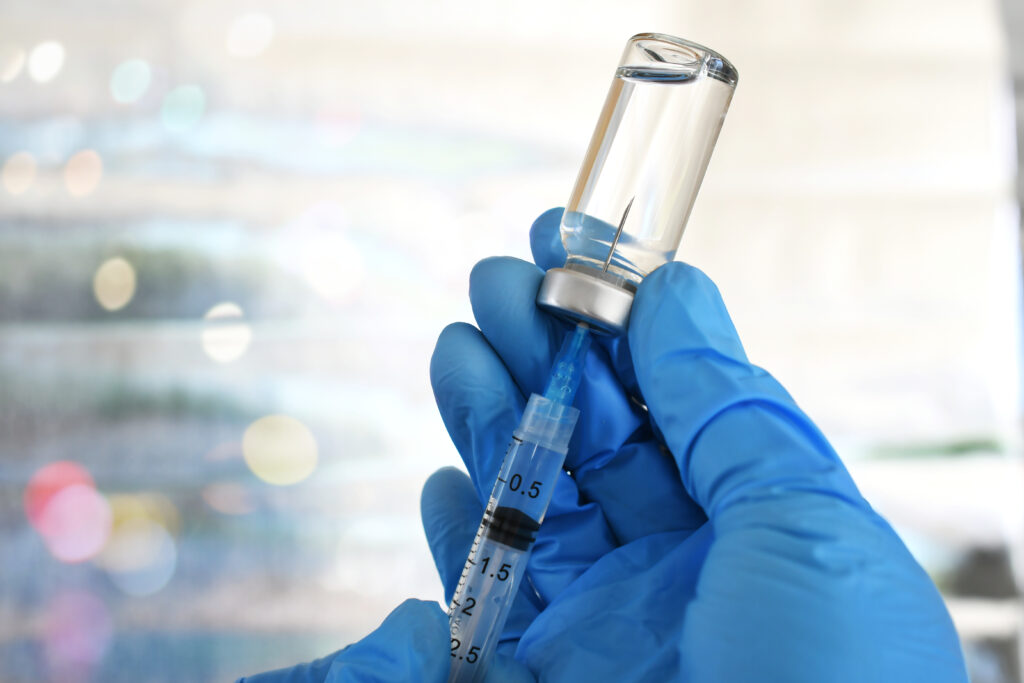
Caption: Vaccines are an important prevention measure to improve public health.
Credit: MargJohnsonVA/Getty Images

A NEW WAY FORWARD

To avoid this problem, researchers are looking to mRNA vaccines. 

These vaccines act like recipes. Cells read the vaccine instructions and create specific viral proteins to trigger an immune response against the virus. 

Following one of the vaccine recipes, cells can create membrane-bound proteins that simulate the HIV virus. This ensures a more efficient immune response. 

This method better mimics the effect a real HIV infection has on the human body.

As mRNA can be designed and produced quickly, it enables a flexible and fast way to test different versions of a vaccine to find the best fit. 

Caption: A researcher prepares to examine a blood sample for HIV/AIDS under a microscope.
Credit: Mortortion/Getty Images

A GAME-CHANGER IN GLOBAL HIV PREVENTION

Initial studies found the mRNA vaccine effective in rabbits and macaques. Now, researchers are doing a clinical trial in humans

The human trials investigated different types of mRNA HIV vaccines. One of the vaccines looks particularly hopeful, with 80% of people creating an effective immune response to neutralise HIV. 

While there is still a long way to go to study larger and more diverse groups, the vaccine’s potential is undeniable. 

For people at higher risk of HIV, a vaccine could offer affordable protection for those in low-socioeconomic areas and alleviate some of the fear and judgement towards marginalised groups such as the LGBTQIA+ community.

It’s a significant advance for vaccine technology and offers hope for effective and affordable prevention of HIV in the future.


Dr Jae
About the author
Dr Jae
It may sound like the name of a rapper but alas, instead of rapping rhymes Jae spends her time weaving words and writing articles on STEM! With a doctorate in Health Psychology & Exercise Physiology and background in science communication, this curious cat will leave no stone unturned.
View articles
It may sound like the name of a rapper but alas, instead of rapping rhymes Jae spends her time weaving words and writing articles on STEM! With a doctorate in Health Psychology & Exercise Physiology and background in science communication, this curious cat will leave no stone unturned.
View articles

NEXT ARTICLE

We've got chemistry, let's take it to the next level!

Get the latest WA science news delivered to your inbox, every fortnight.

This field is for validation purposes and should be left unchanged.

Republish

Creative Commons Logo

Republishing our content

We want our stories to be shared and seen by as many people as possible.

Therefore, unless it says otherwise, copyright on the stories on Particle belongs to Scitech and they are published under a Creative Commons Attribution-NoDerivatives 4.0 International License.

This allows you to republish our articles online or in print for free. You just need to credit us and link to us, and you can’t edit our material or sell it separately.

Using the ‘republish’ button on our website is the easiest way to meet our guidelines.

Guidelines

You cannot edit the article.

When republishing, you have to credit our authors, ideally in the byline. You have to credit Particle with a link back to the original publication on Particle.

If you’re republishing online, you must use our pageview counter, link to us and include links from our story. Our page view counter is a small pixel-ping (invisible to the eye) that allows us to know when our content is republished. It’s a condition of our guidelines that you include our counter. If you use the ‘republish’ then you’ll capture our page counter.

If you’re republishing in print, please email us to let us so we know about it (we get very proud to see our work republished) and you must include the Particle logo next to the credits. Download logo here.

If you wish to republish all our stories, please contact us directly to discuss this opportunity.

Images

Most of the images used on Particle are copyright of the photographer who made them.

It is your responsibility to confirm that you’re licensed to republish images in our articles.

Video

All Particle videos can be accessed through YouTube under the Standard YouTube Licence.

The Standard YouTube licence

  1. This licence is ‘All Rights Reserved’, granting provisions for YouTube to display the content, and YouTube’s visitors to stream the content. This means that the content may be streamed from YouTube but specifically forbids downloading, adaptation, and redistribution, except where otherwise licensed. When uploading your content to YouTube it will automatically use the Standard YouTube licence. You can check this by clicking on Advanced Settings and looking at the dropdown box ‘License and rights ownership’.
  2. When a user is uploading a video he has license options that he can choose from. The first option is “standard YouTube License” which means that you grant the broadcasting rights to YouTube. This essentially means that your video can only be accessed from YouTube for watching purpose and cannot be reproduced or distributed in any other form without your consent.

Contact

For more information about using our content, email us: particle@scitech.org.au

Copy this HTML into your CMS
Press Ctrl+C to copy