


You might be interested
In the last century, synthetic fertilisers have changed the face of the planet. The current world population might be halved if not for this useful development.
However, farmers are on the verge of a fertiliser shortage set to disrupt the agricultural process.
This shortage threatens to escalate into a global food scarcity crisis – and the solution on the lips of many sustainably minded scientists might shock you.
A fertilised future
Human urine has been noted as a viable alternative to synthetic fertilisers for decades. Even green-thumbed gardeners in ancient Rome and China were aware of its benefits.
Urine and fertiliser both contain phosphorus, nitrogen and potassium – all essential for plant growth – and basically do the same thing.
But the phosphorus required for fertiliser is getting harder and harder to source. Currently, all phosphorus used in synthetic fertilisers comes from mining. When it’s gone, it’s gone (aside from the nuclear waste it leaves behind).
Without phosphorus, we have far less access to fertilisers. Without fertiliser, we have no food.
Whether you like it or not, urinating on plants is a perfectly acceptable way to grow crops. (Although experts advise diluting the liquid first to protect roots and shoots.)
This is why labs around the world are working to recycle human wastewater to reuse its phosphorus, nitrogen and potassium.
What can wee do?
Jordan Roods is a PhD candidate at the Institute for Sustainable Futures, University of Technology Sydney (UTS) . His research is funded by the Australian Research Council Hub for Nutrients in a Circular Economy (ARC NICE Hub).
ARC NICE Hub is exploring innovative ways to convert the nutrients contained in human urine into safe and effective renewable fertilisers.
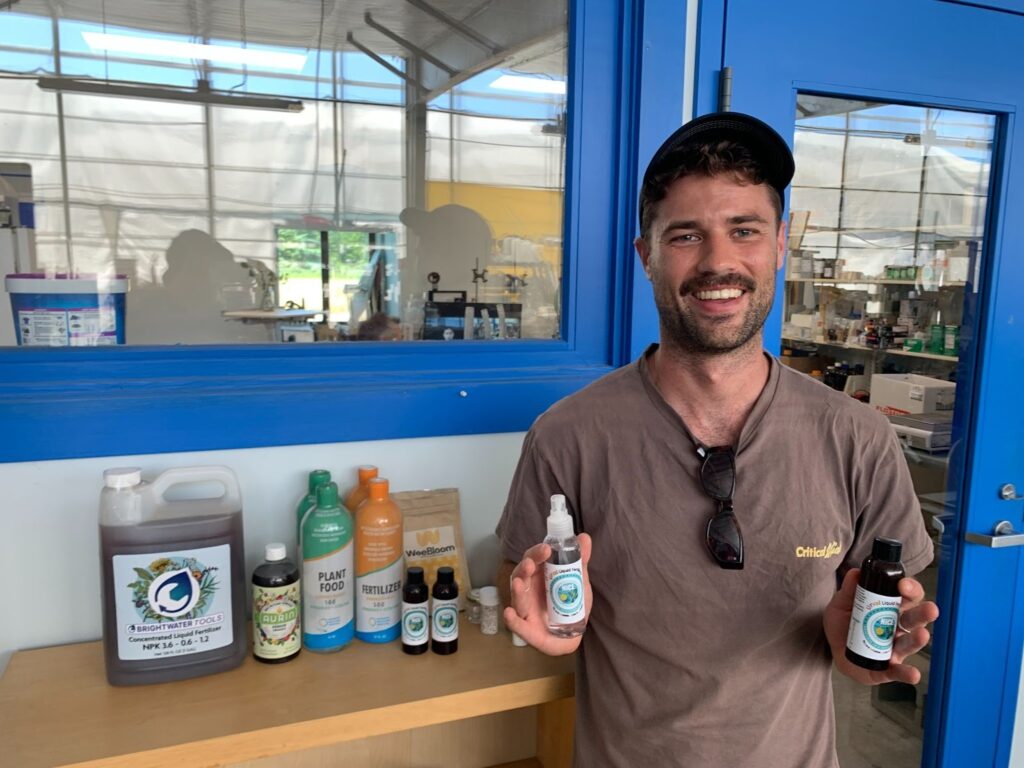
Credit: Supplied Jordan Roods
Jordan says urine is an untapped resource, partly because we view urine as ‘waste’ both socially and politically.
“The system isn’t geared towards looking at urine as a resource rather than as a waste product,” says Jordan.
Most of our wastewater ends up in the ocean where its fertilising qualities can contribute to harmful algal blooms or wash into beaches as gross fat balls.
“We’re not taking advantage of a lot of economic and social benefits,” says Jordan.
“Why are we not shifting to these approaches rather than continuing to do something like mining phosphate rock or the fossil fuel-intensive Haber-Bosch method, which has a lot of impacts?”
Liquid gold?
Urine-derived fertilisers could be more sustainable and cost-effective than synthetic fertilisers.
The economic benefits are broad – especially considering the Australian Government spends roughly $9 billion per year on wastewater processing.
“The benefit of urine is it contains a good balance of all the essential macro and micronutrients required for plant growth,” says Jordan.
“By recycling it and using it as a fertiliser, you’re ticking multiple boxes: achieving food security, reducing water pollution, improving soil health and creating new market opportunities.”
While you can use urine straight on your plants at home, Jordan says processing improves safety and stability.
How-wiz it done?
Labs use three main techniques to transform urine into fertiliser. Though many more varieties exist, often these three are used simultaneously to cover all bases.
You can increase the temperature – a process called pasteurisation – or use a simple dehydration technique to raise the pH level.
The NICE Hub is also trialling a type of membrane filtration that concentrates the desired nutrients and minerals.
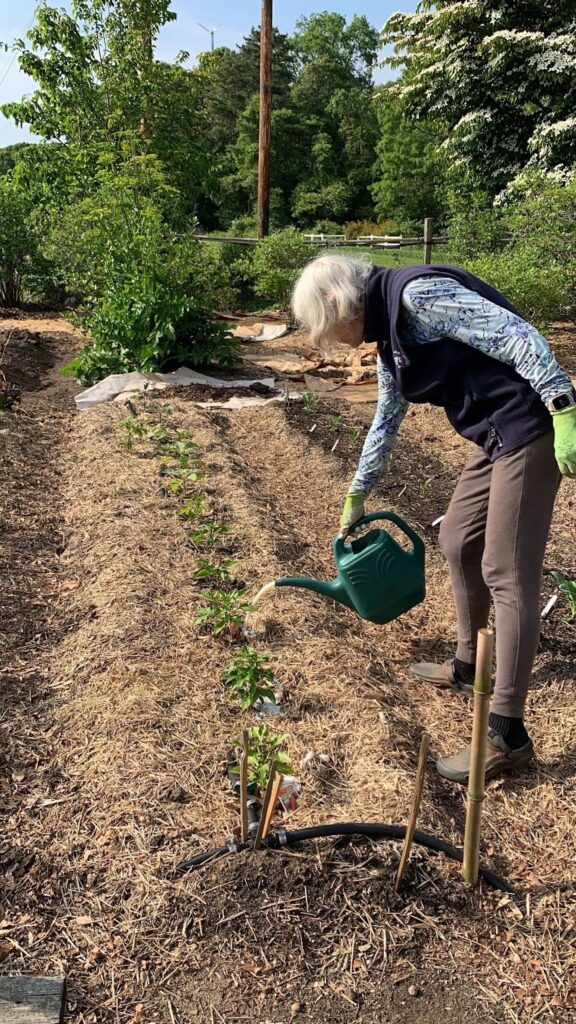
These recycled fertilisers are cheaper, greener and, in some studies, have even been found to outperform synthetic fertilisers.
Credit: Supplied Jordan Roods
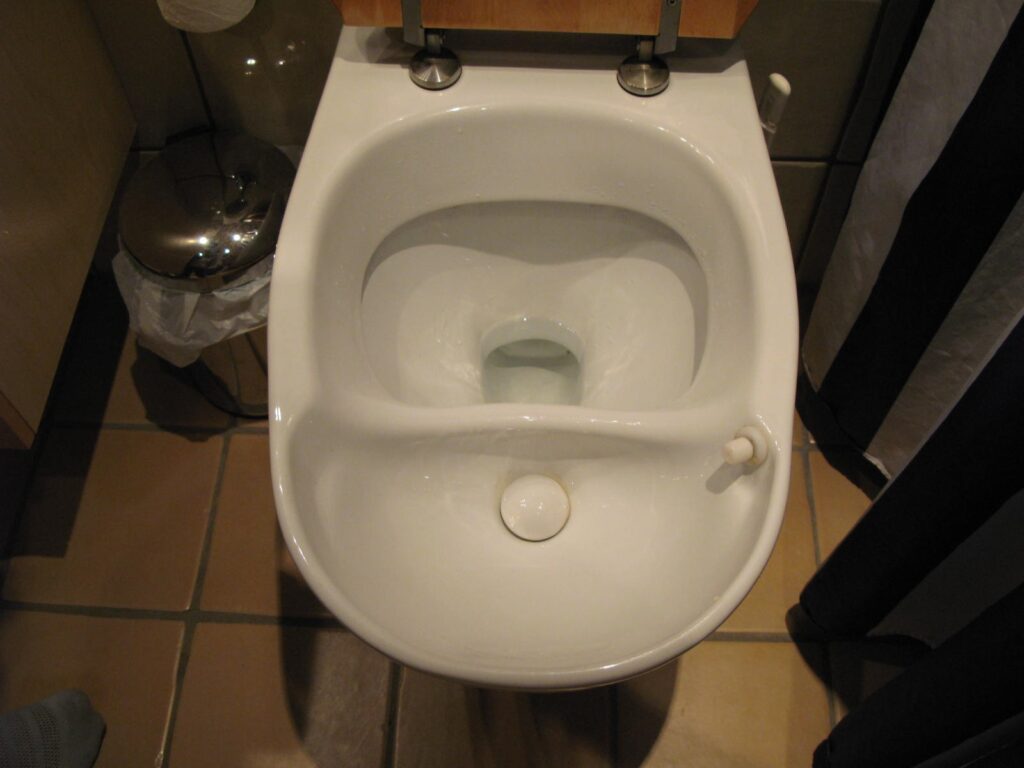
The simplest way to make the most of our unused wastewater is to separate it at the source.
Urinals are one way, but aren’t applicable to everyone. In a large-scale, gender-neutral setting, we can make use of urine-diverting toilets.
What’s the catch?
Critics claim urine-derived fertilisers risk contributing to antibiotic resistance. This fear is unfounded.
Antibiotic resistance occurs when microbes gradually become unaffected by antibiotics over time.
Overcoming the social taboo is likely a bigger barrier.
It’s understandably tricky to market the idea to consumers who may ask if this means there’s pee in our food.
“The urine is processed through pasteurisation to remove pathogens and other contaminants, like pharmaceuticals. This makes these fertilisers very safe to use on crops,” says Jordan.
“Separating urine at its source prevents contamination with faeces, which is where most pathogens would come from.”
Low cost, high reward
Jordan says the economic benefits depend on how transportable urine-derived fertilisers are.
That’s why it’s better to operate in a decentralised way, with individual locations processing their own waste into fertilisers. Costs increase once urine requires transportation.
Phosphorite (the mineral form of phosphorus) is only mined in a few locations, while fertilisers are shipped across the world – at great cost to the consumer.
Fortunately, wee is produced literally everywhere.
Credit: SuSanA Secretariat (CC BY 2.0)/Wikimedia Commons
Coming to a loo near you?
Companies and organisations are already trialling and implementing this technology.
The US Rich Earth Institute calls its initiatives peecycling. It has partnered with a local company to develop scalable systems for onsite wastewater recycling. Then communities can recycle their wastewater into fertilisers without it even leaving the building.
Locally, Jordan’s team at UTS works with a refrigerator-sized membrane bioreactor system to process urine on site. The portable device was wheeled around campus and the Sydney botanical gardens in a big blue mobile toilet called the Loo Lab.
These approaches have faced intense scrutiny and emerged unscathed. A 2025 review concluded that urine fertiliser technologies of all types can be considered safe and effective, assuming all pathogens and pharmaceuticals have been eliminated.
But in Australia, progress is typically slow moving, with urine-diverting toilets only legalised for research purposes in Queensland this year.
“There’s a lot of friction still within the regulatory environment,” says Jordan.
“With the NICE Hub, we’re really struggling with the Environmental Protection Agency to even have the right testing done to get this off the ground at the pilot level.”
Once lawmakers catch up, it seems inevitable that pee-derived fertilisers will play a key part in a green and (shockingly) clean future.