

You might be interested
Aboriginal peoples are warned that this article may contain images of Martu people who may have passed away.
Deep in the heart of Martu Country lies Karlamilyi National Park. Red rock and red sand stretch as far as the eye can see.
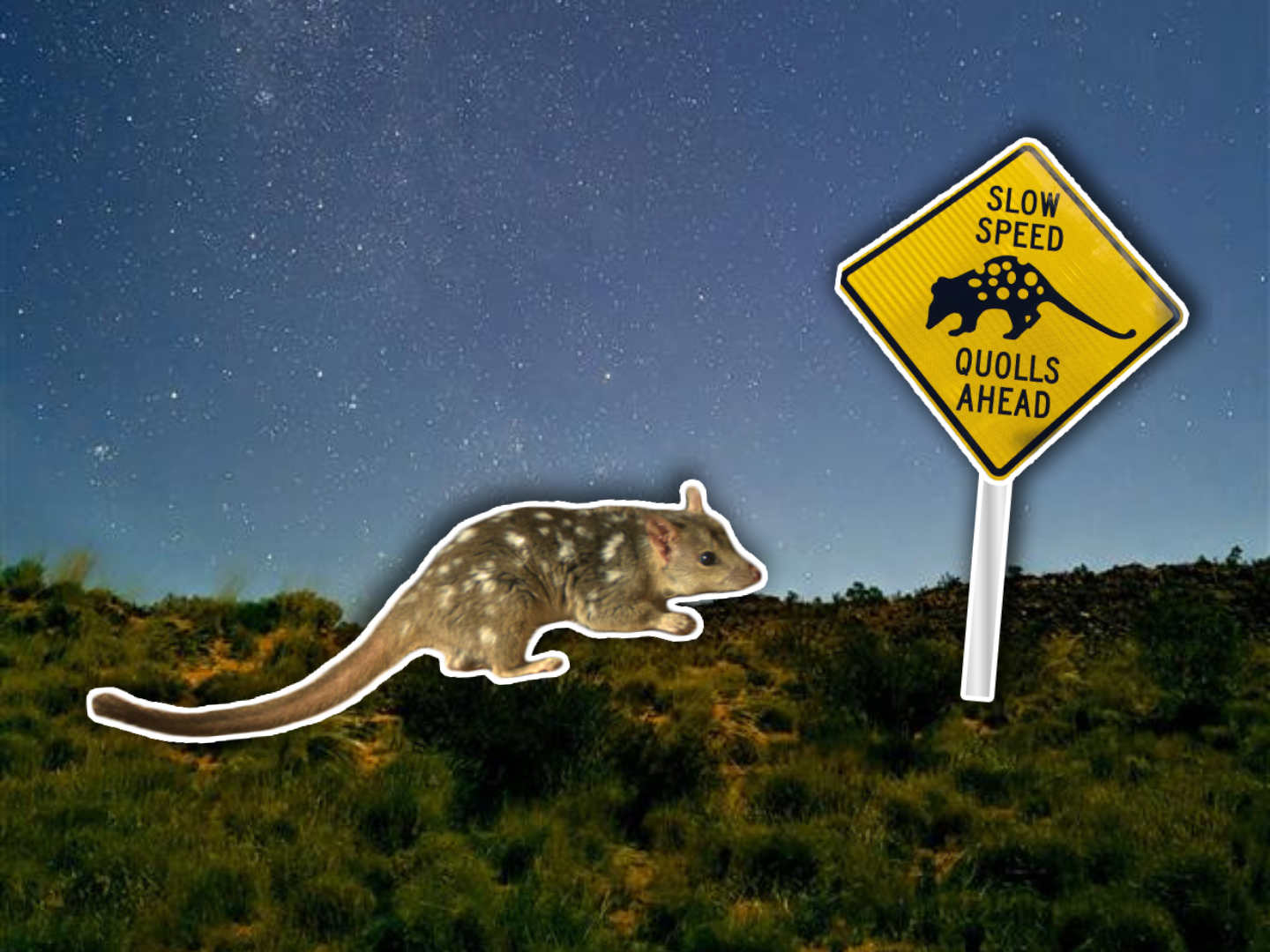
Within some of these rocky outcrops, live a small population of wiminyji (northern quolls). But they haven’t always been restricted to such a small area.
Muuki Taylor is a Martu Elder and Kanyirninpa Jukurrpa (KJ) ranger from Parnngurr. He remembers “hearing stories from the old people”.
“They were all over, wiminyji used to be everywhere,” says Muuki.
He says something that is translated for me.
“Used to be too many … the old people would eat them.”
Where there used to be so many wiminyji they were caught for a meal, we’re now lucky to catch one on camera.
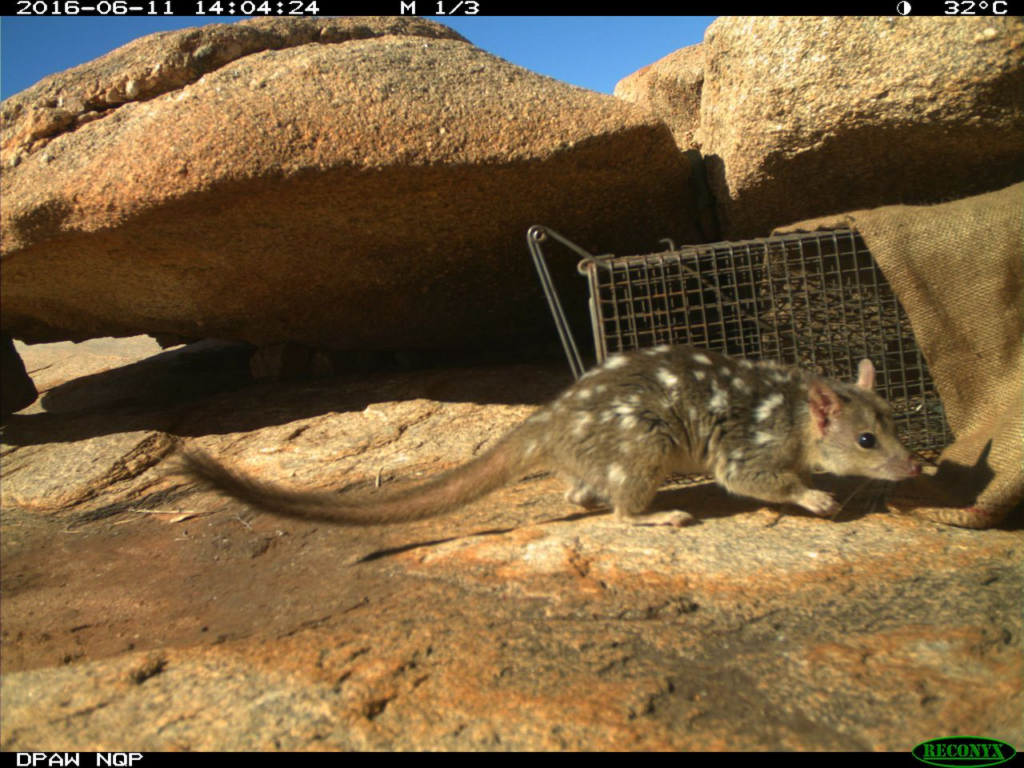
Credit: Supplied Judy Dunlop
A GLIMPSE OF THE PAST
Wiminyji in Karlamilyi National Park have been left behind in Western science monitoring.
Dr Harry Moore is a fauna ecologist with the Department of Biodiversity, Conservation and Attractions. He says this lack of knowledge is – surprisingly – due to a lack of mining.
“Because there’s not really any mining activity that happens that far out … there’s nowhere near as many environmental impact assessments,” says Harry.
“The number of surveys that happen in that part of the northern quolls distribution is very, very few.”
This is where the KJ Martu rangers come in.
The cultural knowledge shared from the old people and passed down generation to generation provides a deeper understanding of where wiminyji used to live.
It also provides a historical baseline of wiminyji distribution. Where Western science assumes their current distribution is ‘normal’, it appears wiminyji are existing at their limits.
“Having this Indigenous knowledge overlayed is really cool because it gives us a glimpse of what northern quolls were doing before Australia was settled by Europeans,” says Harry.
“We think northern quolls are really restricted to rocky habitat, but Martu people talk about how they were very common in sandy areas and open country, which is not something we see today.”
Credit: Judy Dunlop
LOOKING FOR WIMINYJI
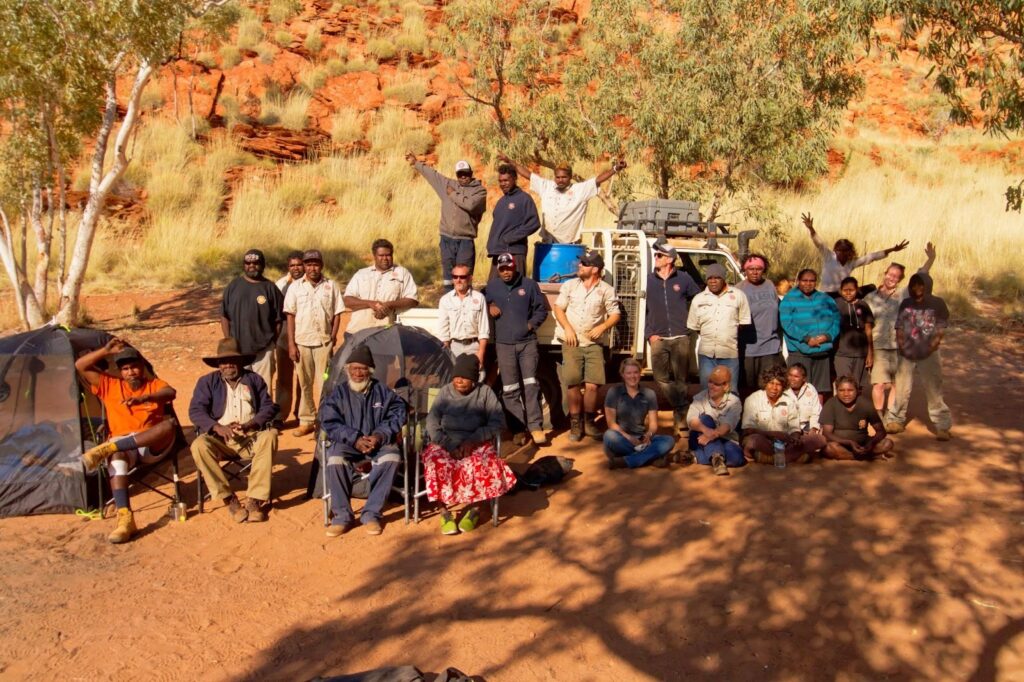
To combine Western science with Martu knowledge, a research trip was organised to bring everyone together.
“We did a big trip with about 50 rangers,” says Harry. There were rangers from Punmu, Parnngurr and Jigalong, as well as other scientists, Elders and kids.
Adrian Bullen, a KJ Martu ranger from Parnngurr, says it’s important to have kids around when working on Country.
“We need to go out and teach young ones, pass this knowledge onto them,” says Adrian.
During the research trip, the team set up trap cameras to find wiminyji.
“We didn’t catch any, but we caught some on camera,” says Harry.
“Seeing that the quolls were still there made a lot of people really happy. Most of the Martu Elders hadn’t actually seen one themselves. It was all stuff their parents have told them about.”
“Seeing [wiminyji] for the first time was emotional,” says Danielle Booth, a KJ Martu ranger from Punmu.
Natasha Surprise, another KJ Martu ranger from Punmu, said she “was happy” when she first saw a wiminyji.
Since the research trip, the rangers have recorded more sightings.
“Rangers have gone out on their own and got a few more northern quoll records here and there around that area,” says Harry. “They’re on the map included in the paper.”
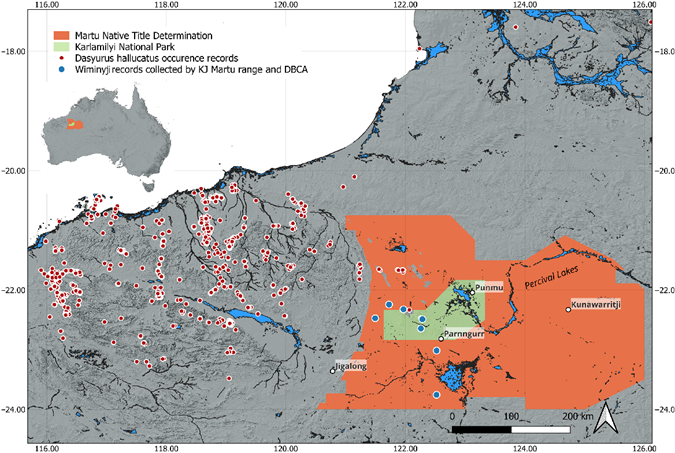
Credit: Taylor et al., 2026 in Wildlife Research
WHY WIMINYJI?
Anthony Bullen, a KJ Martu ranger from Parnngurr, says looking after wiminyji is important, “otherwise they go extinct.”
Harry says ecologically, they’re a crucial species.
“It’s one of northern Australia’s largest marsupial predators,” says Harry.
“Apart from the dingo, it’s one of the biggest terrestrial predators that are there.”
Wiminyji are also a generalist species and can survive in a lot of different conditions.
“When they drop out of an area, it’s representative of a really significant environmental change,” says Harry.
“It’s a warning sign – when a species that is pretty tough drops out – that something is definitely changing.”
While the wiminyji population in Karlamilyi has declined, there is still hope.
Indigenous knowledge provides more than filling a gap in scientific knowledge – it can guide conservation strategies for threatened species.
With Martu rangers at the helm, wiminyji have more than just a fighting chance.