

READ

Particle 101: Krill

Small animal, big responsibility.
Cody Robinson
Cody Robinson
Freelance Writer
Particle 101: Krill

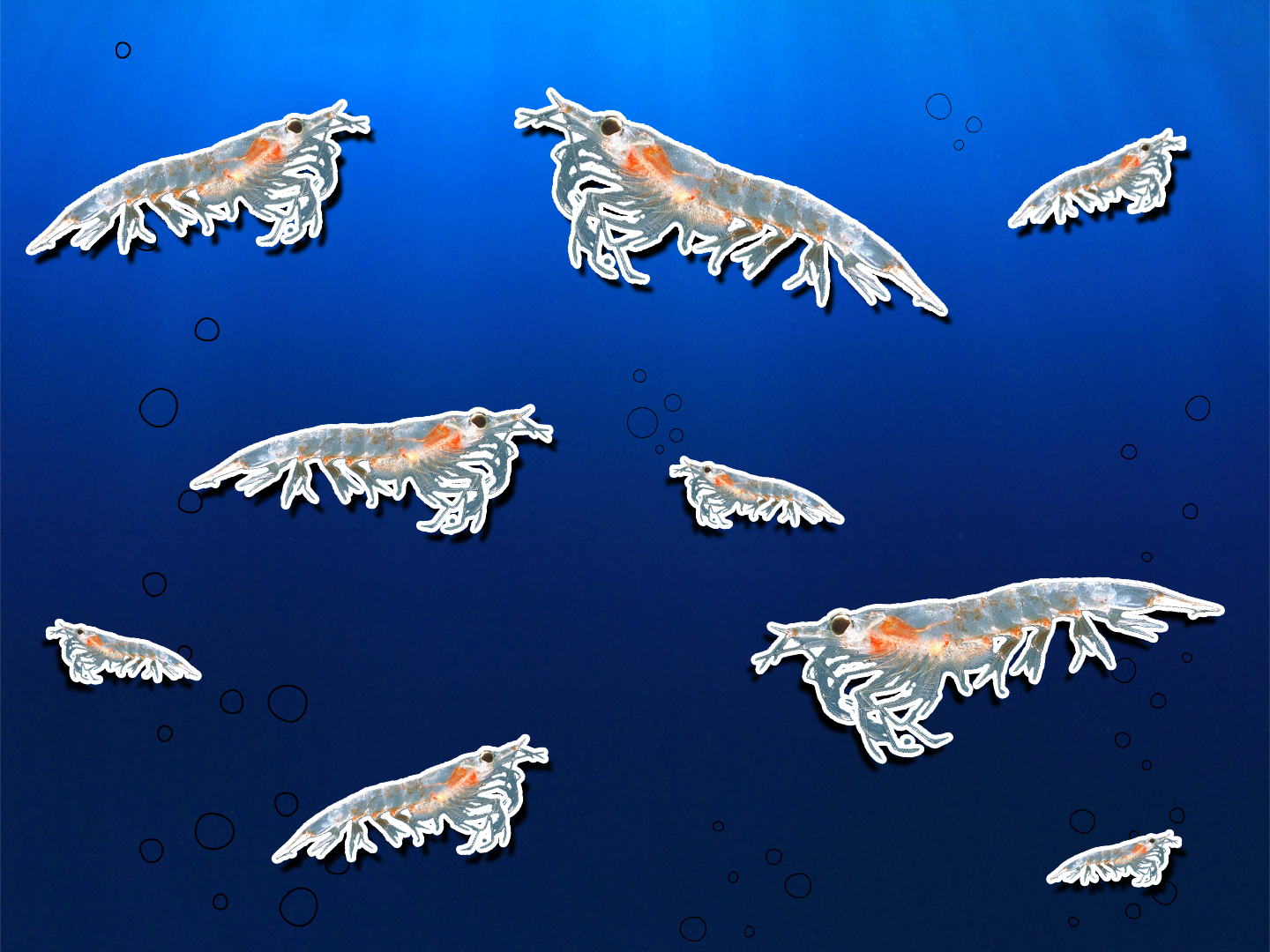
Krill are small, shrimp-like crustaceans found in every ocean.

Roughly the size and weight of a paperclip, krill are responsible for sustaining some of our most iconic marine species, including seals, penguins and whales.

There are approximately 85 krill species, with most spending their lives swimming and feeding in the open ocean. 

Most krill species are filter feeders. They have five pairs of swimming limbs located on their abdomen, which propel them through the water in short bursts. Their front-most appendages vary between 6–8 depending on species and use small combs to ‘catch’ food when drawn through the water.

Almost all krill feed on plankton and zooplankton, but some species utilise other food sources.
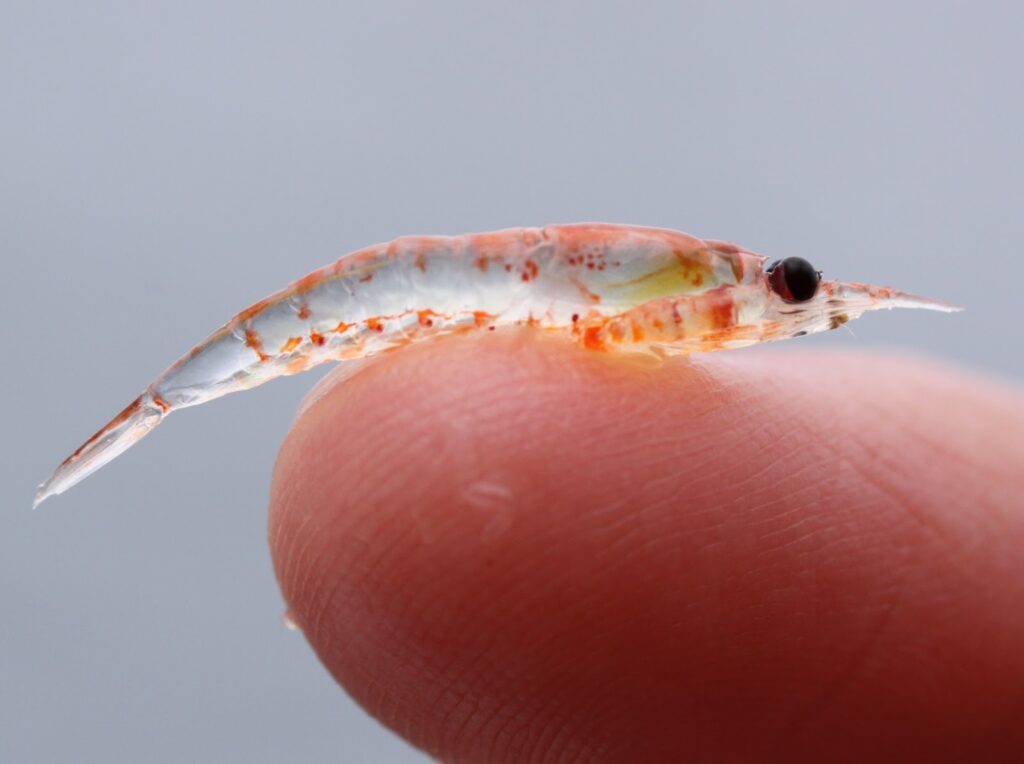
Caption: Krill are similar in size and weight to a paperclip.
Credit: Credit: NOAA Office of National Marine Sanctuaries/Flickr

Antarctic krill feed on microalgae growing on the underside of sea ice during spring, when plankton is less abundant. Other species feed on organic matter in the ocean sediments.

Krill are a keystone species and play an integral role in the ocean food web. The largest concentration of krill – estimated to be 300 million tonnes – is found in the Southern Ocean.

Here, they are the primary food source for many species, including fish, whales, seals, penguins and seabirds.

Thanks in part to the abundance of krill, they are responsible for storing as much carbon as the world’s seagrass mangroves, salt marshes and seagrass beds.

Coming in for the krill

Despite their abundance, krill populations face increasing pressure. They are commercially fished, primarily for aquarium and aquaculture feed, and utilised in pharmaceuticals

Driven largely by technological advancement, the krill fishing industry has expanded rapidly over the last two decades.

Industrialised krill-fishing fleets not only disrupt krill populations, they also disrupt ocean ecosystems through overfishing and entanglement in fishing nets.
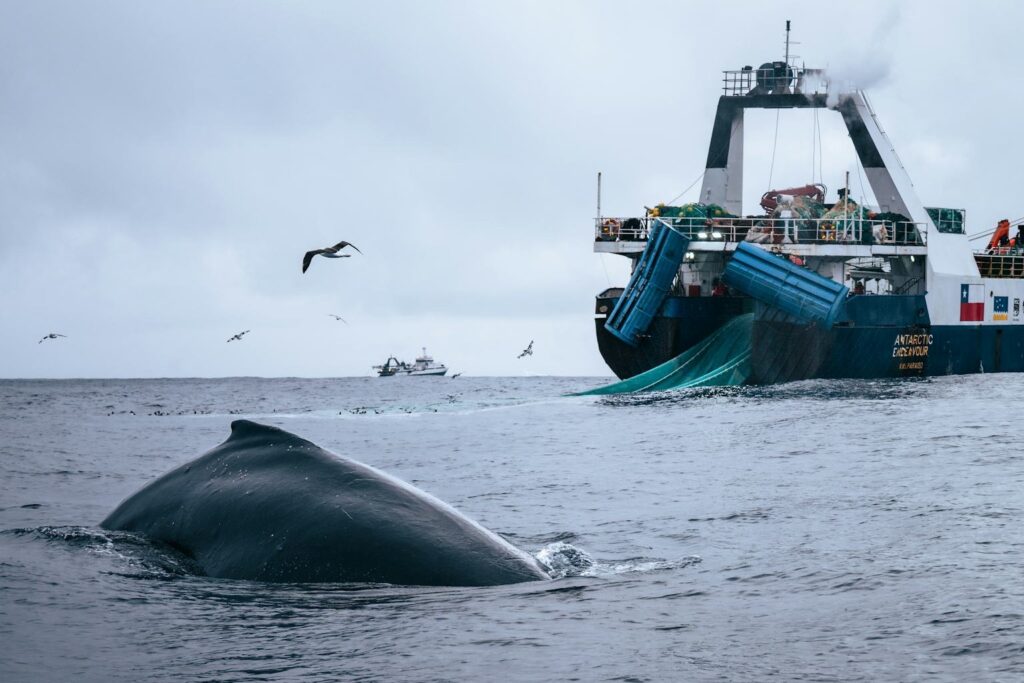
Caption: A humpback whale surfaces near trawlers fishing for Antarctic krill.
Credit: Youenn Kerdavid (CC BY-ND)/Sea Shepherd Global

Krill-cial to protect

Krill are currently not listed as endangered, but looming threats of climate change and expiring commercial fishing regulations in some regions could change this. 

Scientists and conservation groups are calling for strict fishing limits, updated regulations, expanded marine protected areas and improved monitoring of krill populations.

For such a small animal, krill carry an enormous responsibility to support some of the largest and most iconic species on Earth.


Cody Robinson
About the author
Cody Robinson
Cody is a freelance writer with a degree in marine science and science communication. He’s passionate about the ocean and its conservation. In his free time, Cody enjoys the outdoors, nature photography, and Judo.
View articles
Cody is a freelance writer with a degree in marine science and science communication. He’s passionate about the ocean and its conservation. In his free time, Cody enjoys the outdoors, nature photography, and Judo.
View articles

NEXT ARTICLE

We've got chemistry, let's take it to the next level!

Get the latest WA science news delivered to your inbox, every fortnight.

This field is for validation purposes and should be left unchanged.

Republish

Creative Commons Logo

Republishing our content

We want our stories to be shared and seen by as many people as possible.

Therefore, unless it says otherwise, copyright on the stories on Particle belongs to Scitech and they are published under a Creative Commons Attribution-NoDerivatives 4.0 International License.

This allows you to republish our articles online or in print for free. You just need to credit us and link to us, and you can’t edit our material or sell it separately.

Using the ‘republish’ button on our website is the easiest way to meet our guidelines.

Guidelines

You cannot edit the article.

When republishing, you have to credit our authors, ideally in the byline. You have to credit Particle with a link back to the original publication on Particle.

If you’re republishing online, you must use our pageview counter, link to us and include links from our story. Our page view counter is a small pixel-ping (invisible to the eye) that allows us to know when our content is republished. It’s a condition of our guidelines that you include our counter. If you use the ‘republish’ then you’ll capture our page counter.

If you’re republishing in print, please email us to let us so we know about it (we get very proud to see our work republished) and you must include the Particle logo next to the credits. Download logo here.

If you wish to republish all our stories, please contact us directly to discuss this opportunity.

Images

Most of the images used on Particle are copyright of the photographer who made them.

It is your responsibility to confirm that you’re licensed to republish images in our articles.

Video

All Particle videos can be accessed through YouTube under the Standard YouTube Licence.

The Standard YouTube licence

  1. This licence is ‘All Rights Reserved’, granting provisions for YouTube to display the content, and YouTube’s visitors to stream the content. This means that the content may be streamed from YouTube but specifically forbids downloading, adaptation, and redistribution, except where otherwise licensed. When uploading your content to YouTube it will automatically use the Standard YouTube licence. You can check this by clicking on Advanced Settings and looking at the dropdown box ‘License and rights ownership’.
  2. When a user is uploading a video he has license options that he can choose from. The first option is “standard YouTube License” which means that you grant the broadcasting rights to YouTube. This essentially means that your video can only be accessed from YouTube for watching purpose and cannot be reproduced or distributed in any other form without your consent.

Contact

For more information about using our content, email us: particle@scitech.org.au

Copy this HTML into your CMS
Press Ctrl+C to copy