

You might be interested
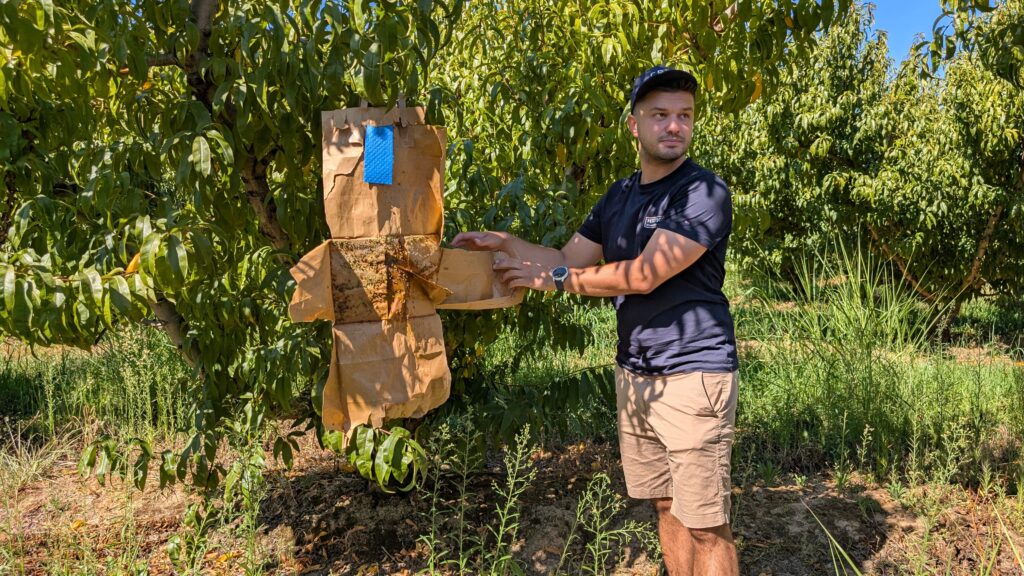
When Vasilis Rodovitis rips open his brown paper bag in a sunny persimmon orchard just outside Naousa, in Greece, I half expect groceries to spill out.
Instead, a barely there grey cloud emerges. For half a week, the bag was home to some 4,000 Mediterranean fruit flies (Ceratitis capitata). The thumbnail-sized flies, which the scientists here simply call ‘Medfly’, quickly disappear into the orchard.
Unleashed by Vasilis, a PhD student at the University of Thessaly, the swarm is expected to do what fruit flies typically do – feed, mate, deposit their larvae into the flesh of juicy fruits and die.
They’re nearly invisible. They don’t buzz or bother like a house fly. But they’re far more destructive.
Infestations and annihilations
Fruit fly larvae punch holes in fruit and introduce bacteria, causing it to rot from the inside out. The fruit becomes unsellable. Entire orchards can be obliterated, their value dropping to zero.
There are indirect costs too. Farming jobs disappear. Insecticide use, which may harm soil quality and human health, increases.
Some estimates suggest fruit flies cause multi-billion dollar losses in fruit production annually, according to Nikos Papadopoulos, an applied entomologist at the University of Thessaly.
For farmers in Greece’s Peach Valley, where we watch Vasilis release his flies, those losses would be felt acutely.
“The impact of these flies for the fruit-producing industry in this area may be enormous. We may lose some important markets of exported fruits,” says Nikos.
Defying its naming convention, Medfly is a global pest. It was first detected in Western Australia about 120 years ago, and keeping it under control has been a battle ever since.
“It’s a very, very old infestation,” says Sonya Broughton, Principal Entomologist at WA’s Department of Primary Industries and Regional Development (DPIRD). “Back in the day, it was quite hard to control, particularly if you grew stonefruit.”
Medfly, as well as the Queensland fruit fly (Qfly) – another fly that defies its naming convention – are the two major pest species that threaten Australia’s $13 billion horticulture industry.
Sonya says farmers who do nothing can lose 100% of their crop to an infestation. Medfly is established across many regions surrounding Perth, as well as Geraldton and Carnarvon, but Qfly has – largely – been kept out of the state.
Yet, as the world warms as a result of human-induced climate change, the range of fruit fly species is expected to expand. This is true in the orchards in Greece and in Australia. So why, then, would Vasilis release thousands of the pests all at once?
Well … his flies are frauds.
Credit: Jackson Ryan
Frauds and phonies
Releasing tens of thousands of flies directly into an orchard sounds like a bad idea.
“We make and release more flies, which is counterintuitive to getting rid of flies,” jokes Marc Schetelig. Marc is a biotechnologist at the University of Giessen in Germany and project coordinator of REACT, a research collaboration that aims to deploy environmentally friendly, rapid and scalable techniques to respond to invasive insects.
The Medflies released in Greece have undergone a process preventing reproduction, sensibly dubbed the Sterile Insect Technique (SIT). First developed in the 1950s, SIT creates infertile batches of insects, typically using X-rays, and then releases them into the wild.
Today, SIT is one of the most widely used techniques for insect control and has been deployed in eradication programs across the world. Western Australia successfully implemented it in the 1980s to tackle invasive Qfly. South Australia also used it against Medfly incursions in Ceduna as recently as 2025.
With SIT, millions of sterile males are reared and released to compete with, and overwhelm, wild populations. Dud males mate with wild females, which produce no viable offspring.
Enough flies and enough time causes a population crash.
In the Greek orchard, around 100,000 flies are being released each week in the first field trials. The farmers watching describe their battles against fruit flies as a war, which makes REACT’s SIT a scientific salvo – a way to win the war.
Wintering and warming
Medfly, an established pest across the EU, is but one target of REACT. “Medfly serves as a perfect model for developing technology to deal with flies that are not currently in Europe and in Greece,” says Nikos.
The Peach Valley and the wider Mediterranean region are particularly susceptible to two problematic species native to the tropics of Asia: the oriental fruit fly (Bactrocera dorsalis) and the peach fruit fly (Bactrocera zonata).
If a fruit fly invades, there’s no time to waste. The REACT team’s methods in these field trials are designed to show that inexpensive, environmentally friendly responses can rapidly curb fruit fly invasions and prevent populations from establishing.
Credit: Jackson Ryan
Last spring, an alert revealed the peach fruit fly had been spotted in northern Athens during an annual survey. It’s unlikely to be the last time.
Fruit flies typically don’t survive cold winters, but that may change as global temperatures warm, according to Nikos. “Both species will benefit from climate warming,” he says, noting their ranges will expand north.
It’s the same story in Western Australia – particularly the Perth region, which has a Mediterranean climate. Sonya’s recent research has explored how, at all life stages, Medfly are adept at surviving through mild winters. With warming weather, a mild winter becomes more common and that would see the flies push further south, Sonya says.
Sexing and straining
WA has focused its efforts on keeping Qfly out of the state in recent years. Though those programs typically use pesticides, they are highly successful. DPIRD recently announced the successful 10th eradication of Qfly from metropolitan Perth.
Reducing the use of pesticides and making SIT cheaper is one of REACT’s challenges. Another is using SIT to reliably separate males and females during development.
SIT works best when only males are reared, sterilised and released, so differentiating between sexes becomes a key part of defending against fruit fly. And it would help drive costs down and efficiency up.
“The sexing is very important,” explains Marc, “because you don’t have to rear females through the larval stages.”
To help with sexing flies, scientists tweak Medfly genes to create genetic sexing strains. This enables reliable separation of the sexes.
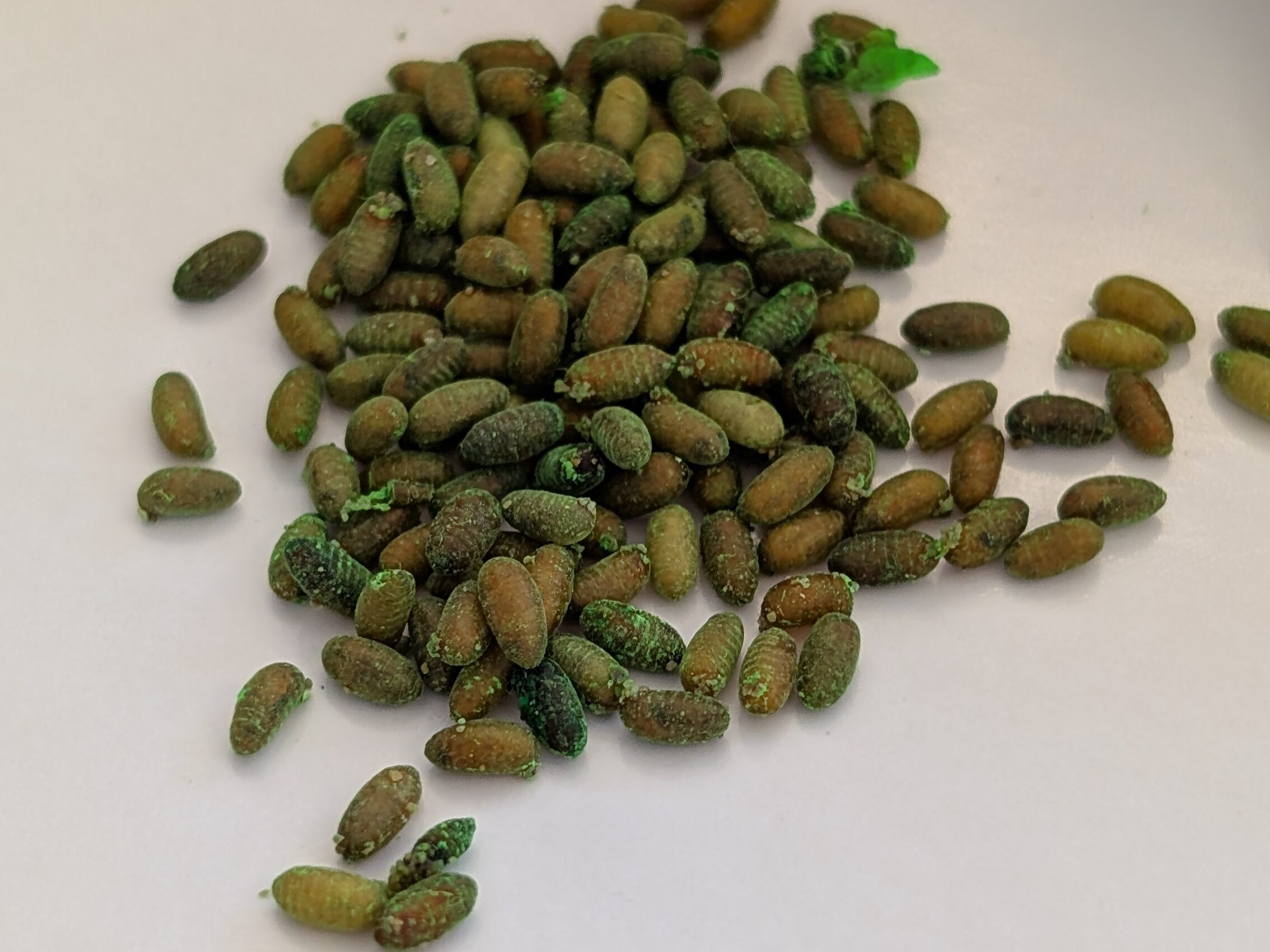
To separate the Medflies in Greece, females are tweaked to be prone to heat stroke. Scientists apply a quick blast, around 34°C, to pupa. All survivors are male, which then undergo SIT before release into the orchards. This saves time and money.
Credit: Jackson Ryan
Marc’s team are working to have strains ready for the next incursion. “My dream product,” he says, “would be to have dorsalis and zonata genetic sexing strains.”
But given climate change and the species’ adaptability, an incursion feels inevitable.
How scientists, farmers and growers respond is critical – once a fruit fly species is established, eradication becomes exponentially more difficult and much more expensive. Pesticide use may increase. Jobs may be lost. Health may be endangered. And the fruit you love might not make it to your table.
“In the end, the public will pay the price if we’re using sh*tty methods for the environment. Sooner or later, it doesn’t matter – but somebody will,” says Marc.
After the flies are released in the persimmon orchard, we move onto another plot – this time with nectarines. Vasilis rips a few more bags open and, as we’re leaving, hands me a fresh nectarine. Later in the evening, I bite into its delicious flesh.
Fresh, juicy, fly free.