

You might be interested
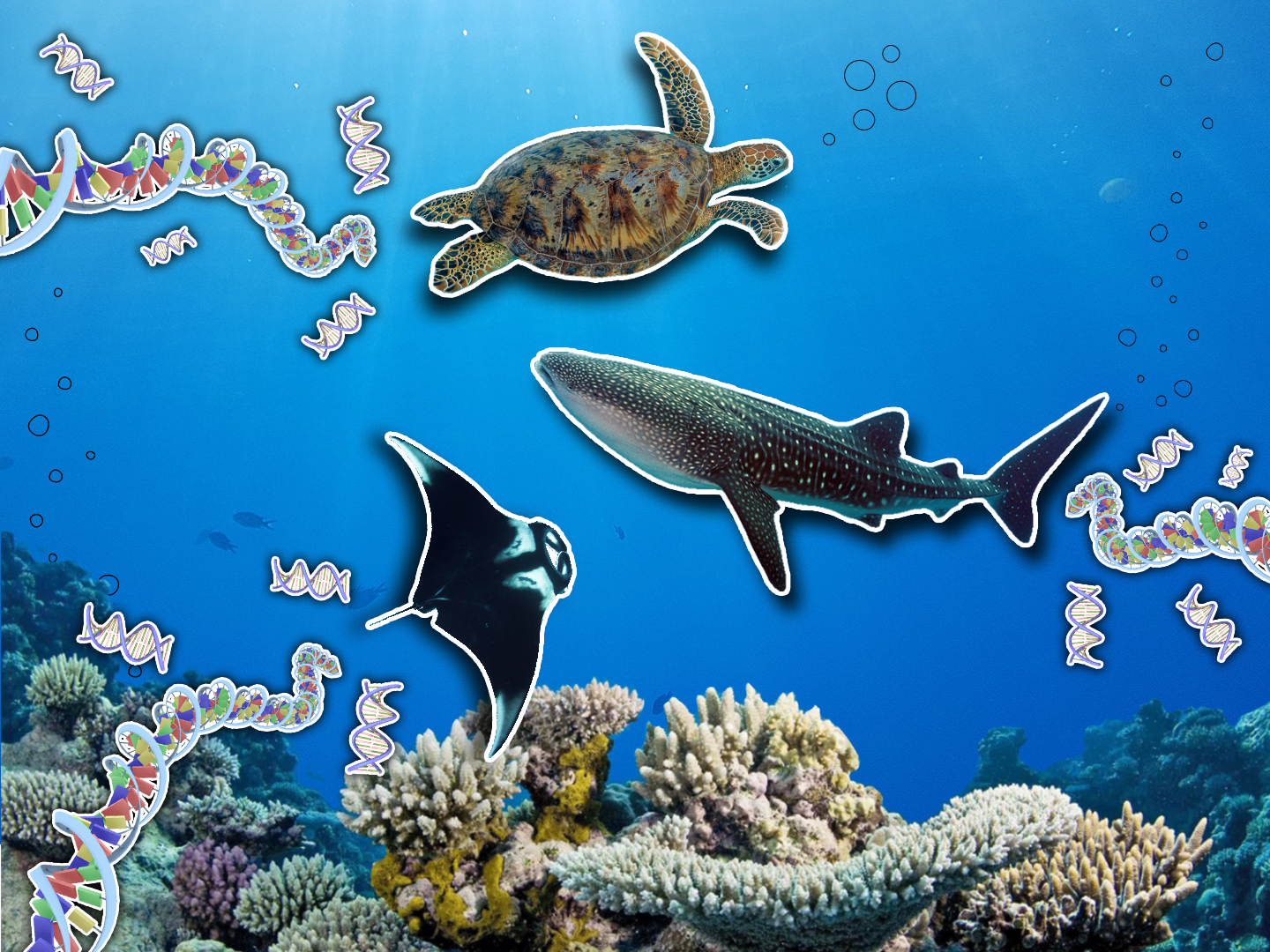
As we move through the world, we leave behind invisible traces of ourselves encased in the hair, skin and other bodily matter we shed.
These tiny pieces of DNA – known as environmental DNA or eDNA – have major conservation potential. Now, West Australian research hopes to push the boundaries of the technique.
Finding eDNA
eDNA techniques involve extracting samples – for example, a soil or water sample – isolating the DNA from the biological material present and identifying the animals it came from.
But eDNA usually degrades quickly and doesn’t display the whole genome. Instead, to identify the species present, scientists compare short sections of DNA, known as barcodes, to other known barcodes from various animals.
Comparing samples to broad datasets of barcodes from many different species is known as metabarcoding and can identify multiple species within a single sample.
What is eDNA used for?
“The main benefit [of eDNA] is detecting organisms without the need to visually see them,” explains Georgia Nester.
Georgia is a deep-sea postdoctoral researcher at the University of Western Australia (UWA) who uses eDNA to assess biodiversity in some of the deepest parts of the Indo-Pacific.

Credit: Steve Lawtong & Inkfish/Sea Museum
This means less time in the water and fewer people in the field, and it is less invasive for the animal compared to capturing and tagging.
The biodiversity data gathered is also broader than in traditional surveys – able to identify creatures ranging in size from microbes to whales.
In Australia, it’s hoped that eDNA can help scientists monitor species and ecosystem health across the country’s 60 marine parks.
“It has the potential to be really scalable and allow you to sample frequently, at low cost and across really vast spatial scales,” says biologist Shannon Corrigan.
Shannon works at UWA’s OceanOmics centre, part of the OceanOmics program in partnership with the Minderoo Foundation. They’re building up the database of genetic data across Australia’s fish species to make metabarcoding more comprehensive.
eDNA doesn’t just help scientists find out what species are present. It can allow them to track species movement too.
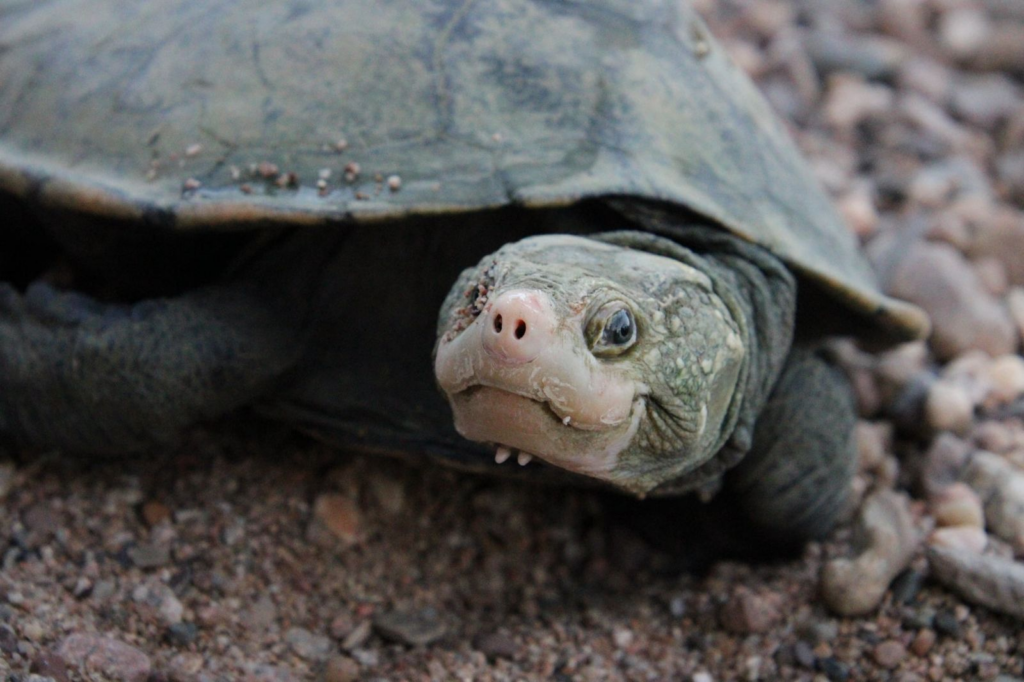
Cecilia Villacorta-Rath is a senior research officer at James Cook University. She co-authored a 2022 eDNA study that confirmed the presence of the bum-breathing Irwin’s turtle (Elseya irwini) in the Lower Burdekin River in northern Queensland, some 20 years after it was last seen there.
Credit: Lorelle McShane/JCU
“If we have species moving down south with climate change, with eDNA, we can detect the first incursions,” says Cecilia.
But eDNA has limitations. The lack of a complete reference database for all species means many will fall through the cracks or be incorrectly assigned.
And while eDNA can confirm the presence of a species within a sample, it’s very difficult to know the abundance of that species in the area.
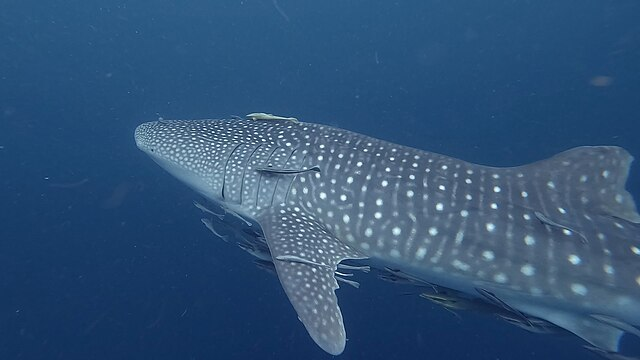
But Abinaya Meenakshisundaram, a researcher at the OceanOmics centre, hopes to change that – at least for the iconic whale shark.
PUSHING THE LIMIT
Each year from March to July, hundreds of juvenile male whale sharks visit Ningaloo Reef to feed, but there are many unknowns about their movements outside this window.
Whale sharks are endangered and have seen a roughly 60% population decline globally in the last 120 years.
“I’m trying to push eDNA techniques beyond just presence or absence of species,” Abinaya says. “We’re trying to get population-level data.”
That data includes the ability to identify individual sharks within a population as well as the community’s genetic diversity – a marker of population health.
To identify individual whale sharks, Abinaya borrows techniques from the field of forensic science. This uses short, highly polymorphic DNA sequences to identify individuals. A polymorphic gene is one that has multiple potential versions.
Her work has shown that you can identify individual whale sharks from the eDNA you find in seawater directly behind them. That means no invasive testing or tagging but only works if you are very close to the animal.
By identifying these individuals, Abinaya hopes to estimate the genetic diversity of the local community.
Credit: Rachel Crane/Wikimedia Commons
“We designed a panel of these high polymorphic markers that are specific to whale sharks,” says Abinaya.
“Using the differences we see in these markers, we can then estimate possible population diversity and abundance.”
Right now, controlled studies show it’s possible to accurately identify the number of individuals in a sample that contains DNA from 10 or fewer whale sharks, but larger populations are harder to disentangle. As research builds, this number could grow.
Abinaya hopes that using eDNA in this way can help conservationists understand and protect whale sharks better in future.
“With climatic and environmental changes, it’s really important to keep track of genetic diversity in the species that we’re trying to manage,” she says.