

READ

A BREAKTHROUGH IN MANAGING PSHB

Could lab-grown colonies be the answer to a PSHB-free WA?
Camila Pardo Uribe
Camila Pardo Uribe
Freelance Writer
A BREAKTHROUGH IN MANAGING PSHB

In 2021, the polyphagous shot-hole borer (PSHB) was found in Fremantle.

Since then, it has wreaked havoc on hundreds of tree species. 

So far, the efforts to eradicate this tiny pest have been unsuccessful. But new research might finally give scientists the upper hand.

SMALL BUT MIGHTY

PSHB (Euwallacea fornicatus) is a beetle native to Southeast Asia. It is roughly the size of a sesame seed, yet capable of damaging thousands of trees. This is thanks to its symbiotic relationship with a fungus (Fusarium euwallacea). 
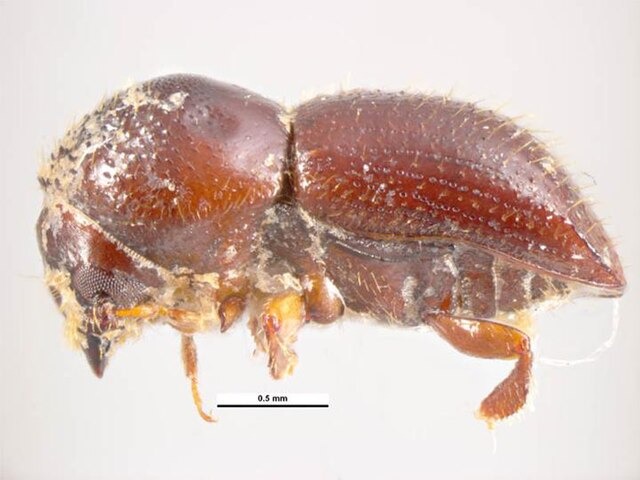
Caption: Polyphagous shot-hole borers have destroyed many trees in the Perth region.
Credit: Ken Walker/Wikimedia Commons (CC BY 3.0)

As the borer tunnels into trees, it harvests the fungus as food for itself and its larvae. The fungus keeps water and nutrients from flowing within the tree, leading to severe damage and even death

When first detected, the WA Government launched a multi-million dollar biosecurity response. Quarantine areas were established and thousands of trees were removed from parks, streets and homes.

However, in 2025, the WA Government declared that eradication would no longer be feasible. The beetles are hard to detect, they reproduce too fast and there are no effective pesticides against them yet.

Instead, the focus will be on the long-term management of the pest.

A NEW HOPE FOR WA’S TREES

In January 2026, PhD student Md Shahidul Islam Khan and Associate Professors Wei Xu and Rob Emery from Murdoch University announced that they had grown the first successful PSHB lab colony.
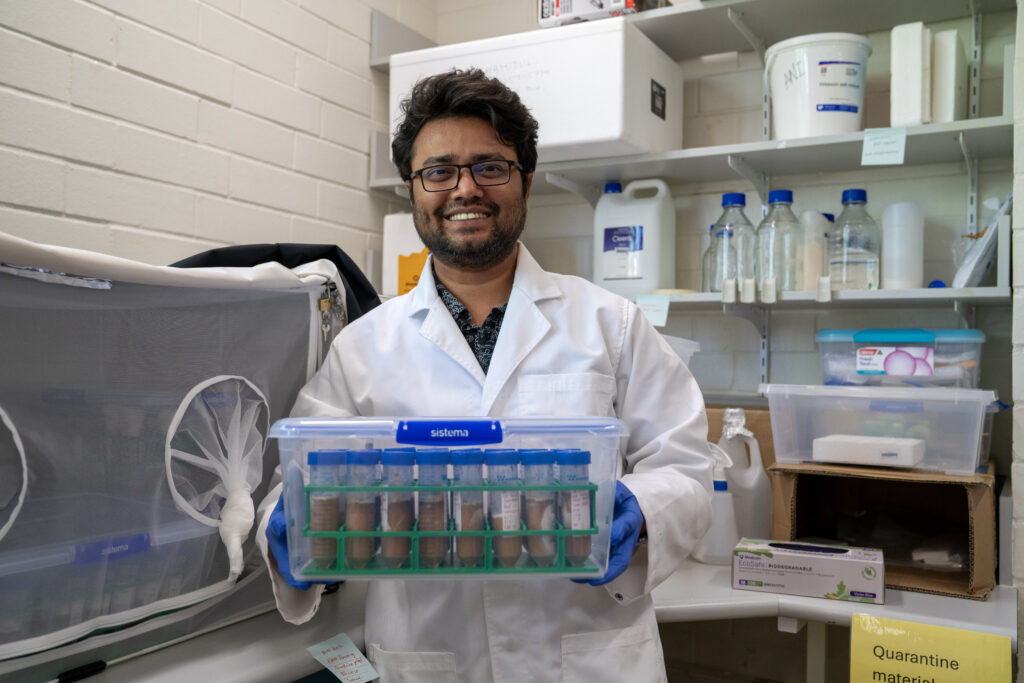
Caption: Md Shahidul Islam Khan in the Murdoch University lab with his colony of PSHB.
Credit: © Ezra Kaye/Murdoch University

The team obtained beetles from infested sites and replicated their natural conditions in the lab. The beetles displayed their typical behaviours, including the creation of tunnels and subsequent growth of the Fusarium fungus. 

This means scientists can now observe the borer’s life cycle under controlled conditions to understand how it behaves and how it responds to chemical cues.

“With a stable colony, scientists can now rapidly and safely screen potential attractants, repellents and environmentally friendly control tools that are essential for early detection,” says Mr Kahn. 

The development of PSHB lab colonies could also contribute to the management of this pest. 

”This project represents an important step forward in protecting WA … from the ongoing damage caused by [PSHB],” says Dr Xu.

”By understanding this pest more deeply, we can develop targeted tools that safeguard the health and resilience of our landscapes for the long term.”

Camila Pardo Uribe
About the author
Camila Pardo Uribe
Camila is a science communicator from Colombia with a background in literature and biology. When she's not talking about hummingbirds with the people around her, you will find her trying to master the perfect selfie with any animal that comes her way or complaining about the weather.
View articles
Camila is a science communicator from Colombia with a background in literature and biology. When she's not talking about hummingbirds with the people around her, you will find her trying to master the perfect selfie with any animal that comes her way or complaining about the weather.
View articles

NEXT ARTICLE

We've got chemistry, let's take it to the next level!

Get the latest WA science news delivered to your inbox, every fortnight.

This field is for validation purposes and should be left unchanged.

Republish

Creative Commons Logo

Republishing our content

We want our stories to be shared and seen by as many people as possible.

Therefore, unless it says otherwise, copyright on the stories on Particle belongs to Scitech and they are published under a Creative Commons Attribution-NoDerivatives 4.0 International License.

This allows you to republish our articles online or in print for free. You just need to credit us and link to us, and you can’t edit our material or sell it separately.

Using the ‘republish’ button on our website is the easiest way to meet our guidelines.

Guidelines

You cannot edit the article.

When republishing, you have to credit our authors, ideally in the byline. You have to credit Particle with a link back to the original publication on Particle.

If you’re republishing online, you must use our pageview counter, link to us and include links from our story. Our page view counter is a small pixel-ping (invisible to the eye) that allows us to know when our content is republished. It’s a condition of our guidelines that you include our counter. If you use the ‘republish’ then you’ll capture our page counter.

If you’re republishing in print, please email us to let us so we know about it (we get very proud to see our work republished) and you must include the Particle logo next to the credits. Download logo here.

If you wish to republish all our stories, please contact us directly to discuss this opportunity.

Images

Most of the images used on Particle are copyright of the photographer who made them.

It is your responsibility to confirm that you’re licensed to republish images in our articles.

Video

All Particle videos can be accessed through YouTube under the Standard YouTube Licence.

The Standard YouTube licence

  1. This licence is ‘All Rights Reserved’, granting provisions for YouTube to display the content, and YouTube’s visitors to stream the content. This means that the content may be streamed from YouTube but specifically forbids downloading, adaptation, and redistribution, except where otherwise licensed. When uploading your content to YouTube it will automatically use the Standard YouTube licence. You can check this by clicking on Advanced Settings and looking at the dropdown box ‘License and rights ownership’.
  2. When a user is uploading a video he has license options that he can choose from. The first option is “standard YouTube License” which means that you grant the broadcasting rights to YouTube. This essentially means that your video can only be accessed from YouTube for watching purpose and cannot be reproduced or distributed in any other form without your consent.

Contact

For more information about using our content, email us: particle@scitech.org.au

Copy this HTML into your CMS
Press Ctrl+C to copy