


You might be interested

Sometime in the next couple of months, NASA will be launching Artemis II to get humans close to the Moon for the first time in almost 54 years.
If all goes well, the Space Launch System will hurl the Orion spacecraft and four astronauts into an orbit around the Moon and back.
The crew will conduct hundreds of tests of the Orion spacecraft and launch system, test communication systems, observe the deep space environment, perform medical testing – and of course – observe the Moon.
Because the Moon and Earth are always moving, there are better times than others to launch a spaceship there, called launch windows.
It’s impossible to say exactly when they will light the candle, but it will be soon.
FLY ME TO THE MOON
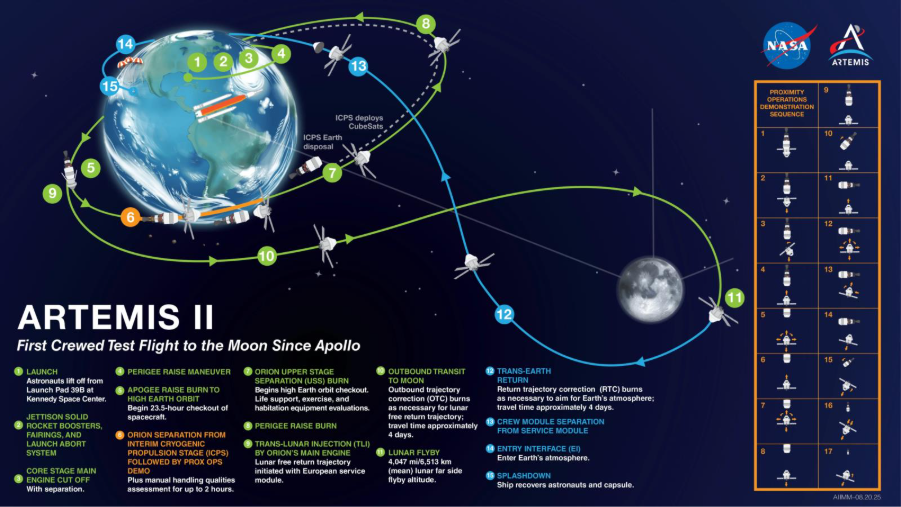
After liftoff, the astronauts will spend a couple of days in an intermediate orbit, taking them about a fifth of the way to the Moon.
During this time, they will verify that everything is working properly, test communications with Earth and get some flight experience, before continuing all the way to the Moon.
The free return trajectory they will take to the Moon is designed to minimise the difficulty of getting back to Earth safely if anything goes wrong.
Credit: NASA
The Artemis Program is NASA’s flagship Moon exploration project and consists of a series of increasingly ambitious missions to our natural satellite. Artemis I launched in November 2022 sending an uncrewed Orion spacecraft around the Moon and back.
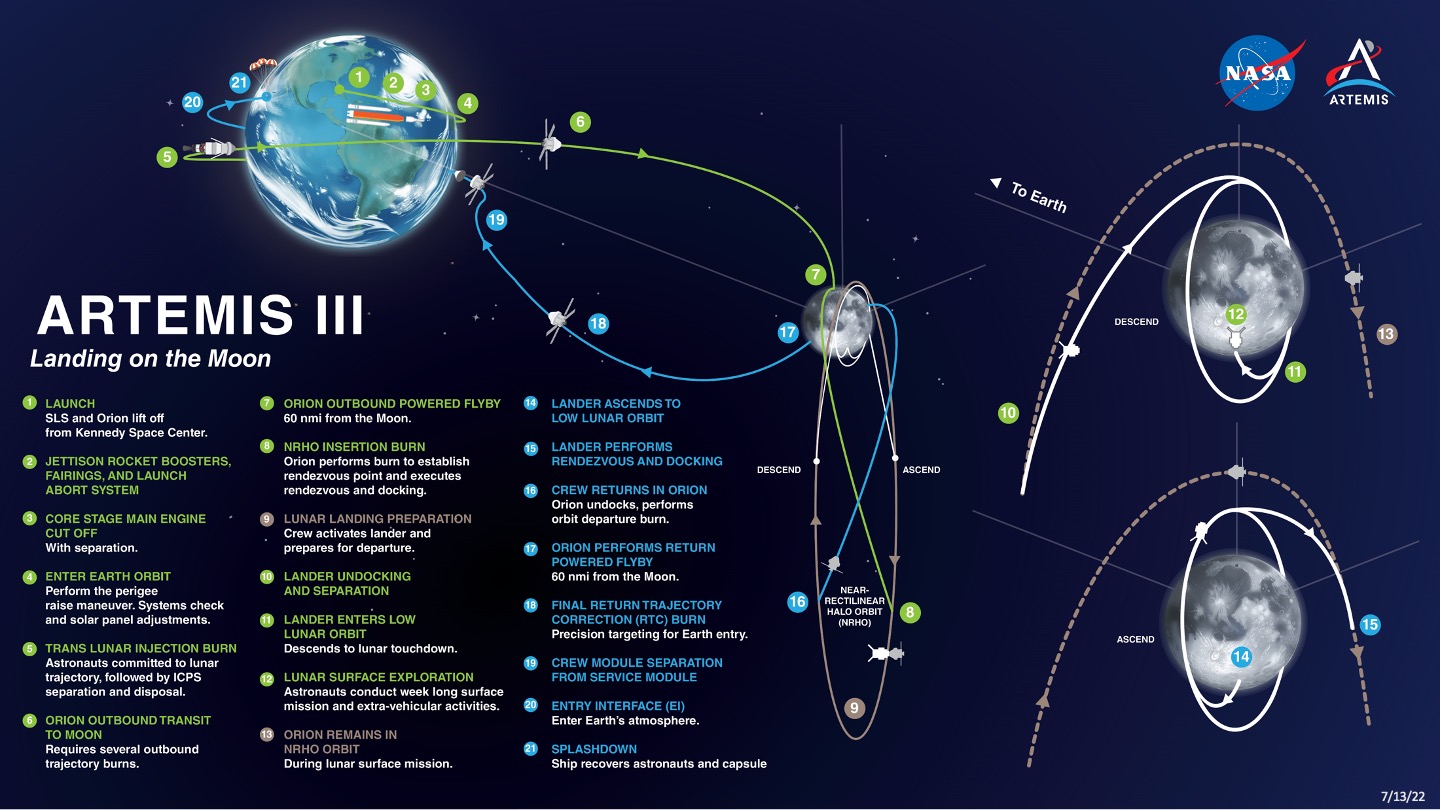
Artemis II largely repeats the mission, this time with people aboard. They won’t land on the Moon – that will happen during Artemis III, still in the planning stage.
MONEY, MONEY, MONEY
The heart of the Artemis Program is the enormous Space Launch System (SLS); a rocket made from repurposed Space Shuttle technology.
At its inaugural launch for the Artemis I mission it was (at the time) the most powerful rocket ever flown.
Unfortunately, the delayed and expensive development of the SLS, severely straining relationships between NASA and prime manufacturer Boeing, have pushed the price tag out to about AUD$4 billion per vehicle.
This is where the Artemis Program presents a complex topic for spaceflight enthusiasts. The tremendous cost of launch makes the program unsustainable, so any flights on the SLS will be more symbolic than genuinely long-term, and certainly not scalable. But also, there is no alternative right now.
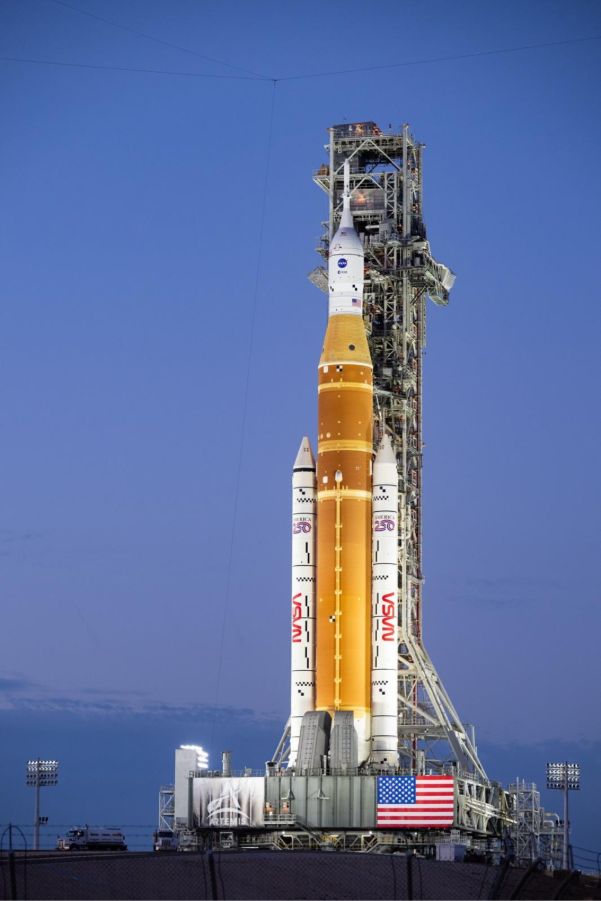
Credit: Keegan Barber/NASA
If SpaceX can perfect Starship as a lunar lander (big if) planned for Artemis III, this will place everybody’s favourite Xitter owner in a powerful position to monopolise the situation and pursue commercial opportunities.
Meanwhile China is certainly not lagging behind, with an aggressive program to develop its heavy spaceflight capability.
No matter how you look at it, the 21st century space race is well underway. One way or another, people will set foot on the Moon again soon.
NEVER SAY NEVER
NASA has put tremendous effort into minimising risk and will take no shortage of time and effort to verify that all systems are ‘go’ before pressing the big launch button.
In the Scitech Planetarium we have a wager going for when it will take off. My money is on 11 March.
And it will be very exciting when it does.